Customer Ratings & Reviews





- Model:
- NIMAPEANUTSENSOR
- SKU:
- 6318493
to a friend
Customers are saying
Customers enjoy the portability of the Peanut Sensor, appreciating its compact size and lightweight design that allows for easy carrying and minimal interference in their daily lives.
This summary was generated by AI based on customer reviews.
- Pros mentioned:Ease of use, Size

Good detector but a budget is needed
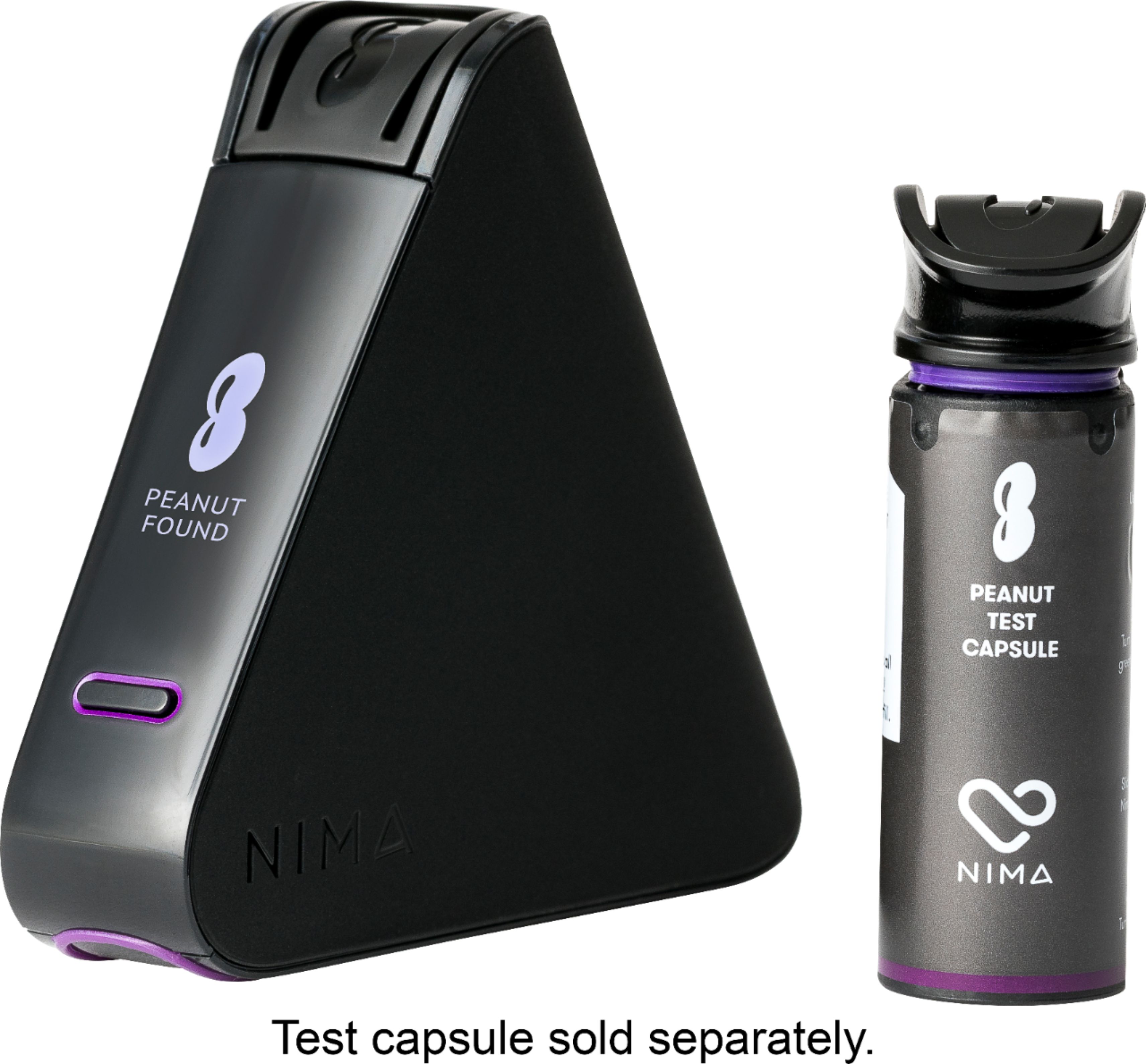
|Posted .This reviewer received promo considerations or sweepstakes entry for writing a review.Over the last eight last years of my life (age of my son) I become an expert in reading the back of each food package searching for the magic word: “peanut”. This word normally comes in all kind of forms: made of, made with, made in facility that processes... I made a routine including at the end of all my orders in restaurants the question: “do you have/cook/include peanut in any of your preparations?”. But of course, because the answer is never definitive or a guaranty of anything (the yesterday night unidentified dumplings were a dangerous evidence of it), I always carry my antihistamine bottle and I am also one of those that knows the current market price (superhigh) of the epinephrine because every year needs to have two packages at least: at home, in the school, in the summer camp. With all of that and despite my due diligence, I finished in the ER couple of (traumatic) times. What if I could test the food that you are not sure about, before trying? What if you are travelling to a less conscientious country where the allergens are not always explicit? I recently discovered that NIMA is proposing the solution for that situation with the Peanut Sensor that I’ve been trying at home. I need to recognize that the use is probably one of the simplest that I could imagine. You pick a piece (normally the size of a pea) of the food that you are testing and enter it in one of the testing capsules. Once the capsule is absolutely closed, enter it in the sensor and in the time of 3 to 7 minutes (yeah, varies depending the food) you have your result (see picture below). The sensor has a portable size and fits perfectly in my hand (or pocket), probably because has been designed to be travelling with it. A capsule it’s the size of my index finger. The full kit stores nicely together in a carry bag (included). The battery life seems to be impressive with a recommended charge once a month. With the sensor, you can download the app that connect with it and serves as log of your tests. The use of the app it’s not compulsory and you don’t need it to operate the sensor. All super-positive until now and it’s a life saving device, but you need to know: 1.- The app itself is a bit disappointing (see also the rates in the store) and clearly needs some work. While could serve to share your experiences and tests with other testers the results in my area are almost none and mix peanut tests with gluten tests (the other sensor sold by NIMA). I also found strange that the location map when you open the app always brings me to San Francisco and don’t update to my real location: Denver. Perhaps when (if) the users’ community enlarges, could be more relevant. 2.- The time to obtain the results varies and to obtain conclusive results from 3 to 7 minutes, it’ s super important to follow the instructions. Hard solid foods require to be pre-diluted, as dense liquids, or the results will not be definitive (see picture below after testing a Snicker bar in my first “credulity intent”). I also recommend (from my own tests) to shake the capsule once closed, to mix the food with the reactive before introducing it in the sensor. 3.- The capsule need to be absolutely closed and to do it you need to apply a considerable force. In my kit they included a cog wrench that it’s without hesitation a must. 4.- The sensor price is high and without the capsules useless. The capsules are for one sole use and each (in a package of 12) will cost you 6$. Budget it’s clearly a major limitation in going crazy with this. The downsize it’s that we are testing a life-threatening risk and economical options like subscriptions (more or less frequent) are proposed depending your profile. I read (still not tested!) that are FSA/HAS reimbursable if your allergy is a medical recognized condition. 5.- The capsules, as each chemical product, require a certain maintenance about how and how long being stored and have a quick expiration date (2-5 months). So, if you are in a budget and if you plan to use it only in sporadic cases, you should consider certain time-limitations. I love it and I will keep using it. I only wish that would be a less exigent product for tight budgets like mine.
I would recommend this to a friend - Pros mentioned:Ease of use, Size
Great back up when needed
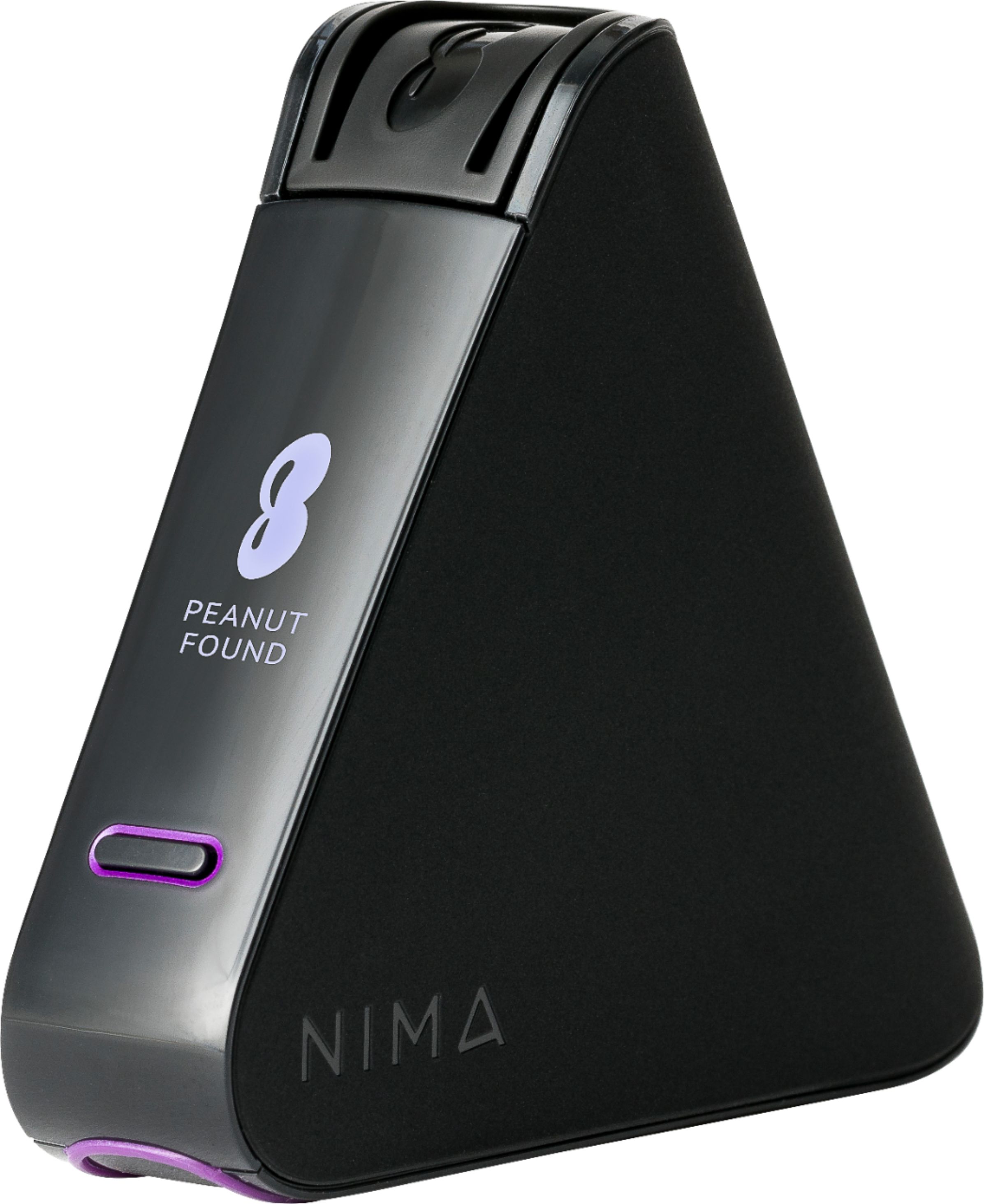
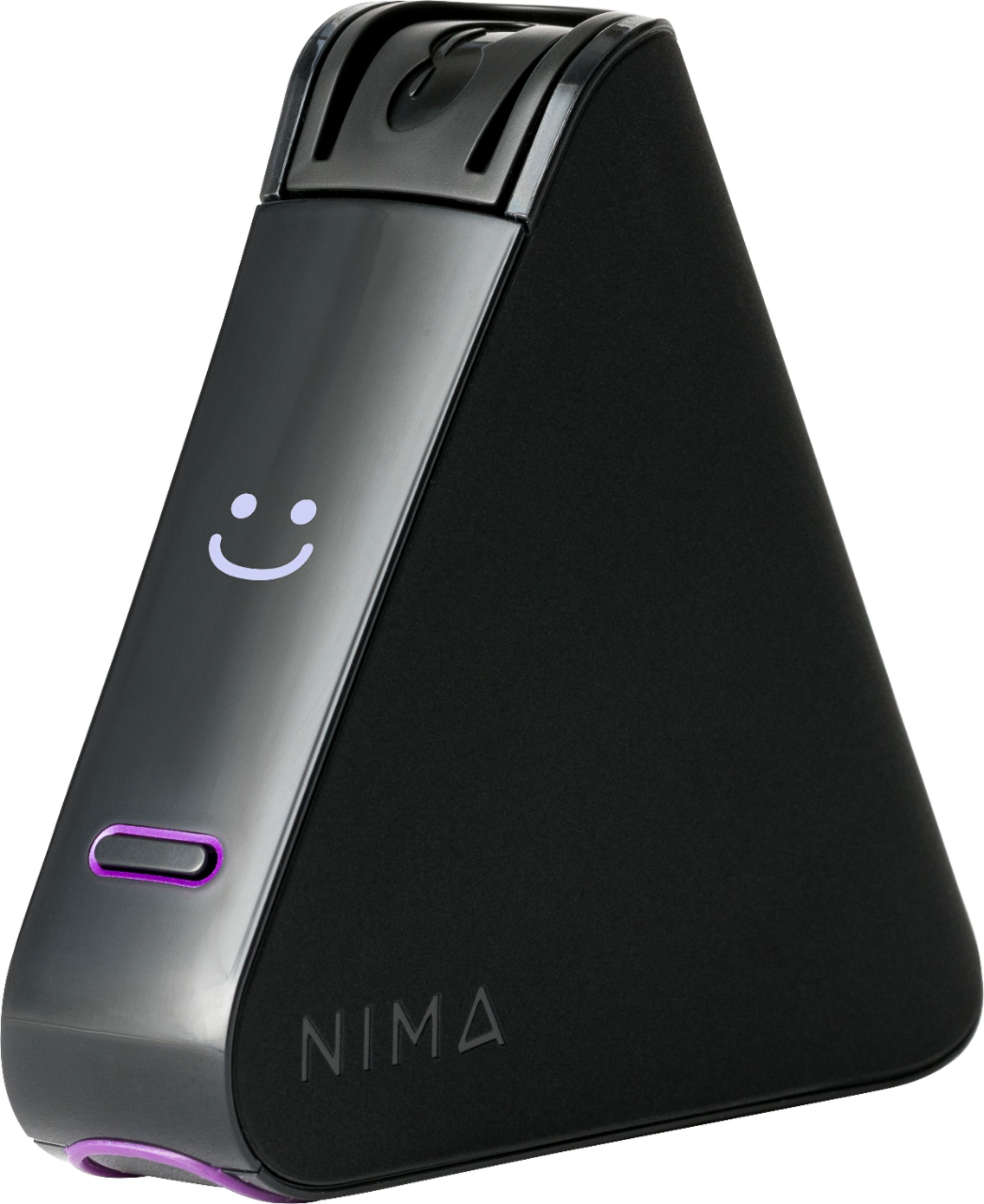
|Posted .This reviewer received promo considerations or sweepstakes entry for writing a review.Having a child with peanut allergies means being prepared for the worse everywhere you go to eat. I view this as a tool of last resort, but one that seems reliable. Even on the Nima website it's talk to the servers first, etc, all the normal things you would do, but if you still have doubts, this should ease your mind. See the table attached from their website on the accuracy of the unit, it's very high. Also, make sure to read what it can't test on, like alcohol for instance. Actual use is very easy, I think they made it as simple as possible. Take a pea bit size of food(s), drop it in the capsule (add water depending on the food type), close the capsule and insert it into the Nima. They include a cap to help close the capsule securely if needed. Press start. 4-5 minutes later you'll have a smiley face for no peanuts, and a peanut picture if peanuts are found in the food sample. The starter pack comes with 12 capsules. You can buy more in packs of 12. Don't stock up too much though, they have expiration dates around 6 months out. The device recharges by USB cable and is small and compact. It's not loud, but shacks a little and makes some noise well stirring the food sample with the capsule liquid for analysis. It is not heavy and fits in your hand. It comes with a pouch, and can easily be carried in a purse, jacket, or pocket. The Nima can connect by Bluetooth to your phone or other device and with the Nima app, you can see food results others have uploaded from restaurants to prepared foods, the more data the better. Hooking up to a phone and the Nima app was easy to do. The Nima website has a lot of information on how the device works and they respond quickly to questions I had via chat at least. If I had cause to doubt what a restaurant has told me, or they are unsure, or can’t guarantee cross contamination this device will be my go too. Of course you don’t want to be in any of those situations to begin with, but life happens. Luckily my child isn’t hyper sensitive to peanuts, but they still need to be avoided, and this device will help make sure that happens. A welcome addition in preventing a peanut reaction.
I would recommend this to a friend Test your food anywhere, anytime
|Posted .This reviewer received promo considerations or sweepstakes entry for writing a review.The Nima Peanut Sensor system includes the sensor unit, the testing capsules, and the companion app. To get started, you will download the app and then pair the sensor to it. Once it’s paired, all your tests will be saved in the app. Part of the reason you keep the data in the app is so that you can share with others when you find peanut sensitive foods. That way others in your community will know what to avoid. You can use the app without having the sensor and I think this is a very useful tool for parents of children who have peanut allergies. The map shows places where tests have been done with the results. In my area, There only ended up being one location that had been tested. I found when it comes to testing foods, there is a very specific way it must be done. The first time I tried to test out a piece of food, the sample was too large. I ended up with an error. The sensor is very easy to read. If you have an error, an exclamation point will appear. If there is peanut present, a peanut image will show up and if a smiling face appears then there is no peanut detected. The first sample I used gave me the exclamation point. There were two issues with the sample. First, it was too large and the second was that the cap to the testing capsule was not tightened all the way. The guide for the samples shows the sample size should only be able to the size of a pea. I knew that the sample I used was too large, but I wanted to see what would happen with the test. After the first test, I used a much smaller piece of food and the testing was successful. I was actually surprised at how much vibration was caused by the testing device. It was louder than I expected, too. It wasn’t so noisy that it caused a disturbance, but it wasn’t silent. I ended up testing three different foods. Two of them were fairly known as far as ingredients, while the third was a bit of an anomaly. • Lentil Chips – The labeling indicated that it was produced in a peanut-free environment so the likelihood that peanut would be found in the food item was pretty low. TEST RESULT: NO PEANUT • Peanut Butter Sandwich Crackers – Given the fact that ‘peanut butter’ was in the name of the product, there was a high degree of confidence that peanut was present. TEST RESULT: PEANUT FOUND • Sara Lee Honey Wheat Bread – This food item was the unknown. There are a lot of ingredients listed on the package (listed below), but peanut was not officially listed. TEST RESULT: PEANUT FOUND Given that the first two tests included known elements of peanut or absence of peanut, I have a high degree of confidence that the bread testing is accurate. Sara Lee Honey Wheat Bread ingredients: enriched bleached flour (wheat flour, malted barley flour, niacin, iron, thiamin mononitrate (vitamin b1), riboflavin (vitamin b2), folic acid), water, honey, whole wheat flour, high fructose corn syrup, yeast, wheat gluten, contains 2% or less of each of the following: wheat bran, calcium sulfate, salt, soybean oil, dough conditioners (may contains one or more of the following: mono- and diglycerides, ethoxylated mono- and diglycerides, sodium stearoyl lactylate, calcium peroxide, datem, ascorbic acid, azodicarbonamide, enzymes), calcium propionate (preservative), distilled vinegar, guar gum, yeast, nutrients (monocalcium phosphate, calcium sulfate, ammonium sulfate and/or calcium carbonate), corn starch, vitamin d3, soy lecithin, milk, soy flour. I think that the Nima Peanut Sensor is a very worthwhile device for parents of kids with allergies. It really does seem to work and work well. When you cook foods at home, it’s easy to know what the ingredients are, but when you go out to a restaurant, it gets much harder to regulate what your kids are eating. The Nima Peanut Sensor is an investment. The starter kit, which includes the sensor device and 12 testing capsules, retails for $289. The capsules can only be used once and refills cost $72. Since there are only 12 capsules, I would imagine that you could go through them fairly quickly and that’s a hefty ongoing expense. I think you have to weigh the expense versus the amount you would use it. The sensor does work and I can recommend it from that basis.
I would recommend this to a friend- Pros mentioned:Ease of use
Open up a world of possibilities with food!
|Posted .This reviewer received promo considerations or sweepstakes entry for writing a review.One of the most usefully strange products I've ever used, The Nima Peanut Sensor is a good product for its intended use with anyone with peanut allergies. as they say, this is indeed not a replacement for an EpiPen but useful addition to my family life which is important. My daughter and a co-worker who is a good friend have peanut allergies, so I know up close and personal what its like to be always wary of food. This allow us to test every type of food from Soup, Cookies, Rice dishes, Sauces, Cake, Asian/Indian inspired dishes and so on. This kinda opens up even more possibilities for my daughter to try which is always a good feeling. It was even easy enough for my young daughter to understand and use herself. At my job, we had a party with food, A co-worker was a little cautious of the dishes. I showed him this and he was delighted to hear about a device. Some of the dishes did have peanuts but at least we now knew. He is currently looking to buy a Nima Peanut Sensor himself. The instructions are easy and quick to use which is always a good thing for this type of product. Nima knows caps are a little hard to open and close, So they decided to include an ergonomic handle so you can get to eating (lol) as fast as possible. Turning it on and the white led lights well give you an indicator; Peanut Symbol: Means the food have peanuts. Smiley Face Symbol: Means the food is safe to eat. There are many things to test out with the peanuts or not with Nima's small little machine. This device free up a lot of that worry by making such a thing portable. its small and light enough to carry around, it doesn't get in the way of your life. This has been a fantastic addition to our lives but there is something I'll like to talk about... Buying everything as a starter kit isn't cheap, This is one expensive little device itself and the capsules are $70+ dollars all while the capsules expire in 3 months time. I get that with family or friends you spare no expense for health but if Nima really wants to capture this awesome market they really sure bring the cost of the capsules at least lower. The barrier of entry will cost you for sure. There is much they can improve even more people lives if they were able to buy more or lower the cost if the sensor itself. But overall it's a great device and has indeed made my daughter more open to a range of foods out there.
I would recommend this to a friend - Pros mentioned:Ease of use, Size
Works as advertised in a compact design
|Posted .This reviewer received promo considerations or sweepstakes entry for writing a review.My oldest daughter has a severe peanut allergy so we are always very careful where to eat. Even with these precautions we have had cross contamination situations though that have caused us to end up in an ER. The device was easy to setup and connect to my phone. Once charged we just threw it in our bag along with a few of the capsules used for the testing. Testing takes about 2 to 3 mins to be fully done and gives a very easy to understand icon on the device to identify if the food is peanut free or not. All tests are stored in the app when the device is connected and if testing pre-packaged food you can also upload your results for other Nima owners to benefit from. Overall very happy with the ease of use and size of the device to get real time peanut test results.
I would recommend this to a friend A great invention
|Posted .This reviewer received promo considerations or sweepstakes entry for writing a review.My 9-year-old granddaughter has a severe peanut allergy. I always noticed when we’d go to a restaurant for dinner, she’d be apprehensive about accidentally getting something with peanuts in the recipe. I always felt like she was not enjoying the dining out experience as much as she should have, being so scared of a bad allergic reaction that at best would require an EpiPen or at worst a trip to the emergency room. I discovered the Nima peanut sensor and was initially excited about it. I became more excited when reading the various positive reviews on the Internet, both from Nima customers and organizations like the National Institute of Health which recognizes this device as effective. You should have seen my granddaughter’s face light up when she saw this. It’s small and easy for her to use. We made two initial tests. The first was with some bakery pastry which was supposed to be peanut free. After about five minutes with the machine whirring and vibrating slightly the results popped up. A smiley face indicating no traces of peanuts. Next we tested a small part of a Snickers bar. It took far less time for the machine to stop and display a peanut symbol warning. Another feature of the Nima that I love is the free app that works with the sensor. It automatically records all the results of your tester, keeping a ‘history’ of your tests. But best of all is the ‘social media’ aspect of the app. Nima owners can help each other keeping allergy sufferers safe. The app shows a map listing all the ‘peanut tested’ restaurants in your area and the results owners have checked on specific dishes at each. As more and more Nima owners use this feature, the results will become more complete and helpful. The only less than positive thoughts I have about the peanut sensor is that the food sample that your tester can hold is very small, about the size of a pea, so you might want to pinch very small bits from different parts of your food to test. Testing a liquid like soup would be easier. Second, it’s pricey because you need an entirely new capsule for each test you perform. This makes sense, otherwise you could have cross contamination. Currently each capsule, after the twelve you receive with the unit, costs a little over 6 dollars. About a dollar less if you order automatic refills from the Nima website (and you can choose the frequency of the automatic refills). Bottom line, I think peanut allergy sufferers will LOVE this device. Just realize, as the company says, this should just be another tool in your ‘toolbox.’ You should still read ingredients, ask at restaurants, etc. Just use your Nima as your personal ‘food tester.’
I would recommend this to a friend