Customer Ratings & Reviews

- Model:
- WED7990FW
- SKU:
- 4978247
to a friend
Does what it claims, but...
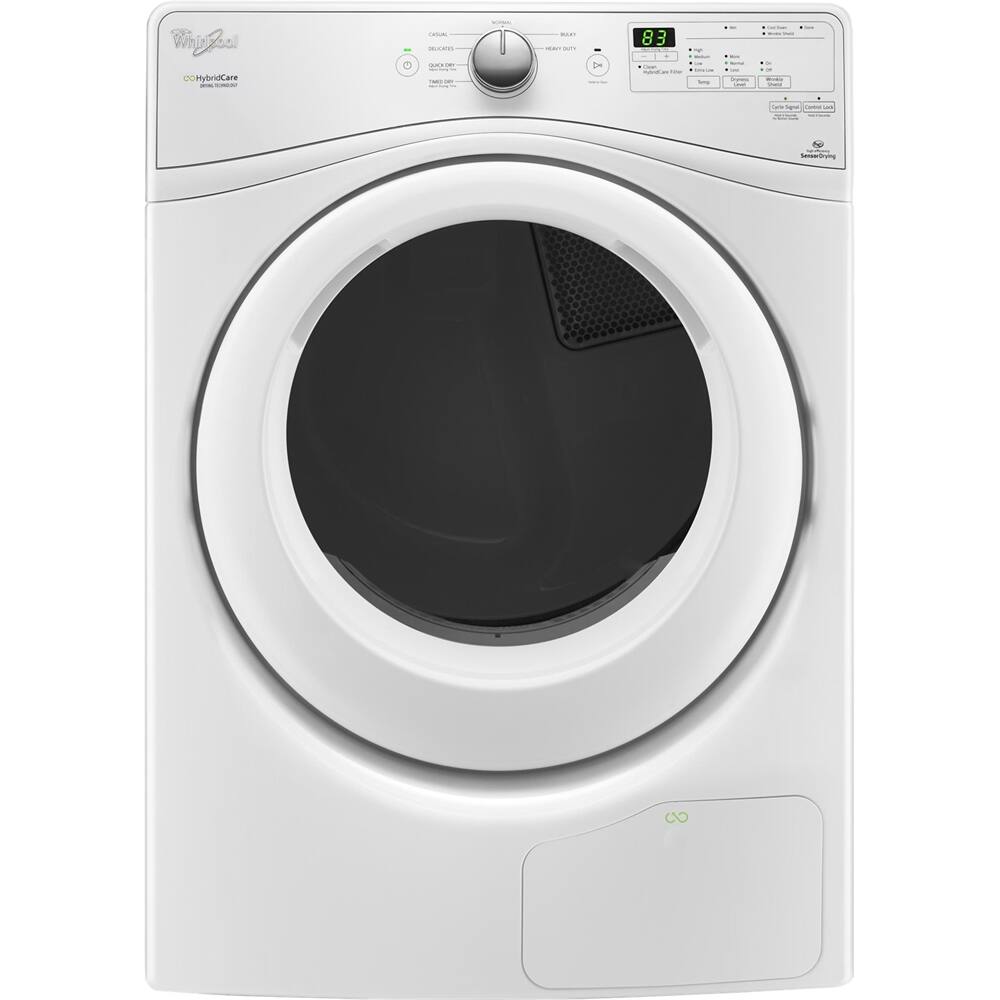
Posted .This reviewer received promo considerations or sweepstakes entry for writing a review.I think that these types of dryers may be the future, they really do use less energy, and with out laundry room not having an ideal place for the dryer vent, this was a great solution, however, there are some things to keep in mind. It helps to clean both lint filters after every cycle (even though it says clean the hybrid filter every 5 loads), you really should be anyway on any dryer. Keep in mind too that this dryer may be a bit louder than a conventional one, to me, it sounds like a medium sized room A/C running in the laundry room. It does warm the laundry room up some as well. Pros: 1. It does use quite a bit less energy than our vented dryer did. The dryer it replaced used over 5kW when running, this one seems to start out around 3kW for the first 10 min or so on the automatic cycles and backs off to around 1.5kW, probably using the element it says it has in it at the start of the cycle. This is just taking the readings from what the incoming meter is showing without much load elsewhere in the house. This was a close enough reading for me. 2. This was a great solution to the problems with where our original dryer vented to, it vented into the carport and would make a huge mess, including starting to cause some mold issues in the carport. The only other solutions were to go through the roof or make it a much longer run, causing more back pressure on the venting, in effect longer cycle times and using more energy. This solved that issue, and we also don't lose a massive amount of inside air being dumped outside by the dryer anymore. No more worries about cleaning duct work or duct work plugging and potentially causing a fire either (still read the manual on the hazards and maintenance). 3. This model is a high capacity model, however, seems to be the only high capacity of this type of dryer available in the U.S. markets at the moment. 4. A large majority of the time, this dryer will completely dry the clothes, very rarely have I had to restart it after the cycle completes to dry anything that is damp. Again, keep the lint filters clean. 5. The "timed dry" cycle seems to use a bit more energy than the automatic cycles, but still quite a bit less than our old dryer, it will run close to 3kW for more of the timed dry load than cruising at 1.5kW during most of the automatic cycles. 6. It does seem to be easier on clothes as it claims. 7. Apparently these types of dryers are not uncommon in Europe, especially in areas with high energy rates, so the tech is somewhat established. In California, our energy rates are very high compared to the rest of the U.S., so anything helps. Reducing energy usage helps the environment. 8. We have the two of us adults and four kids in the house, so we've ran this dryer a lot so far since we've got it. I've read of premature failures in some reviews, it has worked fine for us so far. Cons: 1. The purchase price is a bit high, but seems to be comparable to price with other higher end conventional dryers. 2. There are some things about the automatic cycle programming that really bothers me, when using most of the automatic cycles with the dryness level set to "normal", it seems that frequently the dryer will run much longer than it needs to, I've cut it off with it still showing 30 minutes left on the cycle time and the clothes are bone dry. I've noticed sometimes that the "wet" light will go out during the cycle, and it seems it will set itself to a preset time and seems to ignore the moisture readings at this point, I think the cycle times would be a lot less if this were programmed different (I've seen complaints about long cycle times in some reviews). I've actually found that setting the "normal" cycle to "less" dryness level on most loads will usually still dry the load, and usually finish an average size load within about a hour. The "normal" dry a couple of times has tried to run the dryer for almost 2 hours. This is just what I've observed, but this seems like there should be some changes made to the programming and use even less energy on a cycle that is set to a normal selection. I have found that the "less" dry setting generally still dries an average load to an acceptable level, not always bone dry, but good enough. Based on those observations, I could never imagine using the "more" dry setting unless I guess you just like the dryer running excessively and wasting energy at that point. 3. The owners manual that comes with it isn't for this model, I haven't been able to find one for this specific model. This also bothers me since the manual that comes with it is for a model that is quite different than this one. Most of the basics are correct, but there are some specs and other things about it I would like to have some accurate info on. 4. Some loads (like sheets and sometimes towels) do better on the timed cycle. I've noticed that maybe the sheets are too light to get a good reading off the moisture sensor, and will cause it to only run for a few minutes and stop sometimes. It isn't a big deal, but something to keep in mind. This is probably the case though with any lighter items in an automatic dryer though. 5. I haven't seen anywhere to gain easy access to the heat pump coils for cleaning. I could see this as being a potential issue long term.
I would recommend this to a friend