Skip to contentGo to Product Search
Main Content
Skip to contentGo to Product Search
Main Content
Categories & Filters

High Sensitivity Car Speakers

High sensitivity car speakers can help you get more volume from your car stereo’s available power. Compare speakers by sensitivity rating, size, impedance, and power handling to find a match for your vehicle and head unit or amplifier. When comparing sensitivity ratings, check that they use the same measurement method for a more meaningful comparison.

Read More
Results
Main Results
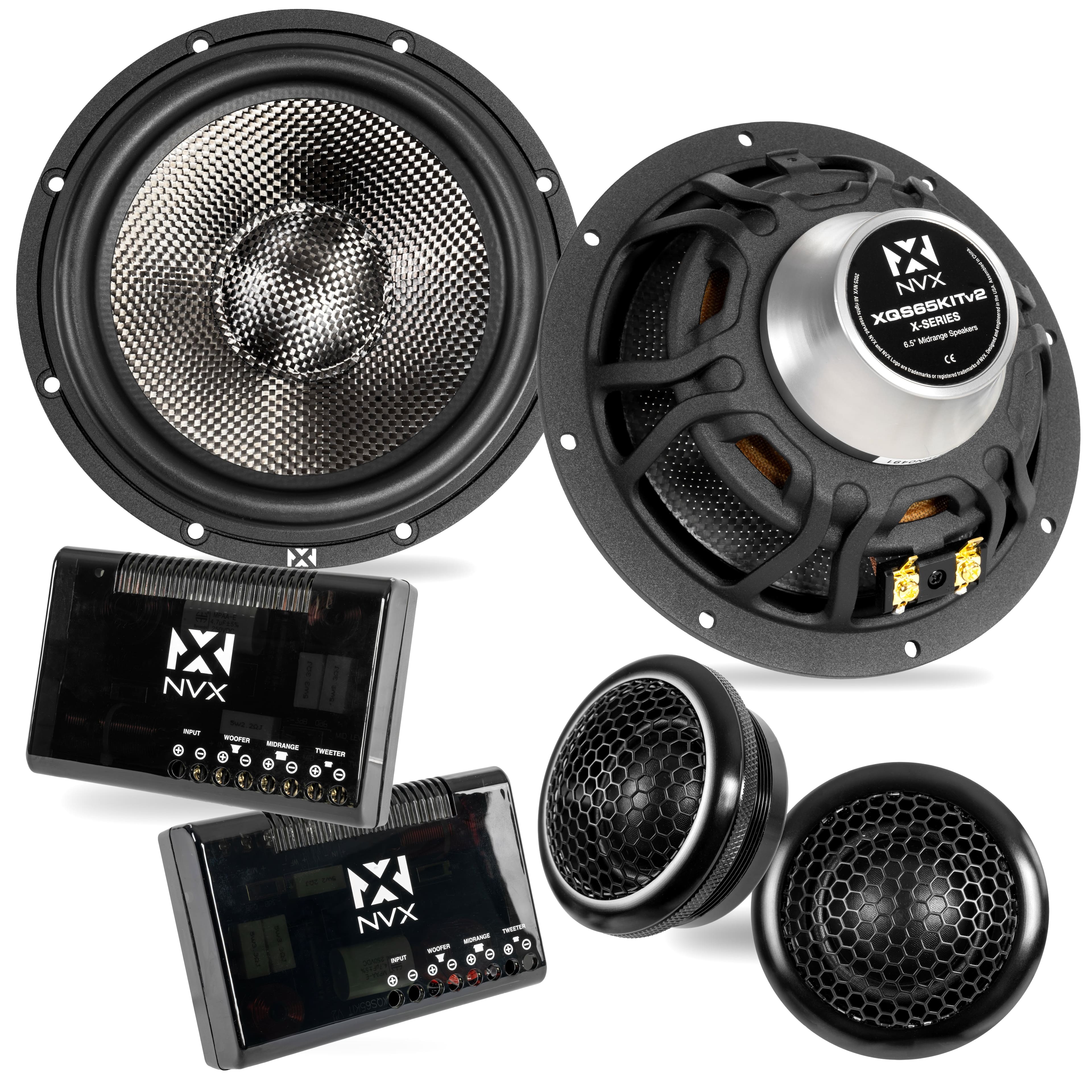
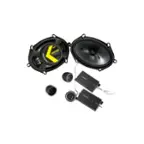
  1. NVX - XQS65KITv2 300W RMS X-Series 6.5" 2-Way Component Speakers (Pair) - Black

    SKU: J3GT43F3GS

    Product Description

    A high-performance 2-way car speaker system with carbon fiber cones, silk dome tweeters, and switchable crossovers.
    See all Car Speakers
    Your price for this item is $399.99
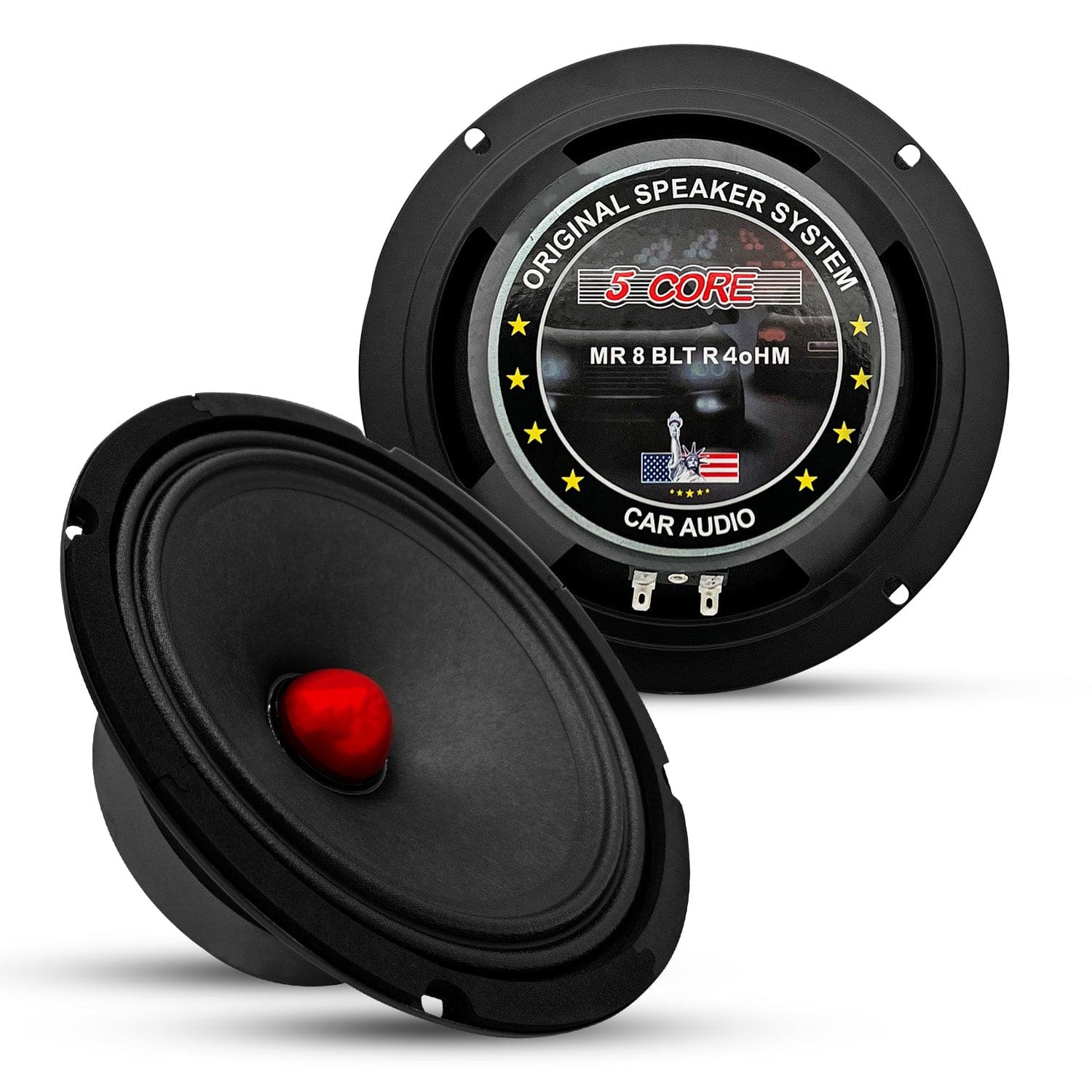
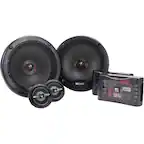
  2. 5 CORE - 8" Subwoofer Speaker 500W Mid Range Car Audio Sub Woofer 4Ohm Deep Bass Replacement Driver-MR 8 BLT R 4oHM - Black

    SKU: J3GWXXTPXV

    Product Description

    A black mid-range car subwoofer delivering deep bass, 500W max power, and durable iron construction.
    See all Home Subwoofers
    Your price for this item is $22.24
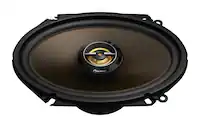
  3. NVX - VSP69 300W RMS V-Series 6x9" 2-Way Coaxial Speakers (Pair) - Black

    SKU: J3Y7KLQWT4

    Product Description

    A pair of 2-way coaxial car speakers with polypropylene cones and 25mm silk dome tweeters.
    See all Car Speakers
    Your price for this item is $109.99
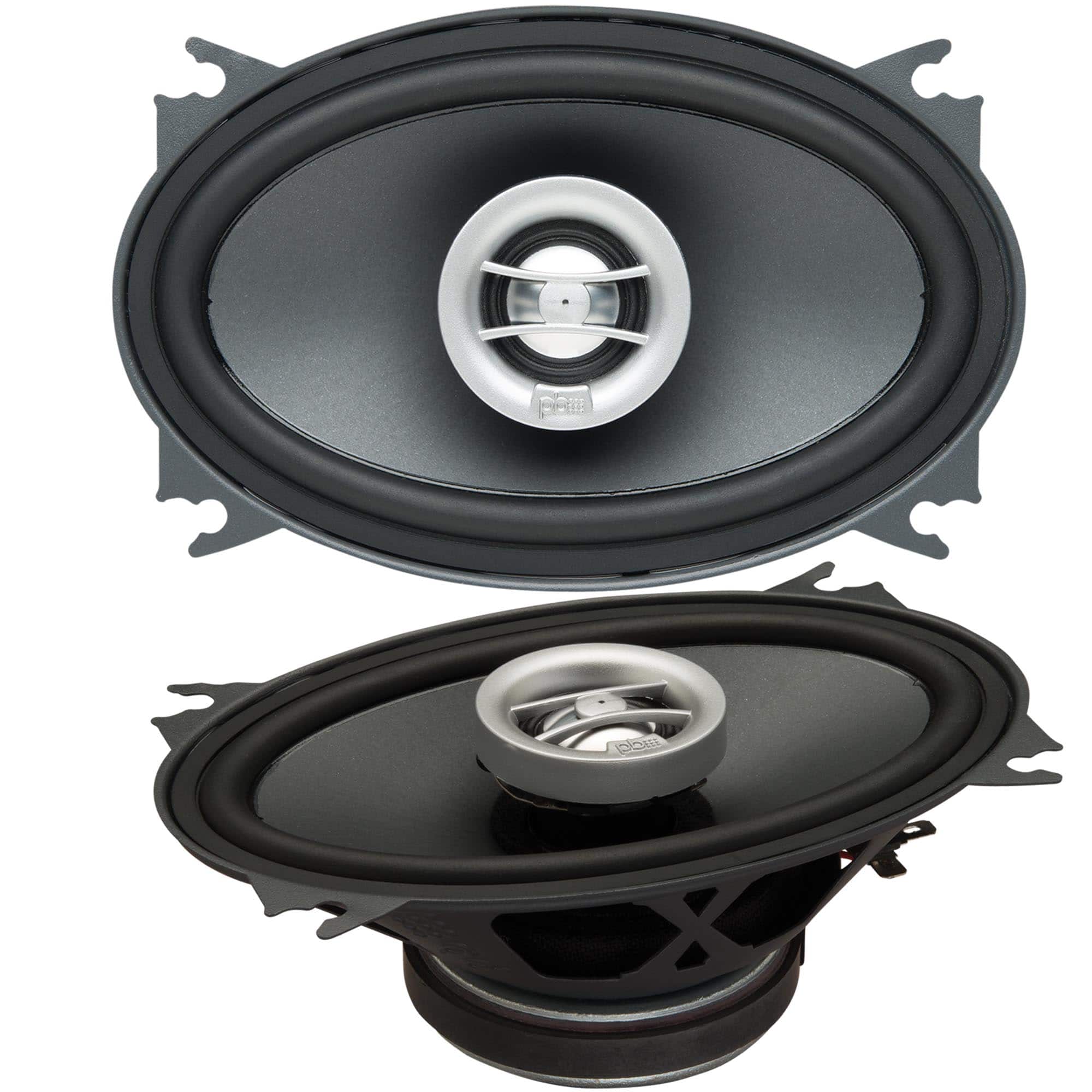
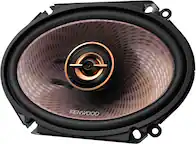
  4. Powerbass - OE-462 - 4x6" Coaxial Speakers 2-Ohm - Pair - Black/Gray

    SKU: J3YVRYKRLR

    Product Description

    A pair of black and gray 4x6" coaxial car speakers with 2-ohm impedance and aluminum dome tweeters.
    See all Car Speakers
    Your price for this item is $60.99

High sensitivity car speakers can help you get more volume from your car stereo’s available power, making them worth considering if you want to upgrade your sound without immediately adding an external amplifier. Speaker sensitivity describes how much sound a speaker produces under specified test conditions, typically expressed in decibels (dB) at a distance of one meter. With comparable measurements, a higher sensitivity rating generally means a speaker needs less power to reach the same listening level as a lower-sensitivity model. For example, a speaker rated at 93 dB sensitivity requires roughly half the power of one rated at 90 dB to produce the same output, assuming other conditions are equal. This can make high sensitivity car speakers a practical match for a compatible factory stereo or a lower-powered aftermarket head unit. Sensitivity does not tell the whole story about sound quality, though: frequency response, distortion, speaker placement and installation all influence how clear and balanced your music sounds. Compare ratings measured using the same method, since 2.83-volt and 1-watt sensitivity specifications are not directly equivalent across different speaker impedances. Choosing the best high sensitivity car speakers for your vehicle also means checking speaker size, mounting depth, impedance and RMS power handling before focusing on the sensitivity number alone. Common options include 6.5-inch car speakers and 6x9-inch car speakers, but the right fit depends on your vehicle’s speaker openings, available clearance and any installation adapters required. Coaxial car speakers combine a woofer and tweeter in one assembly for a relatively straightforward replacement, while component car speakers use separate drivers and crossovers to offer more flexibility in placement and soundstage tuning. For a factory car stereo upgrade, verify compatibility with the original audio system, especially if your vehicle has a factory amplifier or uses speakers with an unusual impedance. If you plan to add a car amplifier, match its output to the speakers’ recommended RMS power range and impedance rather than relying on peak power ratings. Proper mounting, suitable speaker harnesses and sound-deadening material can help reduce unwanted vibration and support cleaner playback. Paired with a compatible system and careful installation, high sensitivity car audio speakers can deliver satisfying listening levels while making efficient use of the power you already have.

FAQ

Sensitivity describes the sound pressure level a car speaker produces under specified test conditions. It is typically expressed in decibels (dB) at a distance of 1 meter with a stated electrical input. High sensitivity car speakers have higher sensitivity ratings, though there is no universal cutoff for the category.

Common formats include dB at 1 watt/1 meter and dB at 2.83 volts/1 meter. These measurement methods are not always equivalent because the power delivered by a fixed voltage depends on speaker impedance. Check the measurement conditions when reading sensitivity specifications.

Yes. High sensitivity car speakers can use either design. Coaxial speakers combine a woofer and tweeter in one assembly, while component systems use separate drivers and typically include external crossovers. Sensitivity is a specification, not a particular speaker configuration.

Sensitivity describes a speaker's measured acoustic output for a specified electrical input. Impedance, expressed in ohms, describes the electrical load the speaker presents to an amplifier. They are separate specifications, and neither can be substituted for the other.

Woofer cones may use treated paper, polypropylene, or composite materials. Tweeters may use silk, other textiles, or metals such as aluminum. Materials vary by design, and cone or tweeter material alone does not establish a speaker's sensitivity rating.