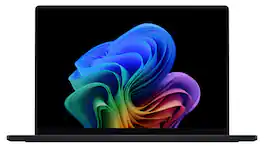
Meet ProArt P16 – your ultimate creative companion for the studio and on the move. Its OLED touchscreen ensures precise color accuracy for flawless proofing, while versatile I/O ports seamlessly connect all your peripherals. This NVIDIA Studio-validated laptop packs GeForce RTX 5070 graphics and AMD Ryzen AI 9 HX 370 processor with 50 TOPs NPU, a pairing that will supercharge all your creative endeavors. With AI-enhanced creative features and a long-lasting battery, ProArt P16 transforms any setting into your studio.
About Open Box
This is an Open Box product, which means it's been opened and returned by another customer. Each open box item is unique, and we offer different discounts based on the . To see a product's condition before purchasing, visit us in store.
Big SavingsScore a major deal on a product that's a perfect fit for you and your budget.
Customers are sayingCustomers are satisfied with the ProArt P16's premium build quality, fast processor speed, and awesome OLED screen. The laptop is also praised for its portability, effective heat dissipation, and excellent resolution. Some customers have expressed concerns regarding the battery life, fan noise, RAM, refresh rate, and weight.
This summary was generated by AI based on customer reviews.
Build Quality (26)
Processor Speed (12)
OLED Quality (10)
Portability (8)
Heat Dissipation (7)
Battery Life (9)
Fan Noise (7)
RAM (4)
Refresh Rate (4)
Weight (3)
Customer Images
The vast majority of our reviews come from verified purchases. Reviews from customers may include My Best Buy members, employees, and Tech Insider Network members (as tagged). Select reviewers may receive discounted products, promotional considerations or entries into drawings for honest, helpful reviews.
Rated 5 out of 5 stars
Impressive Laptop
Every aspect of this purchase has been delightful. The prompt shipment to the packaging presentation was professional. The screen quality and keyboard give a very responsive feel. The processor speed and overall performance does not disappoint. The power with the AI feedback suggests support in new directions beyond my expectations. My only reservation is whether I chose a large enough hard drive to accommodate all the projects I expect to encounter. I'm looking forward to gaming and video editing on a new dimension.
Posted by TAMARL
Rated 4 out of 5 stars
Great for creators, battery efficient discrete GPU
Design
Made from an aluminum body, it’s lightweight, but feels solid and durable, with no creaking or flexing under normal use. Its black finish is attractive and fingerprint resistant. It doesn’t feel metallic and feels comfortable on the skin, soft and silky smooth. The status lights are curiously found on the back of the laptop and hidden by the hinge when the display is folded open. It only seems to be useful while the laptop isn’t in use. The keyboard is backlit with 3 levels of brightness and the option to turn the backlight off. However, I found the minimum setting for the backlight to be too bright. The backlight also doesn’t illuminate the Shift function labels on the keys. The keyboard itself has considerably more travel than other ultra slim laptops, while still being silent. There is no numpad, but this allows for front-firing speakers on the sides of the keyboard as well as the touchpad in a centered position, to prevent accidental input while typing while looking straight on to the screen. The P16 comes with an infrared camera compatible with Windows Hello for facial recognition login, which works in the dark, and more convenient than fingerprint login.
Display
The display is a glossy touch screen OLED with slim bezels and measures 15.8” diagonally. It’s pretty reflective, so it’s not ideal for use opposite a window or light source. Its native resolution is 3840x2400, which is a 16:10 aspect ratio. It’ll produce black bars for 16:9 presentations, but the extra vertical space makes it better for content creation, giving you a larger workspace. Because it’s a 4k display against a 16” display, you won’t spot individual pixels (or at all) at 150% scale or higher. The display has a refresh rate of 60 Hz which is acceptable for content creation, which is what the laptop was designed for. However, I find it a very curious decision that ASUS chose a touch panel over 120 Hz since it doesn’t really leverage touch input very well, while at the same time, proves to be very capable of 120 Hz for gaming. Feels like a misstep to me. I don’t have a protractor, but if I had to guess, the hinge looks like it only goes as far back as 30°. There’s also some wobble when the display is touched. It also does not come with a stylus although it supports the ASUS stylus. When I tried using my Samsung phone’s S-pen, it wouldn’t work. I found the touch display best for making quick selections in editing programs with buttons like Photoshop, and keep the touchpad in my editing workspace. Since the hinge doesn’t fold flat to 180° or 360°, the P16 doesn’t work well for drawing with touch input. I didn’t notice any text fringing. The display is Dolby Vision certified, and is able to play Dolby Vision content. For a model aimed at content creators, I was surprised that its default color profile was oversaturated. Creators looking for accurate colors will want to switch to a different profile such as sRGB, which is great for web content, or Display P3, which is great for graphics and video editing.
Inputs
Left side:
-proprietary 200W power port
-full sized HDMI 2.1 port
-USB 4 Type-C port
-USB 3.2 Type-A port
-3.5mm audio jack
Right side:
-USB 3.2 Type-C port
-USB 3.2 Type-A port
-full sized SD card slot
Charging is done from the left side of the laptop, and the only way to take advantage of the P16 at full power is using the stock 200W power adapter. The USB 4 port only charges at up to 100W, which will cap the CPU and GPU. The cap isn’t as bad as it sounds because it’s still a powerful laptop even with the cap. You just won’t be able to take full advantage of the hardware’s capability. Due to this being a Ryzen laptop, one of its USB-C ports is only USB 4 and not a Thunderbolt port. ASUS also skimps out compared to the competition by making its other USB-C port 3.2. This USB 3.2 Type-C port on the right side has power delivery, but isn’t capable of charging the laptop.
Connectivity
It comes with WiFi 7 but unfortunately maxes out at 2882MB/s up&down. I've seen others do 5000MB/s. It also has Bluetooth 5.4, which is the latest version.
Performance
When set to Performance mode, which can only be run while plugged in using the stock 200W charger, the P16 is impressively powerful, but the fans blare non-stop, making it a pretty noisy laptop. It’s not a high-pitched sound or anything offensive, but it’s a noticeably aggressive sound of fans spinning. The laptop doesn’t get too hot as long as the vents on the bottom of the laptop aren’t blocked. It’s best used on a flat desk and not recommended on a bed while in Performance mode.
While in Performance mode, I was able to play Shadow of the Tomb Raider in max Custom settings, which is more demanding than its preset Ultra settings in native 3840x2400 resolution and get a stable 60fps. In 1080p with those same maxed out settings, I could get 144fps. Sadly, the display is only a 60 Hz panel. But since the P16 was designed for content creation, 60 Hz is more than fine. The Nvidia GPU can be leveraged by connecting the P16 to an external gaming monitor.
When running on battery, the P16 caps its CPU, and the discrete GPU (if it's being used). The P16 will use the integrated Radeon 890M. I never experienced any thermal throttling.
Other than Performance mode, the laptop runs cool and very silent, especially in Whisper mode, where the fan never seems to go off. Through the MyASUS app, your hardware configuration is customizable. You can run on the integrated graphics card exclusively for longer battery life. It’s also nice that the integrated graphics is a Radeon variant (890M), while the discrete GPU is a GeForce RTX 5070, particularly for software that has benefits for one type over the other.
The SSD is speedy with a 5279 MB/s sequential read, 4831 MB/s sequential write. It has a random read of 56 MB/s and random write of 146 MB/s and a capacity of 2TB. There is also a spare m.2 slot for additional SSD storage.
Battery
Using the 200W stock power adapter, it takes 1 hour and 45 minutes to charge from 0% to 100%, though it hits around the 90% mark after around 1 hour. Using a 100W USB-C charger, took about 4 hours to charge from 0% to 100% but hit around 90% after around 1 hour and 30 minutes. The battery life itself varies greatly depending on the mode you use and what you’re doing but otherwise excellent when you need it to be without the laptop feeling sluggish. When streaming video non-stop at 76% brightness and 50% volume I got about 9 hours of battery life. When gaming in 4K using the discrete GPU with HDR on and no caps (Windows mode; Best Performance power plan) it lasted only 1 hour and 47 minutes.
Sound
The sound out of the box sounded terrible to me. It sounded too isolated. But this was the sound profile for its “Music” setting. When I switched it to “Dynamic”, the sound was amazing. It utilizes Dolby Atmos, which gives the audio depth without sacrificing detail. The speakers also get very loud without any distortion. The microphone on the other hand isn’t very impressive. My recorded voice sounds too processed and unnatural. It does do a good job with noise cancellation though, eliminating sounds like an air conditioner.
Touchpad
The touchpad is very responsive but unfortunately lacks haptic feedback. Taps can be done anywhere on the touchpad, but physical button clicks can only be done on the bottom portion. The touchpad is very responsive and feels smooth to touch. It has a unique DialPad touch feature built in to the top-left portion of the touchpad that needs to activated via a simple drag from the top-right corner of the touchpad gesture. I have never accidentally triggered this gesture personally, although perhaps your mileage may vary. When the DialPad is turned on, it gives you a touch dial that comes with preset functions for specific apps like Photoshop and Word, while also allowing you to customize the dial with functions and apps that you assign on your own. This gives your shortcut access to commonly used functions via the DialPad.
Bundled Software
ASUS includes StoryCube and MuseTree with the P16.
StoryCube appears to be a AI-assisted media hub. It automatically organizes your media with AI, such as sorting photos by people with AI recognizing similar faces; sorting photos by scenes that AI will come up categories for such as "Diving & Snorkeling", "Pets". My issues is, it has proven to be very inaccurate for me, and makes things more of a mess and irritating. A picture of a woman taking a selfie in a normal car was labeled under "Off-road Racing". You're supposed to able to search your media contextually, but StoryCube does a poor job. When I search "tennis" it shows one result despite the many tennis photos and videos I had. When I search "blue", I get no results.
I do like how you're able to trim and even crop videos in StoryCube.
But StoryCube only works with the folders you add to it manually, so it can be cumbersome.
MuseTree is a Generative AI image content board. You start with an idea and MuseTree will generate images from it. Then you can add more AI generated images to your content board. You can take those other images and stack them on an existing image to have AI generate an image that combines the 2.
My issue with MuseTree is that the default AI image model it uses, dreamshaper, isn't a style I like. It looks obviously AI, which is to say, bad and soft-looking. It's got a cheap Made in China vibe.
You can change the AI image model by downloading a different one from Civitai but I haven't found any good ones for my needs. On top of that, it won't produce any copyright content.
ASUS came out with the ProArt P16 last year with the RTX 4060 last year, but this model has the RTX 5070, which is more battery efficient when running on the discrete GPU. It also generates AI images slightly quicker. But the improvements for gaming are marginal. It can game but its best use is for media editing and creation.
Posted by KusMoG
Rated 5 out of 5 stars
Powerful Compact Gorgeous Creation Machine
The Asus ProArt P16 is an amazing little content creator's dream. It packs an AMD HX 370 12 core CPU paired with an RTX 5070 with 32GB of RAM, which in this small form factor is pretty impressive. Along with that it has a 2TB SSD as well as a really beautiful 4k OLED display. All of this packed into an almost ultra thin design. This said, I want to stress that this isn't a gaming laptop. While the specs may appear great for gaming, the display while glorious only has a 60hz refresh rate. Pair that with the lower 100w power limit on the GPU and the slim design, gaming isn't really the strong suite of this laptop.
Build quality on this laptop is simply great. I love the matte black (more a deep grey) finish on the laptop. The lid has a very minimalistic texture to it and a sleek badge at the bottom saying ProArt. No flashy gamer stuff here, so it’s suitable for the workplace. Weighing just 4.08 pounds (1.85 kg) and measuring 13.98 x 9.72 x 0.59–0.68 inches (35.49 x 24.69 x 1.49–1.73 cm), the ProArt P16 is remarkably portable for a 16-inch creator laptop, making it easy to carry for on-the-go professionals. The deck of the laptop has two front-facing speaker grills, a keyboard that is mostly great, and a generously large trackpad. The trackpad also has a built-in radial tool that can be set up for specialized control in third-party applications. ASUS also created an easy on/off feature on the trackpad to make it less inconvenient when you don’t need it.
It comes with the standard ports you would expect, 2 USB-C (1xUSB 4, 1x 3.2, the USB 4 supports charging), 2x USB Type A ports, 1 HDMI and 1 SD card slot. No complaints with the ports with the exception of the power port. Its not really so much of an issue with the port, but instead the charging cord design. Its a square block and it has a lot of play in it. I haven't had an issue with it working itself out, but I feel that its one small yank away from breaking the port itself.
As for performance, this laptop definitely impressed. The CPU is interesting because its the first real hybrid CPU AMD has made. It sports 4 P-cores and 8 E-cores. Don't let the naming confuse you with Intels offerings, the E-cores on this are significantly more performant than those you'd find on an Intel machine. They are simply more dense Zen5 cores that have less cache. So essentially the same performance, just at lower clocks and lower power usage. And the results speak for themselves in CPU benchmarks, easily beating out Intels top thin and light CPU (the 288v), while competing with their gaming laptop CPUs. I primarily use the laptop for programming and this thing crushed code compilation. It was also able to run my emulated Android devices with no issues and no perceivable slow downs while they were running.
The GPU performance on this device is simply OK. This is not the fault of Asus, but simply what is available on the market when this is made. The 5070 this is equipped with is more like a 60 series product that Nvidia renamed. Its not longer a mid range GPU. Given that this laptop isn't really a gaming device, I'm not going to hold it against it. The only area where this holds back the laptop is in video editing where if you're working with larger files (4k primarily) it can cause significant hold ups. I was still able to work with it, but I would have appreciated a 12GB or 16GB option. The GPU is powerful enough for video edits without issues, though a desktop is still going to be faster. For gaming its mostly disappointing. You'll spend a lot of time adjusting settings just to maintain 60fps and most of the time turning texture quality down to work with the 8GB the GPU has. Its still plenty capable of gaming, but there are compromises to be made.
The cooling solution on this laptop is ok. Its working with the slim nature of the design and because of that it will get hot. That said, it is moving about 150w of heat off the CPU+GPU combined while both are in use, and its able to keep them both at 85c or less. Pretty good for how thin it is. That said, when it is moving the heat out, it is generally blowing it directly onto your knees or legs depending on how your sitting and its warm. I wish they had opted for side exhaust, but it works so can't complain too much.
While it is under load, the fans do spin up and they are audible. They aren't too loud, but you can definitely hear them.
The display on this, if you can't tell is simply beautiful. Its OLED so its expected but it never ceases to amaze when you use an extremely high PPI display like this with OLED. Both SDR and HDR content pop, its plenty bright for normal environments (don't use in direct sunlight), and the colors seem accurate. I do wish there was a 1600p option instead though. While 4k is great, at this size I think 1600p would be more appropriate as it would allow for higher refresh rates. 60hz is usable for most things, but coming from a desktop that has 2 240hz displays, I can feel the drag of only 60hz. Its especially bad if you do want to do some light gaming on it.
The keyboard on this is for the most part good. Its satisfying to type on, short clicky keypresses and an almost perfect key spacing. The front facing speakers make a number pad impossible though. My only complaint with this is while gaming (I know, its not a gaming laptop) it has a problem with key registration if you're pressing multiple keys. I hope this is something that can get fixed in a driver or bios update, but yeah, it can make playing games pretty bad.
The speakers are great on this. When it comes to laptops, when I think of the Macbook Pro as a reference. This is very very close to the Macbook Pro in audio quality. It falls short in some areas such as distortion at higher levels, but at mid volume its plenty loud enough and the quality is there. Its got decent bass for a laptop and clear mid and high tones.
Battery life on the laptop is decent, but you have to manage it yourself using the MyAsus app. By this I mean, if you're going to be on battery only, you should go into MyAsus and switch it to EcoMode. While I was attempting to test battery life, I noticed it drained much faster than I had expected it to. This was because the dedicated GPU was remaining powered on. It didn't switch automatically. So I dropped 60%+ battery life in simply a couple hours. Switching to Eco mode, I spent the rest of my night (6 more hours) watching videos and only losing about 20% battery.
The laptop comes with its specialized software preinstalled. It doesn't have much bloatware installed on it by default so thats a plus, but Asus includes 4 specific applications for the laptop. The first two I think could really be combined into one, The MyAsus app and the ProArt center. The ProArt center is an app specific to the laptop you're using while MyAsus is one used across all their laptops I've seen. Problem is, both offer specific laptop control. For instance with MyAsus you can control the GPU mode of the laptop, be it dedicated GPU, integrated GPU or Hybrid. Don't confuse this with a MUX switch as the laptop doesn't have one. On the flip side, ProArt allows you to configure power limits and performance of the laptop. I'd really like it if similar features like this were put into a singular app instead of spread across multiple. Its especially jarring that the designs of both applications are so different. The ProArt app has a really nice interface, while the MyAsus one doesn't.
Finally there are two creator focused apps that are included. The first being StoryCube and the second being MuseTree.
StoryCube is an potentially handy content management tool. You can designate this app directories to sort for content you work with and it will work its AI magic on it (what this magic is, I have no idea). How this is helpful is not from the AI that I could see, but instead the ability to use tags. You can designate specific tags and attach them to your files so that you can find them easily when looking for them. The AI feature that I saw was simply person detection, but my media doesn't deal with people so it wasn't of use to me. Where this application fell short for me was its inability to access network drives. I don't store my media on my device, I store it on a local NAS so I can use it from multiple PCs. The application can't work with that, even if it is setup as attached network storage. It does offer the use of OneDrive and iCloud, but when I used it it was incredibly slow. The design of the app is great, and if they extended out the tags feature, allowed AI to determine what tags should be used and grouped content it would be really helpful, but right now its simply a better content manager than windows Explorer.
Finally there is MuseTree. This is an AI image generator that uses your local NPU to generate images. This one is a mixed bag for me. The interface is extremely good with it, with it being node based prompts to generate things. On the other hand, the AI is incredibly bad (don't know if this is due to the model or limited NPU strength) but it almost never would generate what I was asking. It would also generate its own follow on prompts that I had no idea where it was getting or even how they were relevant to what I was doing. If Asus can figure this out then I can see it being a useful tool, but right now its more headache than its worth.
In conclusion, I love this laptop. I use laptops for content creation and development, making webpages/mobile apps and doing hardware reviews for YouTube. This laptop allows me to switch between all those tasks from one machine, while being mobile. Previously I used a larger laptop with a 14900hx and a 4080 which was bulky and had terrible battery life. I've been able to replace that with this, maintaining most of its capabilities while cutting down on charging time and weight.
Posted by Shaun
Rated 5 out of 5 stars
Content Creators Dream Machine
This is my first Pro Art Laptop. I've worked in graphic design, variable data, and commercial printing for over 20 years. Along with my wife, we've also built a fun side adventure on social media which demands plenty of photo and video editing. From the hardware, to the software, to the system settings; everything about this laptop is built with content creators in mind. While a lot of laptops out there are designed for gaming or general work productivity, this one clearly claims its space in the creative world. Even if it's designed for content creators, you can absolutely game on it, watch a movie in 4K, or tackle demanding office tasks. The 4K OLED touchscreen is as good as it gets, whether you're editing video or just watching Netflix. The Asus Pro Art P16 is built for creative work like graphic design, video editing, 3D modeling, and photo editing. If that’s what you do, this is the machine you want.
Unboxing / Design / Build
Right out of the box, the Asus ProArt P16 makes a great first impression with its eco packaging. There's almost no plastic and everything is held securely with cardboard. Inside, you’ll find only the essentials: a quick user guide, a warranty card, and a basic setup guide. There are no unnecessary extras, just what you need to get started. Even at 16" the laptop itself is slim, light, and very easy to carry around. It slides into just about any laptop backpack with no issue, which makes it extremely portable for creative professionals or anyone constantly on the move. The design is simplistic and modern with a black matte aluminum chassis. The OLED display has virtually no bezel giving you every millimeter of screen possible Once plugged in, setup was quick and smooth. I walked through the initial steps in about five minutes before hitting the usual batch of Windows updates. The overall design and build quality feel premium.
Specs & Features
The Asus ProArt P16 comes loaded with hardware and features aimed at creatives and power users. On the left side, it includes a 200W DC-in power port, HDMI 2.1, USB-C 4.0, USB-A 3.2 Gen 2, and a 3.5mm audio jack. The right side has another USB-A 3.2 Gen 2, a USB-C port with data, DisplayPort, and power delivery, plus an SD Express 7.0 card reader. Wireless connectivity is the latest and greatest WiFi 7 and Bluetooth 5.4. It's powered by an AMD Ryzen AI 9 HX 370 processor with 12 cores, 24 threads, and a max boost of 5.1 GHz, coupled with a 50 TOPS NPU for AI tasks. The graphics are impressive. An NVIDIA RTX 5070 with 8GB of GDDR7 memory and DLSS 4, while the integrated Radeon 890M handles lighter workloads to conserve battery. There is 32GB of LPDDR5 RAM with timings of 23-17-20-40, along with a 2TB Western Digital SN740 NVME SSD for storage. The display is a 16-inch OLED Touchscreen, with a 3840 x 2400 4K resolution and 16:10 aspect ratio. The Pantone validated OLED comes in a glossy finish, 60Hz refresh rate, 500 nits brightness, 100% sRGB coverage, and full DCI-P3 color coverage. The other big advantage with the OLED is a mere .2ms response time. It also has stylus support. The trackpad is one of the largest I've had and it registers clicks well. Audio comes from two large top-firing Harman Kardon speakers that sound great with clear highs, mids, and lows. There's a 1080p IR webcam with Windows Hello facial recognition. Battery life is powered by a 90Wh battery with USB-C charging up to 100W. The laptop weighs just under 4 pounds, and the power brick adds about another pound, bringing the total weight to around 5 pounds. One thing that really stands out here is the durability. This machine is built to military grade standards and topped with Corning Gorilla Glass, so if it ever takes a fall, you’ve got a fighting chance of walking away without a cracked screen. It’s been tested against dust, humidity, low temperatures, and altitude. This will give you more piece of mind that your investment is protected.
Software
MyAsus software is your command center to monitor your laptops diagnostics and software. The home screen gives you quick access to system diagnostics, warranty status, system info, fan profiles, and battery health settings. You can set it to WiFi SmartConnect or WiFi roaming if you're switching between networks frequently. Power modes include Performance, Standard, and Whisper, so you can match the system behavior to what you're doing. There is also AI noise canceling for both the mic and speakers, which comes in handy during meetings or video calls. A standout feature is the OLED Care section, which includes pixel refresh and pixel shift tools to help minimize the risk of screen burn-in. For system stability, the built-in update tool is the most reliable way to keep your drivers and BIOS current. If you launch the ProArt Creator Hub, you’ll get access to even more tools like fan tuning, color calibration, and custom controls for the ASUS Dial. Overall, the software helps you setup your experience without needing a bunch of third party apps.
StoryCube is an AI powered photo organizer that makes dealing with a mountain of photos a lot less of a headache. You can import your pics from iCloud or OneDrive, and it’ll automatically sort them into albums by theme, scene, or even by the people in your photos. So if you’re like me and you’ve got 3,500 random photos on your phone, it’s a lifesaver. Now, if you’re a content creator, this is a game changer. When you’re putting together a project and you need to quickly find all your photos from one photoshoot or event, StoryCube can break everything down by people, scenes, and themes. That way, instead of fumbling through hundreds of photos, you’ve got them all neatly organized and easy to access. There’s a built-in editor for quick changes like cropping, brightness, and contrast adjustments. It even includes a global map view so you can see where each shot was taken, which is great for travel content and organizing your adventures. You can also create videos straight from your photo albums. Whether it’s for a highlight reel, a social post, or a personal memory, StoryCube can auto-generate video slideshows from your sorted images. This can be useful if you want to put together a quick video without going into a full blown Video/photo editor.
MuseTree is another cool ASUS app that basically turns brainstorming into a playground. Let's say you start out with a simple idea like designing a celebration card for a milestone. From there, MuseTree uses Stable Diffusion to spin off all sorts of creative prompts. You can add elements, generate images, and continue dragging and merging ideas together until you get something that works for you. Think of it as a massive Design flow chart powered by AI. Another cool feature is the idea canvas where you can literally sketch out your thoughts. The app will polish up those sketches, or even build on them if you allow it to be more creative. You can save your sketches and work them right back into your idea map. Your ideas can really come to life. MuseTree is a creative tool that helps you organize all of your abstract ideas into something more tangible and the creative board can get as large as you can imagine It's definitely a fun way to build your ideas, and you can save each project as you go.
Performance
The Asus ProArt H7606 performs exceptionally well across creative and productivity tasks. In my workflow, which includes commercial printing, graphic design, and a lot of content creation, this machine handles everything easily. It’s clearly built for creators. At the same time, it’s also solid for productivity work. We’re often switching between office tasks, web browsing, video conferencing, and creative. This machine keeps up. During conference calls, I depend heavily on good speakers and clear audio. The built-in speakers are among the best I've heard for a laptop, and deliver strong sound, even when using them for voice and video calls. The 1080p IR webcam is good enough for professional environments and Windows Hello support makes logging in quick. AI tasks like background blurring and noise cancellation are helped by the NPU rated at 50 TOPs. Thermals are good, and they should be because the fans come on frequently. If you want to turn the fans down, there is a whisper mode. Overall, the system stays cool even under heavy load. In Performance Mode with the fans active, the CPU when pressed hard, doesn’t go much higher than 80°C, and the GPU holds at around 60°C. Thermals are great, even during demanding sessions. The fans do kick in frequently, even in Standard Mode. Measured at ear level, fan noise comes in around 45 decibels. Right at the machine, it’s closer to 50 to 52 decibels. It’s noticeable, but manageable, and the cooling system does its job well. I ran a few benchmarks to get a better picture of raw performance. In 3DMark Time Spy, the system scored 11,526. In Speedway, which I think is one of the more accurate tests for this machine, it registered a 3,089 classified as a legendary score. On Steel Nomad, the result came in at 2,602. All of these scores backup the real world performance This laptop is ready for heavy creative workloads, demanding productivity, and gaming if you desire. To top it off, the Asus Dial pad grows on you quickly. There are a ton of apps that we use every day with functions you can quickly add to the Asus dial pad.
Pros
500 Nits, 4K OLED Touchscreen with accurate colors
Audio is exceptional
Entire machine is built for content creators
NPU with 50 TOPs
Large trackpad with Asus Dial
Plenty of Inputs
Portable
Military grade protection
Plenty of Memory and SSD space
RTX 5070 dedicated graphics
Storycube/MuseTree are well done
Suggestions/Needs Improvement
Soldered RAM
Battery life could be better
Frequent Fans
After spending the last week with the Asus Pro Art I'm impressed. It's the machine to get for content creators. Highly Recommended!
Posted by NanoEthan
Rated 4 out of 5 stars
Great for creators
Out of the box this jumps right out at you. The laptop is very solidly built and sleek. Surprisingly it's not too heavy. Startup was pretty simple but with a windows os, it is delayed with all of the initial updates that it has to do. Once it completes the initial windows startup phase, it’s pure gold. The screen is gorgeous. Nice and bright. The resolution is clear, crisp and details are super sharp. I do a lot of editing and it was able to run multiple programs extremely fast. I didn’t experience any lagging when completing downloads of my external data or processing completed edited footage. Not once did I experience the laptop overheating while performing heavy or multiple tasks. This comes with two programs I haven’t seen nor have I used before. The first was Story cube. I wanted to play around with this for a bit, so I uploaded a few pictures and videos. I can see this being a huge use to me and what I do as it will help to organize and categorize my files in a better way which will allow me to keep up with my multiple files for certain jobs, but also keeping them separate from my personal photos. To upload a few videos it took no more than a minute. Less than that actually The second application was something called MuseTree and I’m honestly still trying to understand how I can use this to my benefit. I’ve tried several times to see if I could understand how to use it successfully in a more constructive manner, or even grasp the point of it. I’m still lost. I tried vague and very detailed commands or inputs and I could not get what I was requesting. I don’t understand the “family tree” of response lol. I may be using this completely wrong. Although the application is equipped on the computer you still have to click to activate the download which eats up 11GB of your internal space. Honestly, I’m not a fan of that. I would rather not use it and save the 11GB for something else. It also took a couple tries to get it loaded as I went through steps and then stopped loading twice. Again, after initial activation which took a little bit, it opened super fast with no delay. Overall, I like it for its sleek form factor but also how quickly it’s been able to process and save edited videos using professional software. I would recommend this to a content creator who needs something fast, lightweight with high performance, but also in need of a large amount of internal storage.
Meet ProArt P16 – your ultimate creative companion for the studio and on the move. Its OLED touchscreen ensures precise color accuracy for flawless proofing, while versatile I/O ports seamlessly connect all your peripherals. This NVIDIA Studio-validated laptop packs GeForce RTX 5070 graphics and AMD Ryzen AI 9 HX 370 processor with 50 TOPs NPU, a pairing that will supercharge all your creative endeavors. With AI-enhanced creative features and a long-lasting battery, ProArt P16 transforms any setting into your studio.
The new Zenbook S 16 harmoniously blends beauty and performance. Featuring an impossibly thin 0.43-inch chassis crafted from premium Ceraluminum material, the S 16 exudes elegance in its craftsmanship. Immerse your senses in its breathtaking 16-inch 3K OLED Lumina display and experience high-fidelity audio from its six powerful speakers. Optimized for productivity, the S 16 is powered by the latest AMD Ryzen processor with a dedicated AI NPU that speeds up local AI processes, while a quick-access Copilot AI Assistant key streamlines your workflow. Despite its compact form and powerful performance, the Zenbook S 16 offers incredible all-day endurance thanks to its 78Wh battery.
Meet ProArt P16 – your ultimate creative companion for the studio and on the move. Its 3K OLED touchscreen ensures precise color accuracy for flawless proofing, while versatile I/O ports seamlessly connect all your peripherals. This NVIDIA® Studio-validated laptop packs GeForce RTX™ 5070 graphics and AMD Ryzen™ AI 9 HX 370 processor with up to 50 TOPS NPU, a pairing that will supercharge all your creative endeavors. With AI-enhanced creative features and up to 17 hours of battery life2, ProArt P16 transforms any setting into your studio.
Meet ProArt P16 – your ultimate creative companion for the studio and on the move. Its OLED touchscreen ensures precise color accuracy for flawless proofing, while versatile I/O ports seamlessly connect all your peripherals. This NVIDIA Studio-validated laptop packs GeForce RTX 5070 graphics and AMD Ryzen AI 9 HX 370 processor with up to 45 TOPS NPU, a pairing that will supercharge all your creative endeavors. With AI-enhanced creative features and up to 17 hours of battery life2, ProArt P16 transforms any setting into your studio.
Pros for ASUS - ProArt P16 16" 4K OLED Touch Screen Laptop - Copilot+ PC - AMD Ryzen AI 9 HX 370 with 32GB Memory - RTX 5070 - 2TB SSD - Nano Black