Boston Symphony Orchestra - The Complete RCA Victor Recordings - William Steinberg & Boston Symphony - COMPACT DISCS [CD]
Reviews coming soon
About this product
When William Steinberg was appointed music director of the Boston Symphony in 1969 as successor to Erich Leinsdorf, he attained the pinnacle of his career. No previous conductor had headed two top-ten US orchestras simultaneously. It was a condition of his Boston position that he could continue to work in Pittsburgh with the orchestra that he had headed since 1952. Born as Hans Wilhelm Steinberg in Cologne on 1 August 1899, he studied at the local conservatory with the conductor Hermann Abendroth and the pianist Lazzaro Uzielli, a Clara Schumann pupil. On graduating in 1920 he became Otto Klemperer's assistant at the Cologne opera house. In 1929 he was appointed music director in Frankfurt. Relieved of his post by the Nazis in 1933, he conducted concerts in Frankfurt and Berlin under the auspices of the Jewish Cultural League before emigrating to Palestine in 1936 to take over the Palestine Orchestra (now Israel Philharmonic Orchestra). At Toscanini's invitation he went to the United States in 1938 to assist in forming and training the new NBC Symphony Orchestra. In 1945 he assumed the music directorship of the Buffalo Philharmonic, where he liked to refer to himself as InchBuffalo BillInch. The Steinberg/Boston collaboration with RCA was unfortunately ill-fated and short-lived. Not because of the repertoire, but plummeting sales and spiraling costs plaguing the American recording industry in general persuaded RCA to let it's contract with the Boston Symphony lapse after 52 years' association. Gramophone magazine's Peter Quantrill claimed in 2018 that Steinberg was Inchthe most under-recorded of great conductors in the second half of the last century.Inch In 2004 the critic Richard Freed wrote of the Schubert Ninth (CD 1) and Bruckner Sixth (CD 2) Symphonies InchBoth [are] vital and inspiring performances, free of the monumentalizing all too often inflicted on such m
- GenreClassicalDescriptionWhen William Steinberg was appointed music director of the Boston Symphony in 1969 as successor to Erich Leinsdorf, he attained the pinnacle of his career. No previous conductor had headed two top-ten US orchestras simultaneously. It was a condition of his Boston position that he could continue to work in Pittsburgh with the orchestra that he had headed since 1952. Born as Hans Wilhelm Steinberg in Cologne on 1 August 1899, he studied at the local conservatory with the conductor Hermann Abendroth and the pianist Lazzaro Uzielli, a Clara Schumann pupil. On graduating in 1920 he became Otto Klemperer's assistant at the Cologne opera house. In 1929 he was appointed music director in Frankfurt. Relieved of his post by the Nazis in 1933, he conducted concerts in Frankfurt and Berlin under the auspices of the Jewish Cultural League before emigrating to Palestine in 1936 to take over the Palestine Orchestra (now Israel Philharmonic Orchestra). At Toscanini's invitation he went to the United States in 1938 to assist in forming and training the new NBC Symphony Orchestra. In 1945 he assumed the music directorship of the Buffalo Philharmonic, where he liked to refer to himself as InchBuffalo BillInch. The Steinberg/Boston collaboration with RCA was unfortunately ill-fated and short-lived. Not because of the repertoire, but plummeting sales and spiraling costs plaguing the American recording industry in general persuaded RCA to let it's contract with the Boston Symphony lapse after 52 years' association. Gramophone magazine's Peter Quantrill claimed in 2018 that Steinberg was Inchthe most under-recorded of great conductors in the second half of the last century.Inch In 2004 the critic Richard Freed wrote of the Schubert Ninth (CD 1) and Bruckner Sixth (CD 2) Symphonies InchBoth [are] vital and inspiring performances, free of the monumentalizing all too often inflicted on such mArtistBOSTON SYMPHONY ORCHESTRATitleThe Complete RCA Victor Recordings - William Steinberg & Boston Symphony OrchestraFormatCDLabelSony Masterworks
Reviews
This product doesn't have any reviews yet.
Compare similar products
![Boston Symphony Orchestra - The Complete RCA Victor Recordings - William Steinberg & Boston Symphony - COMPACT DISCS [CD]](https://pisces.bbystatic.com/image2/BestBuy_US/images/products/218724eb-b977-469f-bd7c-90e2f8221857.jpg;maxHeight=422;maxWidth=264?format=webp)
When William Steinberg was appointed music director of the Boston Symphony in 1969 as successor to Erich Leinsdorf, he attained the pinnacle of his career. No previous conductor had headed two top-ten US orchestras simultaneously. It was a condition of his Boston position that he could continue to work in Pittsburgh with the orchestra that he had headed since 1952. Born as Hans Wilhelm Steinberg in Cologne on 1 August 1899, he studied at the local conservatory with the conductor Hermann Abendroth and the pianist Lazzaro Uzielli, a Clara Schumann pupil. On graduating in 1920 he became Otto Klemperer's assistant at the Cologne opera house. In 1929 he was appointed music director in Frankfurt. Relieved of his post by the Nazis in 1933, he conducted concerts in Frankfurt and Berlin under the auspices of the Jewish Cultural League before emigrating to Palestine in 1936 to take over the Palestine Orchestra (now Israel Philharmonic Orchestra). At Toscanini's invitation he went to the United States in 1938 to assist in forming and training the new NBC Symphony Orchestra. In 1945 he assumed the music directorship of the Buffalo Philharmonic, where he liked to refer to himself as InchBuffalo BillInch. The Steinberg/Boston collaboration with RCA was unfortunately ill-fated and short-lived. Not because of the repertoire, but plummeting sales and spiraling costs plaguing the American recording industry in general persuaded RCA to let it's contract with the Boston Symphony lapse after 52 years' association. Gramophone magazine's Peter Quantrill claimed in 2018 that Steinberg was Inchthe most under-recorded of great conductors in the second half of the last century.Inch In 2004 the critic Richard Freed wrote of the Schubert Ninth (CD 1) and Bruckner Sixth (CD 2) Symphonies InchBoth [are] vital and inspiring performances, free of the monumentalizing all too often inflicted on such m
![Gratest Hits [Custard Yellow Vinyl] [Only @ Best Buy] [LP]](https://pisces.bbystatic.com/image2/BestBuy_US/images/products/ca23a7d3-5801-4fe9-aed1-d8d22f5ca7ad.jpg;maxHeight=422;maxWidth=264?format=webp)
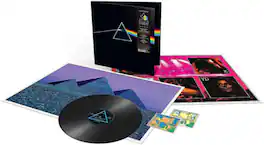
Limited 180gm vinyl LP pressing in gatefold jacket. The 50th anniversary edition of the original studio album remastered by James Guthrie comes in a gatefold jacket with posters and stickers. Album Tracks 1. Speak to Me 2. Breathe (In the Air) 3. On the Run 4. Time 5. The Great Gig in the Sky 1. Money 2. Us and Them 3. Any Colour You Like 4. Brain Damage 5. Eclipse
![My Hero Academia: Season 7 [Original Soundtrack] [Translucent Sea Blue 2 LP] [Only @ Best Buy] [LP] [VINYL]](https://pisces.bbystatic.com/image2/BestBuy_US/images/products/ad658ab5-584e-481a-b93a-c8998e033654.jpg;maxHeight=422;maxWidth=264?format=webp)
| Pros for Boston Symphony Orchestra - The Complete RCA Victor Recordings - William Steinberg & Boston Symphony - COMPACT DISCS [CD] | |||
|---|---|---|---|
| There were no pros for this product— | There were no pros for this product— | There were no pros for this product— | Playback Quality |
Specs
Be the first to ask a question.
We’ll try to get your question answered within 24 hours by a Best Buy customer or brand representative.