Cluster - Grosses Wasser - VINYL LP
Reviews coming soon
About this product
Cluster - Grosses Wasser [VINYL LP] date 07/07/2009
Specifications
- GenreRockDescriptionCluster - Grosses Wasser [VINYL LP] date 07/07/2009ArtistClusterTitleGrosses WasserFormatVINYLLabelBureau B
Reviews
This product doesn't have any reviews yet.
Compare similar products
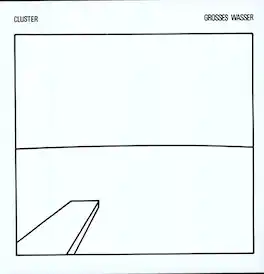
Cluster - Grosses Wasser [VINYL LP] date 07/07/2009
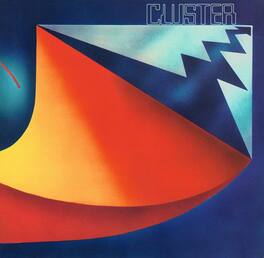
2016 re- of Bureau B's 2010 reissue. 140-gram LP. Cluster's self-titled debut was originally released by Philips in 1971; this edition is the first reissue to restore the track running order of the original Philips . Includes liner notes by electronic avant-garde pioneer Asmus Tietchens. In 1998, The Wire listed Cluster's self-titled debut as one of 100 Records That Set The World On Fire (When No One Was Listening). Very few albums from Germany can lay claim to this honor. Cluster is a monster; it contains a mere three untitled tracks and was quite an ordeal for untrained ears when it was released. Yet the album pointed the way forward like no other electronic opus. Cluster's previous incarnation was a trio called Kluster. A change in direction and musical differences moved Dieter Moebius and Hans-Joachim Roedelius to split from the group's third member, Conrad Schnitzler, in 1970. The following year, in addition to playing live, they recorded their first album in Ralf Arnie's Star Musik Studio in Hamburg. Here they first met Conny Plank, who would himself become a legend. They remained close friends until Plank's death in 1987. Early Cluster music was new. New in the sense that it did not continue any tradition, instead laying the foundations for a future tradition. The duo's utter renunciation of conventional harmony and rhythm, embrace of near total aural abstraction, and confident use of noise, rigorous live electronic improvisation, and a positive mindset were all factors in Cluster's innovative trailblazing of 1971. For want of a better category, Cluster was classified rather inappropriately and incorrectly as cosmic. Few recognized Cluster for what it was - a synthesis of pop music, stripped of embarrassing glamour, and so-called serious music without intellectual constraints. Moebius and Roedelius took the liberty of raiding both disciplines to perfect the
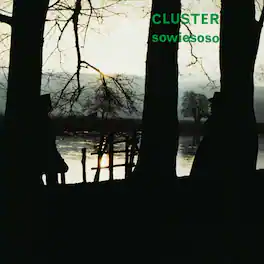
2016 re- of Bureau B's 2009 reissue. The fourth full-length album by legendary German electronic music duo Cluster, originally released on Sky Records in 1976. Sowiesoso follows on from their most highly-acclaimed album, Zuckerzeit (1974). Michael Rother's influence was clearly audible on the latter, Cluster already having recorded two albums with him under the name of Harmonia. 1976 saw the duo looking for new musical forms. More than any other Cluster album, Sowiesoso represents the utopian vision of Hans-Joachim Roedelius and Dieter Mobius, it's mellow transparency evoking the landscape of the Weser Uplands where the two musicians lived at the time. Sowiesoso is not the work of fanatic dreamers who have fled the metropolis, but the reward for their tenacious search for a new musical language. The LP's seven cuts were recorded in their own studio with modest equipment - a four-track tape machine, two Revox A77 stereo tape-decks and a simple 8-channel mixer. Cluster were thus completely independent, able to work where and when they wanted, at their own pace. With no guest musicians, sound engineers or producers to accommodate, Cluster thrived on their new-found autonomous freedom. Sowiesoso captures them at the peak of their creative development, with the limited range of recording equipment enhancing the clarity of their vision, allowing them to concentrate on the music without drifting into narcissistic muso territory. Minimalist, yet neither formulaic nor automated, the album is a rhythmic tapestry of otherworldly electronic and acoustic elements - relaxed, organic and gentle ambience. This could only be Cluster music; it's harmonies reaffirm the quality of song, in spite of eluding song structure as such.

Einstürzende Neubauten ?- Alles In Allem Vinyl LP - After more than 12 years, Einstürzende Neubauten's long-awaited new studio album Alles In Allem is finally released. The album marks the quintessence of the band's output, opening yet another unexpected door in 40 years of ongoing sound research bya very experimental group of musicians around Blixa Bargeld. This band, like nearly no other, has managed to create a musical cosmos. It has, in fact, built up it's own genre by uniquely combining edgy sound with sophisticated poetry. Appropriately, in the Year of the Rat - the symbol of ingenuity and versatility according to the Chinese zodiac - the band is not resting on the laurels of it's last four decades. Instead, it curiously continues to explore everything that the sound universe has to yield, with one eye on the future and with boundless playfulness. The unique sound and textual landscapes of the band, founded in 1980 in Berlin, reveal the timelessness that Blixa Bargeld, N. U. Unruh, Alexander Hacke, Jochen Arbeit and Rudolph Moser have continuously maintained. And yet, through experimental approaches to songwriting, instruments developed over four decades and collective input, the band sounds remarkably cutting edge within it's own time. In fact, through it's individual brand of music the Einstürzende Neubauten seem to always command each and every manifestation of the here and now - whether industrial in it's early years, the driving beats of the 1990s or it's more considered later work. The verse Wir hatten tausend Ideen / Und alle waren gut (We had a thousand ideas / And all of them were good) from album track Am Landwehrkanal could easily be perceived as the band's description of itself. The sum total is a special compilation Alles in Allem, Einstürzende Neubauten's first regular studio album in 12 years, presents an incomparable band that defies categorizat
Specs
Be the first to ask a question.
We’ll try to get your question answered within 24 hours by a Best Buy customer or brand representative.