Hughes / Cox - Weimar & Back - COMPACT DISCS [CD]
Reviews coming soon
About this product
There's the view that cabaret started off in the 19th century as Inchthe salon of petty criminals and prostitutesInch. In place of gilded drawing rooms were smoky dives and rather than offering a venue for artistic transcendence, it offered shaky boards on upturned crates or beer barrels. These boards, in German InchBretteInch were further parodied in the diminutive as InchBrettelInch - or Inchlittle boardsInch, offering a name to the songs performed on such makeshift stages. It soon became fashionable for urban bohemians to frequent such low-life dives bringing a certain gentrification in their wake. In Berlin, Paris, Vienna and Barcelona, the bawdy songs that would have been more typical of English sea-side music halls were replaced by social satire, often pulling heavy political punches. Yet if there's a single difficulty about Cabaret, it would be it's inability to transcend locality, time and place. Cabaret like operetta, is essentially local, and rarely even survives into the following week or year. It's pre-war material was the equivalent of the satirical television programs of today - enormously entertaining while being Inchto the minuteInch relevant, making references to issues or people everyone recognized. Less entertaining is returning to the same material a year or a decade later. Events, politicians and social mores have moved on. Yet some elements survived either because the music and text were timeless in themselves, or emerged decades - or indeed, a century later, as provocatively contemporary. Struggles for social justice such as InchMe TooInch or InchBlack Lives MatterInch are embryonically echoed in songs such as InchChuck all of the Men out of the ReichstagInch or InchDas Lila LiedInch. Even today, we return to music to poke fun at society while making serious political points as a viable tool of passive resistance. True geniuses such as Hollaende
Specifications
- GenreJazzDescriptionThere's the view that cabaret started off in the 19th century as Inchthe salon of petty criminals and prostitutesInch. In place of gilded drawing rooms were smoky dives and rather than offering a venue for artistic transcendence, it offered shaky boards on upturned crates or beer barrels. These boards, in German InchBretteInch were further parodied in the diminutive as InchBrettelInch - or Inchlittle boardsInch, offering a name to the songs performed on such makeshift stages. It soon became fashionable for urban bohemians to frequent such low-life dives bringing a certain gentrification in their wake. In Berlin, Paris, Vienna and Barcelona, the bawdy songs that would have been more typical of English sea-side music halls were replaced by social satire, often pulling heavy political punches. Yet if there's a single difficulty about Cabaret, it would be it's inability to transcend locality, time and place. Cabaret like operetta, is essentially local, and rarely even survives into the following week or year. It's pre-war material was the equivalent of the satirical television programs of today - enormously entertaining while being Inchto the minuteInch relevant, making references to issues or people everyone recognized. Less entertaining is returning to the same material a year or a decade later. Events, politicians and social mores have moved on. Yet some elements survived either because the music and text were timeless in themselves, or emerged decades - or indeed, a century later, as provocatively contemporary. Struggles for social justice such as InchMe TooInch or InchBlack Lives MatterInch are embryonically echoed in songs such as InchChuck all of the Men out of the ReichstagInch or InchDas Lila LiedInch. Even today, we return to music to poke fun at society while making serious political points as a viable tool of passive resistance. True geniuses such as HollaendeArtistHUGHES / COXTitleWeimar & BackFormatCDLabelNimbus Alliance
Reviews
This product doesn't have any reviews yet.
Compare similar products

There's the view that cabaret started off in the 19th century as Inchthe salon of petty criminals and prostitutesInch. In place of gilded drawing rooms were smoky dives and rather than offering a venue for artistic transcendence, it offered shaky boards on upturned crates or beer barrels. These boards, in German InchBretteInch were further parodied in the diminutive as InchBrettelInch - or Inchlittle boardsInch, offering a name to the songs performed on such makeshift stages. It soon became fashionable for urban bohemians to frequent such low-life dives bringing a certain gentrification in their wake. In Berlin, Paris, Vienna and Barcelona, the bawdy songs that would have been more typical of English sea-side music halls were replaced by social satire, often pulling heavy political punches. Yet if there's a single difficulty about Cabaret, it would be it's inability to transcend locality, time and place. Cabaret like operetta, is essentially local, and rarely even survives into the following week or year. It's pre-war material was the equivalent of the satirical television programs of today - enormously entertaining while being Inchto the minuteInch relevant, making references to issues or people everyone recognized. Less entertaining is returning to the same material a year or a decade later. Events, politicians and social mores have moved on. Yet some elements survived either because the music and text were timeless in themselves, or emerged decades - or indeed, a century later, as provocatively contemporary. Struggles for social justice such as InchMe TooInch or InchBlack Lives MatterInch are embryonically echoed in songs such as InchChuck all of the Men out of the ReichstagInch or InchDas Lila LiedInch. Even today, we return to music to poke fun at society while making serious political points as a viable tool of passive resistance. True geniuses such as Hollaende
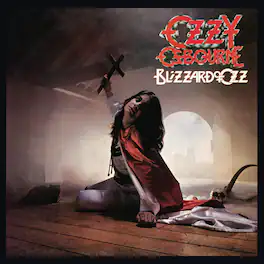
2011 marked the 30th anniversary of BLIZZARD OF OZZ (U.S. ) and DIARY OF a MADMAN. Both landmark albums took metal in a new direction in the early 1980s, inspiring new generations of rock bands and fans. This latest edition of this Hard Rock Masterpieces showcase Ozzy's musical collaborations with late guitar hero Randy Rhoads. Both BLIZZARD OF OZZ and DIARY OF a MADMAN have been restored and remastered from the original tapes for these definitive editions.

Kuhn / Lentz / Various - Immer Krisensitzung [COMPACT DISCS] date 04/02/2010

Deviant Resonances carries the concept of Inchcreative listeningInch into new dimensions. In addition to the unconventional ways in which the everyday listener is called on to interpret the music, composer David Rosenboom literally uses the action of InchlisteningInch as an instrument. The first track, Portable Gold and Philosophers' Stones (Deviant Resonances) (2015), is an epic piece lasting over 35 minutes. Rosenboom achieves a resonant sound by analyzing electrical signals coming from the brains of two imaginative performers. A third performer calibrates a computer system to the responses of what he calls Inchimaginative listening.Inch This system adapts to the brainwave activity of the first two performers and builds a symphony ranging from quiet beginnings to climaxing crescendos. The resulting sound is simultaneously relaxing and curious. The calming flow of resonance from the brainwaves creates the illusion that time is being slowed down. In this calm, however, one can't help but wonder at the revolutionary use of brain functions as music and the potentiality of the organ inside each of our heads. The ethereal droning with occasional flaring sparks and pops evokes a timeless, spaceless experience which listeners from anywhere in the world can explore. The album continues with it's experimental approach to the reverberation of space using electronics and computer algorithms in tandem with live instruments. Though only half the length of Portable Gold, compositions like The Right Measure of Opposites and Earth Encomium explore the same InchnothingnessInch of space but offer grounding in the physical world through instruments like live piano. The album concludes with The Experiment and Four Lines (String Quartet). They are the only tracks to use voice and strings, respectively. These compositions call on attentive listeners to experience a constant volley between
Specs
Be the first to ask a question.
We’ll try to get your question answered within 24 hours by a Best Buy customer or brand representative.