PopMarket - Hair: Etude Variations under Alderbaran - Multicolor
Reviews coming soon
About this product
Etude-variations Under Aldebaran is also a Concert Study, based on the poem by Australian poet James McAuley, but is very different from the collection of the 'Transcendental' 12. It's the only atonal piece in this album, and by far the most complicated in it's detail, and was written many years earlier. It consists of an introduction (wherein 8 fragmentary figures are laid out by a handful of notes), followed by 8 variations on each figure in turn (in 3 different tempi), concluding with a 'whispering' coda in the piano's high register.
Features
SPECIAL PRODUCTS
HAIR,GRAHAM Studio/Label/Brand: Nimbus Alliance
Classical Artists
Specifications
- BrandPopMarketModel Number9790708219217Product NameHair: Etude Variations under AlderbaranColorMulticolorTitleHair: Etude Variations under AlderbaranUPC9790708219217
Reviews
This product doesn't have any reviews yet.
Compare similar products
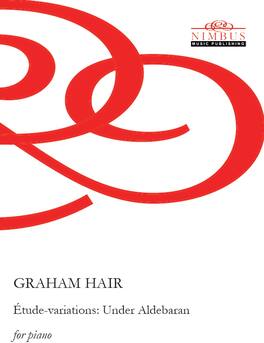
Etude-variations Under Aldebaran is also a Concert Study, based on the poem by Australian poet James McAuley, but is very different from the collection of the 'Transcendental' 12. It's the only atonal piece in this album, and by far the most complicated in it's detail, and was written many years earlier. It consists of an introduction (wherein 8 fragmentary figures are laid out by a handful of notes), followed by 8 variations on each figure in turn (in 3 different tempi), concluding with a 'whispering' coda in the piano's high register.
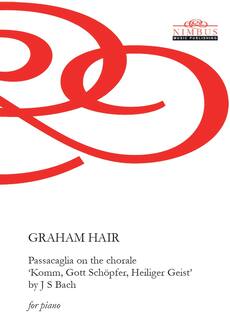
Passacaglia on the chorale 'Komm, Gott Schopfer, Heiliger Geist' by J S Bach is based on a chorale melody derived from the famous plainsong hymn Veni Creator Spiritus. This is the 'ground bass' on which this Passacaglia is built. However, like many Passacaglias in the Canonic Repertoire, the theme often strays into the upper voices of the texture, and because of the relative length of the theme, it has something of the sense of a set of variations as much as of a Passacaglia. The chorale melody modifies the plainsong melody somewhat by moving it's third cadence from the sub-dominant to the dominant, thus creating something of a sense of the confluence of authentic and plagal modes. In some variations I have modified the tune further, to create Phrygian and other modal structures, authentic and plagal. Finally, each of the 12 variations bases the melody on a different tone-centre (plus it's authentic or plagal structures) encompassing all 12 tone-centres (B-flat, E, F-sharp, E-flat, F, A, D, C-sharp, G, A-flat, B, C) over the course of the piece.
Words that leap to mind when I think of the sun include universal, energy, qi, ripples, vitality, life, spirituality, hope, renewal, radiance, and braids of light. InchPlaitsInch, InchbridgesInch, and InchlinksInch all function both as nouns and verbs. The dimensional meanings and images of the combination of the four words propelled the spiraling invention and creation of Sun Plaits - Bridges and Links. Across a 5-minute duration, the composition unfolds a labyrinth of musical interrelationships and connections that showcase the soloist in a joyous, virtuosic display of rhythmic agility, double-stops (playing 2 notes at once), counterpoint, energy, dynamic range, timbre, clarity, and majesty. Throughout the kaleidoscopic journey, the work passes through several lively and lyrical episodes, never losing it's sense of radiance, effervescence, and expressiveness. The abundance of double-stops symbolizes InchlinksInch while the sparkling, fast-moving lines, which reach in all directions, fly out across the piece like Inchbridges.Inch Musical materials are braided in dimensional ways like Inchsun plaits.Inch © Augusta Read Thomas
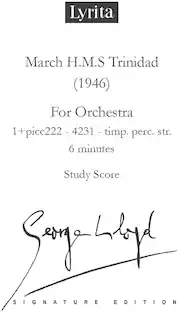
The HMS Trinidad March was composed for the ship on which George Lloyd served during the Second World War and became, in his words, Inchthe official ship's marchInch. When HMS Trinidad was commissioned on 14 October 1941, bandmaster Harold A Davis asked George to write the ship's official march. Unbeknown to Harold, a friend of the ship's captain, the composer Ralph Vaughan Williams, had also been invited to write a march. The captain agreed to listen to both men's marches and decide which was to be used. Vaughan Williams' march was not popular with the bandsmen and when both pieces were premiered in the ship's aircraft hangar, the captain announced that George's music would be adopted as the HMS Trinidad's official march. George's rousing march echoes the role of the Fantasia on British Sea Songs traditionally played at the Last Night of the Proms, with it's links to the Navy and it's catchy tunes and up tempo rhythms, which encourage audience participation.
Specs
Be the first to ask a question.
We’ll try to get your question answered within 24 hours by a Best Buy customer or brand representative.