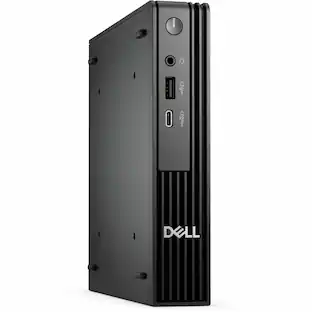
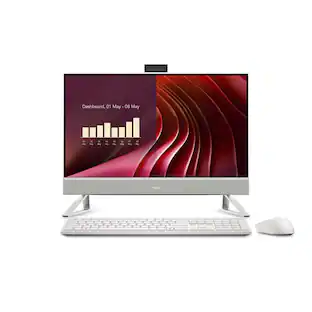
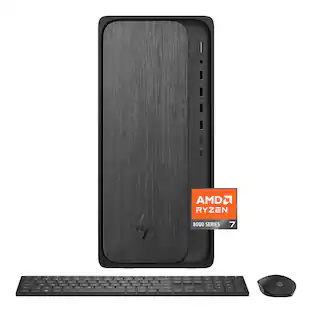
Dell - Desktop - AMD Ryzen 5 150 2025 - 16GB Memory - AMD Radeon 660M - 512GB Storage - Black

Key Accessories:
- Microsoft - 365 Personal (1 Person) (3-Month Subscription) - Activation Required - Windows, Mac OS, Apple iOS, Android [Digital]$29.99
![Microsoft - 365 Personal (1 Person) (3-Month Subscription) - Activation Required - Windows, Mac OS, Apple iOS, Android [Digital]](https://pisces.bbystatic.com/image2/BestBuy_US/images/products/1a3ca6db-e1d3-4e1f-a121-21728ec455e7.jpg;maxHeight=160;maxWidth=166)
More Buying Options from Best Buy
Related Item

Highlights
- Key Specs
- Processor Model: AMD Ryzen 100 Series (Your computer's processor is like its brain. Working in combination with system memory, the power of the processor determines the complexity of software you can run, how many programs you can have open at the same time, and how fast those programs will run. Most computers feature an AMD, Intel or Snapdragon processor.)
- Storage Type: SSD
- Total Storage Capacity: 512 gigabytes
- System Memory (RAM): 16 gigabytes (Random-access memory (RAM) is a computing device's short-term data storage, which allows active information to be accessed quickly. The size and type of RAM determines how efficiently the device can handle large amounts of information at one time. For example, gaming or video editing requires more RAM for optimal performance.)
- Graphics Type: Integrated (Dedicated graphics uses a separate graphics card for processing video images. Because it does not use memory from the system's RAM, there is no extra burden on the CPU and graphics are processed more efficiently. Integrated graphics shares system RAM to process video images.)
- Graphics: AMD Radeon 660M (Often referred to as a "graphics processing unit" (GPU), this device is responsible for displaying image content and decoding/encoding video content in programs and games.)
- General
- Brand: Dell
- Model Number: DDT1265-5981BLK-PUS
- Product Name: Desktop - AMD Ryzen 5 150 2025 - 16GB Memory - AMD Radeon 660M - 512GB Storage
- Color: Black
- Year of Release: 2026
- Processor
- Processor Brand: AMD
- Processor Model: AMD Ryzen 100 Series (Your computer's processor is like its brain. Working in combination with system memory, the power of the processor determines the complexity of software you can run, how many programs you can have open at the same time, and how fast those programs will run. Most computers feature an AMD, Intel or Snapdragon processor.)
- Processor Model Number: 150
- Processor Model Year of Release: 2025 (The year the processor model was initially available for sale or built into a computer.)
- CPU Base Clock Frequency: 3.3 gigahertz (Actual central processing unit (CPU) speed may vary by device configuration and design. The average rate at which the processor is able to execute tasks under normal operating conditions as asserted by the manufacturer.)
- CPU Boost Clock Frequency: 4.55 gigahertz (Actual central processing unit (CPU) speed may vary by device configuration and design. The maximum rate at which the processor is able to execute tasks, typically only used for a short period of time as needed. This rate may temporarily boost the processor's performance, but may result in overheating, shutdown, or damage to equipment if sustained.)
- Number of CPU Cores: 6-core (A core, or "brain" of a CPU, allows it to receive and execute instructions. Each core can work independently or together to perform parallel operations.)
- Number of CPU Threads: 12 (Generally, the more threads, the faster and more responsive the operating system.)
- CPU Cache Memory Level: L1, L2, L3
- L1 Cache: 0 megabytes (Cache memory, also called CPU memory, is random-access memory (RAM) that a computer microprocessor can access more quickly than it can access regular RAM. This memory is typically integrated directly with the CPU chip or placed on a separate chip that has a separate bus interconnect with the CPU.)
- L2 Cache: 3 megabytes (Cache memory, also called CPU memory, is random-access memory (RAM) that a computer microprocessor can access more quickly than it can access regular RAM. This memory is typically integrated directly with the CPU chip or placed on a separate chip that has a separate bus interconnect with the CPU.)
- L3 Cache: 16 megabytes (Cache memory, also called CPU memory, is random-access memory (RAM) that a computer microprocessor can access more quickly than it can access regular RAM. This memory is typically integrated directly with the CPU chip or placed on a separate chip that has a separate bus interconnect with the CPU.)
- Storage
- Storage Type: SSD
- Total Storage Capacity: 512 gigabytes
- Solid State Drive Capacity: 512 gigabytes (The amount of data that can be stored on the device's solid state drive (SSD). SSD is a flash-based storage with faster speeds than a hard disk drive (HDD).)
- Solid State Drive Interface: PCIe (Connects the solid state drive to the host system. PCI and SATA interfaces are the most common; PCI interfaces are typically faster, but SATA interfaces are compatible with a wider range of systems.)
- Memory
- System Memory (RAM): 16 gigabytes (Random-access memory (RAM) is a computing device's short-term data storage, which allows active information to be accessed quickly. The size and type of RAM determines how efficiently the device can handle large amounts of information at one time. For example, gaming or video editing requires more RAM for optimal performance.)
- Type of Memory (RAM): DDR5 (Each type of RAM delivers a different level of speed, bandwidth, energy efficiency and performance.)
- System Memory RAM Speed: 4800 megahertz (How fast the information-storing hardware operates. The faster the RAM, the faster memory can be transferred to other system components. Ultimately, faster RAM improves operational efficiency.)
- Number Of Memory Slots: 2
- Number of Memory Sticks Included: 1
- System Memory RAM Expandable To: 64 gigabytes (Adding more random-access memory (RAM) to a computer speeds up performance and improves efficiency. Upgrades to memory are limited by the number of expansion slots for additional RAM and existing RAM installed on the device.)
- Graphics
- Graphics Type: Integrated (Dedicated graphics uses a separate graphics card for processing video images. Because it does not use memory from the system's RAM, there is no extra burden on the CPU and graphics are processed more efficiently. Integrated graphics shares system RAM to process video images.)
- GPU Brand: AMD Radeon
- Graphics: AMD Radeon 660M (Often referred to as a "graphics processing unit" (GPU), this device is responsible for displaying image content and decoding/encoding video content in programs and games.)
- Compatibility
- Operating System: Windows 11 Home (The operating system manages all software and hardware, including files, memory and connected devices. Most importantly, it lets you interact with your device and your programs in a visual way; otherwise, you'd be typing computer code to get anything done.)
- Operating System Architecture: 64-bit (An operating system (OS) manages computer hardware, software resources, and programs in conjunction with the system's processor. 64-bit operating systems can handle more data at once than 32-bit systems, resulting in faster speeds, more effiency, and overall improved performance.)
- Connectivity
- Display Connector(s): 1 x DisplayPort 1.4, 1 x HDMI 2.1 (The number and type of connectors used to connect to an external display.)
- Number of HDMI Outputs (Total): 1
- Number of DisplayPort Outputs (Total): 1
- USB Ports: 4 x USB-A 2.0, 3 x USB-A 3.2, 1 x USB-C 3.2 (The number and type of USB ports the product has.)
- Number of USB Ports (Total): 8
- Wireless Connectivity: Wi-Fi, Bluetooth (The manner in which a device sends data to another device over a short distance without the use of wires or cables.)
- Wireless Standard: AX (The wireless networking protocol used by the device. Each iteration of the protocol is based on the 802.11 standard developed by the Institute of Electrical and Electronics Engineers (IEEE) Standards Association. Denoted by letters following 802.11 (802.11a, 802.11ac, etc.), each version, published in alphabetical order, encompasses all previous versions.)
- Wireless Networking Standard: Wi-Fi 6 (The wireless networking standard used by the device. Each iteration of the standard developed by the Wi-Fi Alliance corresponds to an existing IEEE 802.11 protocol; for example, standard 802.11ac (or AC) is termed Wi-Fi 5. Refers specifically to the standard the device is designed to use, but ultimately determines product interoperability and backward compatibility including previous versions.)
- Ethernet Card: 10/100/1000 (Also known as an Ethernet adapter, this card plugs into a computer's motherboard and enables it to access an Ethernet network. Ethernet data transmission speeds are measured in Mbps (megabits per second) and Gbps (gigabits per second). For example, a 10/100 Ethernet port transmits 10 and 100 Mbps, while a 10/100/1000 Ethernet port transmits 10 and 100 Mbps and has a maximum speed of 1000 Mbps (1 Gbps).)
- Number Of Ethernet Ports: 1
- Power
- Power Supply Maximum Wattage: 180 watts
- Features
- Audio Technology: Realtek ALC3204 Audio Controller
- Windows AI: Copilot
- Size: Standard
- Dimensions
- Product Height: 12.77 inches (The out of box height of the item. Height is measured as the vertical distance from the bottom of the item to the top as it would be primarily used or placed.)
- Product Width: 6.06 inches (The out of box width of the item. Width is measured as the horizontal distance from one side of the item to the other as it would be primarily used or placed.)
- Product Depth: 11.54 inches (The out of box depth of the item. Depth is measured as the distance from the front of the item to the back as it would be primarily used or placed.)
- Product Weight: 8.84 pounds (The out of box weight of the item.)
- Certifications Listings & Approvals
- ENERGY STAR Certified: true (Devices carrying the ENERGY STAR service mark, such as computer products and peripherals, kitchen appliances, and other products, generally use 20% to 30% less energy than required by federal standards.)
- EPEAT Qualified: true (The Electronic Product Environmental Assessment Tool (EPEAT) was designed to provide an environmental assessment tool for purchasers. In order to qualify for EPEAT, a product must meet all 23 required criteria.)
- EPEAT Level: Silver (The Electronic Product Environmental Assessment Tool (EPEAT) was designed to provide an environmental assessment tool for purchasers. In order to qualify for EPEAT, a product must meet all 23 required criteria. Products are rated Bronze, Silver or Gold based on how many of 28 optional criteria they meet (below 50%, 50%, 75%).)
- Included
- Included Software: McAfee LiveSafe 30-day trial
- Optical Drive Type: None (An optical disk drive (ODD) uses a laser light to read data from or write data to an optical disc. These discs include CDs, DVDs, and Blu-ray Discs. This allows you to play music or watch movies using prerecorded discs.)
- Keyboard Included: true
- Mouse Included: true
- Wireless Keyboard: false
- Wireless Mouse: false
- Warranty
- Warranty - Parts: 1 Year Basic Onsite Service after remote diagnosis with Hardware-Only Support-Retail
- Warranty - Labor: 1 Year Basic Onsite Service after remote diagnosis with Hardware-Only Support-Retail
- Other
- UPC: 884116695981
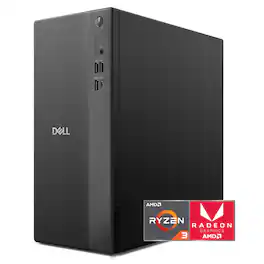
Dell Tower Desktop. Powerful, space-saving performance. Boost everyday productivity with a powerful, space-saving desktop.
- Fast performance: Launch apps instantly, switch tasks without slowdown, and work efficiently with the responsive power of AMD Ryzen 100 Series Processors.
- Everyday visuals: Experience vibrant graphics for casual play, smooth video calls, and creative tasks powered by integrated AMD Radeon graphics.
- Multi‑monitor support: Connect up to four FHD displays via DisplayPort 1.4 with Daisy Chaining* or two 4K displays with HDMI 2.1 and DP 1.4.
- Easy upgrades: Access internal components quickly using the tool‑less entry and removable side panel, making upgrades convenient and hassle‑free.
- Style meets sustainability: A sleek tower crafted with recycled**.
Whats Included
- Dell Tower DT1265
- Dell Wired Keyboard - KB216 - US English - Black
- Dell Wired Mouse - MS116 - Black
- US Power Cord
- Documents
Disclaimers
- *DisplayPort can support up to 1 UHD or 3 FHD monitors if displays are equipped with Daisy chain functionality.
- **materials and refined edges brings modern elegance to any home or office
- **** Based on internal analysis, January 2025. Up to 5% closed loop plastic and up to 38% post-consumer recycled plastic. 50% recycled steel in select chassis parts.
Q: does this computer have a disc burner?
A: No, this desktop does not include internal Optical Disc Drive. We recommend using an external DVD Drive.
A: No, the display cables are usually shipped with the Monitors.
Compare similar products
Dell Tower Desktop. Powerful, space-saving performance. Boost everyday productivity with a powerful, space-saving desktop.
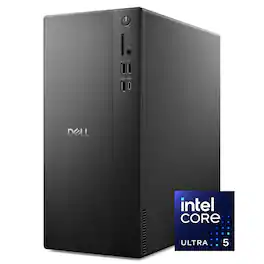
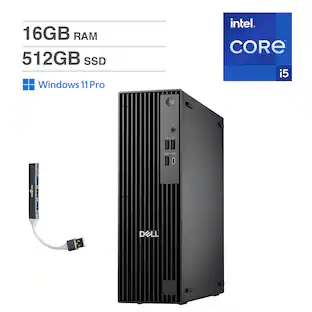
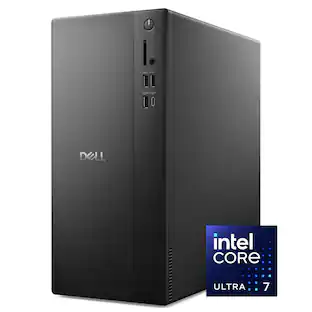
Boost productivity with a high-performance desktop in a stylish, space-saving design. Featuring built-in AI, powered by Intel Core Ultra desktop processors (Series 2).

The ASUS V500 Desktop delivers powerful, reliable, and expandable performance in a compact design. Ideal for professionals and home users, it ensures seamless multitasking, productivity, and entertainment. AI-powered two-way noise cancellation enhances virtual meetings with crystal-clear audio. Advanced cooling keeps operation quiet and efficient, while versatile connectivity allows easy integration with peripherals. Built-in security features and upgradeability make it a future-proof solution for those seeking performance, convenience, and reliability. Whether for work or entertainment, the V500 offers a space-saving design with the power to handle diverse computing needs.
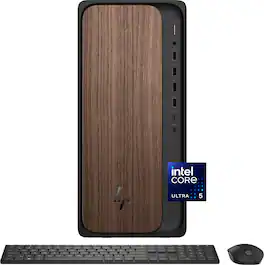
Intelligent performance and trusted tech for your most demanding tasks. This desktop combines trusted technology with intelligent performance in a sophisticated design that complements any space. Equipped with the latest ports, powerful Intel Core processor with built-in AI technology, plenty of storage, and reliable Wi-Fi technology for fast and stable connections, it effortlessly handles critical daily tasks and powers up your everyday work and play.
| Pros for Dell - Desktop - AMD Ryzen 5 150 2025 - 16GB Memory - AMD Radeon 660M - 512GB Storage - Black | |||
|---|---|---|---|
| Noise Level, Graphics Performance, Connectivity, Port Selection, RAM | Overall Performance, Speed, Size, Storage Capacity, Noise Level | Overall Performance, Speed, Noise Level, Size, Storage Capacity | There were no pros for this product— |
| Cons for Dell - Desktop - AMD Ryzen 5 150 2025 - 16GB Memory - AMD Radeon 660M - 512GB Storage - Black | |||
| Storage Capacity | Connectivity | There were no cons for this product— | There were no cons for this product— |
Specs

- ASUS - V500SV Slim Desktop - Intel Core i5-13420H - 8GB Memory - 512GB SSD - Dark Gray$429.99The price was $499.99
- ASUS - V500SV Slim Desktop - Intel Core i3-1315U - 8GB Memory - 512GB SSD - Dark Gray$379.99The price was $449.99

Reviews
Rating 4.4 out of 5 stars with 24 reviews
Top Mentions
- Graphics Performance (10)
- Noise Level (8)
- Connectivity (7)
- Port Selection (4)
- RAM (4)
- Storage Capacity (5)
Customer Images
The vast majority of our reviews come from verified purchases. Reviews from customers may include My Best Buy members, employees, and Tech Insider Network members (as tagged). Select reviewers may receive discounted products, promotional considerations or entries into drawings for honest, helpful reviews.
Explore tech essentials Sponsored
 $599.99The price was $769.99
 $1,169.99The price was $1,439.99
 $1,349.99The price was $2,049.99