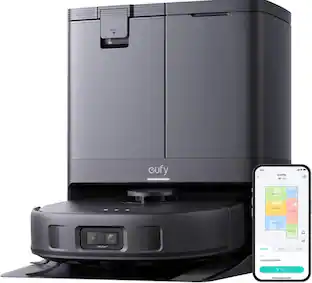
eufy - E20 3-in-1 Wi-Fi Connected Robot Vacuum with Auto Emptying, Powerful Max 30,000 pa and Precise Obstacle Avoidance - Black
- Key Specs
- Cleaning Path Width: 5.12 inches
- Vacuum Type: Robotic
- Bin Capacity: 0.1 gallons
- Product Weight: 24.8 pounds (The out of box weight of the item.)
- Bagless: false
- Compatible Floor Type: All floors
- Corded/Cordless: Cordless
- Amperage: 1.4 amperes (Strength of electrical current.)
- Wattage: 350 watts (Measurement of electrical power.)
- Wet And Dry Usage: false
- Filter Type: 6-stage
- Multi Surface: true
- Washable Filter: true
- Auto Docking and Recharging: true
- Room-by-Room Navigation: true
- Maximum Runtime: 180 minutes
- General
- Brand: eufy
- Model Number: T2070JF1
- Product Name: E20 3-in-1 Wi-Fi Connected Robot Vacuum with Auto Emptying, Powerful Max 30,000 pa and Precise Obstacle Avoidance
- Color: Black
- Dimensions
- Product Height: 15.22 inches (The out of box height of the item. Height is measured as the vertical distance from the bottom of the item to the top as it would be primarily used or placed.)
- Product Length: 13.78 inches (The out of box length of the item. Length is measured as the longest dimension of the item.)
- Product Width: 13.78 inches (The out of box width of the item. Width is measured as the horizontal distance from one side of the item to the other as it would be primarily used or placed.)
- Features
- Connectivity Technology: Wi-Fi (The manner in which a device sends data to another device over a short distance.)
- Cliff Sensor: true
- Bagless: false
- Amperage: 1.4 amperes (Strength of electrical current.)
- Wattage: 350 watts (Measurement of electrical power.)
- Wet And Dry Usage: false
- Filter Type: 6-stage
- Voltage: 110 volts (Amount of power needed to support an electrical current.)
- Protective Bumpers: true
- Remote Control: true
- Self-Emptying: true (During docking these products can automatically empty the contents of the collection bin into a separate base collection bin which is capable of holding dirt and debris from more than one cleaning cycle.)
- Performance
- Adjustable Suction: true
- Edge Cleaning: true
- Noise Level: 60 decibels
- Programmable Cleaning Intervals: true
- Power
- Self-Charging: true
- Rechargeable Battery: true
- Charger Included: true
- Battery Charge Time: 150 minutes (Battery charge time will vary depending on the product configuration, product model, applications loaded on the product, power management setting of the product and the product features used by the customer. Charging time will likely decrease with time and usage of the battery.)
- Battery Chemistry: Lithium-ion
- Battery Capacity: 4200 milliampere hours (The amount of energy stored in the battery.)
- Compatibility
- App Compatible: true (The product can be connected to a program or software application on a mobile device, which then receives collected data from the product.)
- Warranty
- Warranty - Parts: 1 year
- Warranty - Labor: 1 year
- Other
- UPC: 194644035563
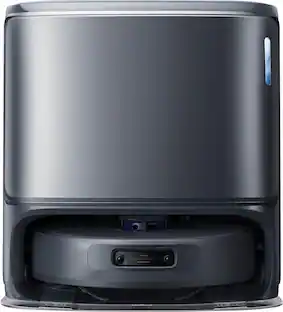
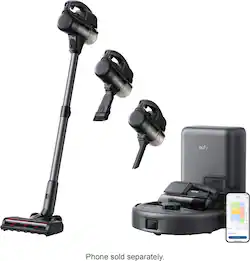
The eufy Robot Vacuum 3-in-1 E20 is the world’s first detachable multi-function robot vacuum. It seamlessly transforms from a powerful robot vacuum to a versatile stick vacuum or a portable handheld vacuum, making it the ultimate cleaning solution for your home — from floors to stairs and everything in between. Equipped with high-performance filters, a powerful 30,000 Pa suction for handheld and stick modes, an auto-empty station, faster charging, and millimeter-level obstacle avoidance, the E20 is designed to serve you and your family anytime, with unmatched convenience and efficiency.
- Innovative FlexiONE 3-in-1 Multi-Function Design: Experience ultimate cleaning versatility with the FlexiONE 3-in-1 combo design. Seamlessly switch between handheld, stick, and robot vacuum modes, giving you complete control for every cleaning scenario—all with a single device.
- 30,000 Pa Max Suction Power: Tackle dirt, dust, and debris with unparalleled suction power. Enjoy up to 30,000 Pa for handheld cleaning and 8,000 Pa in robot vacuum mode, ensuring deep, thorough cleaning on all surfaces—from carpets to hard floors.
- AeroTurbo️ Five-Stage Filtration: Breathe cleaner air with the AeroTurbo️ five-stage filtration system. Using five advanced cyclone structures, it captures 99.97% of particles as small as 0.3 microns, ensuring a fresher, healthier home environment.
- Millimeter-Level Obstacle Avoidance: Effortlessly avoid obstacles with the cutting-edge Triple-Line Laser Obstacle Avoidance system. Featuring: Top LiDAR System for Precision Navigation. Dual Laser Sensors for real-time obstacle detection. 129° Ultra-Wide Front Scanning for smarter edge cleaning. It smoothly navigates around obstacles over 15mm, such as shoes, toys, and even moving pets—there are no more frustrating snags or interruptions.
- 40% Faster Flash Charging: Equipped with a flagship-level battery management system and an aviation-grade TI chip, this vacuum delivers faster, safer, and smarter charging. Fully charge in 2.5 hours (40% faster than other vacuums) and clean up to 1,500 sq ft on a single charge!
- Pro-Detangle Comb: The Pro-Detangle Comb automatically rotates in reverse to keep your vacuum brush clean and tangle-free. Enjoy cleaning without the frustration.
- Versatile Auto-Emptying: A 3L bag lasts up to 75 days, so you wait longer without emptying. All three modes—handheld, stick, and robot vacuum—empty automatically, giving you time to relax.
Whats Included
- E20 3-in-1 Wi-Fi Connected Robot Vacuum with Auto Emptying, Powerful Max 30,000 pa and Precise Obstacle Avoidance
Q: Is this eufy vacuum suitable for both carpets and hard floors?
A: Yes, the E20 vacuum cleaner is designed for multi-surface cleaning, including both carpets and hard floors.
Q: Can I control the vacuum through an app?
A: Yes, you can control your cleaning preferences with the eufy app.
Q: How does the eufy E20 vacuum handle obstacles?
A: This vacuum uses a Triple-Line Laser Obstacle Avoidance system to avoid obstacles.
Q: How long does the battery last on a single charge?
A: This vacuum can clean up to 1,500 sq ft on a single charge.
Q: What type of filtration system does this vacuum use?
A: This vacuum uses the AeroTurbo™️ five-stage filtration system.
Q: What is the maximum suction power of this eufy vacuum in handheld mode?
A: The eufy E20 vacuum cleaner boasts a powerful suction of up to 30,000 Pa when used in handheld mode.
Q: Does this eufy vacuum cleaner have a self-emptying feature?
A: Yes, the E20 comes with a self-emptying feature that can last up to 75 days.
A: The height of the Eufy RoboVac (such as the S1 and S1 Pro models) is approximately 9.60 cm (or 3.78 inches). This means the robot can clean under furniture with a clearance of at least 10.2 cm (4.01 inches) to avoid getting stuck. If the furniture clearance is slightly higher than the RoboVac's height, there is a small chance of it getting stuck. You can ensure optimal performance by raising the furniture clearance to 11 cm (4.33 inches) or more if possible, or using features like the no-go zones in the robot's app to prevent it from entering tight spaces.
People also viewed
 $379.99The price was $799.99
 $299.99The price was $359.99
 $399.99The price was $799.99
 $479.99The price was $799.99
Today's top picks
 $199.99The price was $496.99
- $399.99The price was $799.99