Main Content

Questions & Answers

$229.99
Save $107.96
The comparable value is $337.95
Page Showing 21-40 of 100 questions
  • QuestionDoes it have night vision?

    Asked by Alex.

    • Answer No, the StarSense Explorer LT 114AZ does not have electronic night vision built in, but its primary mirror collects enough faint light to reveal countless galaxies, nebulae and star clusters from a dark sky site away from city light pollution.

      Answered by Telescope

  • QuestionWhat Brand and Type of eye pieces are included?

    Asked by Peanut.

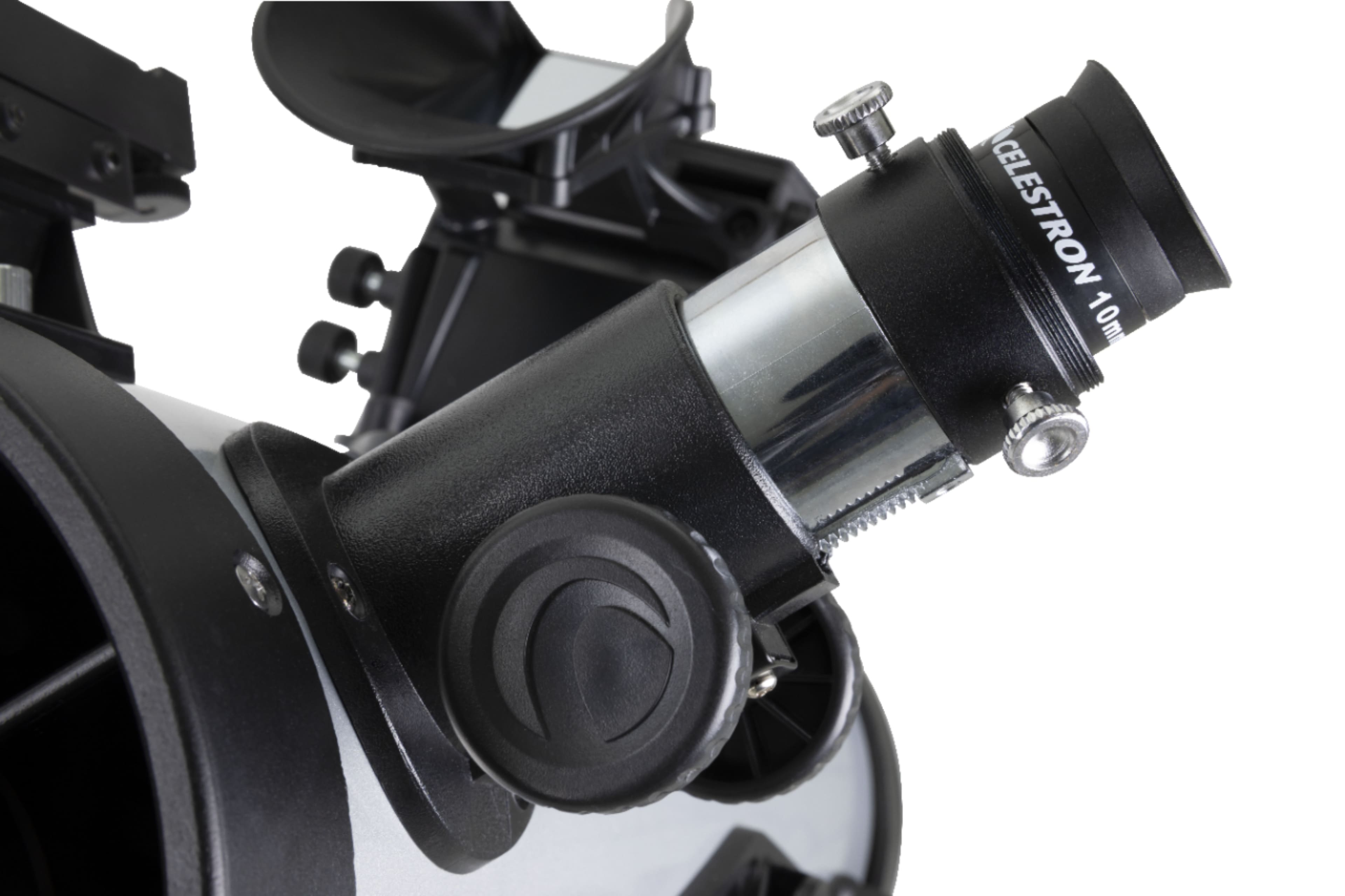
    • Answer The 10mm and 25mm eyepieces supplied with the StarSense Explorer DX 130AZ telescope are standard Kellner eyepieces with no particular branding.

      Answered by Telescope

  • Questionwhat type of filter is used to observe the Sun?

    Asked by Anonymous.

    • Answer You will need a Solar Safe, ISO compliant white light solar filter. Unfortunately, Celestron does not offer a solar filter for the 130mm Newtonian Reflector optical tube. The filter must be purchased from a solar filter manufacturer.

      Answered by Telescope

  • QuestionDoes this come with the Barlow 2x lens that doubles the magnification? I didn't see it listed and didn't assume it did, but in one of the reviews someone mentioned that it came with it.

    Asked by Anonymous.

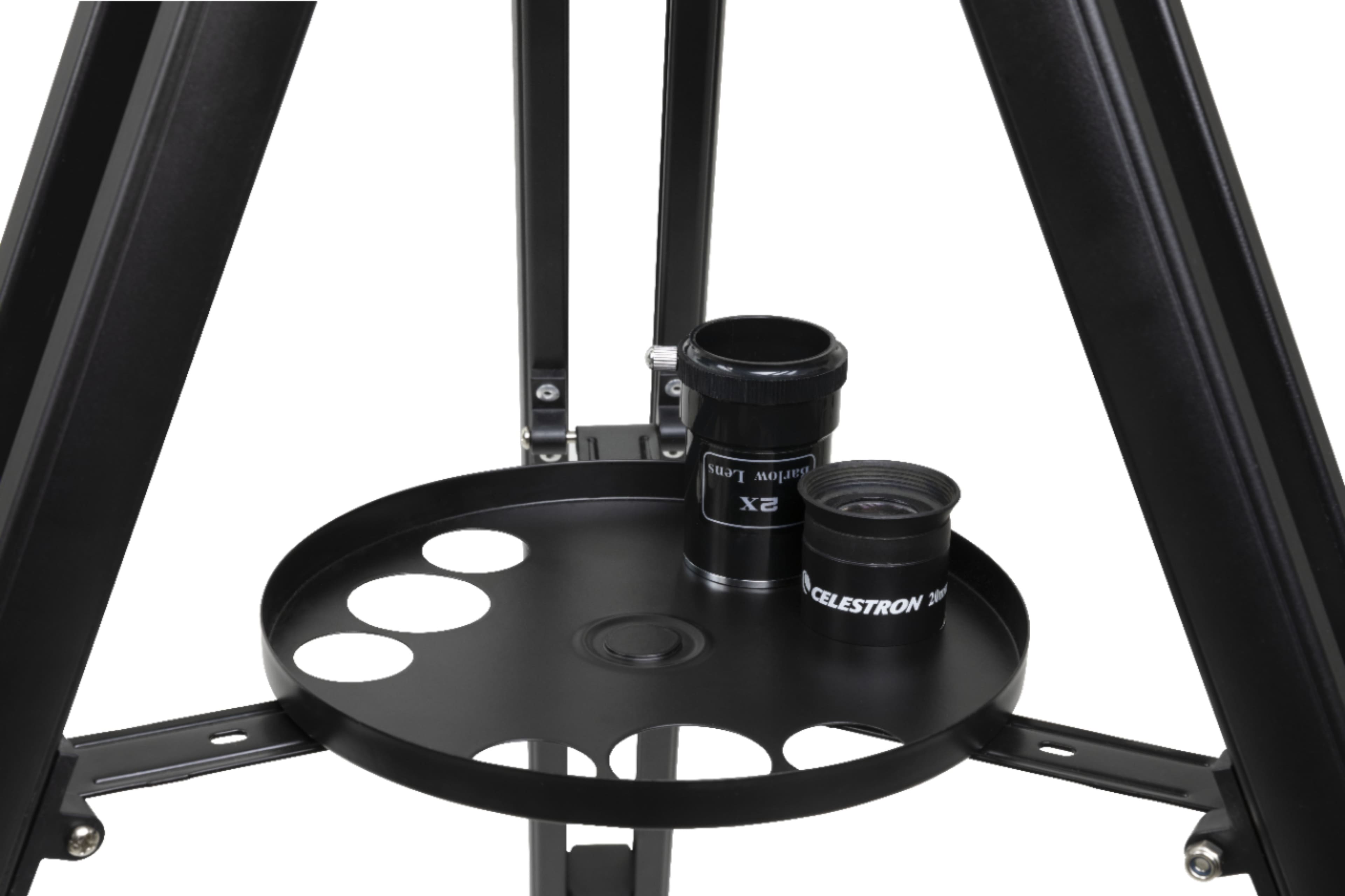
    • Answer A 2x Barlow lens does not come with the StarSense Explorer DX 130AZ telescope. It will be a separate purchase.

      Answered by Telescope

  • QuestionWhat are you able to see at night in the sky, is it able to see mars, lots of constellations?

    Asked by Buckey.

    • Answer We bought this telescope just over a month ago as a little bit of an impulse buy. We are far from being astronomy enthusiasts but, noting how clear the night sky had been around then, and the publicity surrounding a comet that was visible at the time, we thought it would be fun at a reasonable price point. Jupiter and Saturn were bright at the time and we were able to pick them out on the first night we had the telescope after (easily) setting it up during the daylight hours as the instructions advise. We were able to see Jupiter well and even four of its' moons. With Saturn we were able to see the rings which was cool. However, they do appear very small in the viewfinder, even at max magnification. Saturn's rings were tiny but visible, and Jupiter's moons appeared as tiny pinpricks of light aligned with the planet. It was clear what we were looking at, and pretty interesting, but was far from the color illustrations of the planets you see in textbooks and on the internet. Someone said it was possible to see the 'spot' on Jupiter's surface - we were certainly not able to do that. The only time we got a 'textbook' view of anything was looking at the moon's surface which was really clear and fantastically detailed. I'm hoping this doesn't sound negative because overall we have had a very positive experience with this and with the ease of use in particular. Moving forward we are likely to be occasional - and happy - users of this telescope.

      Answered by BBCustomer

  • QuestionHow much is the phone mount (IPhone 10). And can it be ordered with the telescope?

    Asked by Alan.

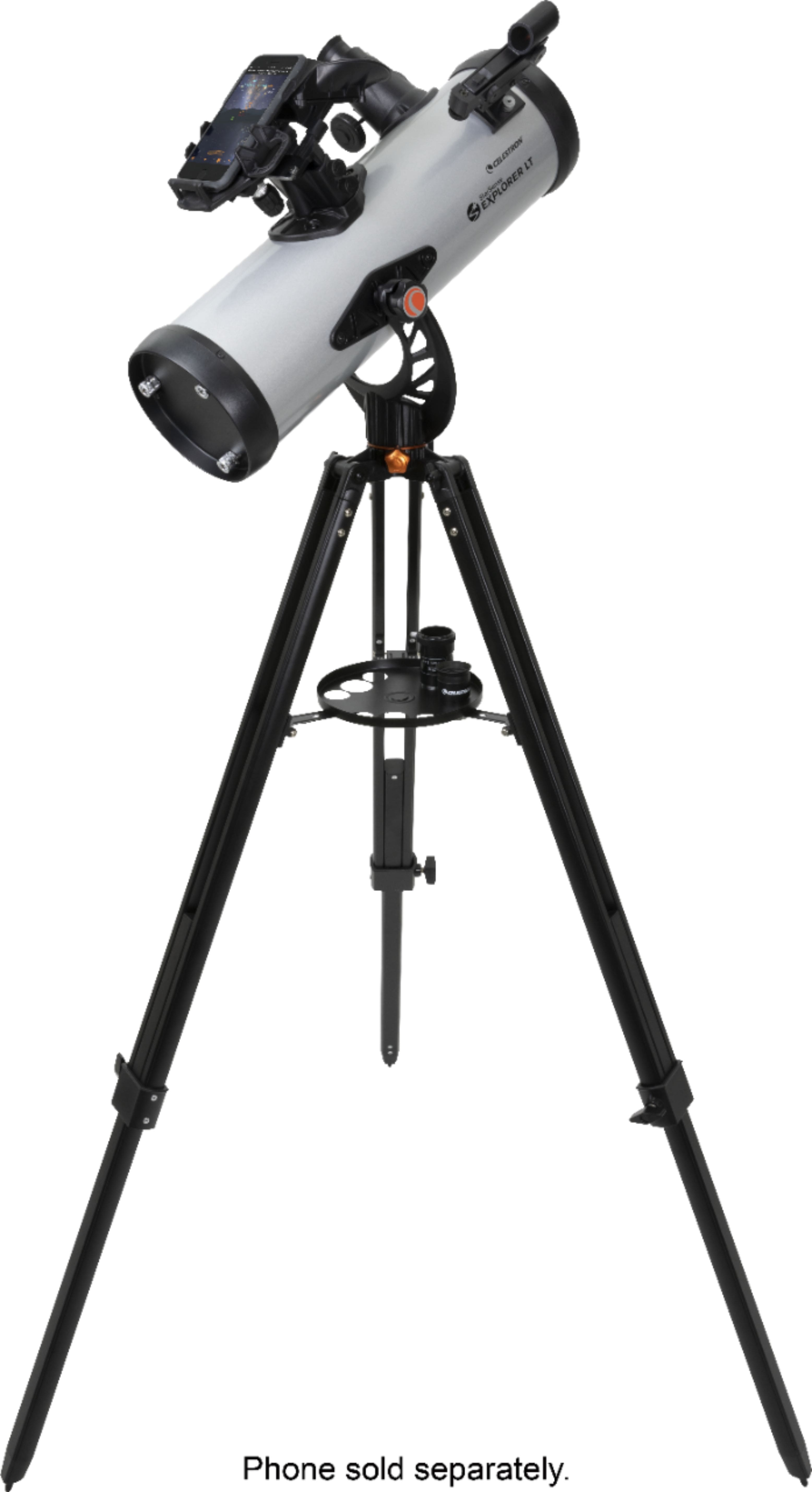
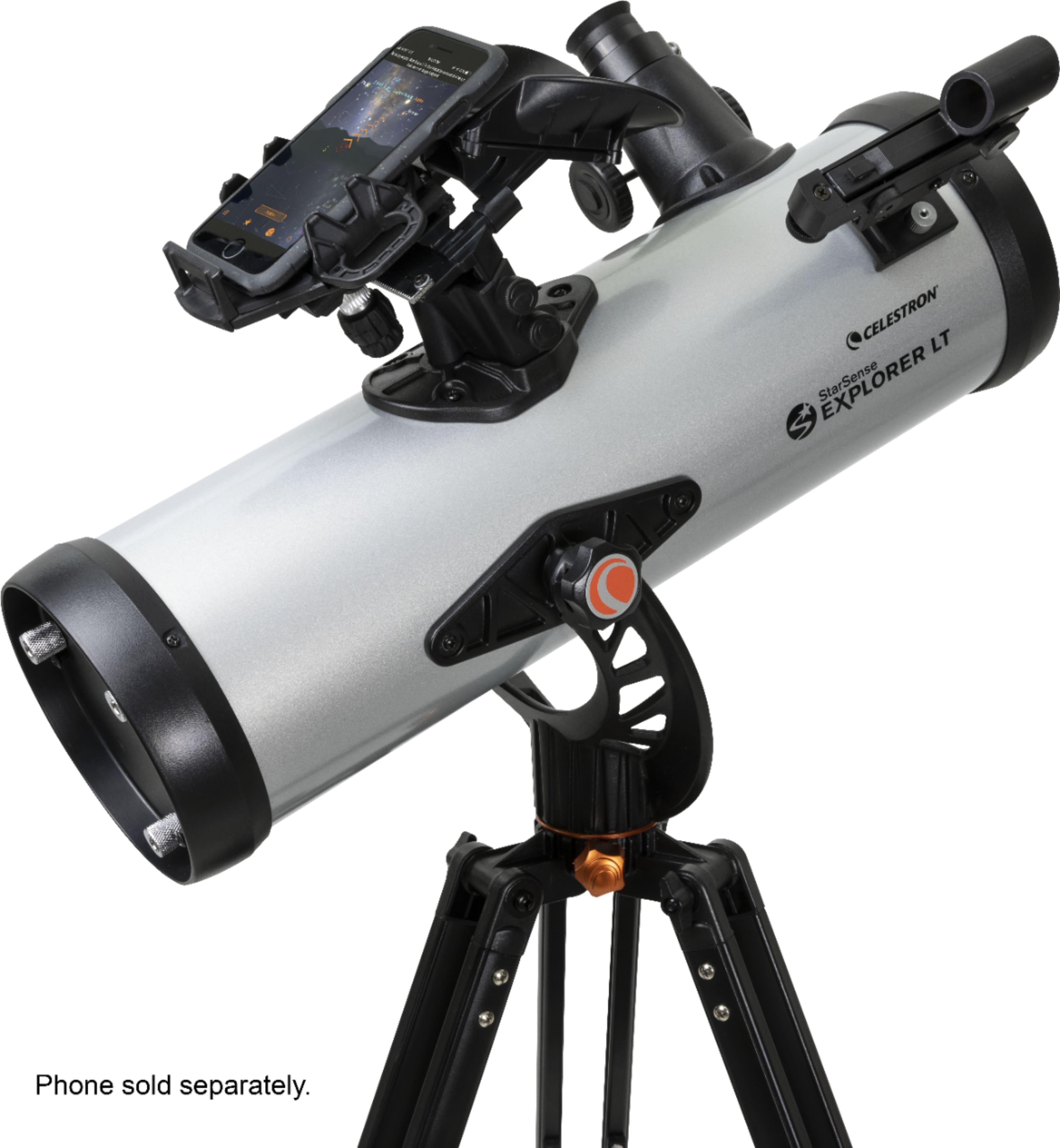
    • Answer Celestron's NexYZ 3-Axis Universal Smartphone Adapter #81055 is listed on Celestron's website at $65.95. https://www.celestron.com/products/nexyz-3-axis-universal-smartphone-adapter It will have to be ordered separately.

      Answered by Telescope

  • QuestionCan you see the andromeda Galaxy using this telescope?

    Asked by RaulT.

    • Answer Yes, the StarSense Explorer DX 130AZ telescope's 5" primary mirror gathers enough light, so you can observe galaxies and nebulae. The best views will be seen from a dark sky site away from city light pollution. The Andromeda Galaxy M31 and galaxies M81 and M82 are all easily visible in dark skies with this telescope.

      Answered by Telescope

  • QuestionAny guidance on what lens I can purchase to see planets and stars more closely other than standard included 25mm, 10mm. What is maximum allowed with this telescope.

    Asked by Trav2021.

    • Answer The StarSense Explorer DX 130AZ telescope's highest useful magnification is 307x. However under most normal seeing conditions, such extreme magnification will be too much for the telescope resulting in blurry views. We recommend to add a 2x Barlow Lens to double the magnifications of the included 25mm and 10mm eyepieces when steady seeing conditions (less turbulent atmosphere) allows.

      Answered by Telescope

  • QuestionHi, Is the image inverted if you look at land objects, like boats on the ocean? If it is inverted, is there a way to get it flipped? Thanks.

    Asked by Inverted.

    • Answer The view through a StarSense Explorer 130mm Newtonian Reflector telescope is upside-down. It is the nature of the optics itself and is generally not recommended for terrestrial viewing. You can help to minimize this effect, by standing at the front and off to the side of the telescope. While facing towards the rear of the telescope, look through the eyepiece, and the objects will appear right-side-again.

      Answered by Telescope

  • QuestionHow tall is the telescope?

    Asked by BlueCherokee.

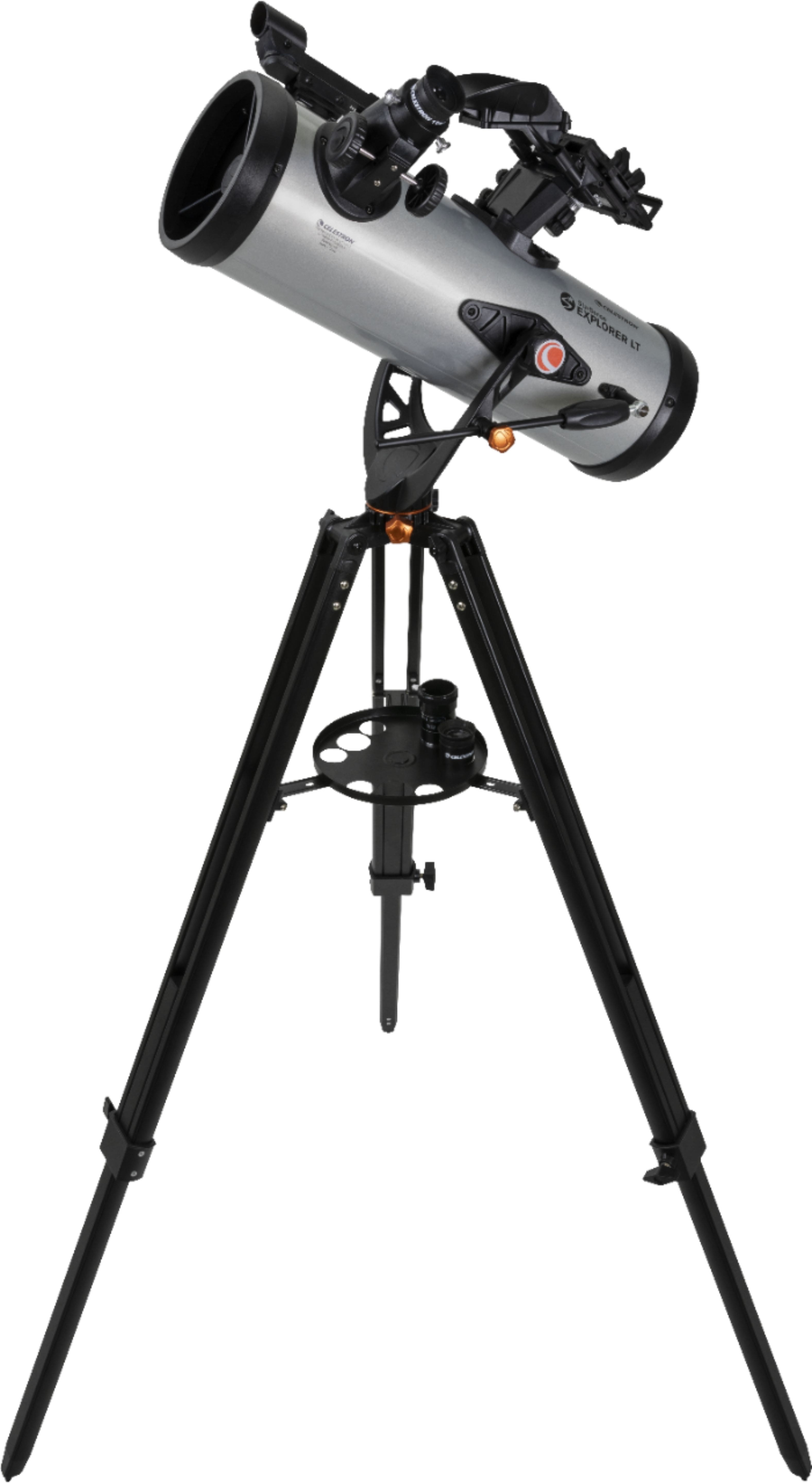
    • Answer The maximum height adjustment (includes mount and tripod) is 52".

      Answered by Telescope

  • Questioncan i hook a 35 mm camera to this scope ?

    Asked by Anonymous.

    • Answer Yes, a 35mm DSLR camera can be attached to the StarSense Explorer DX 130AZ telescope. A Celestron Universal Barlow and T-Adapter and a camera specific T-Ring for Canon or Nikon, for example, will be needed.

      Answered by Telescope

  • QuestionI live in central Florida, will I be able to see night launches from Cape Canaveral?

    Asked by RayRiggs.

    • Answer It is possible, but due to the speed as the rocket accelerates, you will most likely lose seeing the rocket in the telescope's field of view. Viewing the launch using binoculars or your naked eyes would be a better choice.

      Answered by Telescope

  • QuestionIs this telescope compatible with a Canon EOS Rebel T7 DSLR video camera?

    Asked by KarlaM.

    • Answer The Rebel T7 camera can be adapted to the DC130AZ using the appropriate T-ring for the camera and the Celestron 1 1/4-inch Barlow T-adapter as seen here: https://www.celestron.com/products/t-ring-for-canon-eos-ef-mount-camera and https://www.celestron.com/products/universal-barlow-and-t-adapter-125in However, the camera will create an offset imbalance on a telescope this small and counterweights will be needed to balance the telescope with the camera attached. Celestron does not sell counterweights for the DX130AZ.

      Answered by Telescope

  • QuestionIs cellular or WiFi access required for using the smartphone app?

    Asked by DataRequirements.

    • Answer The Starsense Explorer phone app is completely self-contained and does not need a cell or wifi connection to operate. The StarSense Explorer app itself is large and will take a while to download, so if available, a wifi connection to download the app from the Apple App Store or Google Play, is recommended. Once installed on your phone and activated, the Starsense Explorer app is stand-alone and does not need a wifi or cell connection.

      Answered by Telescope

  • QuestionCan I see things that are super far out such as other galaxies? you know what i mean not like in perfect detail but just to see the general image.

    Asked by Deren.

    • Answer Absolutely! The StarSense Explorer DX 130AZ telescope gathers enough light to reveal faint objects such as galaxies and nebulae. The best views will be seen from a dark sky site far from city light pollution. The Andromeda Galaxy will reveal its core, as well as its two faint companion galaxies. The Orion Nebula will appear as a gaseous cosmic flower in space.

      Answered by Telescope

  • QuestionCan you take a picture of your image

    Asked by Jiji.

    • Answer You can hold up a second smartphone and place the camera lens up to the eyepiece to take photos of the moon, bright planets, and terrestrial objects.

      Answered by Telescope

  • QuestionWhere is this telescope made? USA?

    Asked by BuyAmericanProducts.

    • Answer The StarSense Explorer LT 114AZ telescope is manufactured in China.

      Answered by Telescope

  • QuestionIs this product appropriate for a 13 year old?

    Asked by Toni.

    • Answer I think this is a decent beginners telescope. Fairly easy to maneuver around. If your child is a typical 13 year old, they should have no problem.

      Answered by RobG

  • QuestionDoes anyone know how I would go about using my Sony A6600 with this? Or if I’d have to go with a higher end model? I have a telescope adapter for my A6600.

    Asked by JakeR.

    • Answer You will need the #93640 Universal Barlow and T-Adapter and a Sony E-mount T-ring adapter for your A6600.

      Answered by Telescope

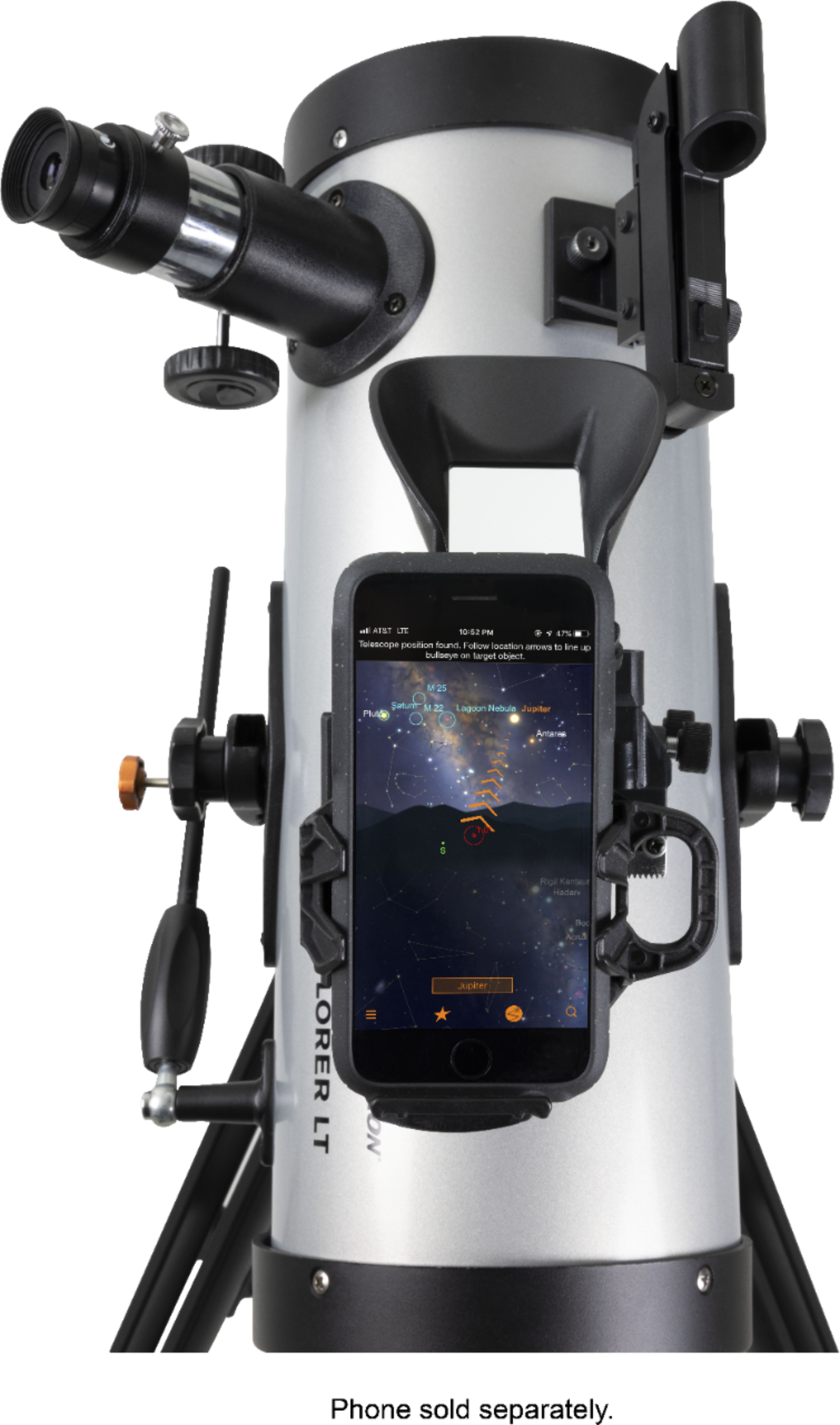
  • QuestionWhy is it when I align the phone with the telescope is it that everything is upside down on the phone

    Asked by Kris.

    • Answer Please make sure you are using the Starsense Explorer app and not just the camera phone only. The native camera phone will show a reversed mirror image as reflected by the angle mirror in the Starsense phone cradle. Start the Starsense Explorer phone app and follow the on screen prompts to align the telescope. If the image is still upside down, it is likely an issue with the phone's camera setting. The Starsense Explorer app has no settings to invert the image. If the image remains inverted when using the Starsense Explorer app, and the native camera settings are correct, please contact Celestron technical support at https://www.celestron.com/pages/technical-support

      Answered by Telescope