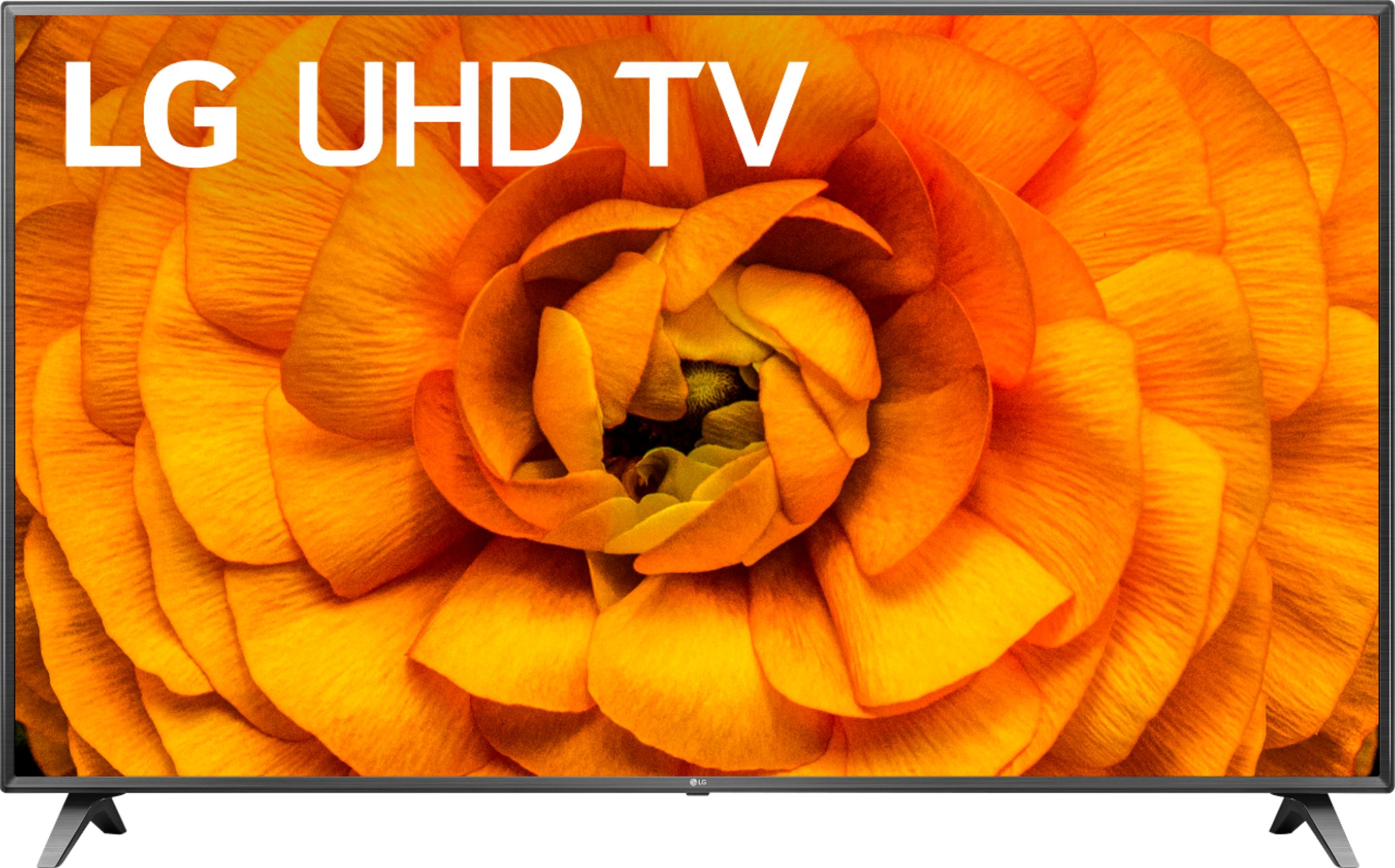
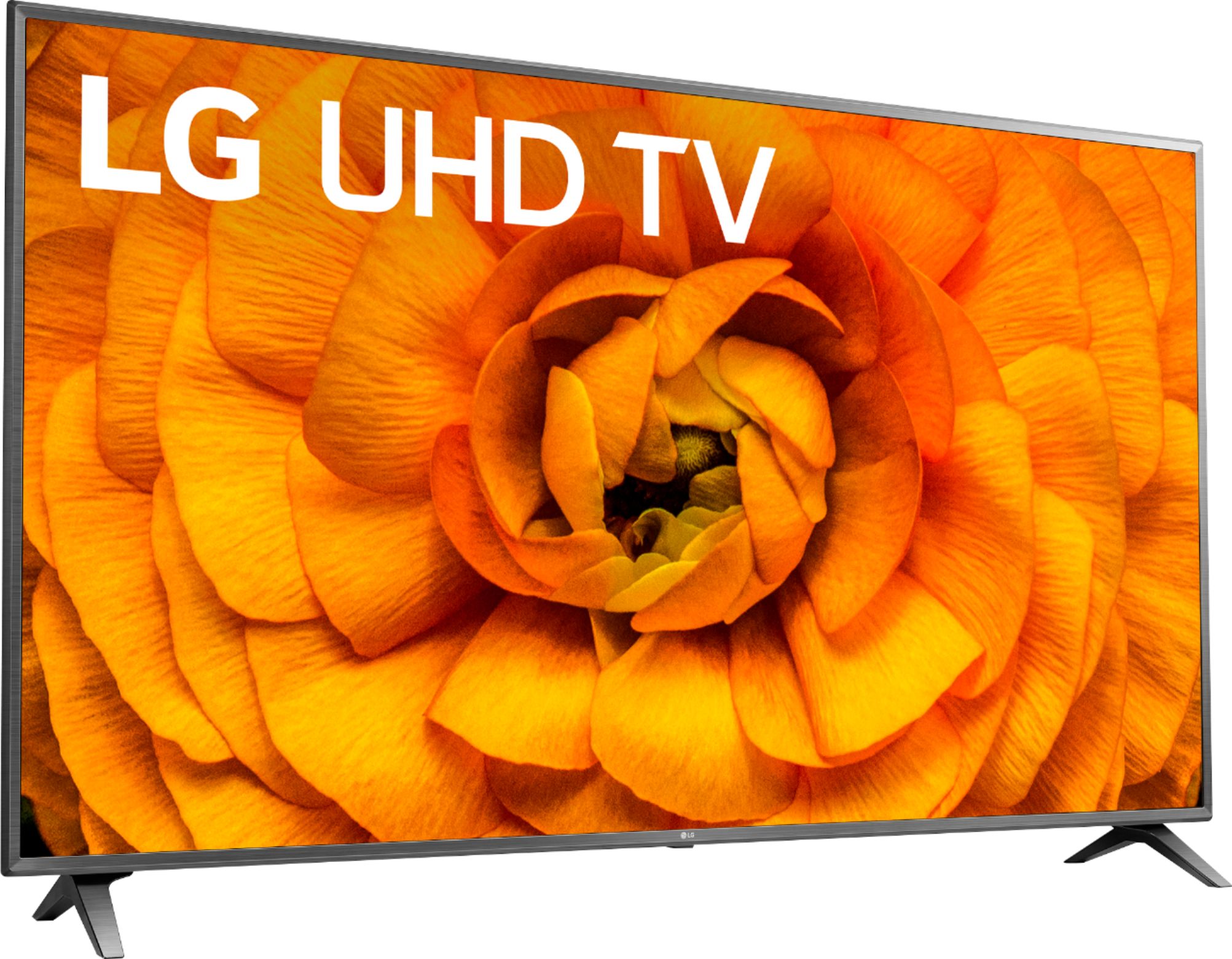
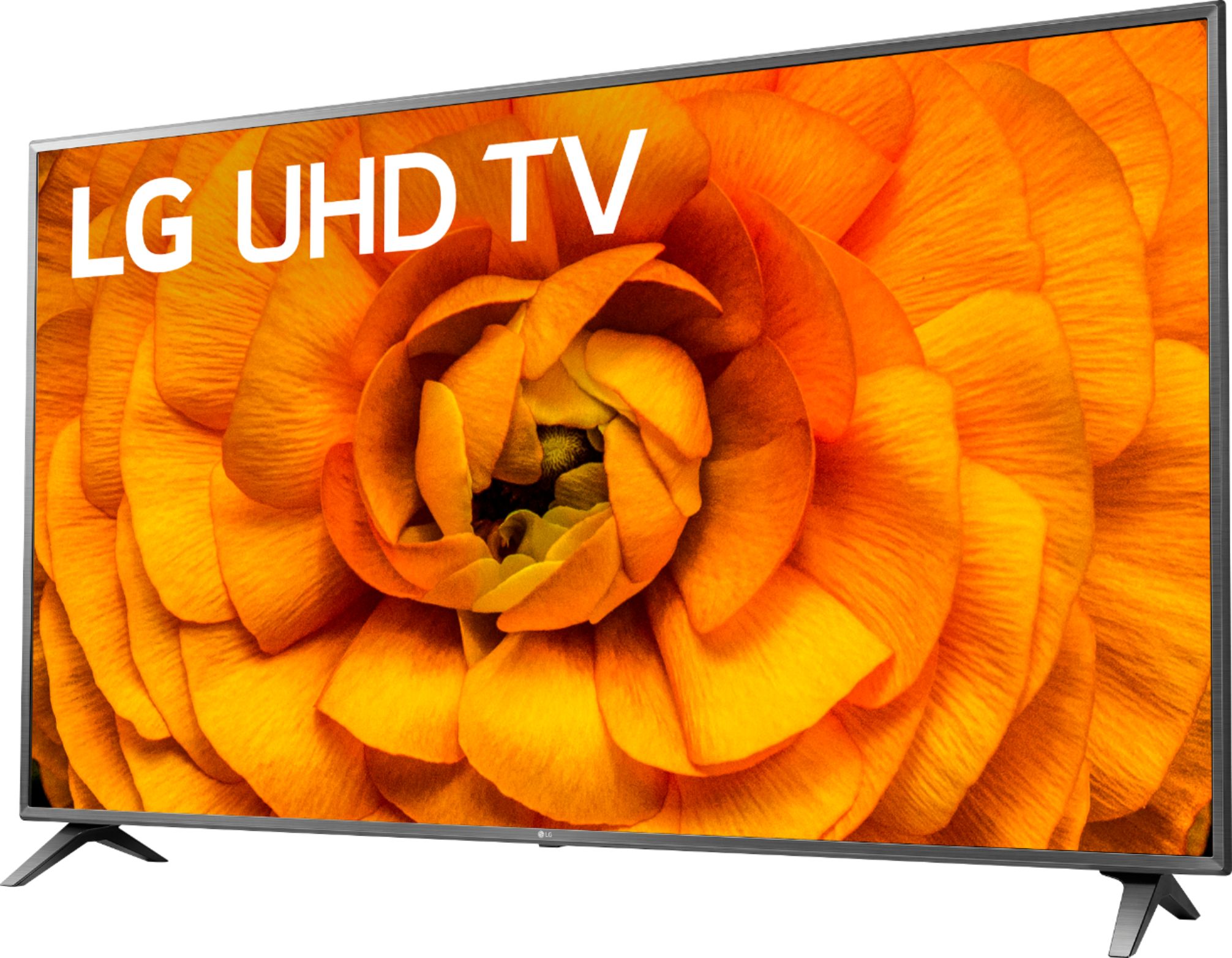
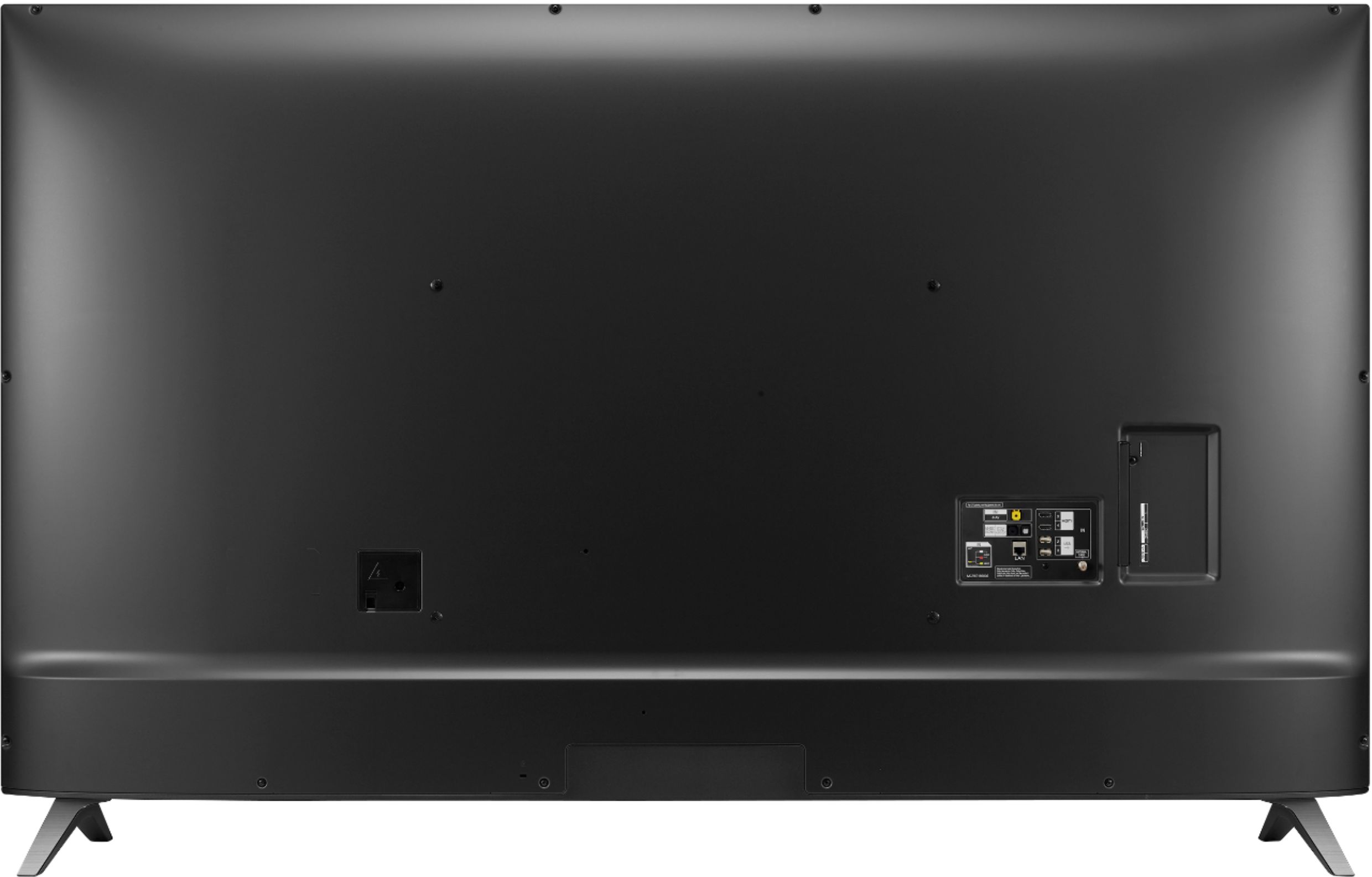
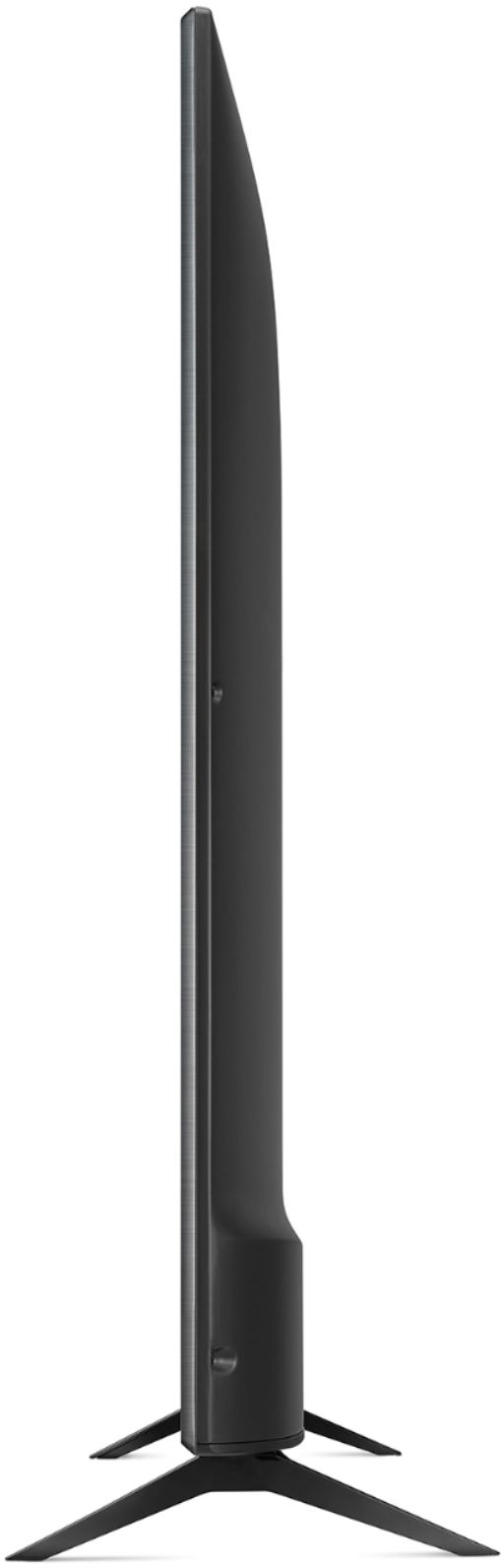
A:AnswerThe TV dimensions with the stand are 66.7"W x 41.3"H x 13.6"D and the TV dimensions without the stand are 66.7"W x 38.5"H x 3.5"D. The stand width is 60.4". ^Daphane https://www.lg.com/us/tvs/lg-75un8570puc-uhd-4k-tv
A:AnswerApp licenses vary by country so the app services will vary and some apps on this LG UHD 85 Series 75 inch Class 4K Smart UHD TV with AI ThinQ® (74.5'' Diag), Model # 75UN8570PUC may not have the same content or be available in other countries (i.e. Africa). This TV is also has a power rating of 120 VAC, 50/60Hz so it will not work on 220~ 240 Volts and the built-in tuners in the TV (i.e. ATSC, NTCS and QAM tuners) are not compatible with the television broadcast standards used in Africa...^IFV
A:AnswerYou can visit https://www.rtings.com/tv/reviews/lg/un8500 to see their test results for the SDR and HDR Peak Brightness for the LG UHD 85 Series 75 inch Class 4K Smart UHD TV with AI ThinQ® (74.5'' Diag), Model # 75UN8570PUC...^IFV
A:AnswerHBO Max is currently not available on the LG UHD 85 Series 75 inch Class 4K Smart UHD TV with AI ThinQ® (74.5'' Diag), Model # 75UN8570PUC or on our webOS Platform. However, we are continually working to add the latest streaming applications, such as HBO, but cannot provide a concrete timeline right now. In the meantime, our webOS platform offers over 600 apps including streaming content and games - including over 180 free streaming channels via the LG Channels app. Also, you can access much of the HBO content through the Amazon Prime, YouTube TV or Apple TV+ apps that are available on our platform. For a complete listing of available apps, please visit: https://us.lgappstv.com/main/tvapp ...^IFV UPDATE: HBO Max is now available in the LG Content Store and is accessible to TVs with a webOS4.0/4.5/5.0/6.0. ^Daphane
A:AnswerYou can configure the Digital Sound Out settings in the LG UHD 85 Series 75 inch Class 4K Smart UHD TV with AI ThinQ® (74.5'' Diag), Model # 75UN8570PUC transmit audio through the Optical Digital Audio Output or through the HDMI eARC port on the TV. The main difference between 7.1 and 7.2 surround systems is that the latter has an additional sub that should give more oomph to the sound. But you should not be fooled. A true 7.2 systems should have two separate channels for the subs, so that the two subs may not be outputting the same signal. Some 7.1 systems may seem like 7.2 systems because they have two subs. But the truth is, the two subs get the same signal from a single channel via a Y splitter. This is not true 7.2, although it might seem so at first glance. A 7.2 speaker system is the same as a 7.1 setup - except it has two subwoofers. The main drawback for 7.2 systems, and even 7.1 systems, is that there is very little support for them in modern media. These systems are not that commonplace and supporting them does not give much return to media makers. Currently, most DVD systems only support 5.1 systems while others can extrapolate up to 7.1. You only get 7.1 sound on Blu-ray hardware, and the content needs to be meant for 7.1 systems. The biggest issue with 7.1 surround sound is that not many movies are mixed with a 7.1 soundtrack (although there are a few). 7.2 systems are even worse off since virtually no media does 7.2. Using it with modern systems, mean that you would still get 7.1 sound since there is no other resort other than replicating the same sound in both subs; pretty much just like using a Y splitter on a single sub channel...^IFV
A:AnswerThe Xfinity Stream Beta app is a compatible app that can be downloaded and installed on the LG UHD 85 Series 75 inch Class 4K Smart UHD TV with AI ThinQ® (74.5'' Diag), Model # 75UN8570PUC from the LG Content Store (App Store). The LG Content Store feature can be launched from the TV's home dashboard...^IFV
A:AnswerBurn-in and image retention are possible on virtually any display. It is rare for an average TV consumer to create an environment that could result in burn-in. Most cases of burn-in in televisions is a result of static images or on-screen elements displaying on the screen uninterrupted for many hours or days at a time – with brightness typically at peak levels. So, it is possible to create image retention in almost any display if one really tries hard enough. And even if image retention does occur from extreme usage, it can usually be mitigated within a short period of time by turning the display off for a while, and watching a few hours of varying content (such as your standard TV watching and channel-surfing). ^Daphane
A:AnswerVudu is one of a few preinstalled Premium Content Providers apps on the LG UHD 85 Series 75 inch Class 4K Smart UHD TV with AI ThinQ® (74.5'' Diag), Model # 75UN8570PUC...^IFV
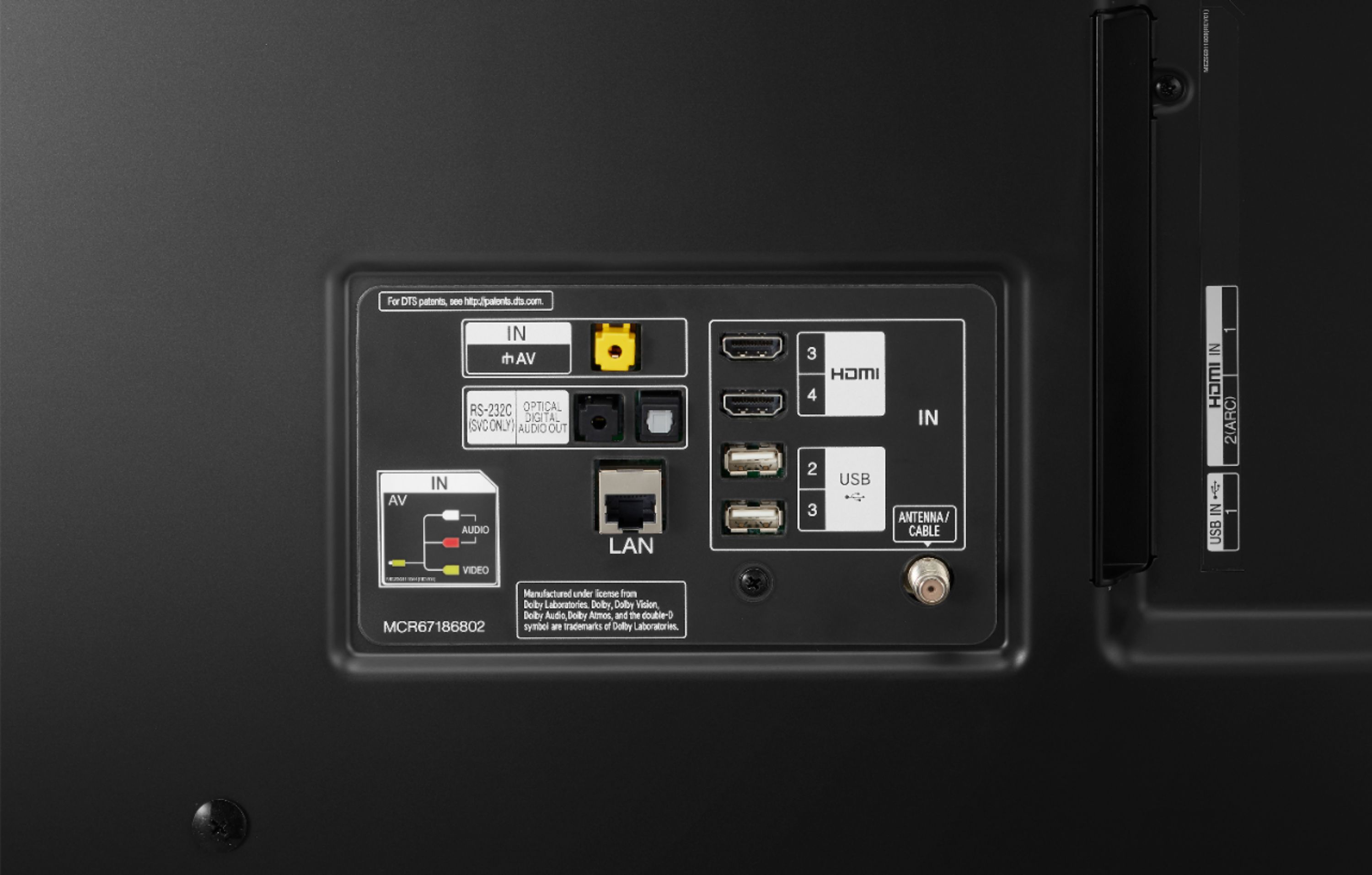
A:AnswerThe LG UHD 85 Series 75 inch Class 4K Smart UHD TV with AI ThinQ® (74.5'' Diag), Model # 75UN8570PUC features 2 x HDMI 2.1ports and 2 x HDMI 2.0 ports. You can connect an Apple TV to any of the HDMI ports on the TV...^IFV
A:AnswerThe LG UHD 85 Series 75 inch Class 4K Smart UHD TV with AI ThinQ® (74.5'' Diag), Model # 75UN8570PUC has a power requirement of 120 VAC, 50/60Hz. It is not a dual voltage TV (i.e. 110 ~ 240V)...^IFV
A:AnswerThe LG NanoCell 85 Series, NanoCell 90 Series, and NanoCell 99 Series TVs are the higher-tiered TVs and are much more advanced TVs than the LG UHD 85 Series 75 inch Class 4K Smart UHD TV with AI ThinQ® (74.5'' Diag), Model # 75UN8570PUC which doesn't have local dimming. The NanoCell 85 Series has local dimming and the NanoCell 90 Series, and NanoCell 99 Series have Full Array Local Dimming an Full Array Local Dimming Pro respectively. The NanoCell 85 Series, and NanoCell 90 Series use the more sophisticated and advanced LG α7 Gen 3 Processor 4K with AI Picture & AI Sound and the NanoCell 99 Series uses the even more advanced LG α9 Gen 3 Processor 4K with AI Picture & AI Sound...^IFV