A:AnswerSonos Era 100 (with Bluetooth):
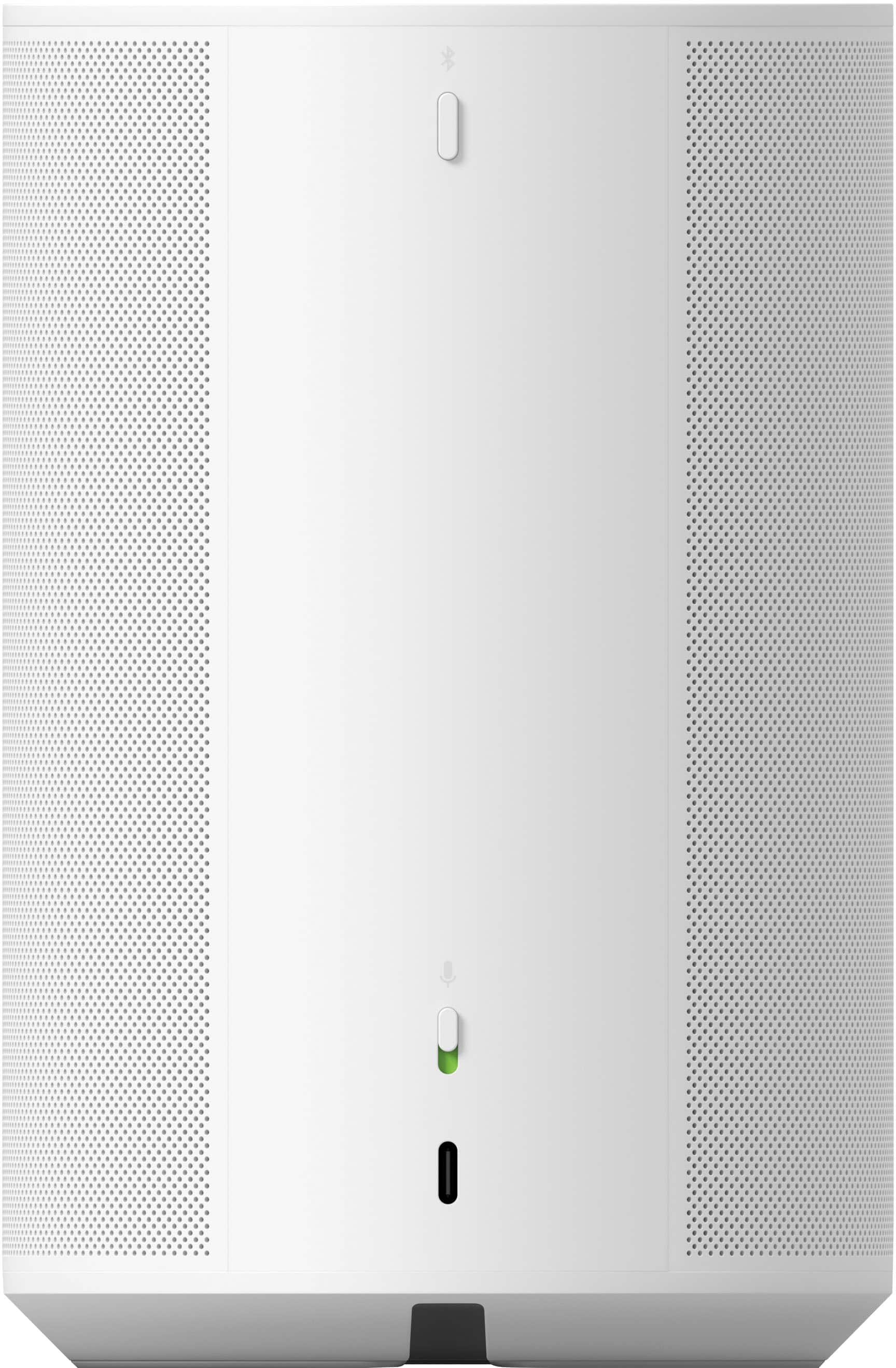
The Era 100 supports Bluetooth connectivity, so you can pair it directly with your laptop. This makes it a good option for streaming music as well as participating in Zoom meetings without needing to use WiFi or the Sonos app. However, keep in mind that Sonos speakers do not have built-in microphones for Zoom calls, so you would still need to use your laptop's mic or a separate microphone/headset for audio input.
A:AnswerYes, the Sonos Era 100 speaker can be grouped with Sonos Gen 1 or Gen 2 speakers. Sonos devices are designed to work seamlessly together, regardless of their generation, as long as they are all connected to the same Sonos system via the Sonos app. This means you can group the Era 100 with your older Sonos speakers to play synchronized music across multiple rooms. Just ensure that all your devices are running the latest software version for the best experience.
A:AnswerSonos Era 100: Works well for extending audio to another room but does not integrate with the Playbar for a true surround sound experience.
Sonos One: A good alternative with voice control and high-quality sound.
Sonos Roam: Portable and can be grouped with your Playbar.
Sonos Five: Offers powerful sound and can be used to extend your audio experience.
A:AnswerYes, the Sonos Era 100 speakers should work well for your needs in a college dorm room. Here's how they can fit into your setup:
Music Playback: The Era 100 speakers are designed to deliver high-quality audio, making them a good choice for listening to music.
Gaming: For gaming, the Era 100 speakers will provide a clear and immersive sound experience, enhancing your gaming experience.
Connecting to a Monitor: While the Sonos Era 100 speakers do not have direct audio input ports (like aux or optical), they can be connected to a monitor using the Sonos line-in adapter. This adapter connects to your monitor via an auxiliary output known as a 3.5mm connection.
Make sure your monitor has the necessary audio output options to connect with the Sonos Era 100s. Good Luck!
A:AnswerYou Play 1s will work with the new v2 Sonos app just fine. I have 6 of them working fine in the app now. And yes, after that you can group them into a room and have them play together. You can't have a Play 1 and an Era 100 stereo paired together though.
A:AnswerYes, the Era 100 would be great for ambient music in the background of a home. You can pick your favorite streaming station via the app and let them play. We do that often at my house when we have parties or around the holidays.
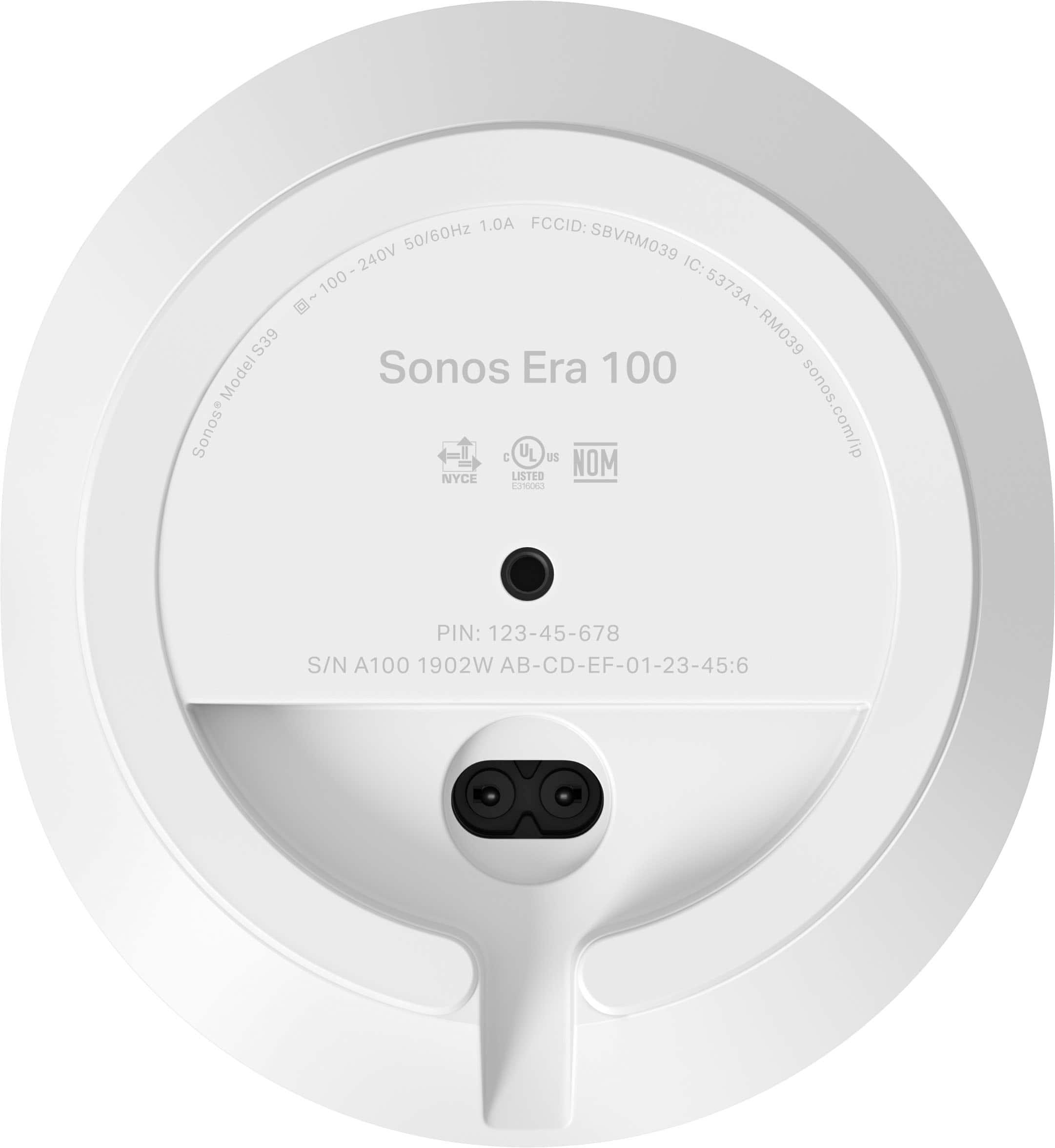
A:AnswerThe Sonos Era 100 operates at 110-220 volts, making it compatible with a wide range of power systems worldwide. The wattage of the Sonos Era 100 is not specified in terms of its power consumption; instead, the focus is usually on the speaker's audio performance and compatibility.
If you're buying the Era 100 for use in another country, ensure that the power specifications align with the local electrical standards. The speaker’s universal power supply should handle both 110V and 220V, but you may need a plug adapter to match the local outlet type.
A:AnswerYes, you can hook up two Sonos Era 100 speakers to your TV without using a soundbar. The Sonos Era 100 speakers can be used as standalone speakers or as part of a Sonos surround sound system.
When using two Sonos Era 100 speakers with your TV, they can function as left and right stereo speakers, providing a stereo audio experience. This means that the audio from your TV will be divided into two channels: left and right.
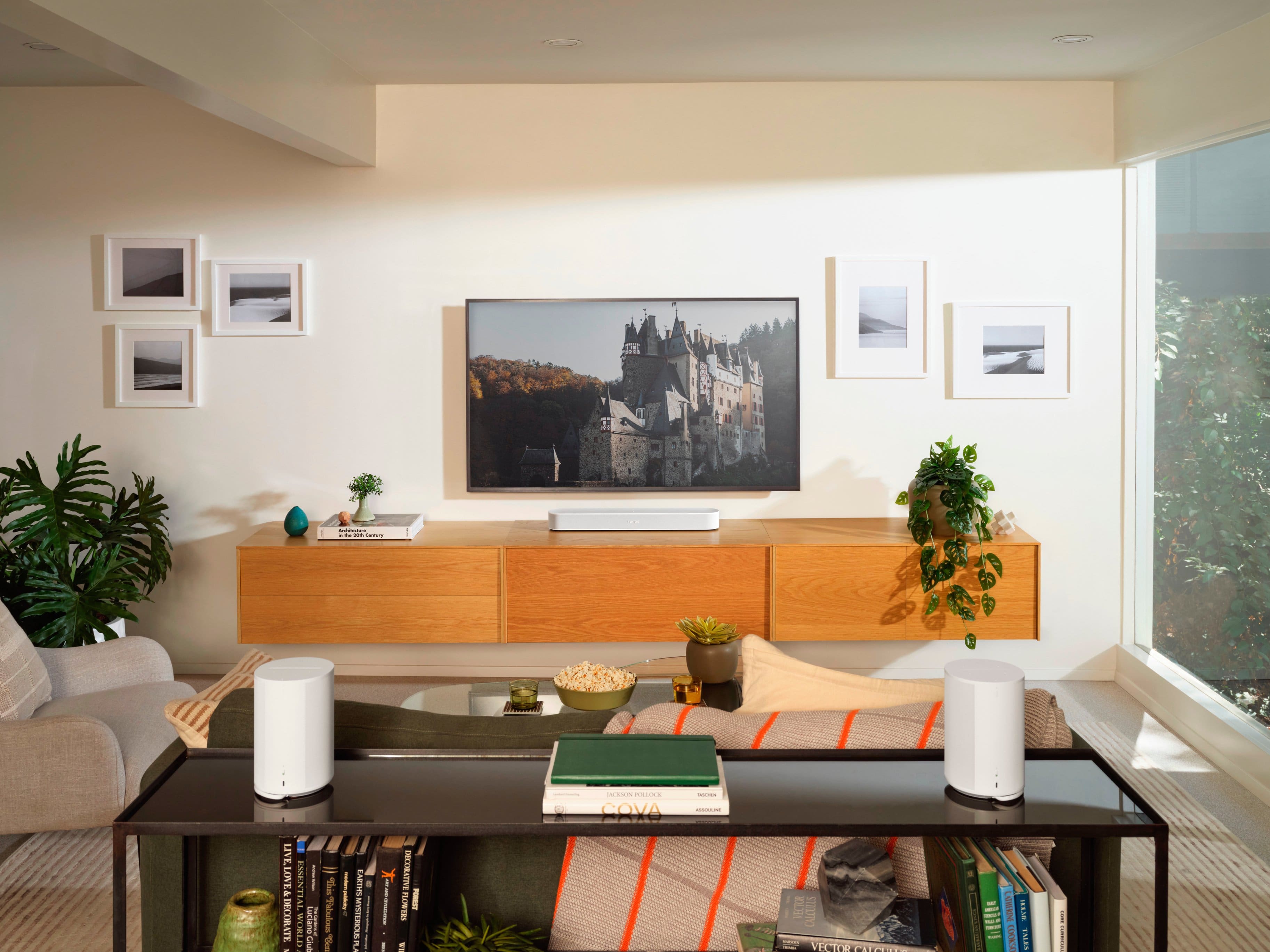
If you're using two Sonos Era 100 speakers as part of a Sonos surround sound system, they can serve as the rear surround speakers. In this configuration, the audio from your TV will be processed by the Sonos system to create a surround sound experience, which typically involves decoding and distributing the audio across multiple channels, including front left, front right, center, surround left, surround right, and sometimes a subwoofer channel for low-frequency effects (LFE).
The specific audio processing and channel configuration will depend on the capabilities of your TV, the content you're watching, and how the Sonos system is configured. In general, when using two Sonos Era 100 speakers as rear surround speakers, the audio may still be compressed into two channels (left and right) for the rear surround soundstage, but the Sonos system will create a spatial surround sound experience using these channels along with the other speakers in the system.
If you have specific preferences for audio processing or channel configuration, I recommend consulting the user manual for your TV and the Sonos app or Sonos system settings for information on how to configure the audio output and surround sound settings to achieve your desired audio experience.