Back To School Calculators For Math Class
Gear up for a successful school year with back to school calculators for math class. Whether you're tackling basic arithmetic or advanced equations, the right calculator can help you stay organized and confident in your studies. Explore a wide selection designed to support students at every grade level, making it easy to find the perfect fit for your classroom needs. Shop now to make sure you're prepared for every math challenge that comes your way.
Read More-
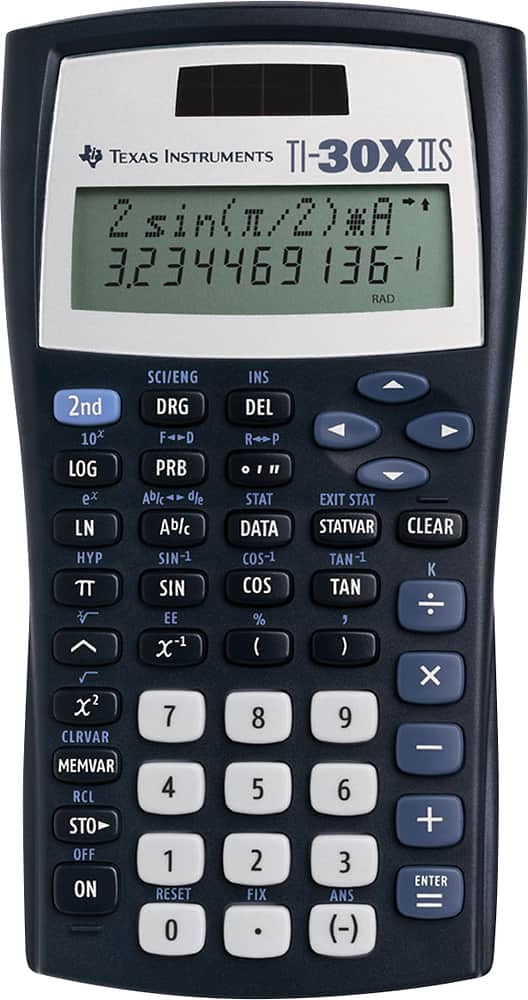
Texas Instruments - Scientific Calculator
SKU: J73SST7TVJI really love this calculator. It’s has everything && is simple to use.
See all CalculatorsProduct Description
A scientific calculator with a two-line display, advanced functions, fraction operations, and solar-battery power.$21.41 Your price for this item is $21.41Save $0Was $21.42The previous price was $21.42 -
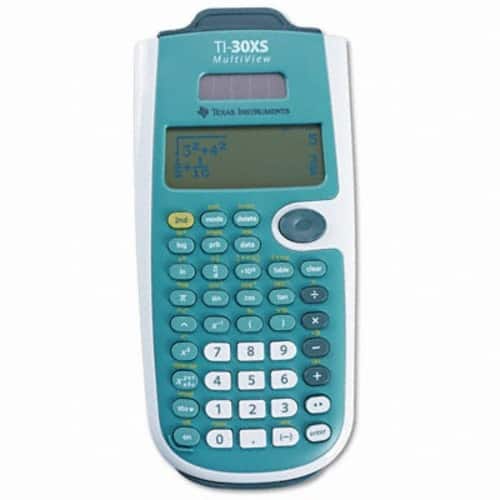
Texas Instruments - TI-30XS MultiView - Blue
SKU: J73SST7XQXThe calculator is great but your service in regards to receiving it was terrible!!!!
See all CalculatorsProduct Description
A blue scientific calculator with four-line display and MathPrint for accurate math and science notation.$25.97 Your price for this item is $25.97Save $8Was $34.12The previous price was $34.12 -
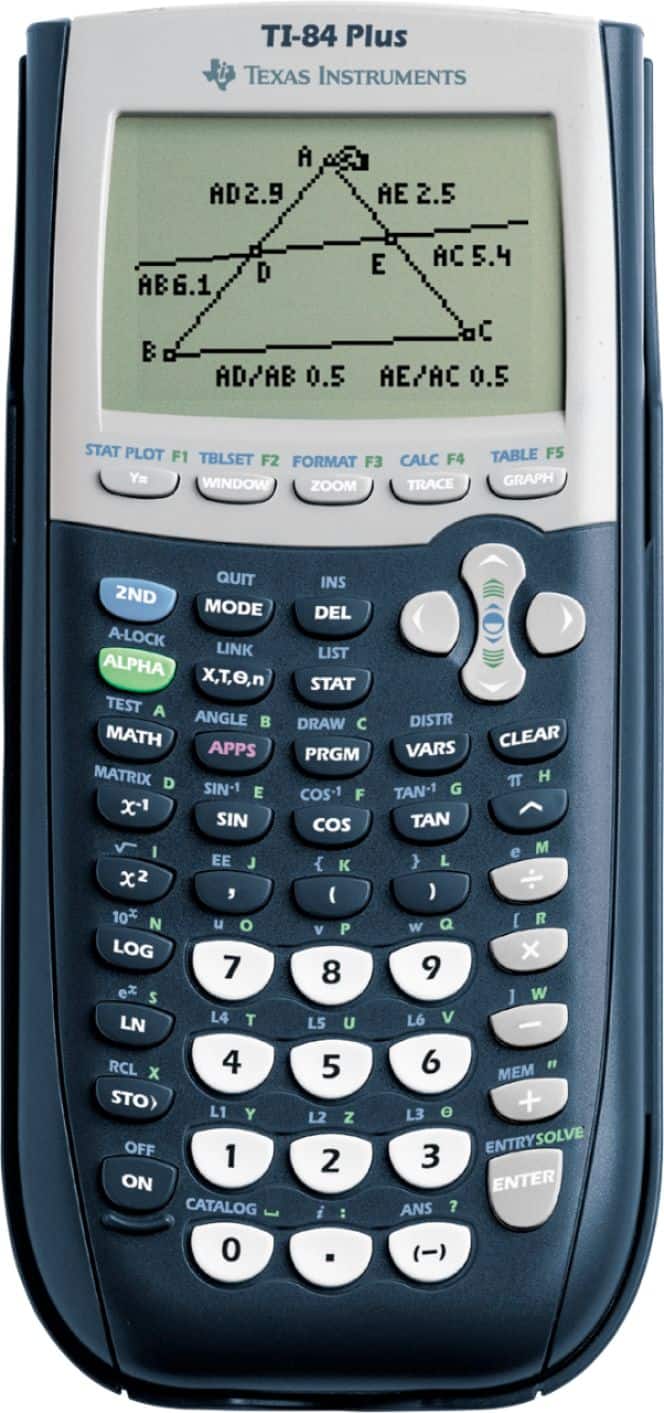
Texas Instruments - TI-84 Plus Graphing Calculator - Blue
SKU: J73SST7GYZSee all CalculatorsProduct Description
A blue graphing calculator ideal for advanced math and science, featuring USB connectivity and long battery life.$143.10 Your price for this item is $143.10 -
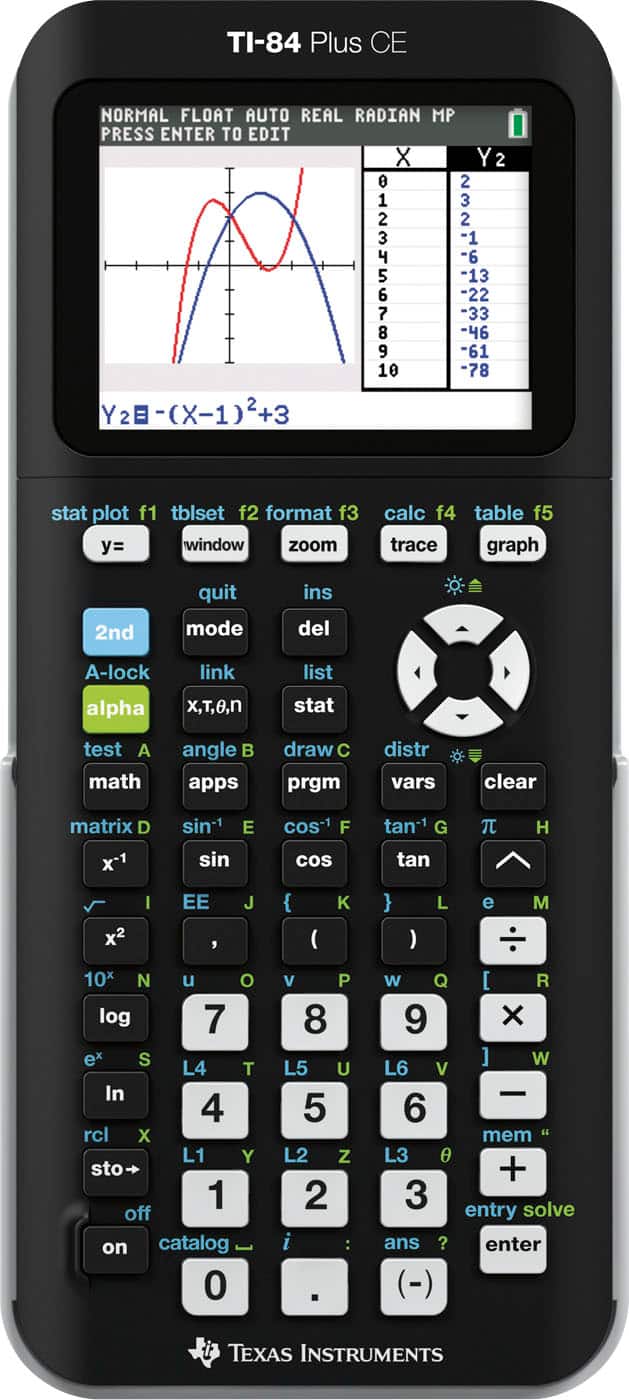
Texas Instruments - TI-84+ CE Graphing Calculator - Black
SKU: J73SSTJ3HTA Great Calculator
See all CalculatorsProduct Description
A rechargeable black graphing calculator with sequence graphing mode and included USB cable for advanced exams.$141.79 Your price for this item is $141.79Save $8Was $149.99The previous price was $149.99 -
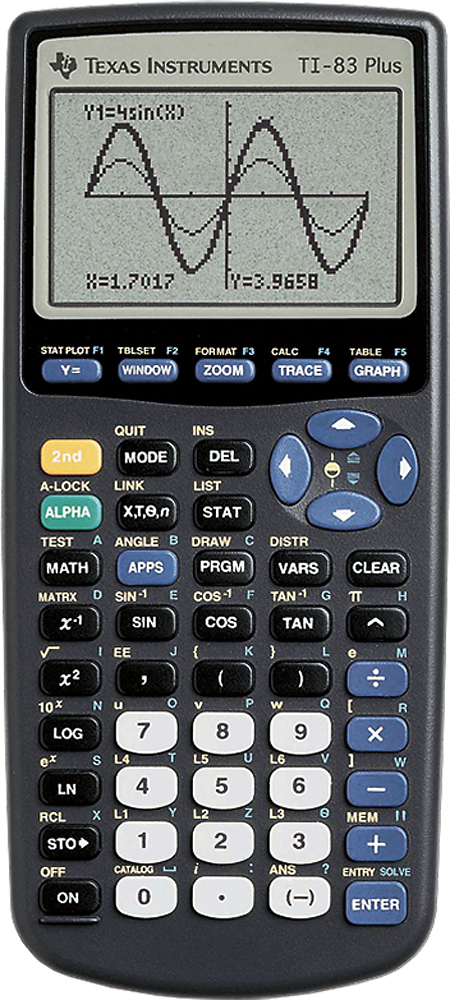
Texas Instruments - TI-83 Plus Graphing Calculator - Blue
SKU: J73SST7T4LSee all CalculatorsProduct Description
A blue graphing calculator with flash technology, ideal for math and science courses from algebra to physics.$107.18 Your price for this item is $107.18Save $2Was $109.99The previous price was $109.99 -
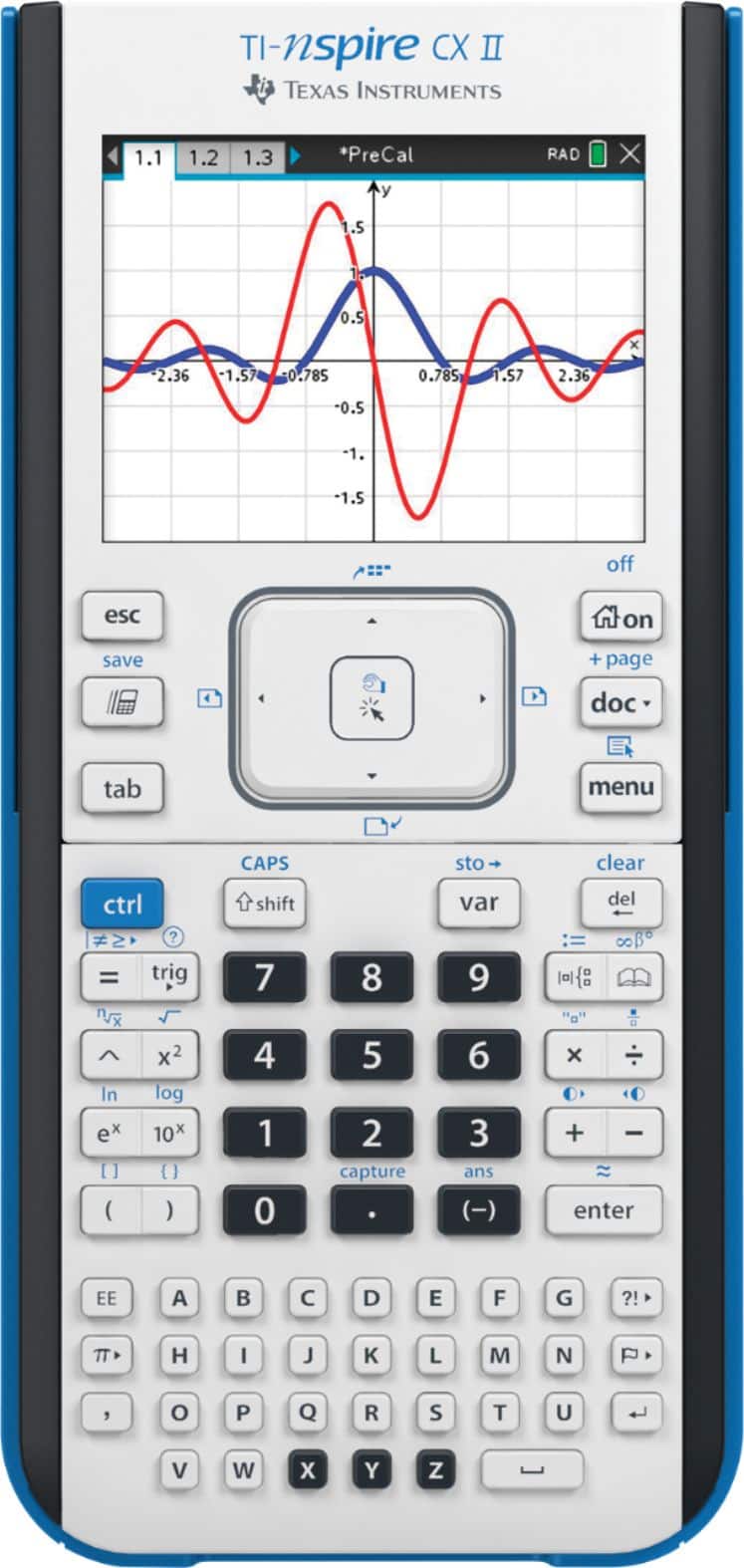
Texas Instruments - TI-Nspire CX II Handheld Graphing Calculator - White
SKU: J73SSTJL6Zreally helps with my statics class, a great crutch and helps you crunch the numbers
See all CalculatorsProduct Description
A white handheld graphing calculator with a high-resolution LCD screen, rechargeable battery, and USB cable included.$178.19 Your price for this item is $178.19 -
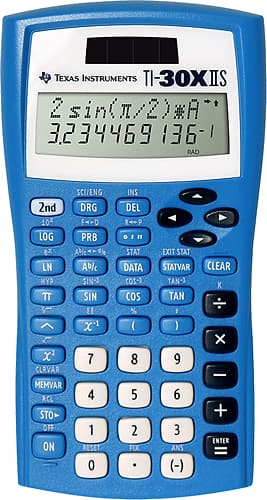
Texas Instruments - 30xIIs Scientific Calculator - Blue
SKU: J73SSTJ2XPSee all CalculatorsProduct Description
A blue scientific calculator that allows easy scrolling, review, and editing of complex mathematical calculations.$26.20 Your price for this item is $26.20Save $8Was $34.99The previous price was $34.99 -
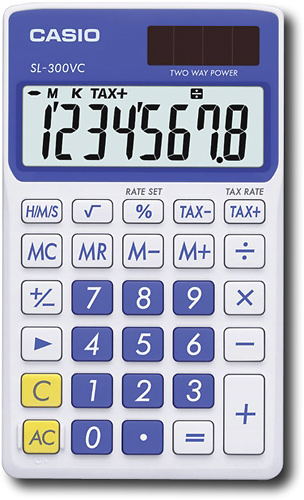
Casio - Pocket Calculator - Blue
SKU: J76JWX7C8TSee all CalculatorsProduct Description
A blue pocket calculator featuring an extra-large 8-digit display, tax functions, and solar/battery power.$28.51 Your price for this item is $28.51 -
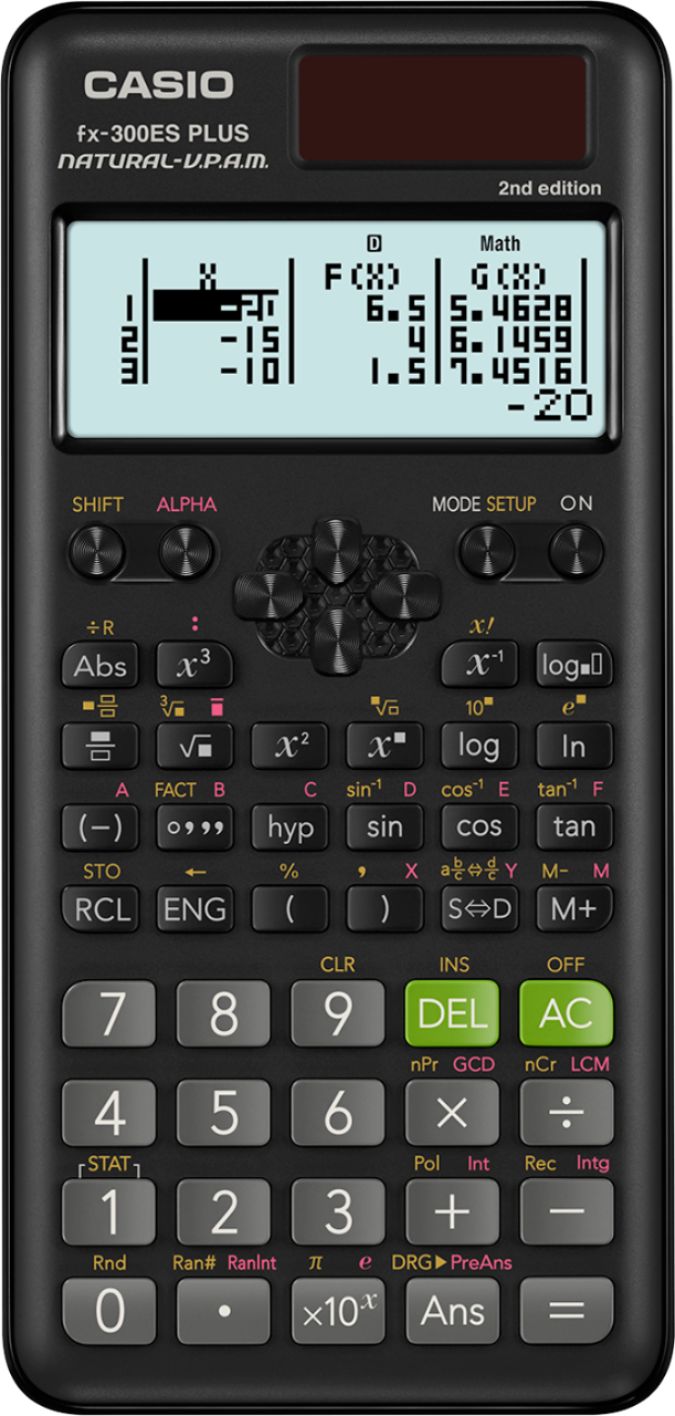
Casio - Scientific Calculator - Black
SKU: J3ZTGP97PZSee all CalculatorsProduct Description
A black scientific calculator featuring Natural Textbook Display, improved math functions, and a durable hard case.$17.99 Your price for this item is $17.99Save $3Was $21.38The previous price was $21.38 -
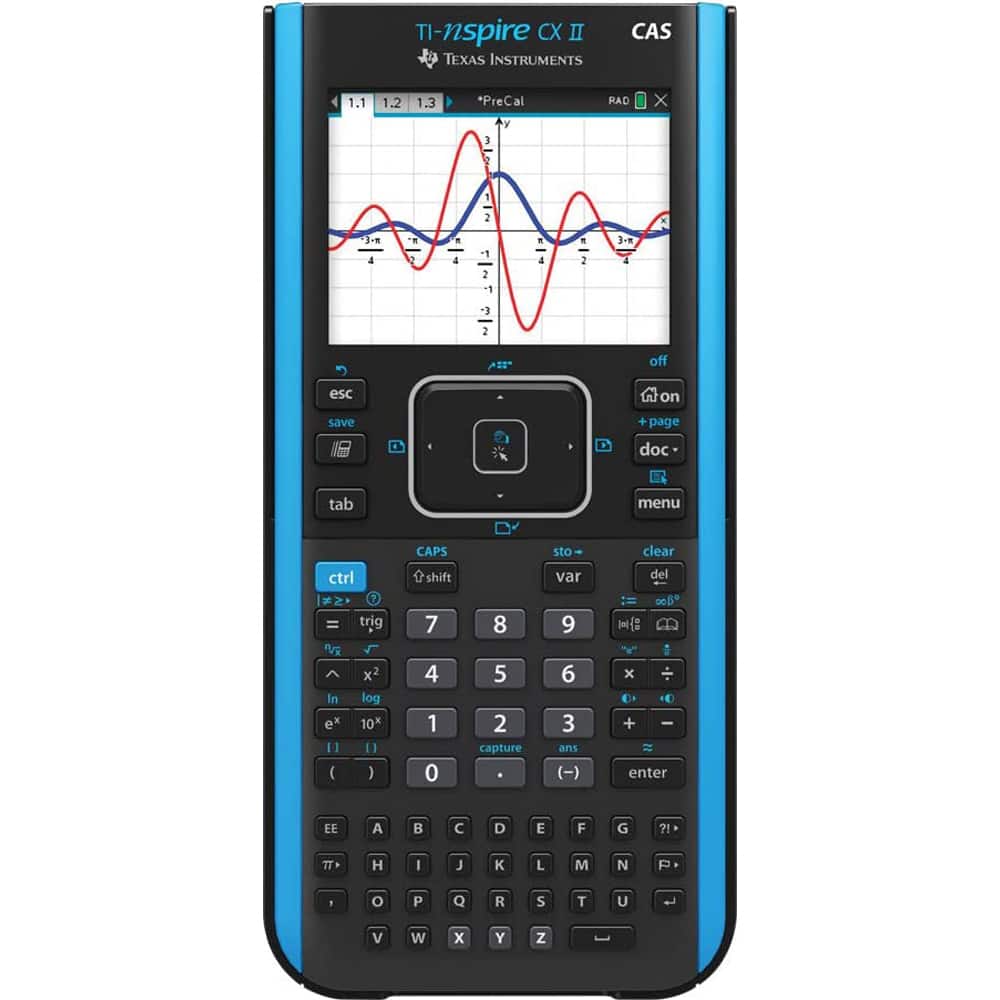
Texas Instruments - TI-Nspire CX II CAS - Color Graphing Calculator
SKU: J73SSTJL9VBest calculator to have for an Engineering Student...Best calculator to have for an Engineering Student, my kid loves it!!...Overall, all great calculator and would suggest buying if it is in your budget....
See all CalculatorsProduct Description
A full-color graphing calculator with CAS functionality, rechargeable battery, and enhanced math and science features.$179.32 Your price for this item is $179.32Save $21Was $201.26The previous price was $201.26
- 1
- 2
- ...
- 10
Back-to-school calculators for math class can help students work through assignments, check their reasoning and build confidence as lessons become more challenging. The best choice depends on the student’s grade level, course requirements and teacher’s classroom policy. In early elementary grades, students may not be permitted to use a calculator for every assignment because practicing mental math and learning basic addition, subtraction, multiplication and division are important parts of the curriculum. When a calculator is allowed, a simple four-function model is often enough for everyday arithmetic, including decimals, percentages and basic operations. These calculators are easy for younger students to understand, with clearly marked keys and uncomplicated displays that help keep attention on the numbers rather than extra features. They can also be useful for parents working on homework at the kitchen table, where a quick calculation can help confirm an answer without taking over the learning process. For a child beginning a new school year, a compact calculator can be a practical addition to a pencil case, homework station or backpack, particularly when it has a sturdy design, responsive keys and a display large enough to read at a glance. Families may also appreciate models with solar assistance or long-lasting batteries, since a dead battery in the middle of a worksheet can turn a simple assignment into an unnecessary interruption.
As students move into middle school and begin pre-algebra, algebra or geometry, a scientific calculator can offer the functions needed for more advanced work. These calculators typically support fractions, mixed numbers, exponents, roots, parentheses, negative values, trigonometry and other operations that go beyond basic arithmetic. A natural or textbook-style display can make fractions and equations appear in a familiar format, which may make it easier to enter an expression accurately and review each step. This is especially helpful when students are learning order of operations, solving equations or checking measurements in geometry. Before purchasing, it is worth reviewing the class syllabus, assignment instructions or school supply list, as some teachers require a particular type of calculator while others limit use during quizzes and tests. Students who are preparing for high school coursework may want to explore the range of High School Calculators available for different levels of math. High school students in Algebra II, trigonometry, pre-calculus and calculus may need a graphing calculator capable of plotting points, displaying functions, creating tables and analyzing graphs. Depending on the classroom, additional capabilities such as statistics, regression, matrices or equation solving may also be useful. A graphing calculator can be a meaningful gift for a student who is moving into advanced math, particularly when it is purchased before the first major unit and paired with a protective case, extra batteries or a charging cable where applicable. For students taking standardized tests, compatibility matters just as much as capability; testing organizations and individual schools may restrict certain functions, wireless features or calculator types, so checking the latest approved-device rules can help prevent surprises on exam day.
Everyday details can make a noticeable difference when selecting a calculator that will be used throughout the school year. Consider the size and weight first: a lightweight model can slip easily into a backpack, while a larger body and raised keys may be more comfortable for extended practice sessions at a desk. A two-line or multi-line display can let students see both the original expression and the result, making it easier to catch a misplaced decimal or forgotten parenthesis. Memory functions, fraction conversion, angle-mode settings and the ability to review previous entries can save time during homework, though students should still learn what each function does before relying on it. For graphing models, look at screen readability, menu organization, graphing speed, storage and the learning curve associated with more advanced tools. A protective cover or case is valuable for equipment that travels between home, school and extracurricular activities, especially during the cooler months when backpacks may be crowded with jackets, notebooks and other supplies. Teachers may also have preferences about color, model family or classroom compatibility, and some schools provide calculators for shared use while others expect each student to bring one. Whether the calculator is for a child entering middle school, a high school student tackling functions and equations, a college-bound learner reviewing advanced mathematics or an adult returning to coursework, matching the features to the actual class is more useful than choosing the most powerful option available. With the right balance of functionality, durability and ease of use, a calculator can become a dependable part of a student’s school routine—from checking a quick division problem between classes to examining a complicated graph during an evening study session.
Best Sellers
Related Pages
FAQ
Most math classes require either a basic calculator, a scientific calculator, or a graphing calculator. The type needed depends on the grade level and the complexity of the math being studied.
Elementary and middle school students typically use basic or scientific calculators, while high school and college students often need graphing calculators for advanced math courses like algebra, calculus, and statistics.
Key features to consider include the ability to perform scientific functions, graphing capabilities, programmability, ease of use, and whether the calculator is approved for standardized tests.
Yes, many standardized tests have specific guidelines about which calculators are permitted. It's important to check with your teacher or test administrator to ensure your calculator meets those requirements.
Most schools require students to use dedicated physical calculators rather than apps on phones or tablets to prevent distractions and ensure fairness during exams.