Early Black Friday Deals & DoorbustersEnds Nov. 8.Shop now

Main Content
Skip to contentGo to Product Search

Early Black Friday Deals & DoorbustersEnds Nov. 8.Shop now

Main Content
Categories & Filters

Cinema Cameras For Filmmakers

Cinema cameras for filmmakers are designed to help creators capture stunning visuals and bring their stories to life. Whether you’re shooting a feature film, documentary, or creative project, the right cinema camera offers the flexibility and performance needed for professional results. Explore a wide selection of options tailored for both aspiring and experienced filmmakers, all built to meet the demands of modern video production. Find the perfect solution to elevate your filmmaking experience and achieve your creative vision with confidence.

Read More
Results
Main Results
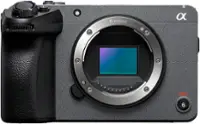
  1. Sony - Cinema Line Super 35 Digital Camera (Body Only) - Gray

    SKU: J7XSRH534L

    Great camera. Amazing colors and clarity. I love this camera. Easy to set up and easy to use....Love this camera best introduction to cinema line for Sony...Best camera...Best Apsc

    Product Description

    A gray APS-C camera delivering 6K oversampled cinematic video with advanced autofocus and image stabilization.
    See all Mirrorless Cameras
    Your price for this item is $2,099.99
  2. Canon - EOS R5 C 8K Video Mirrorless Cinema Camera (Body Only) - Black

    SKU: J7C86S6KTQ

    It is one of the best hybrid cinema cameras on the market when used correctly.

    Product Description

    A black full-frame mirrorless camera offering 45MP stills and 8K video with advanced autofocus and connectivity.
    See all Mirrorless Cameras
    Your price for this item is $3,199.00
    Save $700
    The previous price was $3,899.00
  3. Sony - Cinema Line Super 35 Digital Camera - Gray

    SKU: J7XSRH53L9

    Product Description

    A compact gray camera delivering cinematic 4K video, 26MP stills, advanced autofocus, and image stabilization.
    See all Mirrorless Cameras
    Your price for this item is $2,499.99
  4. Sony - FX3A Cinema Line Full-frame Camera - Black

    SKU: J7XSRH5HTC

    This camera is great though, just not my favorite and I'll for sure end up upgrading it....The best features is the color, the ability to record yourself and see your yourself when recording,

    Product Description

    A compact black cinema camera with a 4K full-frame sensor, 15+ stop dynamic range, and XLR audio inputs.
    See all Mirrorless Cameras
    Your price for this item is $4,299.99
  5. Nikon - ZR Full-frame Mirrorless Cinema Camera Body, for Z Mount Lenses - Black

    SKU: J7CVR96GCQ

    I love my zr and so glad that best buy had 2 in stock.. i ran up there to grab the body and had a photoshoot...10 mins after purchase.. im talking model met me at the best buy door!!!!...Great Camera...One...

    Product Description

    A compact black full-frame 6K cinema camera featuring deep learning autofocus, RED color science, and 32-bit audio.
    See all Mirrorless Cameras
    Your price for this item is $2,199.95
  6. Sony - FX2 Full-frame Cinema Camera Body Only - Gray

    SKU: J7XSRH5HRY

    Product Description

    A compact gray full-frame cinema camera offering 4K video, 33MP stills, and advanced filmmaker features.
    See all Mirrorless Cameras
    Your price for this item is $2,499.99
    Save $200
    The previous price was $2,699.99
  7. Canon - EOS C50 7K Video Mirrorless Cinema Camera (Body Only) - Black

    SKU: J7C86SHFQP

    I'm in love...I have it now and I'm in love

    Product Description

    A compact black cinema camera featuring a 7K full-frame CMOS sensor, advanced autofocus, and cloud integration.
    See all Mirrorless Cameras
    Your price for this item is $3,699.00
    Save $200
    The previous price was $3,899.00
  8. Sony - FX2 Full-frame Cinema Camera with XLR handle - Gray

    SKU: J7XSRH5HRC

    Product Description

    A gray full-frame cinema camera offering 33MP stills, 4K video, dual base ISO, and advanced filmmaker features.
    See all Mirrorless Cameras
    Your price for this item is $2,899.99
    Save $200
    The previous price was $3,099.99
  9. Blackmagic Design - Cinema Camera 6K (Full Frame Sensor, L Mount) Power Bundle

    SKU: JX4FFJZF83

    Works great with my Pyxis 6K.Only negative..goes through batteries quickly.

    Product Description

    A high-end black digital film camera with a full-frame 6K sensor, L-mount, and DaVinci Resolve Studio.
    See all Mirrorless Cameras
    Your price for this item is $1,759.00
  10. Canon - EOS C70 4K Video Mirrorless Cinema Camera (Body Only) - Black

    SKU: J7C86S62YX

    Product Description

    A professional black cinema camera featuring a 4K Super 35mm DGO sensor, Dual Pixel autofocus, and RF lens compatibility.
    See all Mirrorless Cameras
    Your price for this item is $3,699.00
    Save $1100
    The previous price was $4,799.00

Cinema cameras for filmmakers are built to support the creative and technical demands of narrative films, documentaries, commercials, music videos, interviews and independent productions. Compared with everyday video cameras, they often provide more control over exposure, color, recording formats and lens choices, helping filmmakers capture footage that can be shaped precisely during post-production. A camera with a large full-frame sensor can create a naturally shallow depth of field, soften busy backgrounds and perform beautifully in available light, while Super 35 and other sensor formats may offer a familiar cinematic look, practical lens compatibility and a little more depth of field for fast-moving subjects. Resolution is another important consideration, but it is only one part of the picture. Higher-resolution recording can give editors flexibility to crop, stabilize or reframe a shot, while a camera’s dynamic range determines how well it holds detail in bright skies, reflective windows and deep shadows. For scenes with a bright exterior and a dim interior, that extra highlight and shadow information can make the difference between a polished image and footage that feels difficult to rescue. Many filmmakers also look for 10-bit or 12-bit color and RAW recording, which preserve more tonal information for color grading than highly compressed formats. These capabilities are especially valuable when a project needs a consistent visual style across changing locations, from a sunlit field during the warmer part of the day to a low-lit interior during the cooler months. When comparing options in this category, consider the complete production system rather than the camera body alone. Lens mount compatibility affects access to wide, telephoto, macro and specialty lenses; recording media affects storage costs and offloading speed; and battery life can matter just as much as resolution when a scene runs long or a crew is working far from an outlet. Filmmakers building a kit around a familiar lens collection may prefer a body that works with those lenses, while newcomers may want a flexible mount and a broad selection of affordable accessories. Those exploring other interchangeable-lens options can also browse DSLR Cameras For Filmmaking for additional ways to approach a video setup.

The right cinema camera also depends on how a project is produced. Solo filmmakers and small crews often benefit from dependable autofocus, in-body stabilization or electronic stabilization support, a responsive flip or articulating monitor and controls that are easy to reach while operating the camera alone. These features can be reassuring when filming a wedding speech, a documentary interview or a small business profile without a dedicated focus puller and camera assistant. A filmmaker working with a full crew may prioritize a modular body that can be fitted with a professional monitor, follow focus, matte box, wireless transmitter, external recorder and other accessories. Box-style cinema cameras can be particularly useful in custom rigs, drones, vehicles and studio environments because they can be arranged around the needs of the production rather than a fixed body shape. Built-in or supported streaming tools may also help creators move between traditional recording and live production, whether they are covering a performance, presenting a branded event or sharing a behind-the-scenes session. Autofocus deserves close attention: subject detection and continuous focus can simplify solo shooting, but manual focus remains a favorite for controlled narrative work where a focus pull is part of the visual language. Dual-native ISO or multiple base sensitivities can help a camera produce cleaner images in both brighter conditions and dim locations, although lighting, lens aperture and exposure technique still have a major effect on image quality. Audio should be part of the decision as well. Professional inputs, headphone monitoring and compatibility with an external microphone or recorder can turn a promising image into a complete scene with clear dialogue and natural room tone. A camera may be given as a graduation gift to a film student, a meaningful present for a partner building a production business or a practical upgrade for a creator whose short films and client projects have outgrown a basic mirrorless setup. For gift-givers, accessories such as spare batteries, fast memory cards, a compact microphone, a sturdy tripod or a protective camera bag can make a cinema camera easier to use from the first shoot. The best fit is usually the one that matches the recipient’s existing lenses, editing computer and preferred way of working rather than simply the camera with the longest feature list.

Before choosing among cinema cameras for filmmakers, think through the workflow from the first take to the final export. RAW and high-bitrate formats can deliver impressive grading flexibility, but they require fast, reliable media and substantial storage for backups. A filmmaker recording a day of interviews may need a different setup from one capturing high-frame-rate action, long documentary scenes or carefully lit dramatic footage. Check available frame rates, slow-motion options, timecode support and maximum recording times, especially when uninterrupted takes are important. Review the monitor size and menu layout, since clear exposure tools such as waveform displays, false color, zebras and focus peaking can help an operator judge an image accurately under changing light. Ports and expandability matter when a production grows: HDMI or SDI connections, USB functionality, microphone inputs and remote-control options can determine whether a camera integrates smoothly with monitors, recorders and wireless systems. A compact body can be easier to carry through a crowded location, while a larger body may offer better heat management, more physical controls and room for professional connections. No camera replaces thoughtful lighting, stable support, careful composition and good sound, but the right one can make those choices easier to execute and preserve more detail when conditions are less than perfect. Picture a small crew arriving before dawn, carrying cases through a quiet street, then moving from a wide establishing shot to a close-up inside a cramped room; a well-matched cinema camera helps the team change lenses, monitor exposure and keep the visual language consistent without slowing the production. For independent filmmakers, educators, content creators, cinematography students and experienced crews alike, comparing sensor size, recording quality, low-light performance, focusing behavior, connectivity and total system cost creates a clearer path to a dependable setup. During the busy production season and into the cooler months, these cameras can support everything from intimate personal stories to polished commercial work, giving filmmakers the tools to capture images with texture, controlled highlights and a distinctly intentional cinematic feel.

FAQ

Filmmakers should consider features such as sensor size, dynamic range, resolution (4K, 6K, or higher), frame rate options, color science, lens compatibility, and professional audio inputs when choosing a cinema camera.

Cinema cameras are designed for high-end film production and typically offer larger sensors, higher dynamic range, advanced color grading options, interchangeable lenses, and more robust recording formats compared to standard video cameras.

Many cinema cameras support interchangeable lens mounts that are compatible with popular DSLR or mirrorless lenses. However, you may need an adapter depending on the camera's mount system.

Cinema cameras often support professional recording formats such as RAW, ProRes, and DNxHR. These formats provide greater flexibility in post-production for color grading and editing.

Yes, many modern cinema cameras are compact and user-friendly enough for solo filmmakers or small crews while still offering professional-grade image quality and features.