Deals for every list.Start early, save early.Shop now

Main Content
Skip to contentGo to Product Search

Deals for every list.Start early, save early.Shop now

Main Content

STEM Gifts For Teens

Find STEM gifts for teens that connect their interests in science, technology, engineering, and math with opportunities to explore and learn. Browse gift options with your teen’s interests and experience level in mind, and check recommended ages and features to find a suitable challenge.

Read More
Results
Main Results
  1. Teach Tech - Mech-5 Mechanical Coding Robot

    SKU: JXFVCKHZG8

    Product Description

    A green mechanical coding robot that teaches kids programming basics using an intuitive coding wheel and buttons.
    See all STEM & Educational Toys
    Your price for this item is $52.69
  2. E-Blox - Circuit Blox: BYO Glowing LED FM Radio - 395 Projects,Ages 8+

    SKU: J3YX2CWG8Z

    Product Description

    A hands-on STEM kit featuring colorful electronic blocks to build 395 glowing LED circuits and an FM radio.
    See all STEM Toys
    Your price for this item is $51.99
  3. 4M - Intruder Alarm - Red DIY Security Spy Gadget Toy, STEM Electronic Assembly Kit - Multicolor

    SKU: CGJTYXSJFS

    Product Description

    A multicolor DIY electronic kit that teaches circuit basics while building a functional, adjustable intruder alarm.
    See all Science Kits & Toys
    Your price for this item is $24.99
  4. 4M - 4M: Green Science Aqua Robot - DIY Swimming Fish Toy, Solar & Battery Power

    SKU: CGJTYXSXHJ

    Product Description

    An engaging green DIY swimming fish robot kit powered by both solar energy and batteries for hands-on learning.
    See all Science Kits & Toys
    Your price for this item is $38.99
  5. 4M - 4M: KidzLabs Lemon Clock - DIY Renewable Energy Kit, Power Digital Clock, STEM

    SKU: CGJTYXSC59

    Product Description

    A hands-on STEM kit that powers a digital clock using a lemon, teaching kids about renewable energy.
    See all Science Kits & Toys
    Your price for this item is $21.99
  6. 4M - 4M: Green Science Rover Robot - DIY Robotics Kit, Solar & Battery Power, STEM

    SKU: CGJTYXSXT7

    Product Description

    A green DIY robotics kit that teaches STEM concepts with solar and battery-powered rover assembly.
    See all Science Kits & Toys
    Your price for this item is $37.99
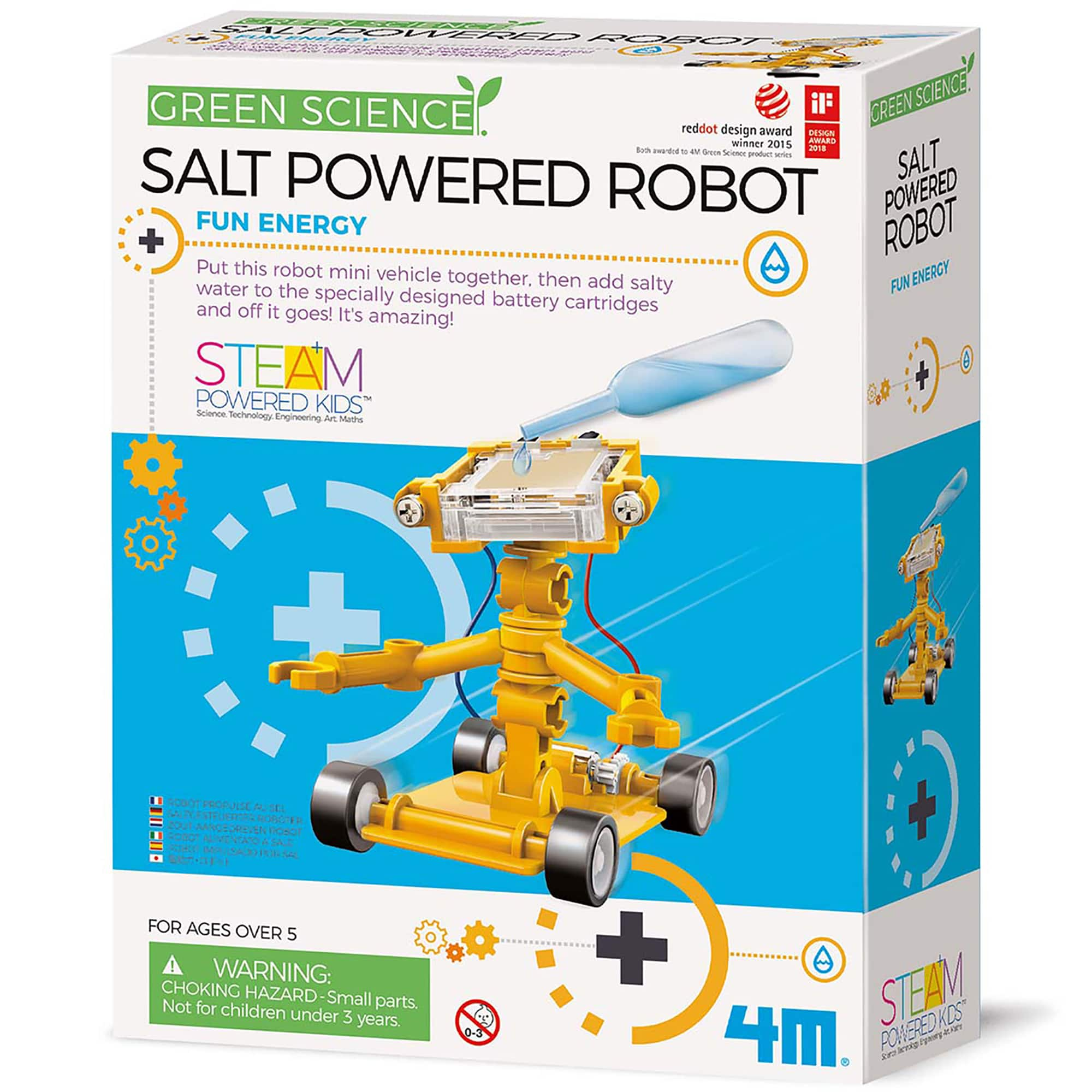
  7. 4M - Green Science Salt Powered Robot - DIY Mini Building Kit - Mulitcolor

    SKU: CGJTYXS2HS

    Product Description

    A green plastic DIY robot kit demonstrating clean energy through a functional saltwater-powered magnesium-air battery.
    See all STEM & Educational Toys
    Your price for this item is $24.99
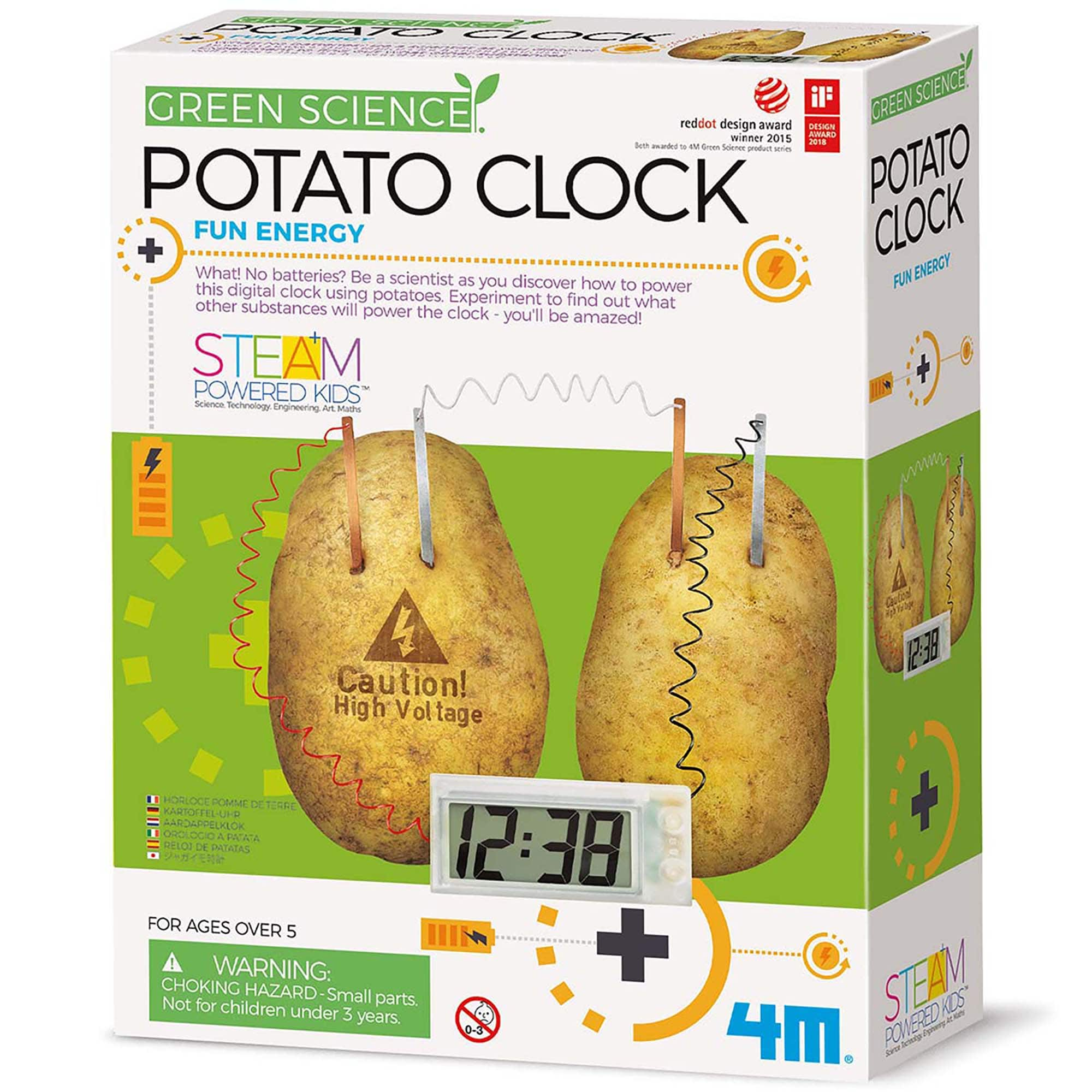
  8. 4M - 4M: Green Science Potato Clock - DIY Renewable Energy Kit, Power Digital Clock

    SKU: CGJTYXSCPJ

    Product Description

    A fun green science kit that powers a digital clock using potatoes or other household items.
    See all Science Kits & Toys
    Your price for this item is $41.99
  9. CaDA - Mars Exploration Robot Kit- 2

    SKU: CZ6Y866YPQ

    Product Description

    A programmable Mars-themed robot kit in white, orange, and gold with remote control and LED lights.
    See all Building Sets & Blocks
    Your price for this item is $50.99

STEM gifts for teens connect science, technology, engineering, and mathematics with the satisfaction of making something work. Robotics, coding, mechanical construction, electronics, and physical science offer different ways to turn curiosity into a project with a visible result. A teen interested in movement might enjoy assembling a mechanism, adjusting its gears, and watching how a small change affects speed or direction. Someone drawn to computers may prefer programming challenges that begin with simple commands and develop into interactive designs. For a teen who likes experimenting, hands-on science activities can make ideas such as energy transfer, electrical circuits, and structural strength easier to observe. The appeal is not limited to students who already excel in science or math. Creative thinkers can find room for storytelling, visual design, and inventive problem-solving, while methodical builders may enjoy precise assembly and repeated testing. The most suitable STEM gifts leave space for both kinds of thinking: following a clear starting point, then making choices that produce something personal. A robot that turns unevenly becomes a reason to compare wheel alignment, motor behavior, or instructions in the code. A structure that bends under a load invites a different arrangement of supports. Those small discoveries can make the process as engaging as the finished project. Age recommendations provide an initial reference, but experience, patience, and interests matter just as much. A teenager trying electronics for the first time may appreciate clearly labeled connections and approachable explanations, while an experienced hobbyist may want more control over components or programming. Projects with an achievable first build and room for later modification can accommodate growing confidence without requiring advanced knowledge at the outset. Clear diagrams, understandable terminology, and explanations of why something works help distinguish meaningful experimentation from simply copying a sequence of steps. For independent teens, being able to pause, retrace a mistake, and try a different approach is often an important part of the experience. The intended use might be a focused solo activity, a shared family build, or an ongoing hobby that returns to the same worktable again and again.

The physical design of STEM toys and building sets influences how comfortably they fit into a teen’s everyday space. Reusable components, secure connections, and parts that can tolerate repeated assembly are especially useful when a project is meant to be taken apart and rebuilt. Molded plastic can keep structures light and make connections straightforward, while metal components may provide rigidity for mechanical builds; suitability depends on the design rather than the material alone. Smooth edges, well-fitting pieces, and clear assembly directions matter more than an impressive-looking collection of parts. Small fasteners and delicate connectors call for a stable work surface, good lighting, and a way to keep pieces organized between sessions. A shallow sorting tray or divided storage area can help prevent a missing connector from interrupting an otherwise successful build. Larger projects also need room for testing, whether that means a clear section of floor for movement or enough desk space to keep a laptop away from loose components. Physical fit deserves attention, too: controls, tools, and assembly tasks should be comfortable for the intended user’s hands and coordination. For connected STEM gifts, compatibility is as important as construction quality. Programming activities may depend on a supported operating system, a compatible device, software installation, an internet connection, or permission to create an account. A school-issued computer may restrict downloads or external connections, so access to a device does not automatically mean every coding activity will work with it. Instructions should explain any requirements for batteries, charging, accessories, and adult assistance. Care is generally about protecting the parts that make repeated experimentation possible: keeping electronics dry, avoiding strain on wires, storing small pieces together, and following the manufacturer’s cleaning and battery guidance. Activities involving heat, chemicals, cutting tools, or powered mechanisms require attention to the stated age recommendations and safety directions. A durable gift is not necessarily the heaviest or most complicated one. It is a well-matched design that can withstand its intended use, be stored sensibly, and return to working condition after ordinary handling. Accessible instructions and straightforward troubleshooting can matter just as much as sturdy materials when a teen wants to resume an unfinished project.

Giving a STEM-focused present works especially well when it reflects something the recipient already enjoys without prescribing a future career. A teen who sketches imaginary machines may appreciate the chance to explore motion and structure; someone who creates digital art may connect with coding through animation, patterns, or responsive effects. An interest in music can lead naturally to experiments with sound, while enthusiasm for puzzles can translate into logic-based programming challenges. These connections make science and engineering feel relevant rather than like an extra assignment. Open-ended activities allow teens to decide whether to spend an afternoon completing a defined challenge or keep refining a design over several sessions. A satisfying project might begin with a basic moving model, continue with changes to its balance, and eventually include a programmed response to a sensor. Not every gift needs that level of complexity, though. A compact experiment with a clear result can be equally absorbing when it matches the recipient’s attention span and available workspace. For siblings or friends working together, projects with distinct building, testing, and programming tasks give each person a useful role. Shared experimentation also creates natural opportunities to describe an idea, compare observations, and explain why a modification helped or failed. For birthdays, personal milestones, and celebrations, STEM gifts can recognize an existing interest while opening a door to something unfamiliar. They can also sit naturally alongside other holiday gifts for teenagers when the aim is to balance entertainment, creativity, and hands-on discovery. The strongest match respects the teenager’s independence: enough direction to get started, enough challenge to hold attention, and enough flexibility to make the outcome their own. Whether the result is a working mechanism, a small program, or a carefully repeated experiment, the lasting appeal comes from understanding what changed and seeing the effect firsthand. That cycle of building, observing, and adjusting gives STEM gifts a purpose beyond the initial unboxing, with opportunities to revisit familiar parts and use them in a different way.

FAQ

STEM gifts for teens center on science, technology, engineering, and math through hands-on projects and exploration. Popular categories include robotics kits, coding kits, electronics sets, digital microscopes, telescopes, and 3D printing tools.

For teens who enjoy gaming, consider game development kits or programmable controllers. Robotics and engineering sets offer building projects, while digital microscopes and telescopes appeal to science enthusiasts. Teens interested in art may enjoy 3D pens, digital drawing tools, or programmable LED projects that combine creativity with technology.

Look for coding gifts with clear tutorials, project examples, and a programming environment that matches the teen’s experience. Beginners can start with visual, block-based coding, while experienced coders may prefer support for languages such as Python or JavaScript. Check whether the kit requires a computer, mobile device, or separate software.

Yes. Mechanical building sets, marble runs, model engines, and some circuit kits offer screen-free projects. Optical microscopes and manual telescopes also provide opportunities for hands-on observation. Check the activity requirements, since some kits use an app or online instructions even when the main project is screen-free.

Robotics kits typically combine a physical build with motors, sensors, and programming to create movement or automated actions. Electronics kits focus on assembling circuits with components such as LEDs, switches, and resistors. Some kits overlap, using programmable circuit boards to control both electronic components and robotic builds.