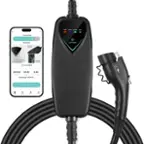
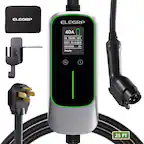
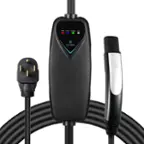
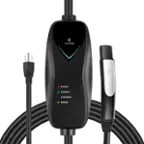
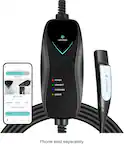
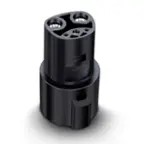
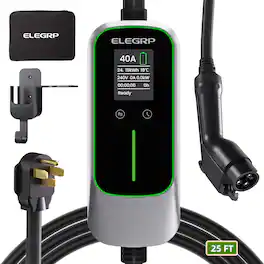
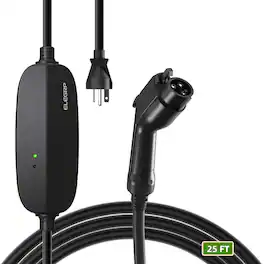
ELEGRP - Electric Vehicle Charger 32A Level 2 Portable, EV Charger 240V for BEVs/PHEVs,25ft Cable W/ NEMA 14-50 Plug - Black
FREE shipping to
Related Item

- General
- Brand: ELEGRP
- Model Number: EMCP3201
- Product Name: ELEGRP Electric Vehicle Charger 32A Level 2 Portable, EV Charger 240V for BEVs/PHEVs,25ft Cable W/ NEMA 14-50 Plug
- Color: Black
- Power
- Electric Vehicle Charging Level: Level 2 (Level 1 chargers connect to a standard 120V outlet but may take nearly a day to charge a vehicle. Level 2 chargers connect to a dedicated 240V outlet and charge most vehicles within a few hours. Level 3 chargers require a specialized charger and are typically found in public, fast charging stations. Charging requirements vary by vehicle.)
- Input Wiring Type: NEMA 14-50
- Charging Cable Length: 25 feet
- Connectivity
- Connector Type(s): SAE J1722 (Type 1) (Type of interface connection found on the device.)
- Features
- Number of Vehicles Charged Simultaneously: 1
- Certifications Listings & Approvals
- ENERGY STAR Certified: true (Devices carrying the ENERGY STAR service mark, such as computer products and peripherals, kitchen appliances, and other products, generally use 20% to 30% less energy than required by federal standards.)
- Dimensions
- Product Height: 7.48 inches (The out of box height of the item. Height is measured as the vertical distance from the bottom of the item to the top as it would be primarily used or placed.)
- Product Width: 13.39 inches (The out of box width of the item. Width is measured as the horizontal distance from one side of the item to the other as it would be primarily used or placed.)
- Product Depth: 16.93 inches (The out of box depth of the item. Depth is measured as the distance from the front of the item to the back as it would be primarily used or placed.)
- Product Weight: 11.24 pounds (The out of box weight of the item.)
- Warranty
- Warranty - Parts: 1 year limited
- Warranty - Labor: 1 year limited
- Other
- UPC: 195330010550
Important Safety Instructions Read all the instructions before using this product. (1) This is an EV charger for EVs with Type 1 inlets (SAE J1772). Don't use it for EVs with different inlet types. (2) This cable has a precise internal structure. Any questions, please contact our Customer Service at the first time. Please don't take it apart without any professional technical support. (3) The product is only for EV charging. Please don't use it in any other occasions, including hauling, binding and so on. (4) Don't use it in water. (5) This device should be supervised when used around children. (6) Do not put fingers into the electric vehicle connector. (7) Do not use this product if the flexible power cord or EV cable is frayed, has broken insulation, or any other signs of damage. (8) Do not use this product if the enclosure or the EV connector is broken, cracked, open, or shows any other indication of damage. (9) The device must be grounded. (10) Use of an extension cord or adapter is not recommended for this device. If it's really needed, please employ a qualified cord or adapter and ensure it's firmly connected. (11) Mind the risk of electrical shock or burn. (12) The device does not contain any user-serviceable parts. (13) Please do not disconnect the plugs while the EV charger is charging the vehicle. (14) Handle the equipment with care during transportation. Do not subject it to strong force or impact or pull, twist, tangle, drag or step on the equipment, to prevent damage to it or any components. Note: This equipment has been tested and found to comply with the limits for a Class B digital device, pursuant to part 15 of the FCC Rules. These limits are designed to provide reasonable protection against harmful interference in a residential installation. This equipment generates, uses and can radiate radio frequency energy and, if not installed and used in accordance with the instructions, may cause harmful interference to radio communications. However, there is no guarantee that interference will not occur in a particular installation. If this equipment does cause harmful interference to radio or television reception, which can be determined by turning the equipment off and on, the user is encouraged to try to correct the interference by one or more of the following measures: · Reorient or relocate the receiving antenna. · Increase the separation between the equipment and receiver. · Connect the equipment into an outlet on a circuit different from that to which the receiver is connected. · Consult the dealer or an experienced radio/TV technician for help.
- Certified Components: ETL Listed with UL-certified components including the charging adapter (UL-2594), cable (UL-2263), and NEMA 14-50 plug (UL-498), ensuring safety and reliability.
- Advanced Protection: Features ELEGRP's PBE technology for multi-layer protection against overcurrent, overvoltage, and leakage, with ultrasonic welding in the adapter and lead-free brass terminals for enhanced conductivity and heat dissipation.
- Rapid Charging: Supports 120V-240V up to 40A (9.6kW), capable of fully charging an 80kWh EV in 8.3 hours, suitable for various locations including home and travel.
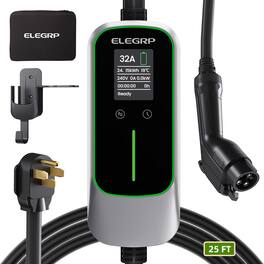
- Versatile Compatibility: ELEGRP 40 amp EV charger with a 25ft cable and NEMA 14-50 plug, compatible with J1772 EVs/PHEVs, offering 5 adjustable current settings (10A/16A/20A/24A/32A).
- Smart Functionality: Includes an 1-12 hour delay timer for scheduled charging during off-peak hours and boasts an IP67 rating for reliable outdoor use in temperatures from -21F to 121F.
Compare similar products
Important Safety Instructions Read all the instructions before using this product. (1) This is an EV charger for EVs with Type 1 inlets (SAE J1772). Don't use it for EVs with different inlet types. (2) This cable has a precise internal structure. Any questions, please contact our Customer Service at the first time. Please don't take it apart without any professional technical support. (3) The product is only for EV charging. Please don't use it in any other occasions, including hauling, binding and so on. (4) Don't use it in water. (5) This device should be supervised when used around children. (6) Do not put fingers into the electric vehicle connector. (7) Do not use this product if the flexible power cord or EV cable is frayed, has broken insulation, or any other signs of damage. (8) Do not use this product if the enclosure or the EV connector is broken, cracked, open, or shows any other indication of damage. (9) The device must be grounded. (10) Use of an extension cord or adapter is not recommended for this device. If it's really needed, please employ a qualified cord or adapter and ensure it's firmly connected. (11) Mind the risk of electrical shock or burn. (12) The device does not contain any user-serviceable parts. (13) Please do not disconnect the plugs while the EV charger is charging the vehicle. (14) Handle the equipment with care during transportation. Do not subject it to strong force or impact or pull, twist, tangle, drag or step on the equipment, to prevent damage to it or any components. Note: This equipment has been tested and found to comply with the limits for a Class B digital device, pursuant to part 15 of the FCC Rules. These limits are designed to provide reasonable protection against harmful interference in a residential installation. This equipment generates, uses and can radiate radio frequency energy and, if not installed and used in accordance with the instructions, may cause harmful interference to radio communications. However, there is no guarantee that interference will not occur in a particular installation. If this equipment does cause harmful interference to radio or television reception, which can be determined by turning the equipment off and on, the user is encouraged to try to correct the interference by one or more of the following measures: · Reorient or relocate the receiving antenna. · Increase the separation between the equipment and receiver. · Connect the equipment into an outlet on a circuit different from that to which the receiver is connected. · Consult the dealer or an experienced radio/TV technician for help.
Important Safety Instructions Read all the instructions before using this product. (1) This is an EV charger for EVs with Type 1 inlets (SAE J1772). Don't use it for EVs with different inlet types. (2) This cable has a precise internal structure. Any questions, please contact our Customer Service at the first time. Please don't take it apart without any professional technical support. (3) The product is only for EV charging. Please don't use it in any other occasions, including hauling, binding and so on. (4) Don't use it in water. (5) This device should be supervised when used around children. (6) Do not put fingers into the electric vehicle connector. (7) Do not use this product if the flexible power cord or EV cable is frayed, has broken insulation, or any other signs of damage. (8) Do not use this product if the enclosure or the EV connector is broken, cracked, open, or shows any other indication of damage. (9) The device must be grounded. (10) Use of an extension cord or adapter is not recommended for this device. If it's really needed, please employ a qualified cord or adapter and ensure it's firmly connected. (11) Mind the risk of electrical shock or burn. (12) The device does not contain any user-serviceable parts. (13) Please do not disconnect the plugs while the EV charger is charging the vehicle. (14) Handle the equipment with care during transportation. Do not subject it to strong force or impact or pull, twist, tangle, drag or step on the equipment, to prevent damage to it or any components. Note: This equipment has been tested and found to comply with the limits for a Class B digital device, pursuant to part 15 of the FCC Rules. These limits are designed to provide reasonable protection against harmful interference in a residential installation. This equipment generates, uses and can radiate radio frequency energy and, if not installed and used in accordance with the instructions, may cause harmful interference to radio communications. However, there is no guarantee that interference will not occur in a particular installation. If this equipment does cause harmful interference to radio or television reception, which can be determined by turning the equipment off and on, the user is encouraged to try to correct the interference by one or more of the following measures: · Reorient or relocate the receiving antenna. · Increase the separation between the equipment and receiver. · Connect the equipment into an outlet on a circuit different from that to which the receiver is connected. · Consult the dealer or an experienced radio/TV technician for help.
Important Safety Instructions Read all the instructions before using this product. (1) This is an EV charger for EVs with Type 1 inlets (SAE J1772). Don't use it for EVs with different inlet types. (2) This cable has a precise internal structure. Any questions, please contact our Customer Service at the first time. Please don't take it apart without any professional technical support. (3) The product is only for EV charging. Please don't use it in any other occasions, including hauling, binding and so on. (4) Don't use it in water. (5) This device should be supervised when used around children. (6) Do not put fingers into the electric vehicle connector. (7) Do not use this product if the flexible power cord or EV cable is frayed, has broken insulation, or any other signs of damage. (8) Do not use this product if the enclosure or the EV connector is broken, cracked, open, or shows any other indication of damage. (9) The device must be grounded. (10) Use of an extension cord or adapter is not recommended for this device. If it's really needed, please employ a qualified cord or adapter and ensure it's firmly connected. (11) Mind the risk of electrical shock or burn. (12) The device does not contain any user-serviceable parts. (13) Please do not disconnect the plugs while the EV charger is charging the vehicle. (14) Handle the equipment with care during transportation. Do not subject it to strong force or impact or pull, twist, tangle, drag or step on the equipment, to prevent damage to it or any components. Note: This equipment has been tested and found to comply with the limits for a Class B digital device, pursuant to part 15 of the FCC Rules. These limits are designed to provide reasonable protection against harmful interference in a residential installation. This equipment generates, uses and can radiate radio frequency energy and, if not installed and used in accordance with the instructions, may cause harmful interference to radio communications. However, there is no guarantee that interference will not occur in a particular installation. If this equipment does cause harmful interference to radio or television reception, which can be determined by turning the equipment off and on, the user is encouraged to try to correct the interference by one or more of the following measures: · Reorient or relocate the receiving antenna. · Increase the separation between the equipment and receiver. · Connect the equipment into an outlet on a circuit different from that to which the receiver is connected. · Consult the dealer or an experienced radio/TV technician for help.

Charge your electric vehicle (EV) on the go with this portable level 2 charger. Compatible with all plug-in EVs in the United States, except for Tesla, which requires a SAE J1772 adapter. It's compact size and 17-foot charging cable allows for flexible installation and usability. All you need is a 220 Volt or 240 Volt NEMA14-50 outlet to plug the charger into.
Specs
Reviews
This product doesn't have any reviews yet.