
Klipsch - RP-504C II Reference Premiere Series Quad 5.25" 600-Watt Passive Center Channel (Each) - Ebony
Color
Ebony
More Buying Options from Best Buy and Marketplace sellers
Related Item

Specifications
- Speaker TypeCenter channelRMS Power150 watts
- Key Specs
- Speaker Type: Center channel
- RMS Power: 150 watts (The maximum amount of continuous power the device is able to handle.)
- General
- Brand: Klipsch
- Model Number: 1070018
- Product Name: RP-504C II Reference Premiere Series Quad 5.25" 600-Watt Passive Center Channel (Each)
- Color: Ebony
- Audio
- Speaker Type: Center channel
- Enclosure Type: Bass reflex
- RMS Power: 150 watts (The maximum amount of continuous power the device is able to handle.)
- Peak Power Handling: 600 watts (The maximum amount of power an electronic device, like a speaker, can handle without damage. This refers to short bursts of power, while root mean square (RMS) power handling indicates the amount of continuous power a device can sustain. Higher levels of distortion can also occur at peak power levels when the device is powered beyond its recommended usage.)
- Impedance: 8 ohms (Describes the resistance of an electric signal throughout the system. Devices with low impedance require less power to deliver optimal signals but are more at risk for damage from overloading. Higher impedance requires more power but is more protected from overload damage.)
- Minimum Frequency Response: 25 hertz (Describes the maximum range of frequencies or musical tones a product can reproduce, from very low tones to very high treble tones. The minimum frequency or musical tone the speaker can reproduce. High treble tones have higher frequencies while low tones and deep bass have lower frequencies.)
- Maximum Frequency Response: 50 kilohertz (Describes the maximum range of frequencies or musical tones a product can reproduce, from very low tones to very high treble tones. The maximum frequency or musical tone the speaker can reproduce. High treble tones have higher frequencies while low tones and deep bass have lower frequencies.)
- Sensitivity: 96 decibels
- High Resolution Audio: true (Hear music the way musicians and sound technicians intended it to be heard. Products that support hi-res audio deliver audio signals with a dynamic range and bandwidth far greater than that of a standard CD so you'll be able to enjoy pure music with outstanding sound quality. The device supports high-resolution audio signals, which more closely resemble the quality of music as it was originally recorded, with more texture and detail than can be heard via typical music streaming services or CDs.)
- Tweeter Type: Horn
- Woofer Type: Cone
- Number of Speakers: 4
- Number of Tweeters: 1
- Tweeter Size: 1 inches
- Number of Midranges: 1
- Number of Drivers: 5
- Driver Size: 4 inches
- Number of Woofers: 4
- Woofer Size: 5.25 inches
- Connectivity
- Speaker Connectivity: Wired
- Wireless Multi-Room Audio: false (Technology that allows multiple speakers and/or soundbars to be connected wirelessly and play audio in separate rooms.)
- Audio Only Inputs: No audio only inputs
- Network Connector(s): No network connectors
- Speaker Wire Connection Type: Binding posts
- Features
- App Compatible: false (The product can be connected to a program or software application on a mobile device, which then receives collected data from the product.)
- Indoor Or Outdoor Use: Indoor (Indicates the appropriate environment product was designed to be used in.)
- Dimensions
- Product Height: 6.87 inches (The out of box height of the item. Height is measured as the vertical distance from the bottom of the item to the top as it would be primarily used or placed.)
- Product Width: 32.06 inches (The out of box width of the item. Width is measured as the horizontal distance from one side of the item to the other as it would be primarily used or placed.)
- Product Depth: 15.08 inches (The out of box depth of the item. Depth is measured as the distance from the front of the item to the back as it would be primarily used or placed.)
- Product Weight: 36.3 pounds (The out of box weight of the item.)
- Material
- Tweeter Material: Aluminum
- Driver Material: Cerametallic
- Woofer Material: Cerametallic
- Included
- Speaker Wire Included: false
- Certifications Listings & Approvals
- ENERGY STAR Certified: false (Devices carrying the ENERGY STAR service mark, such as computer products and peripherals, kitchen appliances, and other products, generally use 20% to 30% less energy than required by federal standards.)
- Warranty
- Warranty - Parts: Five Years
- Warranty - Labor: Five Years
- Other
- UPC: 743878046434
The third generation of Klipsch's award-winning premium Reference Premiere Series features new, larger proprietary Tractrix horn technology to improve high-frequency response and extension, while enhancing imaging and dynamics. Klipsch signature copper Cerametallic woofers with aluminum faraday rings and Tractrix ports provide powerful low frequencies while minimizing distortion and maximizing efficiency. Sleek cabinet design details exude refinement and luxury with enhanced cabinet bracing, aluminum binding posts, cat aluminum feet, and discrete Dolby Atmos connections that allow for easy and refined elevation speaker integration.
- Larger horn: A new, larger 90° x 90° silicone composite hybrid Tractrix horn provides incredibly efficient transfer of high-frequency waves into the listening area for crisper, clearer sound. The phase plug and compression molded silicone face ensure smooth frequency response.
- New cerametallic woofers: The 5.25” cerametallic woofers have been updated for absolutely flawless sound reproduction, minimum distortion, and maximum efficiency. The redesigned woofer will deliver the power, detail, and emotion you expect from a Klipsch Reference Premiere speaker.
- LTS titanium diaphragm tweeter: The exclusive linear travel suspension minimizes distortion for enhanced, detailed performance.
- 2-way speaker system: Sounds like 1 source rather than several separate sources.
- Advanced cabinet design: Additional bracing and a divided cabinet have been added to minimize cabinet resonances and vibrations, for the utmost transparency and clarity.
- Removable grille: Attaches magnetically for an elegant transition from powerful showstopper to discrete performance piece.
- Furniture grade materials and finishes: Finishes include ebony vinyl and walnut vinyl that boast satin painted baffles with a scratch resistant finish.
- Improved input panel: Featuring audiophile-grade wire and easily accessible aluminum binding posts for any connection type.
- 50Hz - 25kHz frequency response: Ensures a wide range of accurately reproduced sound.
- 96dB sensitivity: Ensures crisp, robust audio.
- 8 ohms nominal impedance: Ensures efficient conduction of power through the speaker.
- Tractrix ports: Utilizing Tractrix geometry, the Reference Premiere ports in the main channel allow for the most efficient, fastest air transfer from the cabinet, which reduces port noise for punchier low frequencies and cleaner, more powerful bass.
- Bi-wiring and Bi-amping capability: Dual input terminals for bi-wiring / bi-amping capabilities separate high and low-frequency current into different speaker cables, reducing distortion for clearer midrange. Bi-amping allows for customization using outboard crossovers when using separate amplifiers.
- Vented tweeter design: The vented tweeter housing reduces standing waves that create unwanted harmonics, resulting in enhanced detail and clarity in high-frequency reproduction.
- Cork pads: Cork pads replace rubber bumpers for security on a stand or table.
Whats Included
- Reference Premiere Quad 5.25" 600-Watt Passive Center Channel (Each)
Product Manuals
Q: What is the impedance of this speaker?
A: This speaker has an 8 ohms nominal impedance.
Q: What is the frequency response of this Klipsch speaker?
A: This Klipsch speaker has a frequency response of 50Hz - 25kHz.
Q: What type of tweeter does this speaker use?
A: This speaker uses a LTS titanium diaphragm tweeter.
Q: What is the peak power handling of this speaker?
A: The peak power handling of this speaker is 600 watts.
Q: Does this speaker have bi-wiring capability?
A: Yes, this speaker has dual input terminals for bi-wiring / bi-amping capabilities.
Q: would these speakers work well as left and right front bookshelf speakers
A: No, it will not
Q: Very interested in buying the Klipsch RP-504c II and I wanted to ask if more stock will be arriving?
A: undefined
Q: Would this speaker be compatible (combine) with a Klipsch powered Bluetooth sub woofer? Thanks
A: The RP-504C II is a passive, non-powered speaker that will need to be connected, via speaker wire, to a receiver/amplifier for power and audio reproduction. Depending on the model of receiver/amplifier, a BT subwoofer could be connected to achieve a 1speaker/1subwoofer setup.
Compare similar products
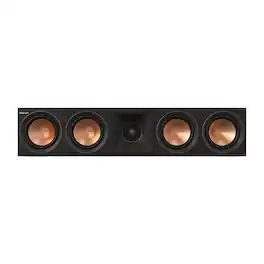
The third generation of Klipsch's award-winning premium Reference Premiere Series features new, larger proprietary Tractrix horn technology to improve high-frequency response and extension, while enhancing imaging and dynamics. Klipsch signature copper Cerametallic woofers with aluminum faraday rings and Tractrix ports provide powerful low frequencies while minimizing distortion and maximizing efficiency. Sleek cabinet design details exude refinement and luxury with enhanced cabinet bracing, aluminum binding posts, cat aluminum feet, and discrete Dolby Atmos connections that allow for easy and refined elevation speaker integration.

Upgrade your home theater with the Klipsch Next Generation Reference 30C center channel speaker. The aluminum tweeter with linear travel suspension and all new spun-copper thermoformed crystalline polymer (TCP) woofer with steeper anglies of the cones for a smoother response and improved accuracy and transparency. The Next Gen Klipsch Reference center channel speaker has a slim design that compliments todays flat panel TVs with an unobtrusive footprint.

The New Reference Series 800 Floor Standing Speaker features the most dramatic upgrades since the series' inception, including many technologies derived from the Klipsch Reference Premiere Series. The Spun-copper thermoformed crystalline polymer woofers utilize trickle-down technology from Klipsch's highly acclaimed Reference Premiere series of speakers. The two 8-inch injection-molded graphite woofers provide deep, distortion-free bass, while the exclusive Klipsch 1-inch aluminum LTS tweeter and larger 90 x 90 square Tractrix Horn provides improved coverage, bandwidth and directivity control. Easy to setup, supports Dolby Atmos, and has amazing sound that will blow you away!

The Reference Premiere RP-502S II surround speakers deliver the highest performing and encompassing sound possible. The third generation of Klipsch's award-winning premium Reference Premiere Series features new, larger proprietary Tractrix horn technology to improve high-frequency response and extension, while enhancing imaging and dynamics. Klipsch signature copper Cerametallic woofers with aluminum faraday rings and Tractrix ports provide powerful low frequencies while minimizing distortion and maximizing efficiency. Sleek cabinet design details exude refinement and luxury with enhanced cabinet bracing, aluminum binding posts, cat aluminum feet, and discrete Dolby Atmos connections that allow for easy and refined elevation speaker integration.
| Pros for Klipsch - RP-504C II Reference Premiere Series Quad 5.25" 600-Watt Passive Center Channel (Each) - Ebony | |||
|---|---|---|---|
| There were no pros for this product— | Sound Quality, Appearance, Design, Size, Power | Sound Quality, Appearance, Design, Bass, Highs | There were no pros for this product— |
| Cons for Klipsch - RP-504C II Reference Premiere Series Quad 5.25" 600-Watt Passive Center Channel (Each) - Ebony | |||
| There were no cons for this product— | There were no cons for this product— | Size, Weight | There were no cons for this product— |
Specs

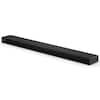
- LG - Sound Suite H7 Soundbar with Dolby Atmos FlexConnect - BlackMemorial Day Deal$899.99
- LG - 3.1.3 Channel SC9S Soundbar with Wireless Subwoofer, Dolby Atmos, WOW Orchestra - Black$699.99The price was $799.99
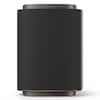
- LG - Sound Suite M7 Wireless Spatial Speaker with Wi-Fi and Dolby Atmos - Black$349.99The price was $399.99


Reviews
Rating 4.9 out of 5 stars with 43 reviews
Customer Images
The vast majority of our reviews come from verified purchases. Reviews from customers may include My Best Buy members, employees, and Tech Insider Network members (as tagged). Select reviewers may receive discounted products, promotional considerations or entries into drawings for honest, helpful reviews.