Universal Eyes - Four Variations On Artificial Society - COMPACT DISCS [CD]
Reviews coming soon
About this product
Universal Eyes started as Universal Indians in Lansing Michigan, in the early shadows of the 90's, with Gretchen Gonzales (now Gonzales Davidson), Bryan InchRammerInch Ramirez, & Johnny InchInzaneInch Olson. The trio started as a Jesse Harper cover band and managed to play every single basement that had a power outlet in the Tri county area. After moving to the Detroit area in the late 90's, Rammer was replaced by Aaron Dilloway and also joined by Nathan Young / a duo that were already in the throes of primitive electronic global domination that is WOLF EYES. The collective quartet played every basement, art space, record store, and club in the metro area that had a power outlet and could also handle the Michigan Progressive Underground audio sprawl. Around the dawn of the 2000's / Gretchen went full time with the moody & cold stylings of SLUMBER PARTY and after a wild Bowling Green Ohio gig, Olson joined WOLF EYES full time. After some drama that would make even Fleetwood Mac disappear into the shadows of suburbia and toss their EQ into a lonely fire, UNIVERSAL INDIANS appeared to have fate / faded into the packed history book pages of Michigan musical lore.As age and time seem to dust over wounds while magically healing them, the quartet met again in the northern suburbs of metro Detroit on a brisk spring Sunday in 2018. They hauled modern and ancient instruments into a home studio and just like that the dream / nightmare had hot blood pumping thru it's' duct-taped sound body once again, as if the missing years were nothing but a minute hurdle.See One-Sheet for full blurb01 16.4402 15.1303 9.2204 11.16 05 6.23
Specifications
- GenreRockDescriptionUniversal Eyes started as Universal Indians in Lansing Michigan, in the early shadows of the 90's, with Gretchen Gonzales (now Gonzales Davidson), Bryan InchRammerInch Ramirez, & Johnny InchInzaneInch Olson. The trio started as a Jesse Harper cover band and managed to play every single basement that had a power outlet in the Tri county area. After moving to the Detroit area in the late 90's, Rammer was replaced by Aaron Dilloway and also joined by Nathan Young / a duo that were already in the throes of primitive electronic global domination that is WOLF EYES. The collective quartet played every basement, art space, record store, and club in the metro area that had a power outlet and could also handle the Michigan Progressive Underground audio sprawl. Around the dawn of the 2000's / Gretchen went full time with the moody & cold stylings of SLUMBER PARTY and after a wild Bowling Green Ohio gig, Olson joined WOLF EYES full time. After some drama that would make even Fleetwood Mac disappear into the shadows of suburbia and toss their EQ into a lonely fire, UNIVERSAL INDIANS appeared to have fate / faded into the packed history book pages of Michigan musical lore.As age and time seem to dust over wounds while magically healing them, the quartet met again in the northern suburbs of metro Detroit on a brisk spring Sunday in 2018. They hauled modern and ancient instruments into a home studio and just like that the dream / nightmare had hot blood pumping thru it's' duct-taped sound body once again, as if the missing years were nothing but a minute hurdle.See One-Sheet for full blurb01 16.4402 15.1303 9.2204 11.16 05 6.23ArtistUniversal EyesTitleFour Variations On Artificial SocietyFormatCDLabelLower Floor Music
Reviews
This product doesn't have any reviews yet.
Compare similar products

Universal Eyes started as Universal Indians in Lansing Michigan, in the early shadows of the 90's, with Gretchen Gonzales (now Gonzales Davidson), Bryan InchRammerInch Ramirez, & Johnny InchInzaneInch Olson. The trio started as a Jesse Harper cover band and managed to play every single basement that had a power outlet in the Tri county area. After moving to the Detroit area in the late 90's, Rammer was replaced by Aaron Dilloway and also joined by Nathan Young / a duo that were already in the throes of primitive electronic global domination that is WOLF EYES. The collective quartet played every basement, art space, record store, and club in the metro area that had a power outlet and could also handle the Michigan Progressive Underground audio sprawl. Around the dawn of the 2000's / Gretchen went full time with the moody & cold stylings of SLUMBER PARTY and after a wild Bowling Green Ohio gig, Olson joined WOLF EYES full time. After some drama that would make even Fleetwood Mac disappear into the shadows of suburbia and toss their EQ into a lonely fire, UNIVERSAL INDIANS appeared to have fate / faded into the packed history book pages of Michigan musical lore.As age and time seem to dust over wounds while magically healing them, the quartet met again in the northern suburbs of metro Detroit on a brisk spring Sunday in 2018. They hauled modern and ancient instruments into a home studio and just like that the dream / nightmare had hot blood pumping thru it's' duct-taped sound body once again, as if the missing years were nothing but a minute hurdle.See One-Sheet for full blurb01 16.4402 15.1303 9.2204 11.16 05 6.23

An unrivalled collection of lesser-known 20th-century piano concertos in both Romantic and modern styles, in definitive recordings by Dutch artists.This survey of Dutch piano concertos actually begins in 1886, with the A minor work by Carl Smulders (1863-1934). Smulders sidesteps convention by opening not with a grand gesture but a slow, expectant build-up, breaking the template for A minor piano concertos established first by Schumann and then Grieg. The piano writing itself has a lyrically Griegian flavour, however, which Ivo Janssen brings out in this 1994 recording. The collection steps confidently into the last century with a glittering 13-minute concerto of 1927 by Willem Pijper, and a punchy neoclassical concertino from 1928 by Henriette Bosmans, who brings sumptuous, Rachmaninoff-style lyricism to the contrasting episodes. The shadows of Bartok and Ravel continue to fall on Kees van Baaren's 1934 Concertino, and Leo Smit's 1937 concerto for piano and wind ensemble. Another chronological leap forward takes the collection to 1964, with a second concerto by Van Baaren, who by now had adopted an angular serial idiom in tune with the times. From the same year, Henk Badings' Concerto for Two Pianos casts a retrospective look at the age of expressionist film scores in a dark and turbulent but conventionally structured work. Coming further up to date, the collection embraces the personal engagements with both modernism and the concerto tradition crafted by Tristan Keuris in 1980, and Ton de Leeuw in 1990. Finally, the 1991 concerto by Jan van Vlijmen encapsulates the musical journey of the 20th century into modernism and then towards an accommodation of it's principles with tonality. Like several other composers in this set, the name of Van Vlijmen deserves to be known far wider than his native Netherlands, and this superbly prepared recording presents the most compel
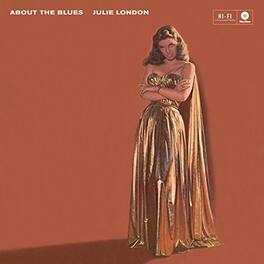
Julie London - About The Blues + 4 Bonus Tracks [VINYL LP] Bonus Tracks, Ltd Ed, 180 Gram, Spain - Import date 08/11/2017

Acclaimed for it's 'rhythmic verve, spontaneity and riot of splendid colors' (Pizzicato magazine on Giovanni Picchi's Canzoni da Sonar con ogni sorte d'istromenti), Concerto Scirocco now immerses itself in the English musical scene of the Elizabethan era, and more especially the genres of the masque and the fantasia. Great cultural ferment swept through England in the sixteenth and seventeenth centuries. The courts invested huge sums of money in the production of 'masques', entertainments combining music, dance, theatre and stage design in a sumptuous display of grandeur. At the same time, the first public playhouses were founded in the suburban districts of London The Theatre, the Red Lion, the Rose, the Swan, and in 1599 Shakespeare's Globe. Music played a key role in accompanying this eccentric burst of cultural vitality the asymmetrical fantasias of John Hilton, the monumental canzonas and pavanes of William Brade, the impudent, rhetorical masques of Robert Johnson and others, reveal an era of unparalleled musical invention and exploration.
Specs
Be the first to ask a question.
We’ll try to get your question answered within 24 hours by a Best Buy customer or brand representative.