Rating 4.7 out of 5 stars with 608 reviews
4.7- Performance (279)
- Price (89)
- FPS (63)
- Graphics Card (37)
- Resolution (29)
- Ray Tracing (6)
- Power Consumption (5)
- Compatibility (3)
- Drivers (3)
- Size (3)
Customer Images
The vast majority of our reviews come from verified purchases. Reviews from customers may include My Best Buy members, employees, and Tech Insider Network members (as tagged). Select reviewers may receive discounted products, promotional considerations or entries into drawings for honest, helpful reviews.
- Rated 5 out of 5 stars
ThenSet Up!
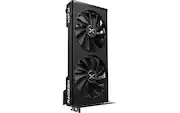
The XFX speedster S WF T210 AMD waiting on R at 6600 is an absolute game changer. Offering incredible formats and cutting edge features for gaming enthusiasts with its AMD R DNA 2 architecture. And 8 GB of Gd DR6 memory. This GPU delivers blistering frame rates and stunning visuals even in the most demanding time. I've been blown away by its ability to handle high resolution. Gaming and retracing technology with ease the combination of high clock speeds and advanced cooling ensures both a stable performance even during marathon, gaming sessions plus the sleep design and customizable R GB lighting. Add a touch of style to any gaming. Stand out feature. Is its support for AMD Fidelity effect? Super resolution FSR which enhances performance without compromising image quality, giving you an edge and competitive gift. Aiming, the XFX spacer S WF T210 also features HDMI2 point 1 and display port. 1.4 support enabling seamless connectivity with the latest displays and VR headsets. Overall, overall, I'm thirdly impressed with the Xfx Speedster S WF T210 AMD radio on RX 6600.Whether you're a casual game or a hardcore enthusiast is g p u delivers exceptional performance and value making it a must have for any gaming rig!
Posted by THANNAH
- Rated 5 out of 5 stars
Love it!
Love it. Run around 60-75 cel with everything maxed out. Using about 90% of the card with max settings. Gets 100-400 fps depending on game and background. Very quite. Only downside is the software will not auto update.
Posted by Keogh
- Rated 5 out of 5 stars
Might be the Best Buy for Budget Gaming at 1080p
Pros: +Comparatively low price ($260 USD at this time) +Good 1080p performance +Handles VR well +Smaller physical profile than most new cards +Lower end of power draw (you probably shouldn't need to replace your PSU) Cons: - Value is very price dependent, and prices have and will fluctuate. When I bought it was $300, when I started writing this review it was $240 or less, now it's $260; still a good deal overall, but less so now. At this moment, the 6650 XT, (the --50 series meaning it's an overclock, and the XT meaning it's one tier of performance up) is only $40 more ($309.99) with Best Buy and offers roughly 25% more performance; probably worth it. - It does dip in performance from time to time in certain games with certain settings. But it’s not a top of the line card, and I can’t complain too much for the price. The research I've done puts the "rx 6600" on average just a hair behind the "3060 rtx", it’s pleasantly capable of high (100+) frame rates with medium/high settings and in some cases even ultra graphics settings at a 1080p resolution. But the rx 6600 manages it while being significantly cheaper than the 3060; at least at the time of writing this. Gameplay isn’t flawless, and like I said before it does dip from time to time, presumably as it makes contact with its limits which is usually when loading in new assets, but it holds well when everything is loaded in. I’d say it's pretty great for the price point. And if you’re willing to part with some settings you can squeeze out a more than comfortably robust framerate. Some arbitrary performance numbers (1080p): Borderlands 3 (High) - 105 FPS (in game benchmark) AOE II DE (Ultra) - 110 FPS (gameplay average), 1278.3 (“multiplayer benchmark”) Shenmue III (Very High) - 130 FPS (“gameplay” average - there are a lot of cut-scenes) Star Wars Battlefront II (EA) (High) - 144 FPS (gameplay average) (Co-Op Mode) Valheim (Custom, low settings, but high rendering distance) - 85 FPS (gameplay average) (hosting 2 player server) I've found it harder to track VR performance, but anecdotally I'd say it's pretty good, and I noticed an improvement coming from an RX480. I don't have solid numbers for running games on Ubuntu via Steam/Proton, I find when I game I tend to stick with Windows still, but anecdotally I'd say the games that I tried, and that worked, worked surprisingly well. I want to say I was able to get 10 more FPS in Valhiem even with somewhat improved settings. A quirk I encountered: If you install the Adrenaline support software, maybe don’t enable Radeon Enhanced Sync or Radeon Boost. I can’t definitively say I saw any performance or visual improvement for having them enabled, but I certainly encountered some performance hiccups, scenes and gameplay acting really choppy that at first made me worry the card had a hardware level defect. Researching it online the advice I found was to uninstall adrenaline, but just disabling those two features solved the problem for me. The AIB, XFX: If you're unfamiliar, Xfx is a Californian company, owned by a Hong Kong holding group, that has specialized in Radeon/AMD graphics cards sine 2009. The market opinion I've gathered is that while not currently a favorite by most, they are regarded well and have no standout controversies from the last 10 years. The XFX "Speedster SWFT" line designates their more budget friendly cooler they have put on the 6000 series GPUs. The consensus I found was that it is more than sufficient for most of the cards, save for perhaps the higher end GPUs or for overclocking where the "MERC" cooler configuration might be better suited. I can’t say I’ve encountered any thermal issues with this cooler, and I'm honestly a fan of its simple and unflashy design. Sound: I can't say I've noticed any particular sound level increase from the GPU, I’m pretty sure it's quieter than my case fans. But also I keep my tower on the floor. Speculation: The next generation of GPUs are starting to be released now, but in a descending order from high end performance and price, and with some concerns of generational price inflation at starting MSRPs. New mid-range cards are expected in 2023 Q1-Q2, and presumably new low end cards some time after that. Nvidia's philosophy for their 4000 series cards seems to be big money for big cards in every sense of the word. And Radeon, so far, seems to still be offering a reactive and comparative value proposition. Both have had notable hardware level issues that they’ve been shaking out with the newest generation (specialized power cables for Nvidia’s hefty power draw melting, Radeon’s cooling solutions improperly filled vapor chambers/surprisingly low generational rendering gains), and personally I don't expect anything new with as good 1080p performance at sub $300 in 2023. The Intel cards may be a viable alternative at this price point, but Best Buy does not currently sell them and they lack acceptable VR functionality at this time to my knowledge. Anyway, even if there is an rx 7600 released later this year, and there might not be, and even if it continues the trend so far of being 10-30% better at rendering over last generation with Radeon GPUs, and it might not, and even if it keeps the same last gen MSRP ($329), and it probably won’t, getting the Xfx 6600 today is still a good buy if you don't want to or can't drop the better part of half a grand on a GPU just to play comfortably at 1080p. My other components for reference: Intel 10600K (6 Core, 4.1 Ghz) A Gigabyte 490 motherboard 16 GB 3600MHZ DDR4 (Crucial Ballistix) Oculus Rift - CV1 Windows 10/Ubuntu Jammy Jellyfish Also Pictured is an MSI r7 265 2GB OC that has served since 2014 and was swapped out of this rig, for everyone to pay their respects/scale. He's still running strong but has been retired to a cozy position in a budget build, strictly office PC.
Posted by 4to25Characters
- Rated 5 out of 5 stars
Great card for upgrade!
Great Price for an upgrade from GeForce 1060 3GB. Easy to install, great card, especially for gaming and editing.
Posted by MichaelP
- Rated 5 out of 5 stars
AMD ROCKS
Bought a custom built PC off my little brother he built it in 2018 and it’s now 2024. Had a Ryzen 5 2600 cpu and Nvidia 1060.my wife Kept getting kicked from COD with direct X errors. Finally bit the bullet and upgraded the cpu to a 5600 and also bought this graphics card. I’ve never built a pc before but this was more straight forward than flashing a modern car computer. Ontop of that the graphics perform next to, if not better than my Alienware laptop. Highly recommend.
Posted by NicholsU