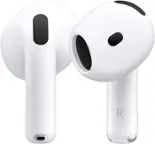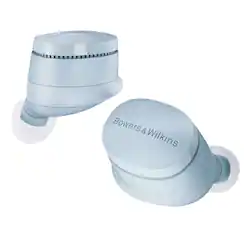
Bowers & Wilkins - Pi6 True Wireless Noise Cancelling In-Ear Earbuds - Glacier Blue
- Key Specs
- Noise Cancelling (Active): true
- Connection Type: Wireless
- Wireless Connectivity: Bluetooth (The manner in which a device sends data to another device over a short distance without the use of wires or cables.)
- True Wireless: true (These headphones not only lack wires between the device and headphones, they also lack wires between the headphones themselves. (true wireless is really only possible with in-ear headphones))
- Water Resistant: true (Resists some degree of water penetration.)
- Built-In Microphone: true
- Carrying Case: true
- Headphone Fit: In-Ear
- Ear Tip Sizes Included: Extra small, Small, Medium, Large
- General
- Brand: Bowers & Wilkins
- Model Number: PI6GLACIERBLUE
- Product Name: Pi6 True Wireless Noise Cancelling In-Ear Earbuds
- Color: Glacier Blue
- Ear Tip Sizes Included: Extra small, Small, Medium, Large
- Audio
- Noise Cancelling (Active): true
- Sound Isolating: false
- Environmental Noise Control: true (A technology that automatically or manually adjusts, or eliminates, ambient background sound to allow conversational voices to be heard clearer.)
- Driver Size: 12 millimeters
- Connectivity
- Connection Type: Wireless
- Wireless Connectivity: Bluetooth (The manner in which a device sends data to another device over a short distance without the use of wires or cables.)
- True Wireless: true (These headphones not only lack wires between the device and headphones, they also lack wires between the headphones themselves. (true wireless is really only possible with in-ear headphones))
- Features
- Water Resistant: true (Resists some degree of water penetration.)
- Built-In Microphone: true
- Carrying Case: true
- Number of Programmable Buttons: 1
- Design
- Headphone Fit: In-Ear
- Power
- Rechargeable: true
- Charging Accessory Included: Cable, Case
- Dimensions
- Product Height: 2.05 inches (The out of box height of the item. Height is measured as the vertical distance from the bottom of the item to the top as it would be primarily used or placed.)
- Product Width: 2.56 inches (The out of box width of the item. Width is measured as the horizontal distance from one side of the item to the other as it would be primarily used or placed.)
- Product Weight: 0.13 pounds (The out of box weight of the item.)
- Other
- UPC: 714346349029
Experience unparalleled audio with Bowers & Wilkins Pi6 True Wireless Earbuds, featuring a true 24-bit connection and aptX Adaptive technology for dynamic, high-resolution sound. The 12mm bio-cellulose drivers, adapted from our Px7 S2e headphones, reduce distortion and enhance high-frequency details, delivering lifelike clarity. Great for commuting, these earbuds boast advanced active noise cancelation and three microphones for crystal-clear calls. The noise cancelation adapts to your environment, ensuring uninterrupted sound. Crafted with premium materials, the Pi6 offers an ergonomic fit and features an intuitive single-button control, supporting multiple functions. Stay powered throughout the day with quick charge support, providing an extra 2 hours of use with just a 15-minute charge. Enjoy up to 8 hours of earbud battery life and an additional 24 hours with the charging case. These durable and versatile earbuds come with an IP54 rating for protection against water and dust, making them suitable for a range of activities, from running and working out to enjoying music outdoors. Use the Bowers & Wilkins Music App, compatible with iOS and Android, to stream music from services like TIDAL, Pandora, Qobuz, Deezer, and SoundCloud, ensuring you always have your favorite tunes at your fingertips.
- True Wireless Earphones: Bowers & Wilkins Pi6 Wireless Earbuds deliver high-resolution audio with a true 24-bit connection and aptX Adaptive technology. These earbuds dynamically adjust for optimal performance, whether you're enjoying music, watching movies, or gaming.
- Distortion-Free, Detailed Audio: The 12mm bio-cellulose drive units, adapted from our Px7 S2e headphones, reduce distortion and enhance high-frequency detail. This design allows you to enjoy lifelike clarity and precision sound that brings you closer to the original recording.
- Advanced Noise Cancelation: Designed for commuting, these true wireless earbuds are equipped with bespoke active noise cancellation and three microphones for pristine call quality. The level of noise cancellation is adjusted automatically according to your environment.
- Ergonomic Design with 1-Button UI: Premium materials combined with the ergonomic design of these Bluetooth earbuds ensure comfort and a secure, snug fit. The intuitive single-button control supports multiple functions, making them easy to use for extended periods.
- Direct Music Streaming via App: Stream directly from services like TIDAL, Pandora, Qobuz, Deezer, SoundCloud, and more using the Bowers & Wilkins Music App, compatible with both iOS and Android. Just search for your favorite song, artist, or album, and enjoy all available options.
- Fast Charging with Charging Case: Quick charge support allows you to stay connected, providing an additional 2 hours of use with just a 15-minute charge. Offers up to 8 hours of earbud life and a total of 24 hours with the quick charging case to ensure uninterrupted listening throughout your day.
- IP54 Water and Dust Protection: With an IP54 rating, these Bluetooth earphones offer protection from water and dust. Robust performance is ensured in any environment, whether you're running, working out, engaging in sports, or enjoying your favorite music outdoors.
- True Wireless Earphones: Bowers & Wilkins Pi6 Wireless Earbuds deliver high-resolution audio with a true 24-bit connection and aptX Adaptive technology. These earbuds dynamically adjust for optimal performance, whether you're enjoying music, watching movies, or gaming.
- Distortion-Free, Detailed Audio: The 12mm bio-cellulose drive units, adapted from our Px7 S2e headphones, reduce distortion and enhance high-frequency detail. This design allows you to enjoy lifelike clarity and precision sound that brings you closer to the original recording.
- Advanced Noise Cancelation: Designed for commuting, these true wireless earbuds are equipped with bespoke active noise cancellation and three microphones for pristine call quality. The level of noise cancellation is adjusted automatically according to your environment.
- Ergonomic Design with 1-Button UI: Premium materials combined with the ergonomic design of these Bluetooth earbuds ensure comfort and a secure, snug fit. The intuitive single-button control supports multiple functions, making them easy to use for extended periods.
- Direct Music Streaming via App: Stream directly from services like TIDAL, Pandora, Qobuz, Deezer, SoundCloud, and more using the Bowers & Wilkins Music App, compatible with both iOS and Android. Just search for your favorite song, artist, or album, and enjoy all available options.
- Fast Charging with Charging Case: Quick charge support allows you to stay connected, providing an additional 2 hours of use with just a 15-minute charge. Offers up to 8 hours of earbud life and a total of 24 hours with the quick charging case to ensure uninterrupted listening throughout your day.
- IP54 Water and Dust Protection: With an IP54 rating, these Bluetooth earphones offer protection from water and dust. Robust performance is ensured in any environment, whether you're running, working out, engaging in sports, or enjoying your favorite music outdoors.
Whats Included
- 2xPi6 ear buds
- Pi6 charging case
- ear tips (XS/S/M/L)
- charging cable
- literature pack
- 2xPi6 ear buds
- Pi6 charging case
- ear tips (XS/S/M/L)
- charging cable
- literature pack
Q: How long does the battery last on the earbuds?
A: The earbuds have a battery life of up to 8 hours, and the charging case provides an additional 24 hours.
Q: What is the warranty on the earbuds?
A: The earbuds have a two-year warranty for both parts and labor.
Q: What type of noise cancellation technology do the earbuds use?
A: These earbuds have advanced active noise cancellation technology that adapts to your environment to ensure uninterrupted sound.
Q: Do the earbuds come with different ear tip sizes?
A: These earbuds include extra small ear tips.
Q: Can the earbuds be used for phone calls?
A: These earbuds have three microphones and advanced active noise cancellation for crystal-clear calls.
Q: What is the water resistance rating of the earbuds?
A: These earbuds have an IP54 rating, which means they are protected from water and dust.
A: Hello, and thank you for your interest in our Pi6 earbuds. You can disable the Noise Cancellation feature by pressing the left earbud for one second, which will switch the earbuds to passthrough mode. The free Bowers & Wilkins Music app allows you to customize the control of the buds.