Questions & Answers
No content

- Model:
- 2020
- |
- SKU:
- 2926045
$87.99Your price for this item is $87.99
Page Showing 1-5 of 5 questions
Q: QuestionHow high does this antenna need to be?
Asked by Bonnie.
- A:Answer Bonbon- The optimum height for an antenna will vary for every location. Higher is usually better than lower. General rule of thumb; Mount it higher than the peak of your roof, and try to keep it away from flat reflective surfaces.
Answered by Channel Master Expert

Q: QuestionWhat is the signal range?
Asked by Veryrural.
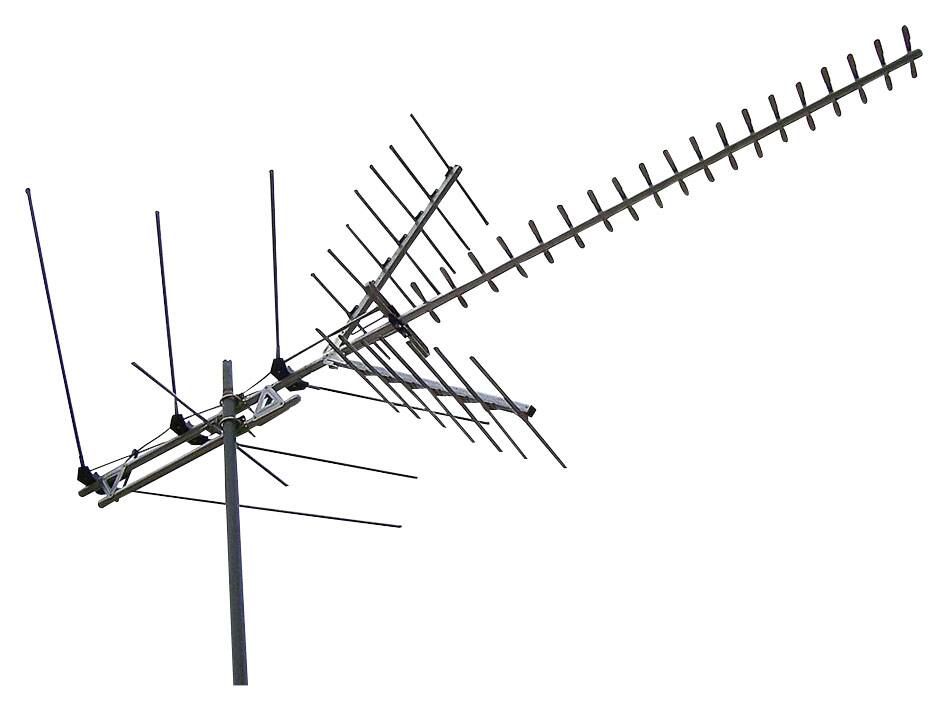
- A:Answer Veryrural- CM-2020, Digital Advantage 100. There is no definitive answer that. The antenna manufactures have adapted a type of rating/describing antennas, where under the right circumstances, including the transmitters being LOS (Line Of Sight) to your location, will probably receive signals, from certain distances. If there are obstacles between you and the TV transmitters, then that 'distance rating' is not valid. We need to have some way to describe the antenna in simple terms. What you should usually consider, in addition to the TV signal , signal path and the ratings in miles, is the actual 'Gain' ratings. The CM-2020 gain is rated at 7.5dB on VHF channels 2-13, and 10dB on UHF channels 14 and higher. I hope this helps.
Answered by Channel Master Expert
Q: QuestionHow many televisions can I use with this antenna?
Asked by Tom.
- A:Answer Tom- There are no limitations as to how many TV's can be connected to an antenna. You want to connect your antenna to a TV, with as short of coax cable that is possible. Now you fine tune the direction that you point the antenna. Now you can start adding other TV's. If you no longer get the same channels as you did with the short coax cable to 1 TV, then you could benefit from a preamplifier. Preamps (And all amps) are designed to take the 'good usable signals' from the antenna and amplify them to a level where, while going through your cables and splitters, the signals will not deteriorate to a point where they are no longer 'good usable signals'. If the signal has already deteriorated to a point where they are no longer 'good usable signals', then amplification cannot fix your signal. SIGNAL; Do I need an Amplifier? 1. Check the TV signals at your antenna without any signal amplification. a. Ideally you’d have an RF spectrum analyzer, but if you have a small ATSC HD TV, you could bring that to your antenna. Adjust your antenna for the best reception for the channels that you want to receive. a. Document the channels received and the signal strength and signal quality on each channel.b. You will use this as your baseline to use throughout the rest of your system. Now, check the signals/channels at all of your TV(s) that are connected throughout your house. If you don't receive the same channels at your TV’s, compared to the stations received at your antenna, then you will need to determine why. You know what signals you can receive at the antenna, (Baseline measurements documented) and you want to get the same results at all of your TV’s. You have a long RG6 Coax cable connected to your antenna that goes into your house. Locate the end of that antenna cable in the house. Test and document the signals/channels you receive at the end of the cable.a. If you don’t receive all of the same channels that you were able to receive right at the antenna, then you will need to install a “Preamplifier” at your antenna to compensate for the signal lost while going through the connectors and long cable.b. If you still get all channels at the end of that antenna cable that you were able to receive right at the antenna, then you know that you do not need to install a “Preamplifier” at your antenna. If you have long cable runs and/or signal splitters in your antenna system, then you may require a preamplifier or distribution amplifier to properly distribute the signals from your antenna, to your TV’s. Choosing the proper equipment. 1. Your amplification must occur/start at a point in your system where the signal is still good and you are able to receive the same channels that you were able to receive right at the antenna. 2. The cable lengths, splitters, connections, and number of additional runs to TV's will dictate your decisions on how much amplification is needed. . Things to consider before deciding on signal amplifiers; 1. The TV signals are measured in dBmV. a. TV signal deteriorates as it goes through long coax cable runs. i. The amount of signal loss per foot, can be obtained from the manufacturer of the coax cable. 1. Most RG6 coax will average about a 5db loss in 100ft. (@500MHz) ii. When using signal splitters, the signal deteriorates. 1. The signal loss (In dB's) is normally printed on the splitter. a. For a quick calculation you could go with a 5dB loss through a splitter. b. Rule of thumb is that you desire 0dBmV (dB) signal at your ATSC HD TV Tuner. c. Signals levels that are considered acceptable are +11dBmv to -11dBmv. d. Too high of a signal at your TV tuner can overload the TV tuner and cause problems or no signal at all. 2. Too high of a signal at the input of your amplifier can cause problems and pass no signal at all.
Answered by Channel Master Expert
Q: Questiondo I need a rotor to turn it in different directions for better reception?
Asked by Anonymous.
- A:Answer Hello- In many locations, you may be able to receive signals from 'multiple TV markets', or just 'multiple directions' from your location. The Digital Advantage series antennas, and all 'Log Periodic/Yagi' style antennas are considered 'directional. Under the right circumstances, this style of antenna can also receive signals from the rear and even from the sides. However, if you are in an area with weak signals, long distances from the TV transmitters, you will need to point the antenna towards the transmitters. The rotator could be the best solution for getting reliable reception.
Answered by Channel Master Expert
Page 1, Showing 1-5 of 5 questions