The vast majority of our reviews come from verified purchases. Reviews from customers may include My Best Buy members, employees, and Tech Insider Network members (as tagged). Select reviewers may receive discounted products, promotional considerations or entries into drawings for honest, helpful reviews.
Page 7 Showing 121-140 of 689 reviews
Rated 5 out of 5 stars
Great little camera for content creators
|
Posted .
This reviewer received promo considerations or sweepstakes entry for writing a review.
Out of the box you have almost everything you need to get started ( you will need your own memory card ). Setup was easy and flawless, due to QR codes included in the instructions in the box, and as you go through the setup in the camera. You will be directed to the Google play store, or Apple App Store.
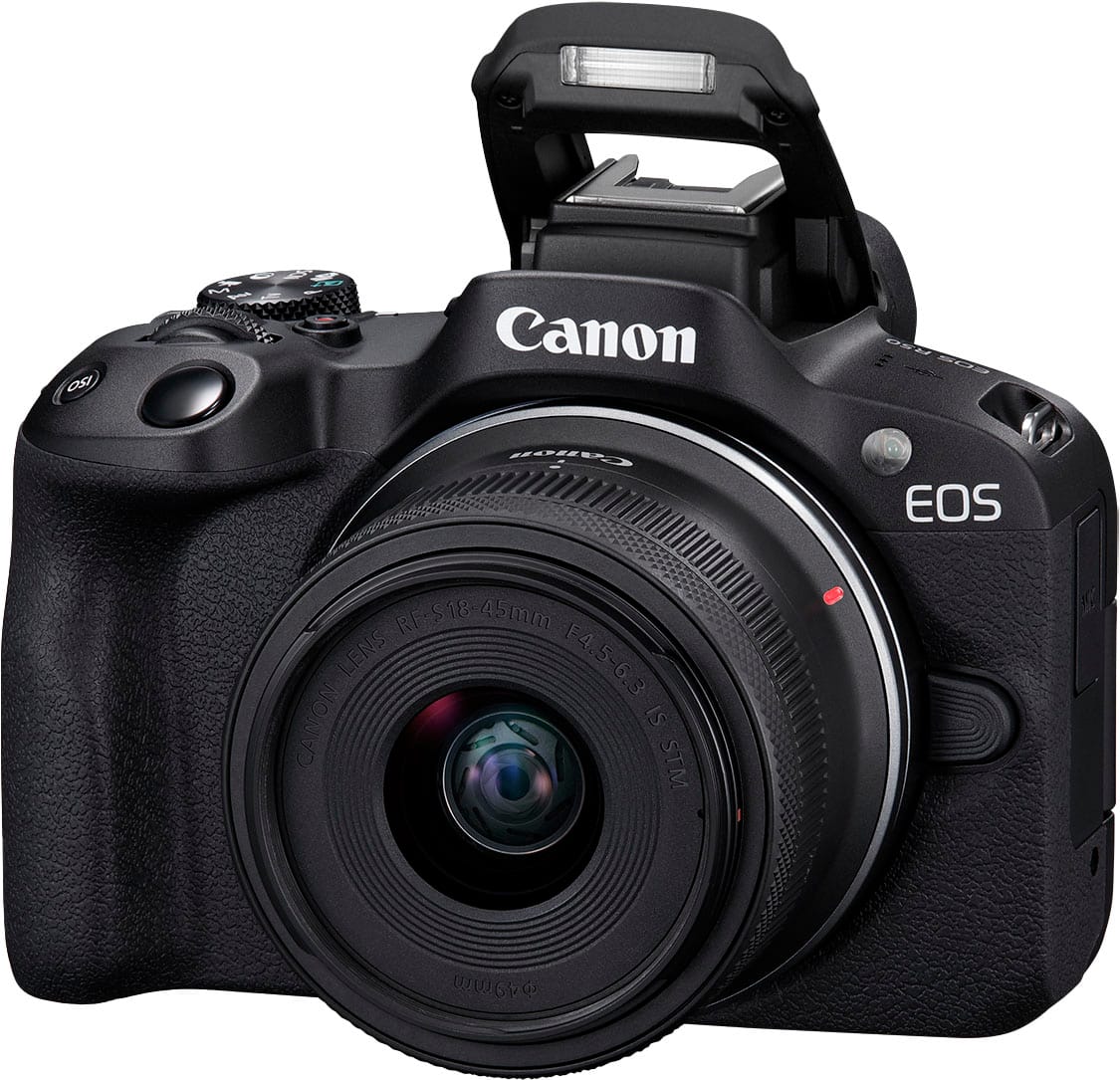
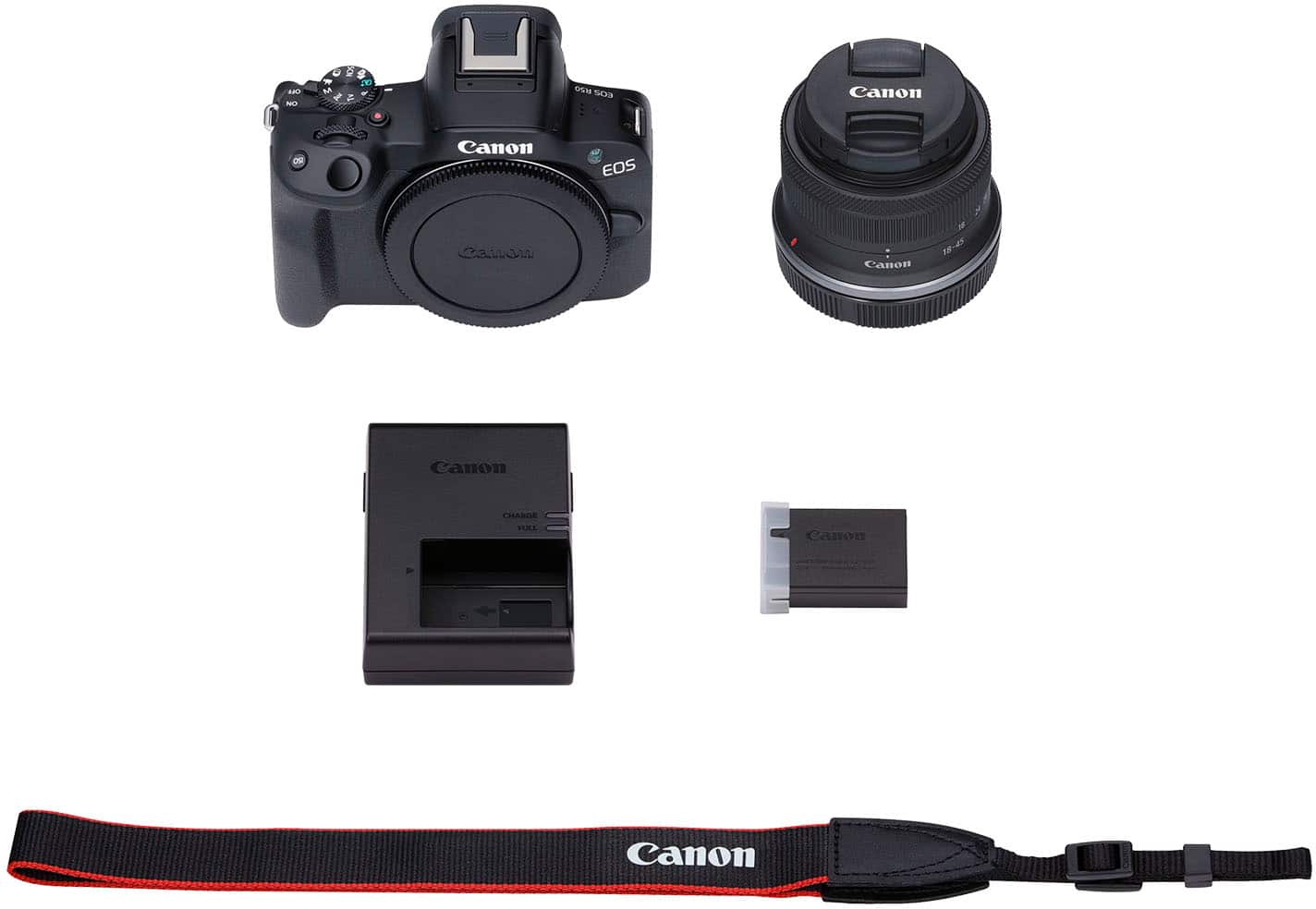
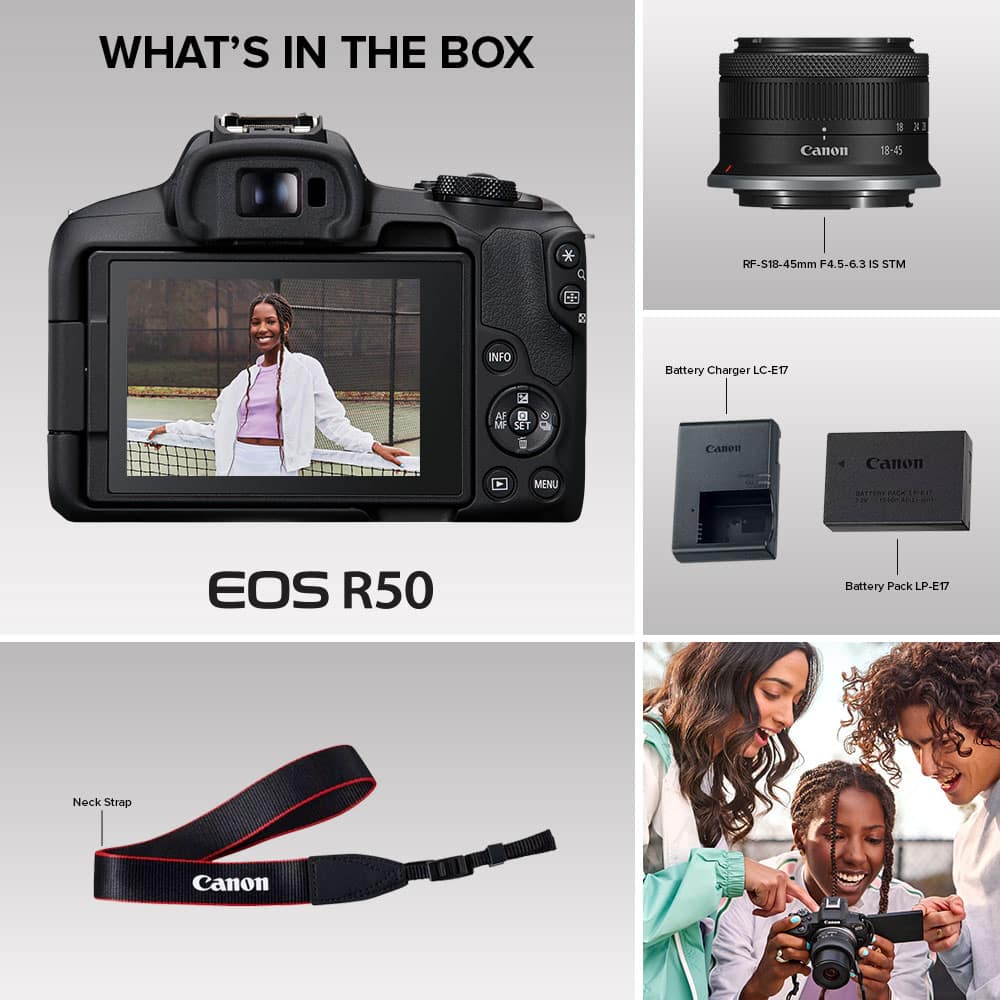
I opted to get started using Bluetooth, although also equipped with Wifi capabilities, and my phone and new camera were paired instantly. In the box you get the lens, camera, battery pack and connector, along with a camera strap. First charge took about 2 hours to complete. The indicator lights up green when fully charged, so you never have to question it.
This Canon is truly jam packed with features. Being able to auto upload your work without having to take the memory card out is a great feature. I was also able to upload my content quickly, and effortlessly. The quality and the lens is so crisp, and it allows you to focus on even the smallest details.
Pretty lightweight, easy to carry, the ability to create high quality 4K content, vibrant screen quality you can’t ask for more. Even good for beginners
This reviewer received promo considerations or sweepstakes entry for writing a review.
This is my first full frame camera, I have always had nice point-and-shoot cameras but was never willing to take the jump thinking it would be too much to deal with when I want to just grab some pics.
When I first turned this on, I was amazed at how easy it was to figure out. Before long, I was clicking shots, playing with settings and grabbing videos of things around the place. Though there are a bunch of buttons, the ones you use often are well-placed and easy to reach. The menu system is intuitive, I have only had to go to the manual a couple of times to figure things out.
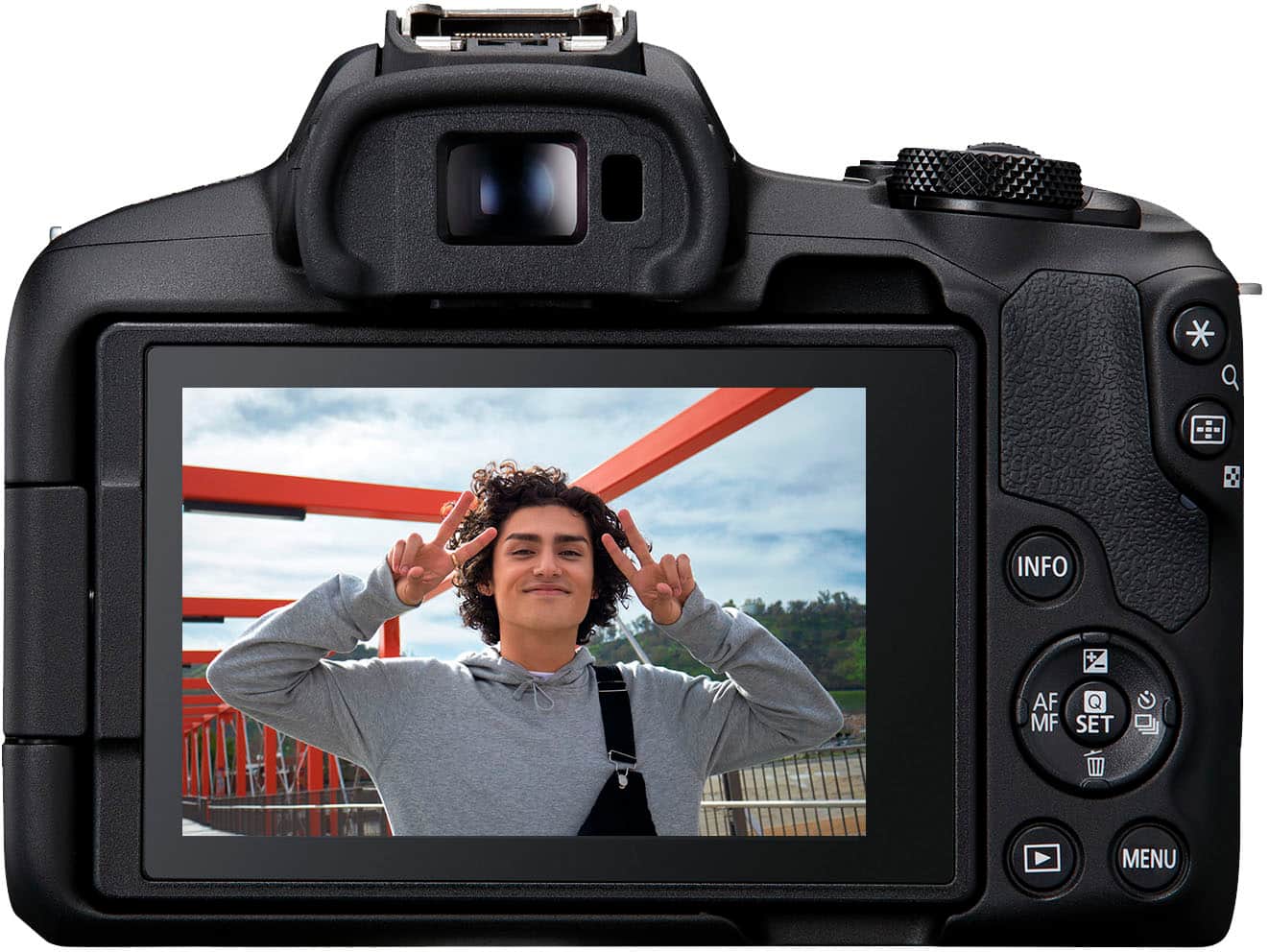
The viewfinder is very bright as is the screen, both of which allow easy framing of the subject. The touchscreen makes navigating the menus easy, allowing instant selection without fumbling with a “t” button to move around.
Battery life is pretty decent, I took 144 pictures and videos and uploaded them to the cloud before it started flashing to warn me that the battery was getting low. I purchased two aftermarket batteries and a double charger that worked without any problems.
The lens that is included does a fair job as an all-around lens, offering some zoom function as well as “regular” view of the subject. It does a pretty good job of stabilizing both video and pictures, something that really helps when I’m not too stable myself while filming and checking settings!
Custom presets are what really made this stand out for me, I don’t have to fire up a photo-editing program to change many things, including style of shooting (such as black and white or other color filters). The presets are available from the touchscreen when the dial is set to each mode.
I was able to take some videos and pictures of students dissecting and doing other experiments and also used my phone to compare. The pictures, as expected, on the Canon are much better. I never realized how much better the pictures could be, I had gotten used to cell phone images after so many years of using them. I am looking forward to summer vacations with the kids and grandkids, I will have even better record of our memories this year!
Overall, I can see the draw of a real camera. I have been bitten by the photography bug again! I can’t leave this thing in the case for very long. It does take a few seconds longer to get it out and set up for the first shot than my phone, but the results are very worth it. The specs for this camera are amazing compared to the camera I was looking at buying just a few years ago at the same price point. Technology has enabled an incredible collection of features and I am glad that I got back into this at this stage of development.
This reviewer received promo considerations or sweepstakes entry for writing a review.
The Canon R50 is an absolute gem! Super compact, crazy fast autofocus, and the image quality is on point. I love how lightweight it is—perfect for travel or vlogging. Coming from a Nikon D3300, the autofocus on this thing feels like magic. Low light? No problem. Battery life could be better, but honestly, for what it does, I’m beyond happy. If you want an easy-to-use mirrorless camera that delivers pro-level results without breaking the bank, this is it!
Perfect if you want to step up from your cellphone
|
Posted .
This reviewer received promo considerations or sweepstakes entry for writing a review.
I’ve been a Canon camera fan for years so this is not my first mirrorless camera, but I can say for sure that it is a perfect entry level and very user friendly. No complicated menu settings, and the fully touchable flip screen makes it even easier to navigate and operate the menu.
The Canon EOS R50 camera is very compact, lightweight, and it was easy to carry around during a weekend getaway.
At first I noticed a few differences between this camera and my previous one.
The Canon EOS R50 camera has an Electronic Viewfinder that has been designed to provide a bright, sharp and colorful view. Love it!
When you turn the camera on, you actually have to set the lens to the shooting position, meaning you have to manually have to extend the lens before it will function.
Another difference I noticed was with the Canon EOS R50 camera you can record videos up to a hour. I also loved the superior 4K quality, AF tracking for humans, animals and vehicles, and movie for product close-up demo mode, which is perfect for content creators.
Although I am not a professional photographer, I am very picky with my pictures, and I would definitely recommend it to anyone wanting to step up from their cell phones.
Now if you are a vlogger, you might need to invest in an adapter + a wider lens in order to film yourself.
This reviewer received promo considerations or sweepstakes entry for writing a review.
Everytime I try and record with this camera it freezes after I finish recording and I get a “cannot play back movie” error. Don’t waste your money on this
This reviewer received promo considerations or sweepstakes entry for writing a review.
Overall
The Canon R50 is a capable, light, and easy to use camera system. If all your prior knowledge of cameras was that from a smartphone, this one will make you feel right at home with plenty of room to grow. The auto Ai function will take care of everything for you with a single tap on the screen for picking a base mode. The resulting images are great with little to no post processing needed for an excellent shot. The touch display is bright and handles well in any environment, I've yet to have issues with it. The hood flash is plenty bright for well lit shots of people or objects. The camera being small is cramped and has a narrow grip that makes it harder to hold for me. The button layout leaves something to be desired, at least the directional keys and center button. I frequently press down when aiming for the set/OK key.
Software
Canon cameras are packed with software for just about everything. From editing, remote operation, and transfer; both desktop and smartphone. The remote app doubles as the transfer app to import images from your camera. I do need to add that the CameraConnect app never connected with my Android device. I only managed to get it paired with an iPhone XR. They also include 30 days of rolling cloud storage and 10gb of long term storage. Rolling storage doesn't count toward the 10gb.
Features
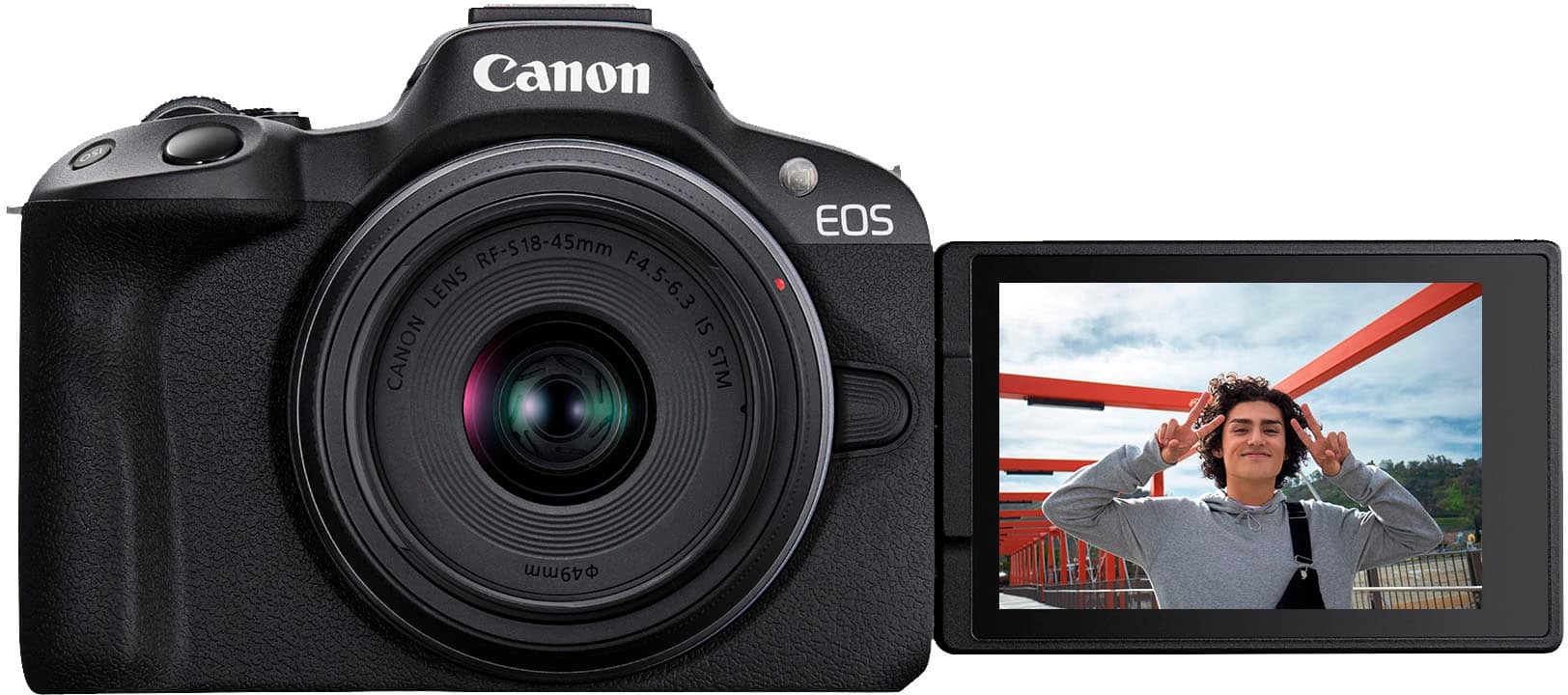
The touch screen display is bright, responsive and sharp. It flips out, rotates and folds back in. It allows for selfie shots by flipping the screen out and facing it toward you. Folding it back in gives you a larger screen other than the viewfinder. There's a sensor in the viewfinder that disables the display while it picks you up, whether your hand reaching across or your eye looking in. IS (Image stabilization) removes a lot of handshake from your shots. There's 2 modes, standard and enhanced. Battery life is adequate getting up to 2 days of sporadic use.
Considerations
Only 1 control dial, this felt odd when first holding the camera but got used to it within the hour. If you're a novice, you may not care or understand this point.
Recording 4K, and other modes, prompts a potential overheating/shutoff warning.
Small frame, short grip. If you have large hands you may find handling the camera a little troublesome. Compact top buttons add to this.
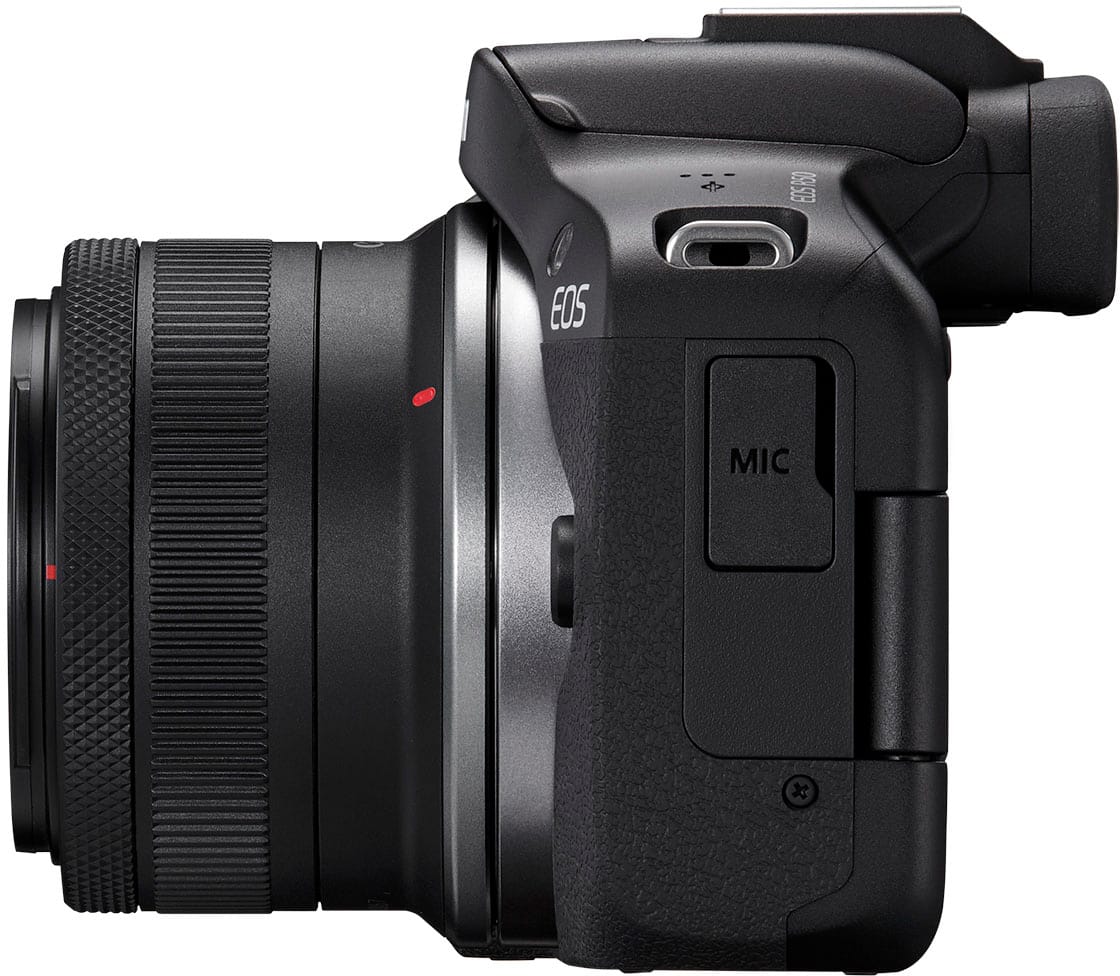
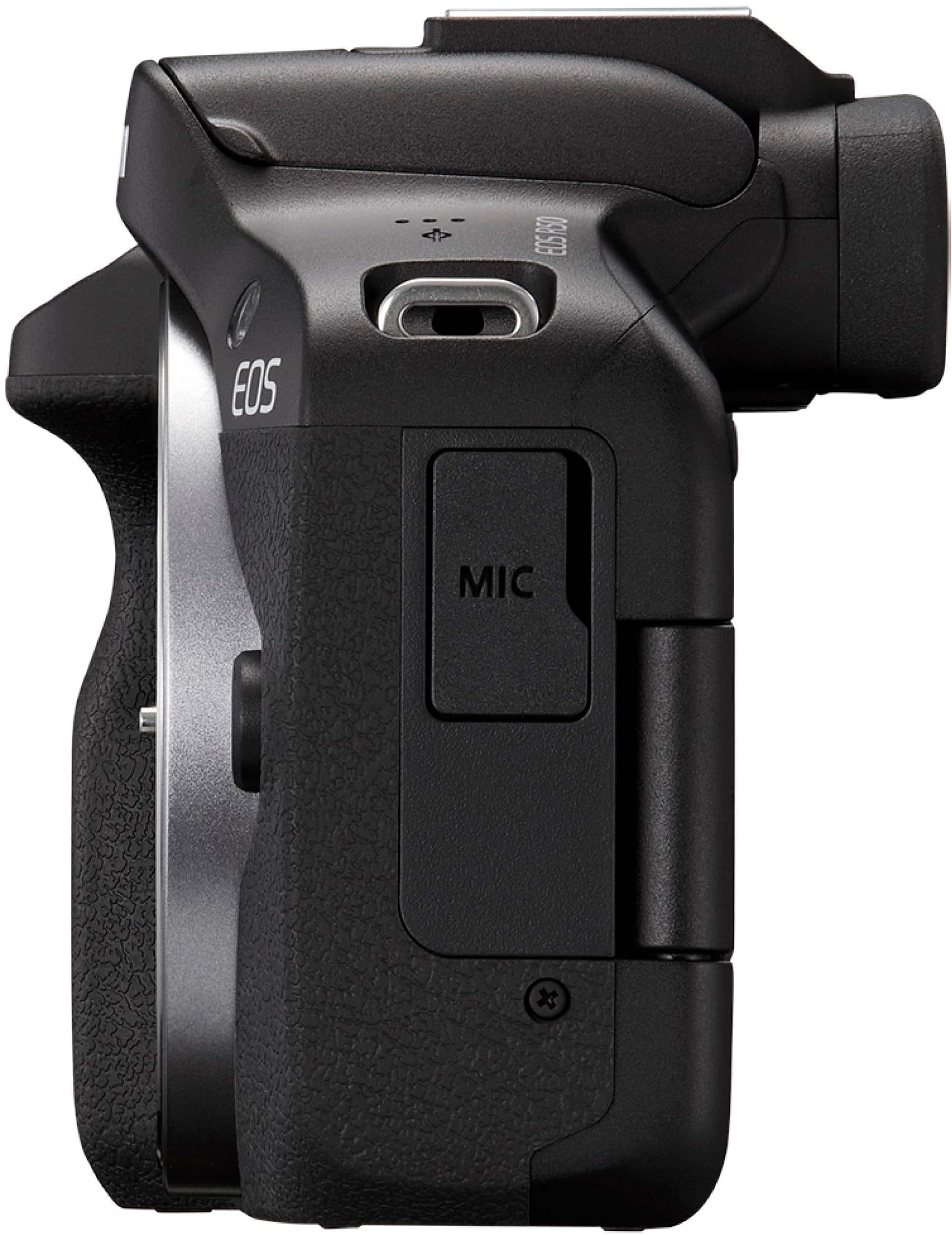
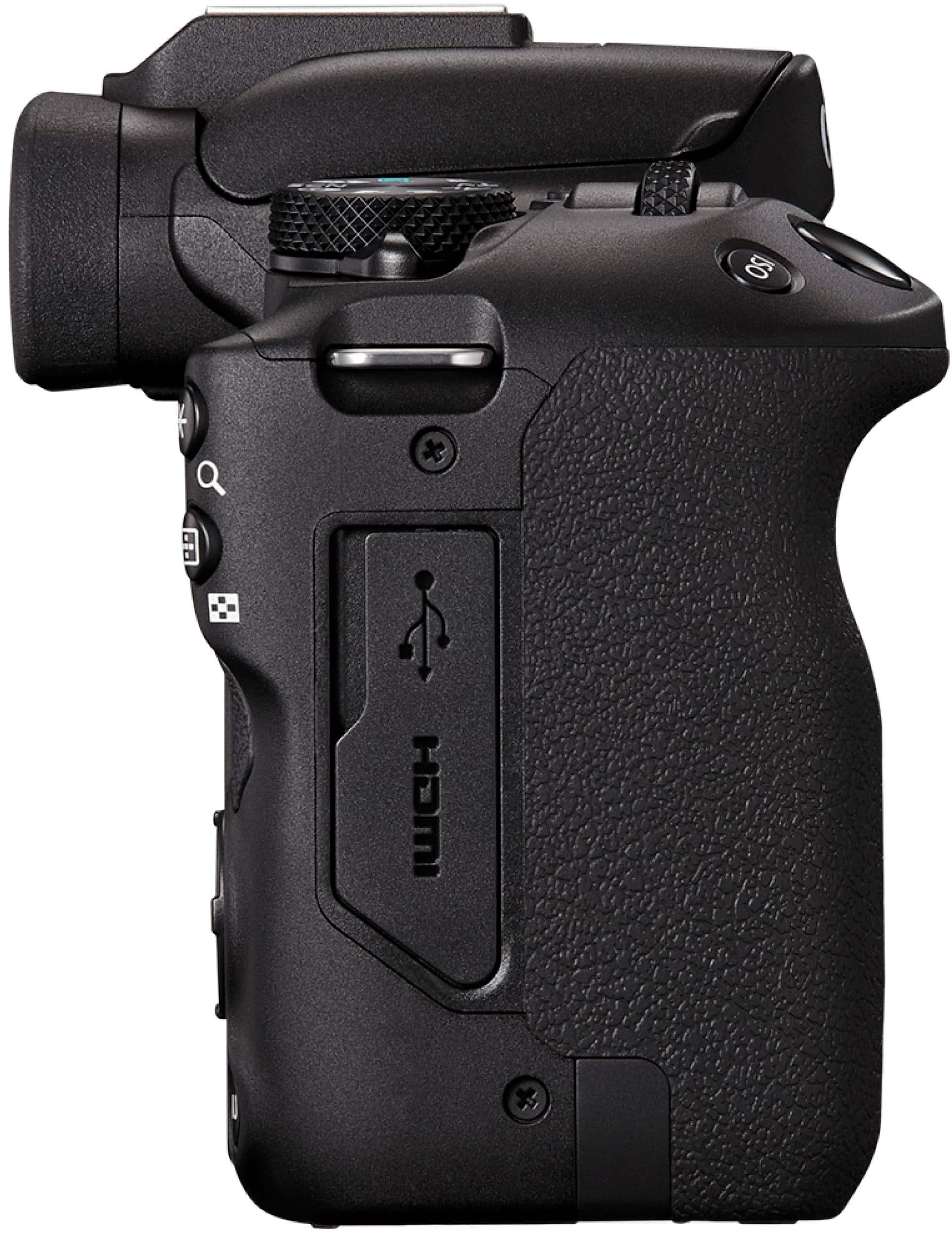
Peripheral ports are on opposing ends. HDMI and USB on one side, mic on the opposite. This one really depends on the type of equipment you have or plan to use with it.
Conclusion
At the end of the day, this is a fantastic camera. It's light, feature packed, and takes great shots. The positives outweigh any of my negative remarks.
This is worth 5-stars.
This reviewer received promo considerations or sweepstakes entry for writing a review.
Absolutely love this camera! I’ve been a “canonphile” ever since the earliest 1.2MP Powershot in 1996. This camera continues the tradition of fantastic photographs with an intuitively designed piece of equipment. I really love the fact this camera can grow as my photography skills improve. The included lens works great as “tourist lens” but I’ve also added a 55-220mm lens and a 50mm prime lens. The versatility of the R50 just cannot be underestimated, especially as an “entry level” mirrorless camera system.
This camera is a MUST for anyone who is a content creator… be it a vlogger, instagrammer, Pinterester, etc. it’s super simple to get excellent 4k video. Colors and image detail are crisp and vibrant. It’s easy enough to use for a teenager’s video diary blog, but technical enough for a photojournalist reporting on the latest gadgets at CES. It’s a remarkable piece of kit, and really shows Canon did their homework on what creative people want in a camera they’ll use to express themselves.
As for the photos, Canon’s app makes it super quick and easy to pull images from the camera to your favorite iOS or Android device. Older cameras I’ve had would often fail because the camera would go to sleep mid transfer. I’ve taken burst pics of my dog running, capturing 20+ images, and uploading to my 12” tablet was smooth as butter. Everything just worked effortlessly.
Lightweight and Feature Packed fro Content Creator
|
Posted .
This reviewer received promo considerations or sweepstakes entry for writing a review.
Content Creators, this is for you. This is a mirrorless DSLR camera. From the movie to the expert, this camera will meet your needs. I was a little nervous the first time using this camera. So many settings. But have no worries, they are easy to figure out and use. I was happy with how lightweight it was. I remember older cameras being so heavy. But this is nicely weighted for extended use.You will be snapping pictures and recording videos in now time, right out of the box.
Mostly I use this for recording videos The autofocus did a nice job, even during close ups. The mic picked up sound well also. You do have the option to plug in an external mic to a port on the camera.The screen is adjustable so you can view the shot while recording yourself to check if you are in frame. Nice bonus here. I am stil getting used to seeing myself while recording and it is nice to be sure the shot is set up properly throughout recording. There is a built in icon to let you know the temperature of the camera as it can get warm the longer you are using it to record. So far the battery life has been good for the length of videos I have been recording. My longest continuous recording was 20 minutes and I had plenty of battery for the job. The battery does have to be removed in order to charge it.
The camera comes with some nice built in guidance features, so even the most novice will be able to use it right out of the box. There are many built in modes, so play around with them and find the right one for each event you are recording. You will not be disappointed. Even nighttime mode was really easy to use and produced great images and video. The LCD is nicely sized and super accurate to the touch. Bonus you do get an actual viewfinder too, so you do not have to use the lcd screen to line up a shot.
You get plenty of support software as well to help you with wireless downloading and editing and even remote operating of the camera. Wireless transfer does drain the battery so maybe connect directly to the computer if possible to save your battery life. You can download the mobile app to your phone and file transfer is a bit quicker to your phone and you can control the camera with the app on your phone too. Nice.
This reviewer received promo considerations or sweepstakes entry for writing a review.
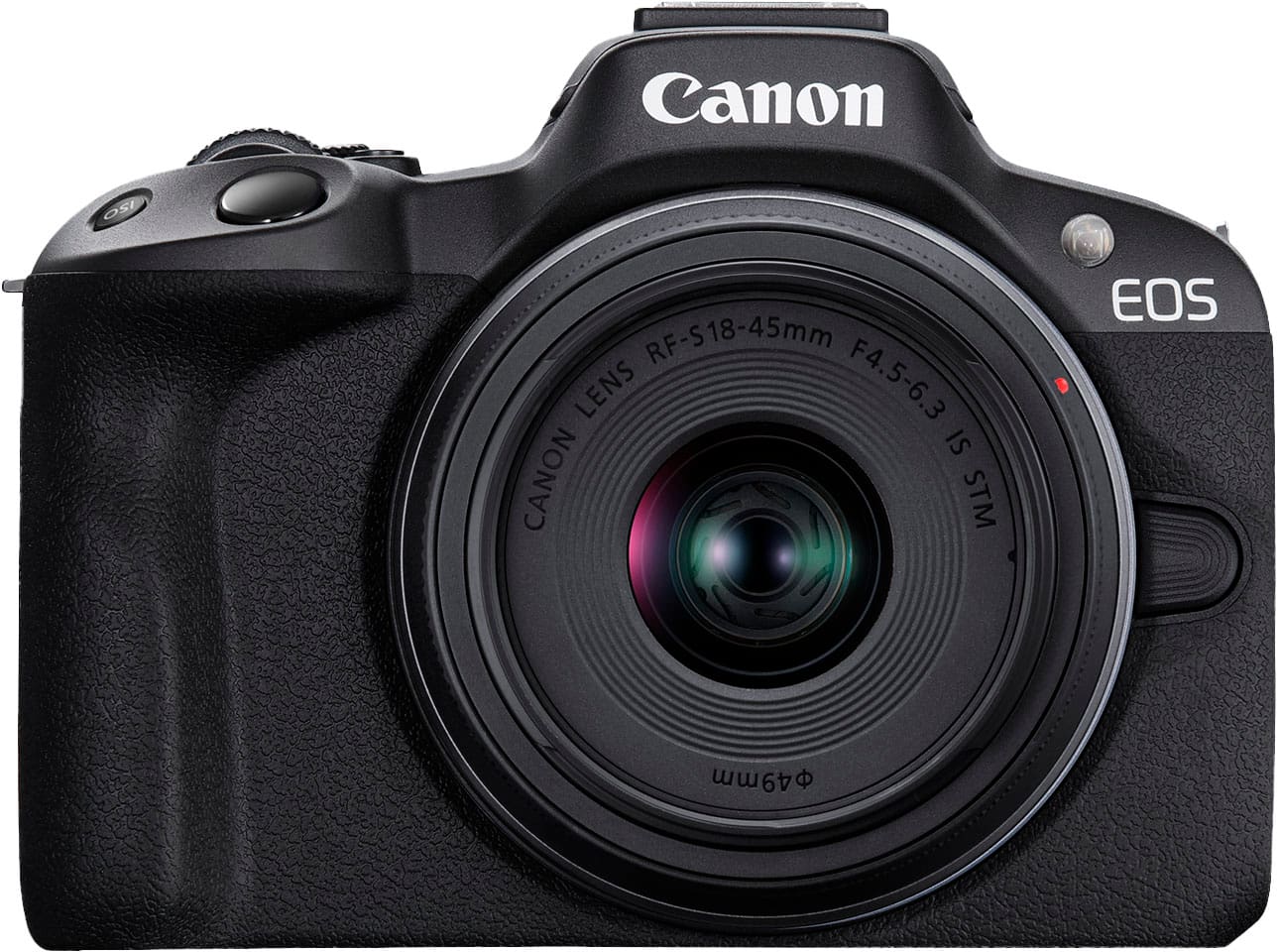
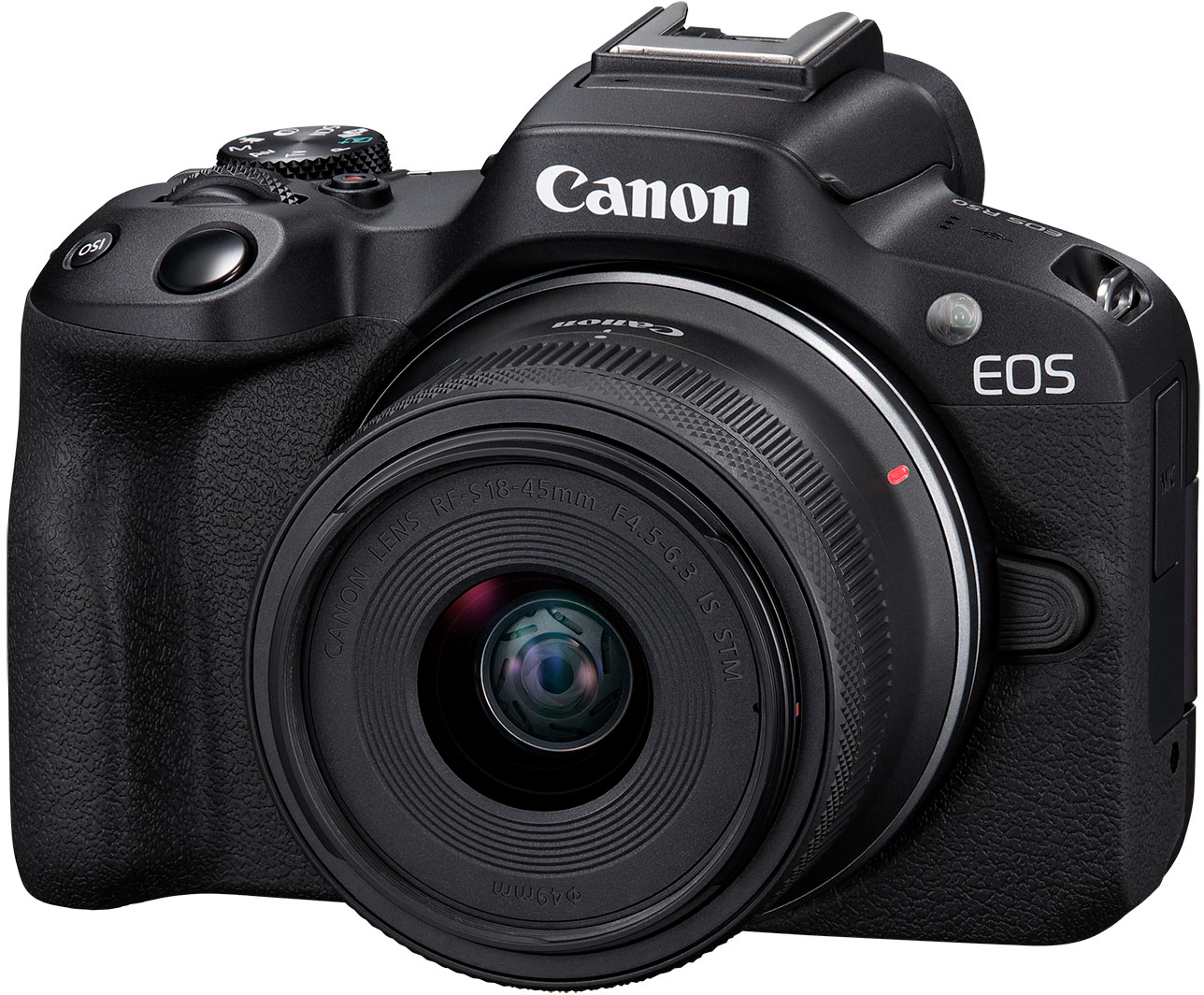
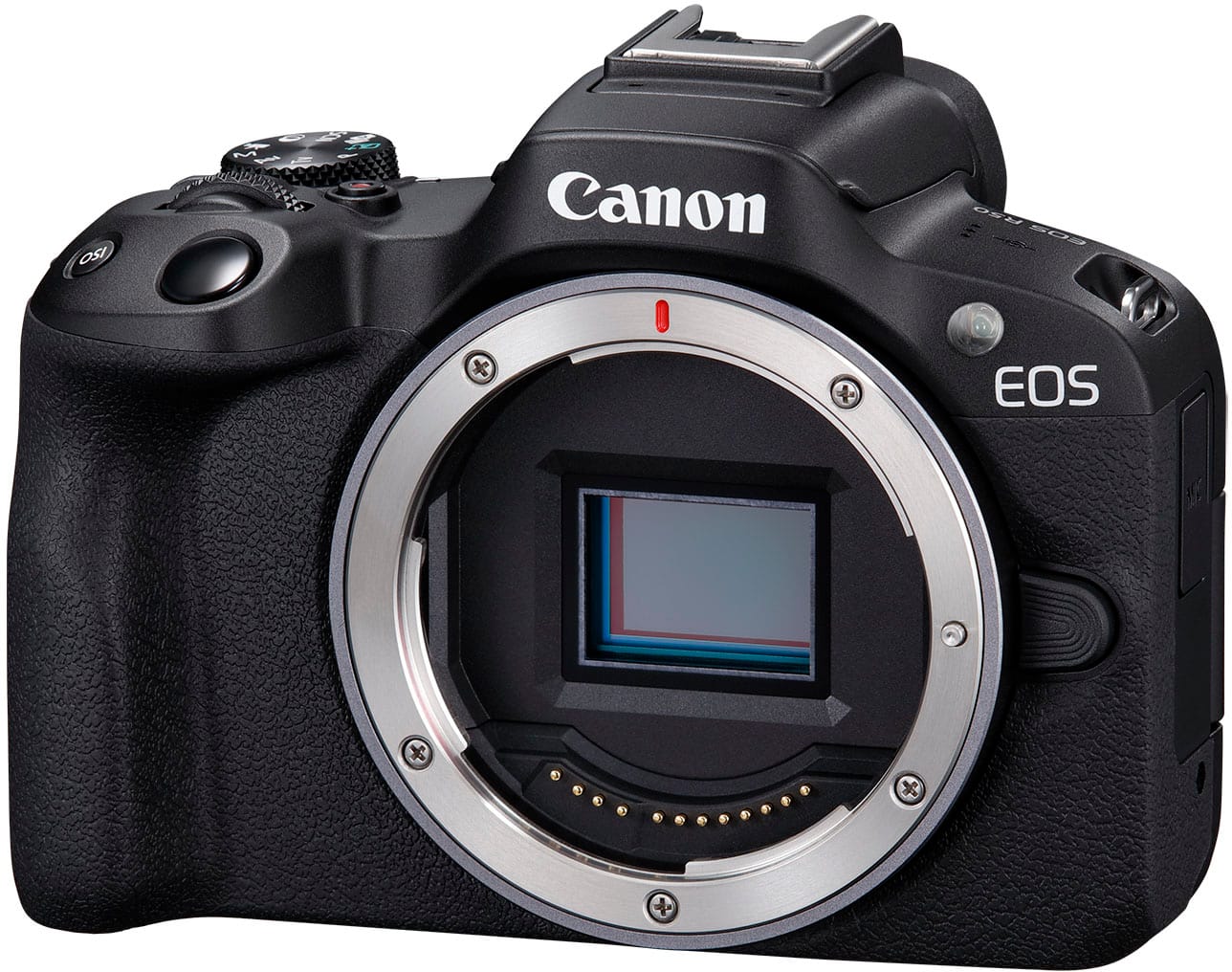
The Canon R50 reminds me of the last Canon camera I owned except a lot smaller! The kit includes the camera body with an APS-C sized sensor and an 18-45mm RF-S lens. It’s great for anyone who is looking for something that provides more than a smartphone camera but doesn’t need anything incredibly fancy. The size and ability to take great pictures and video make this an easy camera to recommend as a daily carry. Despite being small, it has a relatively massive flip-out LCD touchscreen that takes up the nearly entire back of the device. It also includes a USB-C port (USB 2.0 speeds), a micro HDMI port, and a single 3.5mm stereo out/mic in jack. It uses an SD card (not provided) compatible with UHS-1 speeds, which is not the fastest so don’t overspend on a super-fast SD card.
The pictures it takes are of great quality and easily better than a smartphone. In fact, I put my iPhone 14 Pro into ProRAW mode and found that the R50 still took sharper photos in broad daylight, even though it’s only 24.2MP compared to the advertised 48MP on the iPhone. There’s just no competing with the larger sensors of a camera. And if you were to upgrade from the kit lens to better glass the difference would likely be more profound. The R50 supports the current mirrorless RF/RF-S lenses or even the older EF/EF-S lenses with an adapter. Unfortunately, there aren’t many of the APS-C focused RF-S lenses available today, so upgradeability will be limited.
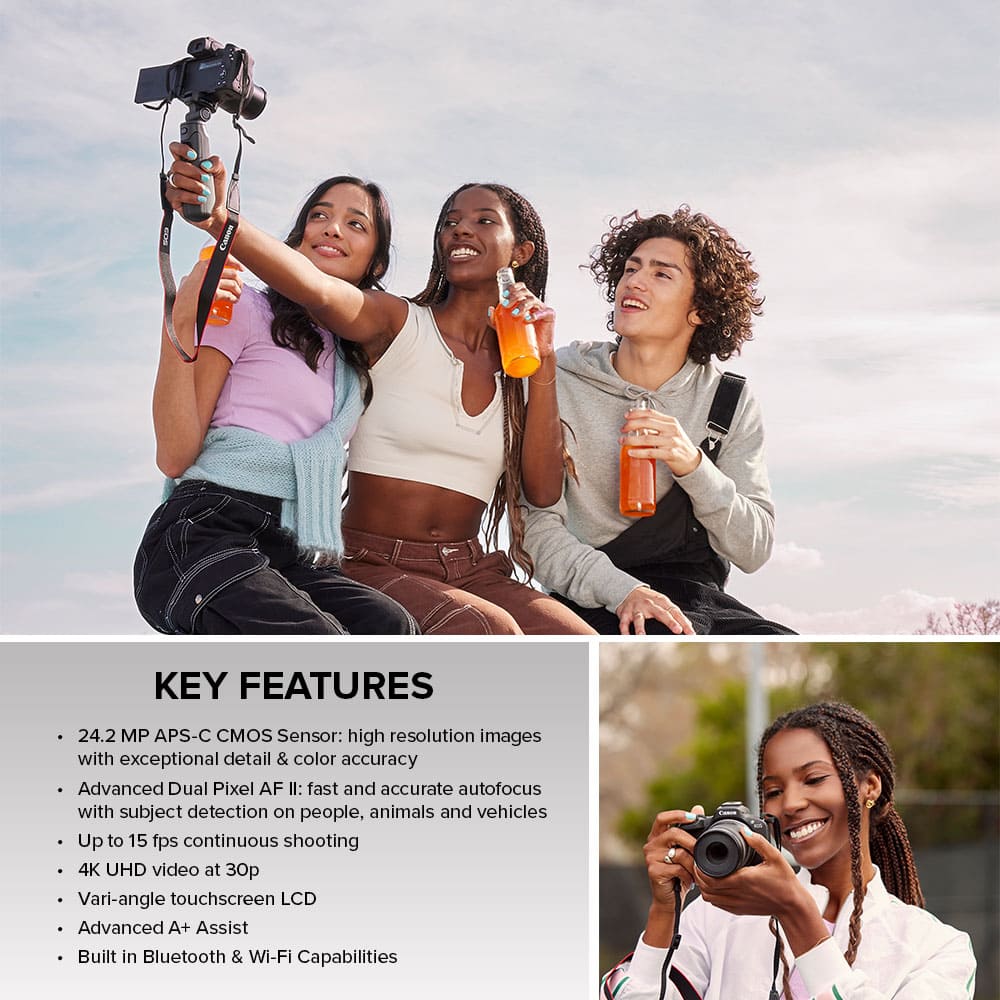
The Dual CMOS Autofocus sensor is superb for a camera in this price range. It is very fast and can accurately find the subject in any part of the frame. It can even track a moving subject, but I had less luck getting it to track really fast-moving targets. You also get burst shooting up to 15 frames per second, which again is punching above it's price point as this is actually faster than my full frame camera. The R50 can take 4K video but you are limited to 4K at 30 frames per second. In 4K, the camera will also warn you that it could get hot and shut down if taking a long video, although that has not happened to me. It would be nice if it had support for 4K60 but at least it oversamples the video from 6K, which should give you a bit sharper 4K video. It also can take 1080p video at 120fps but this can only be used for the slow motion feature and doesn’t record sound.
The camera comes with a lot of “assist” modes aiming to make life easier for a casual photographer. There are four: Scene, Hybrid Auto, Creative Filter, and Automatic. Scene is the simplest to understand, as it asks you what type of photo you are taking, like Macro, Landscape, Portrait, etc. then makes the adjustments for you to hopefully result in the best picture. Hybrid Auto has you snapping photos while it takes a little bit of video before the photos and then puts it all together into one “digest movie” that you can play back later. Creative Filter is the most useless in my opinion. It allows you to do things like add fish-eye effect, watercolor effect, or make objects in your scene look like a toy model. Personally, I’d rather just have the original photo and apply effects to it after I’ve moved it to my phone or computer. Automatic Mode handles scene detection for you and includes a function called “A+” for Assist+ which allows you change a few things such as the amount of background blur or brightness. In my opinion, Automatic should just be automatic, without any of the Assist options, which I think might confuse some people. There should have been another mode for the “A+” features or at the least combine it with one of the other “assist” modes like Creative Filters. For example, my wife, a casual photographer for sure, keeps asking me what to do when she accidentally hits the icon on the touchscreen for the assists when all she wants to do is just let the camera take the photo.
There is also a mode for movies which has a few features inside of it such as software image stabilization since you don't get in-body image stabilization at this price. I was kinda surprised by how many menu options are available while in one of the advanced modes which include P (Program), Tv (Shutter Priority), Av (Aperture-Priority), and Manual. These modes are more familiar to me and I’m glad they are here so that people who are learning the hobby can start to explore more advanced or creative photography such as shooting in Raw and creating bulb exposures in Manual mode.
Battery Life has been better than I expected compared to what I’m used to, however taking 4K video will drain it a lot faster than a day of photos. The kit also comes with a wall charger which is great if you opt to buy an extra battery. You’ll be able to charge one while using the other.
The R50 can pair to your smartphone via Bluetooth which will then allow a connection via Wifi to transfer any photos. Once the faster Wifi connection is established you can easily browse, download, even delete the photos on the camera’s card from your phone. You can also do the opposite and send photos either manually or automatically from the camera to the phone. When the phone is connected via Bluetooth you can enable "GPS via mobile" which will tag your photos with GPS location data. You can also use your phone as a live viewfinder and take photos or record video remotely.
Finally, I’ve used the camera quite a bit for streaming lately and found that it does an excellent job. You’re limited to 1080 HD but the quality is better than most webcams. However, since you’re using the USB-C port to stream there doesn’t seem to be a way to charge it at the same time so it’s not something that will work if streaming is your day job. Better suited for a video call here or there when you want to have better quality than your laptop’s webcam. On the plus side there’s no extra software to install, just make sure to go into the settings and select “Video calls/streaming” under USB Connection type and it will show up just like any other webcam on your computer. I was able to use it with Teams and Zoom for work as well as OBS Studio for live streaming on my mac.
Pros:
Small Form Factor
Large Flip Out Touchscreen
Excellent Auto-focus
Fast Continuous Shooting
Wifi and Bluetooth Connectivity
Electronic Viewfinder
Good Battery Life
Supports HDR
Cons:
Not a lot of RF-S Lenses available for upgrades
No 4K60
Limited options for streaming
Sometimes confusing assist features
Overall – I’m very impressed with what you get with this camera for its price and I love the size. I think most people looking to upgrade from their smartphone to the world of photography will be pleased.
This reviewer received promo considerations or sweepstakes entry for writing a review.
The EOS R50 is an entry level mirrorless camera that targets beginners and content creators alike. It’s easy to see why. The R50 is reasonably priced, compact, easy to use, and boasts incredible image quality. I personally think it’s perfect for anyone that wants to shoot high quality photos and videos without sacrificing the convenience of a smartphone. That’s what made me want to get my hands on this camera, anyway.
To me, the R50 stands out as such a great beginner camera because it’s so approachable. I mean this both literally (physically) and in terms of usability. It’s easy and safe to store/carry in just about any bag given its small form factor, light weight, and the ability to protect the display by putting the camera in “armor mode.” Speaking of the display, it’s big and bright and easy to navigate with either the cross keys or touchscreen. Once you power the camera on, simply start taking pictures. In A+ mode, the camera takes care of the rest. Those with more experience have the ability to change settings in manual mode. Content creators and vloggers can rotate the display into a selfie mode and capture video up to 4K30. The Canon Camera Connect app is easy to use and allows you to quickly transfer photos and videos to your phone that can then be shared on any social media platform.
The 18-45mm RF-S lens that comes in this kit is great for general use, but I would highly recommend also picking up the 55-210mm RF-S lens for increased range. While lens selection for the RF-S mount is extremely limited right now, I’m confident that Canon will continue to develop and release more. It looks like a 28mm lens will be available later this year.. Battery life is much better than expected, but a second battery is also never bad to have on hand. The included wall charger would allow you to charge one battery while using the other.
I have had an absolute blast getting to know my way around this camera. I’m floored by the image quality it produces. I just picked up an e-bike and can’t wait to take this camera along with me to capture all of my adventures!
This reviewer received promo considerations or sweepstakes entry for writing a review.
I’ve been wanting a vlogging camera for a while and was super excited when the Canon EOS R50 became an option. I love how lightweight this camera body and lens are. I’ve been using this camera for vlogging and general photography. The R50 is best suited to vlog on a static camera support for a wider shot, but has just enough of a wide frame to vlog on the go as well.
This bundle comes with a kit lens that zooms from 18-45mm so I can capture a range of close ups and wide shots. Filming in selfie-mode, the Auto-Focus does a great job of focusing on my face as well as products I hold closer to the camera when filming a tutorial or product review. I can film vertically or horizontally and shoot 4K or FHD footage in the right aspect ratio to post online.
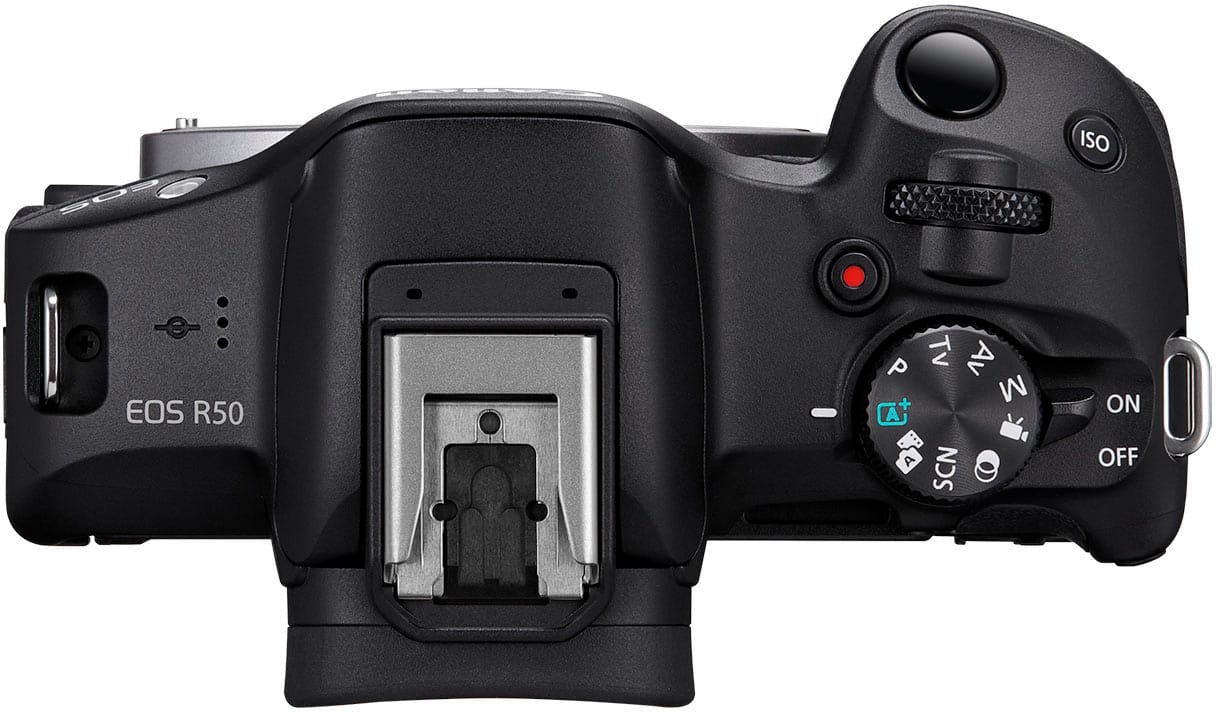
The Canon R50 offers a lot of functionality which lets the user choose which settings are manual or automatic, details below*. For Photography, I like using the “SCN” dial setting because it offers so many options and modes to choose from to prioritize different focal lengths, moving subjects, smoothing skin tones, and more**.
My goal was to have a camera with an LCD screen that flips out (check!) so I can see the monitor when filming myself on-the-go. In order to vlog myself while moving/walking, I hold the camera out at arm’s length. Unfortunately the Canon R50 does not have IBIS (In-Body Image Stabilization) BUT it does have Optical and Digital IS (Image Stabilizer). I suggest accessing the Digital IS from the auto-exposure movie setting for selfie vlogging on-the-go. The reason for this is that Movie IS modes magnify too much for my liking in selfie-mode. The 1.6x crop factor turns 18mm into just under 30mm. Factor in that Movie IS modes magnify the frame even more, holding it at arms length isn’t far enough to get a good shot of myself and my surroundings. The Movie IS modes are good for filming subjects that are further away, but not ideal for selfie vlogging. Digital IS can be enabled inside of Movie Auto-Exposure to bypass the magnification.
The “Canon Connect” app as a remote and external monitor is very helpful when I'm working alone and have the camera framed further than arm’s reach. I will continue to use the “Canon Connect” app for remote monitoring and shutter release.
Overall, the Canon R50 is a great lightweight photo & video camera that captures sharp images, both photo and video.
* Here are high-level explanations of the dial settings. I want to touch on the difference between “P” Program AE (Auto Exposure) mode and “A+” Scene Intelligent Auto mode. While both are considered Automatic settings, Program AE only sets the shutter speed and aperture value and lets the user set the AF (Auto-Focus) area, among other functions. A+ will automatically set the shutter, aperture, along with AF area and other functions to intelligently capture ideal shots.
Movie Mode allows the user to either be incomplete control or fully automate the scene and subject selection. Here are the choices within this mode:
- Movie Auto Exposure: The camera automatically sets the shutter speed, aperture value and ISO. The user can further select what subject type to detect like automatic, animals, people, vehicles, and none (for a manual focus selection). You can also turn on Digital IS within this setting.
- Movie Manual Exposure: This allows the user to set the desired shutter speed and aperture value along with all the other settings. This one also comes with the subject detection feature.
- Movie for Close-Up Demos: This setting will prioritize focusing on items that are closer to the lens which is helpful when recording product reviews and tutorials.
- Movie IS Mode: I feel like I touched on this a lot earlier in the review, however I do want to point out that the default IS mode is the “Enhanced” one which uses more magnification than IS mode “On”. I’ll include a photo of what these settings look like.
- HDR Movie: This setting records video and retains more detail in the bright areas of the frame. Keep in mind that this setting will output video that has a higher bit rate and bigger file size, therefore offers less recording time overall in comparison to video modes with the same settings but without HDR.
- Custom Shooting Mode: You can register specific settings to this mode in the menu.This saves time if you’re the type of shooter that needs the same settings often.
The Canon R50 has a lot to offer and can guide a user to create the most desirable shots. I love the Basic Zone because each dial mode automates the settings based on what the user allows. The Basic Zone includes:
“A+” SCENE INTELLIGENT AUTO: This is the fully automatic mode which allows the camera to analyze the scene and selects the best settings for you.
HYBRID AUTO: You can record video and take photos in this setting which then puts all your photos and videos together for you into a little movie. You can choose to include still shots or not. I would recommend this for events and for users who would prefer not to edit their own video together.
** SCN SPECIAL SCENE: Select the type of scene you’re photographing. While “A+” auto lets the camera choose the scene to optimize for - with SCN, you can pick the scene type yourself for more accurate automatic settings:
- Selfie Portrait Mode smooths skin and prioritizes your face.
- Portrait Mode works best with a Telephoto lens for taking portraits of others.
- Smooth Skin Mode uses image processing to make the subject's skin look smoother.
- Group Photo Mode keeps everyone in focus and works best with a Wide lens.
- Landscape Mode keeps vast scenery in focus and renders vivid blues and greens.
- Sports Mode works best with a Telephoto lens to keep a far, fast-moving subject in focus.
- Kids Mode detects kids in motion and keeps the subject in focus.
- Panning Mode works best when you’re physically panning the camera. It focuses on a subject and creates a “moving” blurred background.
- Close-up Mode is great for small subjects, works best with a Macro lens, and makes subjects appear bigger when using the Telephoto end of a Zoom lens.
- Food Mode reduces red tinges to compensate for tungsten lighting often found in kitchens or restaurants. It’s not recommended for skin tones because warmth will be reduced. Users are able to adjust color tone to better suit the scene’s lighting.
- Handheld Night Scene takes 4 consecutive shots and merges them together to compensate for low lighting and inherent handheld movement. This mode does not capture RAW images.
- HDR Backlight Control, similar to the previous mode, takes 3 consecutive shots to merge them together and retains detail in high-contrast or backlit scenes. It also does not allow RAW images to be captured.
- Silent Shutter Mode shoots without the beeps or shutter release sound but may not capture fast-moving subjects. This mode does not allow flash or continuous shooting.
CREATIVE FILTERS: You can select a filter and create a stylized photo right in-camera with this dial setting. There is no RAW shooting in this mode. If you don’t really care about having RAW images and you like the in-camera effects, this mode can be fun! But I’d say the majority of my photo ops are not going to need filters - plus, I like to edit my own photos.
What I like about the Creative Zone is that you can adjust virtually any setting, but the LCD screen will still flash to warn about under or over-exposing your shots. This allows the user to experiment with custom settings and have a little extra guidance on the screen. The Creative Zone offers more manual settings and includes:
- “P” Program AE (Auto Exposure): Automatically sets shutter and aperture, while letting the user adjust other settings. Although the shutter and aperture are automatic, you can still change the shutter and aperture with “Program shift” with the press of buttons and turning of the vertical dial.
- “Tv” Shutter-Priority AE: This mode allows you to set the shutter speed, while the camera automatically sets the aperture value.
- “Av” Aperture-Priority AE: This mode allows you to set the aperture value, while the camera automatically sets the shutter speed.
- “M” Manual Exposure: This mode is completely manual - you get to pick every setting yourself.
That’s the Canon R50 - hope this was helpful!
This reviewer received promo considerations or sweepstakes entry for writing a review.
I bought this camera for one of my photography classes and was looking for something of good quality, easy to use , and a fair price. I did research on different cameras and this is the one that I thought would be the best for me .
It is a great camera it is very easy to use since it has touch screen. I love the quality and all of the controls, it is a small camera super easy to handle and not heavy. Even with the lens it comes with which is standard, I can take very close up photographs of small objects.
Love this camera very much recommend.
This reviewer received promo considerations or sweepstakes entry for writing a review.
The Canon EOS R50 redefines how I think about an entry level DSLR type of camera in a very good way (yes it’s a mirrorless camera, but I’m referring to the body style). If you mainly shoot in Automatic or Program mode, this camera will be your best friend. In fact, if you do any type of vlogging, videos, or social media content creation, you will love the R50. It’s essentially designed to be a high end camera upgrade for your phone, and it very much works that way. Using the free Canon Camera Connect app for Android, I was able to quickly pair the camera to my phone and begin either transferring files or use it as a remote. Transferring files is surprisingly quick, even the larger 4K videos, but using my smartphone as a second screen and remote is where it gets really interesting. The phone live view is virtually lag free which makes it very handy as a 2nd monitor, and I love that I can touch focus through my phone too. Speaking of which, the focus system on the R50 is ridiculous.
100% viewfinder coverage divided into 651 cells with Ai auto focus and subject tracking. And it actually works! As soon as a person comes into frame, you’ll see a focus box around their eyes. Animals too. It’s almost scary how it knows, but that’s part of what makes this such a good camera. It’s designed to help just about anyone create great looking content. The built in JPG processing is excellent and includes a lot of optional filters and editable features built-in. As a “vlogging camera” one of my favorite features is the Close-Up Demo Mode, which is a boon for product demos. In this mode, the R50 will quickly autofocus between you, the object you hold up to the lens, and then quickly back to you when you take it away. It doesn’t get lost figuring out what to focus on and that’s huge. Especially when live streaming where you can keep the focus on auto without worrying about the camera randomly trying to refocus. The tracking does an exceptional job of keeping up with the subject and there’s even a mode specifically to auto detect cars. In a way, these aren’t really new features, but to have them with such wide focus coverage with smart auto-detection and rapid focus tracking that works well, it’s truly game changing.
Like most entry level cameras in this class, it only has a few dedicated buttons, but that’s ok. A lot of features are quickly accessible through the LCD touchscreen, so you don’t have to fumble through menus and submenus. And in that sense, if you’re an old school photographer that mainly does photos and prefers to shoot through the viewfinder, this camera probably isn’t for you. The body is almost too compact to comfortably hold like a DSLR and it almost feels like I’m holding a toy camera when I use the viewfinder, because of how small it feels. Granted, that’s really a subjective thing and if you have smaller hands the fit could be just what you’ve been waiting for. However, it feels like this camera was made to primarily shoot through the LCD screen and if you treat it like a smartphone, it all starts to make sense.
The R50 was made for content creators who need a quick upgrade to their production values. Wirelessly transferring photos and videos to my phone is so quick and easy, it practically feels like a wireless extension of my phone. I also need to mention that the video exports as the super friendly MP4 format (thank you Canon), so no need to convert a funky file format that barely anyone uses. It’s funny, despite being an “entry” level camera, I think this is all the camera that most people need. If you’re a vlogger or do a lot of solo video recording, you’ll love the Close-Up Demo mode, focus tracking, and easy wireless file transfers. If you’re just getting into photography, you’ll love the image quality and how friendly this camera is to use. And if you bought an expensive DSLR camera, but only shoot in Automatic or Program mode, the 651 focus zones and Ai features will make your stuff look even better. Great job Canon.
PROS
- Vloggers best friend
- If you bought a DSLR, but mostly shoot in Auto or Program, this is the one for you
- Easy to take great looking photos and video
- Stable wireless bluetooth phone connection
- Like a mirrorless DSLR with smartphone camera intelligence
- Can touch focus and shoot with touchscreen AND smartphone at same time
- Compact
- Shoots RAW and JPG
- Sharp photos and 4K video
- Love the Ai autofocus system
- 651 autofocus zones / 100% coverage
- Auto tracks and auto focuses on eyes and moving objects impressively well
- Fast bluetooth and WiFi file transfers
- Easy connect to phone or laptop
- Wireless live view barely has any delay
- Can use phone and laptop as wireless remote camera trigger
- Silent and quick focus
- Responsive, bright, and clear touch screen
- Excellent for influencers, streamers, and content creators
- 1 hour video clip recording capability
- Excellent in camera filters and post processing
- Dedicated video record button
- Reprogrammable hard buttons
- Good in low light
- Lightweight
- Exports video as super convenient mp4
- Sharp kit lens
- Solid body with great fit and finish
- Internal microphone isn’t half bad
- Mic input port
- Zoom/Teams/Skype compatible
- WiFi direct printing (via PictBridge)
- Wide selection of lenses with EF-S/EOS R adapter
CONS
- A little too compact
- Only 1 SD card slot
- Few direct control buttons
- Unsealed body and lens
- Not full frame
- Few inputs and ports
- Must use WiFi to wirelessly connect to PC (lose internet if not hardwired during use)
This reviewer received promo considerations or sweepstakes entry for writing a review.
As a content creator it is essential to have a way to take quality pictures and when necessary video but for a lot of us doing so with less cumbersome equipment (and in a lot of causes using the great cameras available on todays smartphones) make it easier to get the content you need on the go. But sometimes you want to use a true dedicated camera to get the best content. I admit that I rarely pull out my old Canon DSLR anymore because it just felt like more of a hassle. A bit bulky and a little more work to get the content from the camera/SD Card especially when related to uploading social media content were the main reasons. So I was definitely interested in seeing how the Canon EOS R50 would fit into my needs.
This camera is lightweight and has a smaller footprint making it feel less like a hassle to pull out and work with compared to my old DSLR or other traditional full-sized options. It's definitely a great entry option for beginners, novice camera users, and content creators that rely on photos and videos for their work. For some, the smaller, more compact size will be a refreshing experience but for those with larger hands it may feel awkward and take some getting used to. I don't think it would be a huge hinderance to get used to but that's completely subjective. Despite being smaller and lighter this camera does not feel like quality was sacrificed in the build.
Setup was fairly simple but requires downloading Canon Apps that guided you through the process with ease. Specifically the Canon Connect App is pretty easy to navigate and makes transferring content from the camera to your smart device wirelessly a breeze. You are able to view the images on your device for a larger more complete view in lieu of viewing on the camera which is nice. You can also use your smart device as a monitor of sorts...particularly when trying to film video to make sure your shot is setup as you need as well as starting recording instead of needing to directly touch the camera which is extremely helpful when you are the subject on camera.
Battery life is excellent, particularly when taking photos. I was able to go days taking photos, reviewing them, etc without needing to worry about the battery needing to be charged before I could keep going. This is a bit less true when shooting video which isn't really shocking of course. If you are someone filming on the go you may need to get a second battery to ensure you have a little more cushion if you know you wouldn't be able to easily recharge but that is something that is likely going to be true on any camera. I also want to mention that audio using the camera's microphone is more than adequate for my needs and likely for most people but if you need to use an external microphone that is still an option.
The touch screen works flawlessly and so far has not shown any lag or issues for me. I also enjoy the various mode options available to help make your photo or video experience easier. This is something that users who just want to be able to get the content they want in the easiest way or those that aren't quite comfortable with manually selecting each option...although manual mode and selecting everything down to your shutter speed and other options is there for those who prefer complete and customized control of everything. As mentioned, wireless transfer is made easy on this camera making it easier to get your content posted to the platform of choice faster without needing to use a computer or cables if you don't want to. Video transferred this way will be compressed which is something to keep in mind. It will still be a good quality but if you were expecting the full 4K quality then you will need to transfer in a connected manner.
The included lens is great for beginners but lacks optical stabilization so you may want to purchase a different lens if this becomes a huge issue for you needs. If you have other Canon lenses it's possible you can use them with this camera with the appropriate adapter but keep in mind this is not true for all lenses. That is a whole different topic but something worth researching based on your needs and goals with this camera.
Overall, I think this is a great option for a beginner or someone that doesn't require something much more complex to meet their needs. It's a more than adequate option for most content creators and well worth considering when trying to decide on a true camera to help up your creative moves.
Nice entry-level camera for photos/video/blogging.
|
Posted .
This reviewer received promo considerations or sweepstakes entry for writing a review.
This is a very nice entry-level camera for Photographers, Videographers, and/or Bloggers. I've been using the Canon EOS R50 for about 3 weeks now and I really like it. I have been a non-professional photographer/videographer for about 40 years. This is my first Canon DSLR, but I have had several Canon point-and-shoot cameras. The EOS R50 has a high quality lens and an advanced image sensor that you'd expect from mid-level Canons, but at a budget price. After using this camera to take hundreds of photos and videos, I would summarize it as a "advanced point-and-shoot camera with interchangeable lenses". The Canon EOS R50 is also a mirrorless, APS-C 24MP camera capable of 4K video with lots of advanced technology built into it (i.e., WiFi, Bluetooth, USB-C, and HDMI). In my opinion, this is the Swiss Army Knife of affordable, entry-level cameras.
First, the mirrorless and APS-C sensor, are not negatives in my opinion. Canon and most (if not all) camera manufacturers have chosen to stop production of mirrored cameras. Also, making a camera without a mirror and using a smaller sensor (APS-C), allows the camera to be lighter, smaller, and they can then build more technology inside for the same cost. The 24MP image sensor / 4K video and advanced autofocus / subject tracking was a great trade-off decision by Canon. This camera will also allow you to be as creative as you want. You can start by using one of the scene modes, then advance to aperture or shutter priority or go full manual. You can also shoot stills at up to 15 photos per second or shoot up to 60 minutes of video. The photo and video modes let you use a number of advanced settings to provide great photo / video results without a lot of editing too. Perfect for the beginner to intermediate user.
The Canon EOS R50 is really compact and small when compared to my other APS-C and full frame DSLRs. The only nagging problem I had was getting used to the size and placement of the controls. They are so close together, I sometimes pushed a button by mistake while trying to focus and get my exposure. I ended up having to pull my eye away from the viewfinder to do that, then take my photo. Other than that, I really liked everything about this camera. Having the ability to automatically transfer my photos to my laptop or phone is amazing. While I was out at the beach with my kids, I was able to take a couple quick photos and videos, upload them to my phone via Bluetooth, quickly edit them on my phone, then post them to Facebook, all in less than 2 minutes. What I really liked, was I was testing this camera at a park taking some landscape photos/videos. I could quickly transfer them directly to my laptop (either Bluetooth or USB) and could view them to see if I got the image or video that I was hoping for. That was such a great time saver, because I could do all that before I got home and wouldn't lose the perfect photo/video opportunity.
The Canon App allows your to do a lot of different functions remotely and change the camera's settings. It was great at letting me setup my camera on a tripod and take photos from the App remotely. The App will also provide GPS information to the camera from your phone's GPS. You no longer have to purchase a secondary device to attach to your camera. The one thing I'd love to see in the App, is for Canon to add support for an intervalometer and focus bracketing.
None of the features and capabilities of this camera would have been imaginable 40 years ago, or even 10 years ago. This camera opens a lot of doors for a new type of photographer, videographer, and Vlog/Bloggers. I think you will see more cameras like this in the future and the technology will continue to improve. But, for now, this is my go to camera when I don't want the weight and size of my other DSLR and want to just enjoy my time with my kids and save memories. It's small size and weight allows me easily carry this or put it in my backpack. I highly recommend this camera and will certainly take another look at Canon when it is time to replace my full-frame DSLR.
This reviewer received promo considerations or sweepstakes entry for writing a review.
It has been a while since the last time I had a real camera in my hand. This Canon is a big improvement since my last (film) Canon I had, many years ago. I am actually surprised and amazed with the capabilities of this relatively small device. Photos are coming good from the first try. The lens mechanical focus has been replaced with digital focus. Canon won't let you take a photo (in auto mode) unless it is a good quality one. It has a lot of good tools that guarantee your professionalism. They used to say it is 20% the camera and 80% the camera man (or woman)... I believe it is the opposit.
Battery life is amazing. I was skeptical and planning to buy an extra battery. Then, I took it into a long day photos and videos (some 4K) and the battery just did very well. It took a long time to charge the first time though... The power management is incredible. Also, this R50 has what is much needed: A way to synchronize to phone or tablet. It allows you to transfer the photos and videos to your phone or tablet for immediate review, changes and also to keep camera's memory free. I was surprised that synchronization carried on even when the camera was turned off and in the bag. Cannon app is very powerful. Worked well with iOS and Android (new phones mostly). I have a relatively old phone that camera couldn't connect to through the wifi. It started fine over BT but then when switching to WiFi, the phone was lost in loops. Newer phones didn't have any issues. iOS phones and iPad worked very well.
The camera has a micro HDMI connector on the side that allows to mirror all what is on the screen, a USB-C connector allowing super fast access to the memory but honestly with the fast wireless transfer, who need it? It is good to have any way.
4K video recording is also something impressive. I am using a 32Gb micro SD card and it allows the recording of 10 mins only. Even though Canon somewhere warns about the overheating while taking a 4K video, I didn't notice any over usual temperature.
The app is straight forward, it gives you all what you need in one spot. Away from any unnecessary complications...
EOS R50 is coming wiht 18-45 lens. It is ok for most photo shoots... I am planning to get an RF-S 55-210mm telephoto lens. Like the one I had with my vintage Canon.
While I am trying not to get too technical in my review, it is worth mentioning that the fps rating (12fps) is amazing. Allowing to have very nice pictures no matter what.
I recommend getting it for beginners or for anyone trying to get a nice picture without taking too much efforts (by using auto mode) and it will save time editing the photos on the computer. Photos captured came out nice and almost ready to be used.
This reviewer received promo considerations or sweepstakes entry for writing a review.
UNBOXING:
I’ve got the Canon EOS R50 with RF-S 18-45mm f/4.5-6.3 IS STM Lens. The packaging is lightweight, which was surprising for me as someone who had only worked with a larger DSLR before.
Inside the box you’ll find the EOS R50 body, the kit lens, protective caps for the body and lens, the removable battery and charger, and a neck strap that you can attach to the body.
BUILD:
The first thing I noticed about the EOS R50 body was how compact it was. I didn’t really have any expectations upon its arrival, but just holding it was satisfying. The body is lightweight, but the outer plastic feels sturdy and the rubberized textured grip gives you confidence that it won’t accidentally slip out of your hand.
The battery compartment is easy to lock and unlock, and fitting the R50 with the battery or an SD card delivers a tactile click and a sense of security.
The physical controls on the R50 also feel sturdy and confident—I don’t have any concern about accidentally turning a dial or pressing a button. The controls require intention to engage, and I feel that’s often underappreciated. Working with mushy physical controls could really lead to accidental triggers, but I have no worry about that with the R50.
Additionally, the touch screen can articulate out so you can take pictures or video of yourself while monitoring the feed.
The included lens itself clicks tightly onto the body and delivers a tactile click when you set it to 18mm.
PHOTO:
As a content creator and reviewer, when I’m taking pictures of products, I want the process to be simple. I want to be able to reliably engage the autofocus, and take images that are sharp and deliver a pleasant bokeh with minimal noise.
While I haven’t been able to test every single setting on the R50, I will say that if you prefer manual modes, then you can certainly dial in your aperture, ISO and shutter speed as you wish to achieve the best possible shot across a wide variety of scenarios. But if you like to keep things simple, then there are plenty of photo modes that can help you take great pictures without too much effort.
In my experience with the R50, it takes sharp in-focus images and is able to provide a pleasant bokeh which you can certainly dial in if you’re comfortable controlling the aperture.
If you’re opting for the bundle with the kit lens, then it’s important to note that the included lens does not have optical image stabilization, and the camera body uses only digital image stabilization. There are RF mount lenses with optical image stabilization if you are planning to use the R50 by hand and without a gimbal or tripod, but I did find it took sharp images without external gear as long as you have a reasonably steady hand.
VIDEO:
Video seems to be one of the bigger improvements of the EOS R50 compared to the M50 mk II, and the aspect which I find myself most excited about. At its very best, the R50 can record 6K content and downsample the footage to 2160p30, and which delivers a very crisp image with very low noise under proper lighting conditions. It can also record 1080p120 for slow motion content, but audio isn’t recorded in this mode.
My favorite feature, however, has to be the close-up demo mode that is great for product reviews, makeup tutorials, or any other style of content where you may need to show a close-up of a product at times. I’ve tried it on numerous items of varying sizes, textures and colors and found that the autofocus was very responsive and was able to quickly latch onto whatever object I put in front of the lens. And as soon as I removed the object from the view, the autofocus quickly latched back onto the main subject.
One shortcoming for the video is the lack of optical image stabilization on the body or the kit lens. If you are recording video with a lot of movement and without a gimbal or other hardware for stabilization, then you may see some correction artifacts from the digital stabilization trying to correct for the lack of optical stabilization. So for sports or other high-movement purposes (e.g. even walking while filming), I’d still recommend looking into a lens with OIS or a gimbal. You can enable Enhanced Image stabilization in the settings to further compensate for erratic movement, but I found the footage to feel a bit more artificial and overly processed, and even it felt that way while actively recording as well.
AUDIO:
The built-in microphones are also surprisingly decent. While they might not be able to withstand rushes of wind, they were able to capture clear audio that I felt would be reasonably good for folks who don’t yet want to commit to additional audio gear. That being said, if you can, I’d still recommend upgrading to a shotgun microphone that you can mount to the hot shoe since there are so many great affordable options on the market.
APP:
The Canon Connect Mobile app has its ups and downs while over Bluetooth/Wi-Fi. Overall, transferring images and video from the camera to your phone or tablet over Wi-Fi is a slower process than I might like.
You open the app, register the device, and as long as Bluetooth and Wi-Fi are enabled on both the R50 and your device, discovery should be straight-forward.
By default, you’ll receive compressed video and images since this is significantly faster than transferring the content at original size. But you are welcome to enable importing original size content in the app settings. You can import RAW images, although you’ll need software that will be able to open the files. If you choose to import compressed video, then your 4K or 1080p120 video will be downscaled to 1080p30 at best. I honestly don’t recommend importing original size video content this way because it can take quite a bit of time to transfer.
However, you can also connect via USB and import content that way (for lightning-enabled Apple devices, you’ll need the Camera adapter). Comparatively, importing content over USB is significantly more responsive and I would recommend it if you intend to import original size content.
I also really enjoyed the remote live view feature that gives you a live video feed access to some of the controls. This feature is okay in wireless mode, but the latency isn’t particularly great if you’re looking for responsiveness. But if you can hook it up wired like I did, it is super responsive and latency is a non-issue. I found this was especially valuable for using my iPad as an even larger viewfinder.
WEBCAM:
Another feature I found was interesting was that you could hook the R50 up to your computer via USB and turn on the video streaming/call feature under the USB options in the menu options. This turns your R50 into a glorified webcam. This could make it a great option for creators who do video streams, since they can purchase a dummy battery connected to AC power. However, output is limited to 1080p30 SDR in this mode, so if you have a much more advanced setup and want 2160p output, you may have to use the Micro HDMI output with a capable capture card. That being said, you may have to disable various power-saving settings to ensure optimal performance for this strategy to be effective.
CONCLUSION:
Overall, I think the Canon EOS R50 is a good camera that could fit the needs of many creators. If you’re looking for a camera with a compact body that is good for both stills and video, then the R50 is a solid option—especially if you already have RF lenses with optical image stabilization.
But if you’re looking to get into vlogging, or intend to record video without a tripod or gimbal, there are better mirrorless options on the market that will have very similar features with better image stabilization.
In the end, there are a ton of features to compare across many brands. The EOS R50 is going to meet my limited needs as a video-oriented content creator who doesn’t have frequent camera movement. And while it may work well for me, the features I prioritize may not be the ones most important to you.
This reviewer received promo considerations or sweepstakes entry for writing a review.
I think it’s important to acknowledge at the beginning of this review that A) I have never had a camera this fancy or even close to it before. B) I have long wanted a dslr or mirrorless camera body with the ability to change lenses and manually shoot photo and video. As such, I am looking at this camera as a person with a lot to learn, but also a desire to understand and learn how to use a higher caliber machine than an optical zoom equipped point-and-shoot or a phone. I am entry level, for sure, but I think I am a key part of this product’s audience.
The Canon EOR R50 is, to me, truly impressive. It has an amazing mix of video and photography features; a good starting setup with a reliable, crisp, image-stabilizing lens; and is not so complicated that it’s impossible to use for a novice. There are other cameras in the Canon line that are meant for “professionals” and they carry far heftier price tags. If you’re in that group of user, I think you know it. But I think this camera is a really great choice for someone looking to learn new skills in photography and who wants to shoot high resolution video too. I think it’s probably a great camera for dedicated vloggers who might be looking to upgrade their setup with a versatile mirrorless, compact unit. You can look up the specs on the camera online, but it’s able to take 12 or 15 fps depending on what settings you apply to the camera. It’s truly impressive speed and it allows amazing pictures of action, which are also only possible due to the system’s amazing auto-focus and focus tracking abilities. This package comes with a really nice, all purpose, basic lens: an RF S18-45 F4.5-6.3 IS STM with built in image stabilization. The body does not have image stabilization, but I think most of the lens in the RF line do. The zoom works great on even this moderate lens and the optics are excellent. I also do not notice bounce in any video I have shot.
Why will it work for vloggers? Well, it has 4k video capability and, though I have not tested it to this extreme, the ability to shoot video for a full hour. That’s a substantial upgrade over compact zoom cameras and, if I have read stats correctly, the previous model in this same line from Canon. It has several movie modes that will help you tune the autofocus features to your liking, including a special close-up demo mode. This mode is designed to capture and focus on elements that are placed closer to the camera. For example, if you were making a video of yourself showing a small object—let’s say a piece of crafted jewelry—you could talk about the object, then hold it up in front of you to the camera in close range, and the camera will track and focus on your object. When you put the object out of frame or move it back, the camera will go back to focusing on your face. As well, if you’re out somewhere making a video of yourself, the fold-out touchscreen can fully rotate, giving you a selfie view as you film with a far superior camera to a phone. Are phones great? Sure, they might be. But my phone cannot hold a candle to the technical package in the EOS R50. As well, there are creative modes that can be applied to film (and to photo) that can give your movies several different fun effects. I don’t know that I will use these often, but they are fun to play with (for example, a filter that adds effects to make your video look like an old film; one that makes your images look like part of a miniature model, etc). There are also ways to take time lapse videos and to take video capable of high quality slow motion.
The fidelity on the videos is noticeably strong. With a highly zoomed in setting, I took great footage of four dear I happened upon (they were quite far from me) one early evening, and I’ve taken great, easy, auto setting videos of my dogs zooming around the backyard. Even when I only used full hd, not 4k, the videos show amazing ability to track movement and keep focus. Even once compressed and added to a social media platform, the videos look smooth and crisp. Wherea, videos with a lot of motion recorded on my phone have a lot of blur and motion noise when uploaded, especially if viewed on a screen larger than a phone. In contrast, the full hd video (not even 4k) taken on the Canon looks great on a 27” full hd monitor.
The photography quality is also just overwhelmingly good. I have so much to learn about using the settings and selecting the right exposure mixes, but honestly the camera will also do an incredible amount of work for you. Just using the auto, A+ mode yields stunning, rich images. While the 24.5 mp number on the sensor may not make this camera seem superior, the camera’s ability to handle aperture and iso settings with ease and to use a variety of lenses, filters, and other accessories (there is a shoe for separate flash units, as well as the ability to plug in a more substantial microphone) to allow shots that are complex and rich is well beyond, I believe, a phone camera. In addition to the A+ setting (which allows the camera to choose all the ‘right” exposure settings for your shot and to autofocus) there are several options to control just a few features of the camera, while letting it take care of some compatible aspects of the settings. So, if you want to concentrate on aperture in your shot, but leave other matching settings on auto, for example, you can do that. There is of course as well as completely manual mode, several scene modes, and filters that you can apply to photography. I am just starting to learn how to use f-stops, white balance, and speed, but I am very excited about understanding how I can be an active part of taking a really cool photo (instead of just clicking a button).
Some other key details:
The camera comes with a battery and lens cases. The rechargeable battery is maybe less than amazing but not bad. Investing in a second or third battery seems like a no-brainer, especially as I plan on taking it on hiking trips and camping trips where electric hookups may not be readily available. The package comes with a battery charger that plugs into the wall. You can also charge the battery in the camera through a usb cable. I think the charger is significantly faster.
Photos are stored on an SD card, and you’ll want one appropriate for video writing at a high capacity.
The camera can connect to a computer or other device through a USB C cable and there is a micro HD out port so the image can be fed directly into a TV or monitor via a micro HDMI to standard HDMI cable.
The built-in microphone is on the side of the camera. The camera might be hard to operate with the ports being used by accessories.
The camera body is amazingly compact, barely larger than my compact zoom lens point and shoot. It’s got appropriate weight to it and feels sturdy, but seems easy to carry and casually use.
A potential selling point of the camera is that you can also connect it to your computer, smartphone, or tablet through Bluetooth or WiFi. This gives one the ability to use the other device as a remote and/or a monitor and to upload photos and videos onto your Bluetooth device—i.e. tablet or phone. The connected mode can be useful when using a tripod, shooting yourself, or any number of possibilities. A compatible app for your device helps get to these controls and to download and sort pictures. I like this feature, but I find it the most difficult part of the camera. It seems to have a huge amount of difficulty staying connected by Bluetooth. This may be operator error, I admit. But it would be nicer if this feature seemed to work consistently. Perhaps my phone is the problem; but the wireless transferring of photos also has disadvantages. It’s slow (much slower than using the USB Cable) and it can eat battery. So, keep that in mind if your key value in this purchase is the wireless sharing capabilities.
While I would like the Bluetooth to work better, that feature’s issues does not make me, at least at this time, want to degrade the rating of this camera. I think it’s amazing and I hope that accessories and lenses will continue to be compatible and available for a long time.
This reviewer received promo considerations or sweepstakes entry for writing a review.
This is loaded with features you would find in much higher priced cameras.
Mirrorless is the way of the future capturing beautiful images for both still and video.
My Vlogging looks wonderful and was compiled easily using the abilities and features of the EOS 50.
There are different modes that make video a breeze — such as the close-up demo mode for example — which seamlessly switches focus when a product is brought close to the camera.
You can also film slow-motion at a high frame rate of 120 fps in full HD.
For photos, sure your smartphone is always with you and today can take some really amazing shots, but most will still pale in comparison to anything that you capture on the Canon-EOS R50 Mirrorless Camera.
Its had a24.2 Megapixel (APS-C) CMOS Sensor and is equipped with a 24.2-million-pixel CMOS (APS-C) image sensor and DIGIC X Image Processor, the EOS R50 camera will snap up images and videos with reduced noise, with clear, detailed results even in low light.
Images look beautiful even when enlarged, with natural bokeh that smartphones can't offer.
All in all it is a wonderful mid priced upper entry level Video/Still shot camera with a very nice beginners lens that will give you many hours of fun capturing photos and videos for all of your social media platforms as well as any printed enlargements you want to make for yourself or friends or possibly to sell.
This reviewer received promo considerations or sweepstakes entry for writing a review.
I love this little camera. I also love that there are dozens of YouTube videos that tell me how to use all the features. I got an adapter so I can use my older lenses on this camera as well. They work perfectly. The only issue is the right grip is a bit small so I ended up leaning on the buttons all the way to the right, which was annoying as it changed, how many pictures I was taking sequentially. But after I used it a while, I figured it out.. Nothing I would return it for. It took great photos on my Safari.