The vast majority of our reviews come from verified purchases. Reviews from customers may include My Best Buy members, employees, and Tech Insider Network members (as tagged). Select reviewers may receive discounted products, promotional considerations or entries into drawings for honest, helpful reviews.
Page 4 Showing 61-80 of 91 reviews
Rated 4 out of 5 stars
Good Option for Wifi routers.
|
|
Posted .
This reviewer received promo considerations or sweepstakes entry for writing a review.
Setup takes a little long but still easy overall. Good connection for a 2 story home.
I would recommend this to a friend
Rated 5 out of 5 stars
Good product, but no 6GHZ band
|
|
Posted . Owned for 1 month when reviewed.
This reviewer received promo considerations or sweepstakes entry for writing a review.
Hreat product, only problem is no 6 ghz frequency. Would be awesome if it had it.
This reviewer received promo considerations or sweepstakes entry for writing a review.
It provides average coverage and speeds, setup took a little while, but smooth sailing once complete.
No, I would not recommend this to a friend
Brand response from Netgear Support
Posted .
Hi Whyfi,
Thank you for your review, we appreciate your feedback and we want you to know that your experience is important to us. We are sorry to hear that you had a difficult experience while installing your new RBE372. When experiencing any trouble during installation, we recommend visiting the following link with guided instructions: https://kb.netgear.com/000061613/I-m-having-trouble-installing-my-Orbi-WiFi-System-what-do-I-do?language=en_US.
If you need further assistance, please reach out to us at [email protected] with your contact information, and we will be happy to help you.
Regards, NETGEAR Team
Rated 4 out of 5 stars
Great
|
|
Posted . Owned for 1 week when reviewed.
This reviewer received promo considerations or sweepstakes entry for writing a review.
Overall very good,had connections in my part of the house that was never there..
This reviewer received promo considerations or sweepstakes entry for writing a review.
I've run Mesh Networks for my home and at relatives' homes for several years now and I cannot see myself turning back to a single node router. Mesh network nodes help ensure coverage throughout my house and allow my devices to seamlessly transition from one node to another.
My previous mesh network system was a Linksys Velop, but lately it was dropping some connections. So I was in the market for my next stable system.
I've installed Netgear Orbi mesh networks at a couple relatives' houses and they've performed pretty well. So I had no problem making the decision to switch over to Orbi to replace my Linksys system.
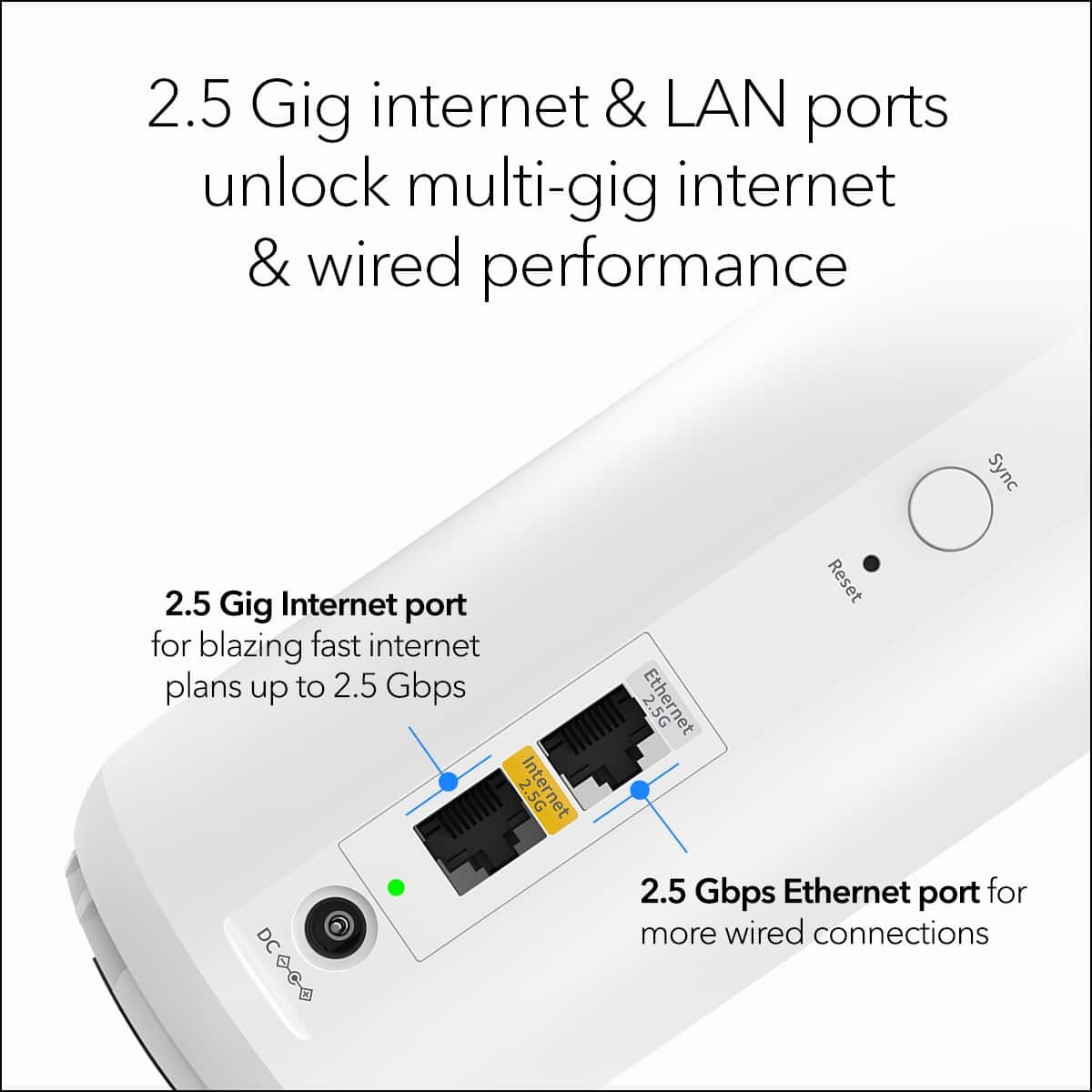
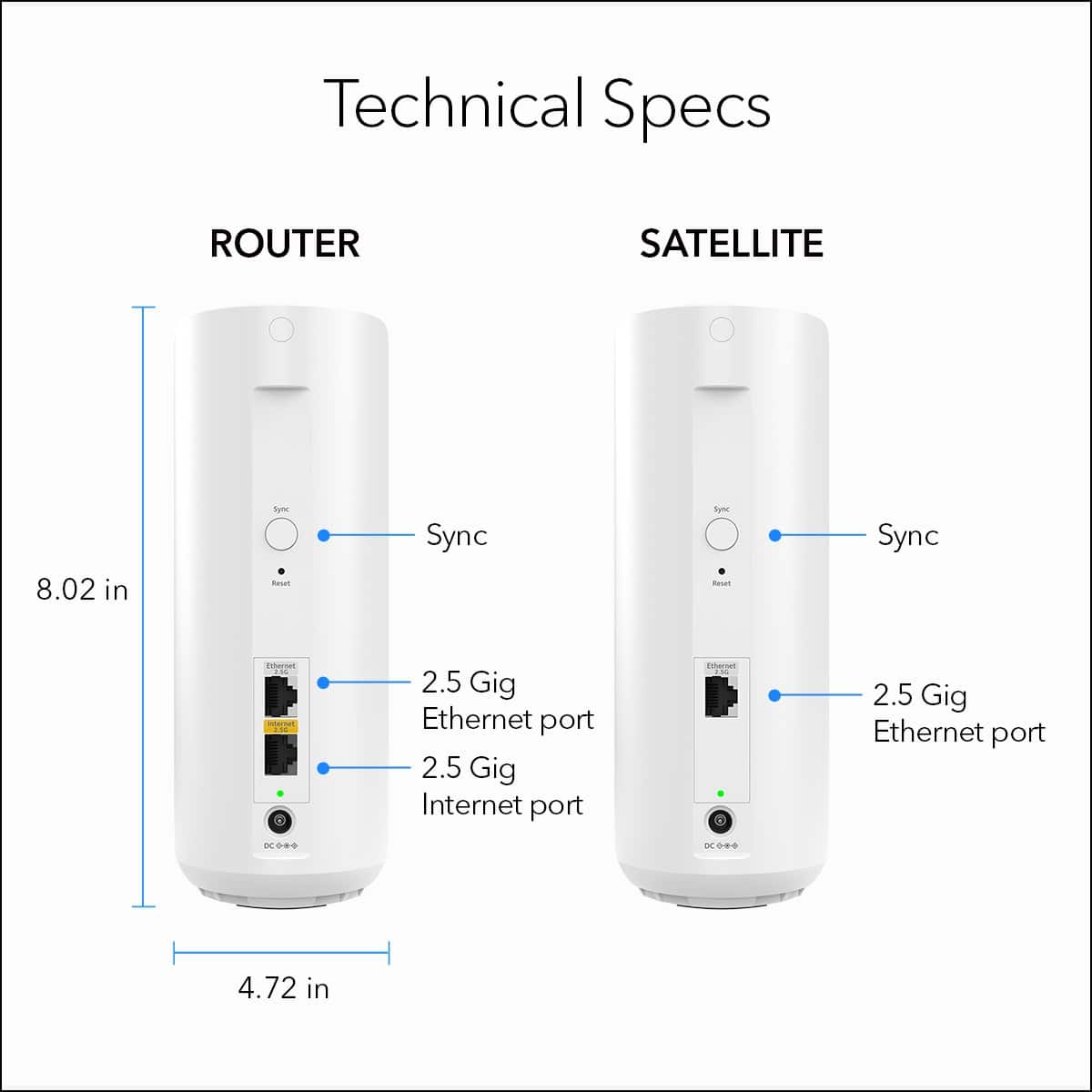
The Orbi 370 series Mesh Network nodes are slightly different. The main node has a sticker on top and has two network ports. One for Internet, one for Network. The satellite nodes just have a single network port. For me, I like to have a built in network switch with about 4 ports. This is usually enough for a small temporary setup when I need to add some desktop computers without relying on WiFi. Unfortunately this latest Orbi 370 Series does not include a 4 port switch on each node.
For a normal person, the Orbi 370 Series is pretty easy to setup. It does take several minutes to setup for the first time. I thought I did something wrong when I first tried to set it up. It just really needed to take something like 10 minutes to boot up completely the first time.
The instructions point out that to set up the satellite nodes, they need to be about 10 feet apart from the other nodes. Ideally, you should have them in the targeted rooms the first time. However, I noticed the 'Sync' button on the back and thought I would set them all up initially in my office, in case I needed to push the 'Sync' button so I'm not running all over my house and possibly miss out due to an inherent timer. Fortunately, I did not have to do more than just plug the satellite nodes to power, wait about 5 minutes and then click a few buttons in the Orbi app to set up the satellite nodes.
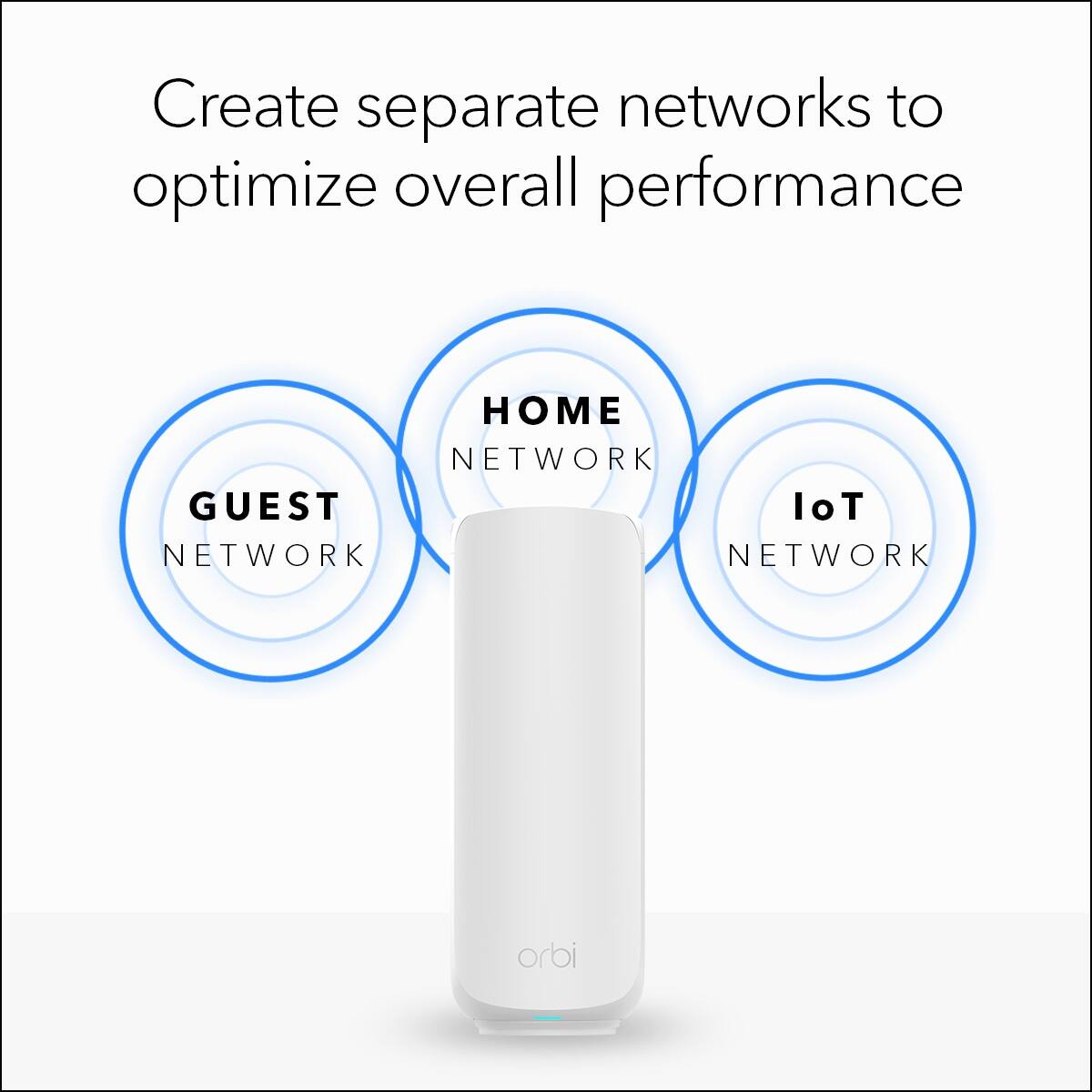
I was really pleasantly surprised that the Orbi 370 series can provide 3 wireless SSIDs. One main SSID, one for Guests but it also includes one for IoT devices.
Within the Orbi app on my mobile device, I was able to set up the Orbi system pretty easily. However, more advanced work really needs to be done on a PC. So things like Port forwarding to open up services from your network to the Internet cannot be done on the Orbi App on my phone. The Orbi app also surprised me by including some network quality utilities so that I can see WiFi signal strength but it also told me that the current network channel was too congested. Unfortunately, I could not find the are in the App to change the network Channel. My Linksys would allow me to push a button in the app to optimize the network to the least congested channel. For the Orbi, I had to navigate to the local Orbi Logon page and get into the Advanced settings to change my network channel.
My next complaint is with the Netgear Armor. I don't particularly need to have this setup. But every time I open the app, I get another reminder that I don't have this feature running. I'm not likely to buy into this Netgear Armor since I have a discrete Firewall (separate from any router) and I generally try to avoid subscription services like this. So I would love a way to disable this completely so I'm not marketed a product I won't ever buy into.
Last, while I used to be able to cover my entire house with two Linksys nodes (one in my home office in the middle of the main floor and one in the basement). I noticed I was getting dropped network coverage in the distant bedroom upstairs. So I installed the 3rd node of the Netgear Orbi set in another bedroom on the second floor and I've had solid connections since.
Overall, I think this Netgear Orbi 370 series system is a solid performer. It delivers next gen WiFi 7, so as my devices get updated in the next few years, this Orbi system will be able to keep up. It's currently delivering great WiFi coverage with the included 3 nodes. I would have no problems recommending this system for average home users. However, for someone that needs to open up single port forwarding and other advanced features, I want the ability to do that from the Orbi app and not just from a computer on my network. Finally, I also want a way to disable Netgear Armor since I won't be subscribing to that service.
This reviewer received promo considerations or sweepstakes entry for writing a review.
TLDR: Robust, 3 unit mesh WiFi 7, higher speeds only limited by the internet provider service you pay for. Solid signals in all parts of your home; offers 3 WiFi networks for Main, Guest, & IoT smart devices at both 5 Ghz & needed 2.4 Ghz for smart devices.
Please note: I am not a network technology specialist so my review will not cover many implementation network options and won't include many technical abbreviations that others may include in their techno jargon packed reviews.I appreciate those network architects and the work they do inventing, creating and installing amazing technology for us.
I am a consumer with some experience in technical skills and have always embraced new inventions and technology since if we don't welcome and embrace new inventions we will stay behind.
All I can say is that using this Netgear Orbi 370 mesh WiFi system will create a more consistent, faster, and stronger WiFi experience in your home or apartment.
What is a MESH WiFi NETWORK?
I found this explanation on my Edge browser Bing search: “A mesh network is a type of local area network (LAN) topology where each node (such as bridges, switches, and other infrastructure devices) connects directly, dynamically, and non-hierarchically to as many other nodes as possible. This allows the nodes to cooperate with one another to efficiently route data to and from clients.”
The 3 Orbi 370 devices are the NODES and our computers, TVs, tablets, smart bulbs, smart switches, smart speakers and other devices that use WiFi are the CLIENTS. The devices (NODES) connect either wired or wirelessly to share and provide internet connection data to the users (the CLIENTS).
How does the NETGEAR Orbi 370 work?
The NETGEAR Orbi 370 system has a router and two satellite stations, which are simple to install when following the instructions in the app and if a user takes their time in reading the narrative.
Each of the 3 devices have their own power adapter which plugs into a wall outlet.
The main Orbi 370 router is connected to your existing home internet device using the included ethernet network cable. By doing so it obtains the connection to the internet and then shares it to the other Orbi 370 satellites. Each of the 2 “satellites” receive the WiFi signal from the main Orbi 370 router access point “base station” and retransmits that same WiFi in another location in your home.
In a simplistic essence, the so-called “mesh networks” act like our current cellular phone networks which do a similar thing with each new minicell that the wireless phone networks are installing on light poles or wooden utility poles across the USA to increase coverage of growing numbers of smart phone users needing data.
The router and satellites have 2.5 Gbit ethernet network ports; the main router has 2 ports; one to connect to your home internet device regardless of your provider, and another to continue the network to either the satellites with a wired ethernet cable or for a wired device such as to a wired computer or network LAN printer.
The 2 satellite stations have single 2.5 Gbit speed ethernet ports which can be used to connect other wired equipment such as an older wired networked LAN printer that also has an ethernet network port on it. In that case the specific printer driver has to be reinstalled AFTER the Orbi 370 is fully installed.
The Orbi ethernet network ports can also be connected by network ethernet cables to create a more robust and constantly strong mesh WiFi in the home without any worries about the possible vagaries of WiFi wireless interference from other nearby wireless sources. In that case the single ethernet port on the satellite units will be occupied. IMO, this lack of a second Ethernet port on the satellites is a shortcoming since other brands do not scrimp in this regard.
The computer download speeds seen are very good. We use TMobile Home Internet and this system improved speeds in our complete home. Our kitchen was sometimes weak before we got the Orbi 370 but no more with 1 Orbi satellite now providing strong WiFI there as well as adjoining areas.
The other Orbi satellite provides a strong signal in the bedrooms and, together with our TMobile 4GAR gateway which also has WiFi, we are fully covered.
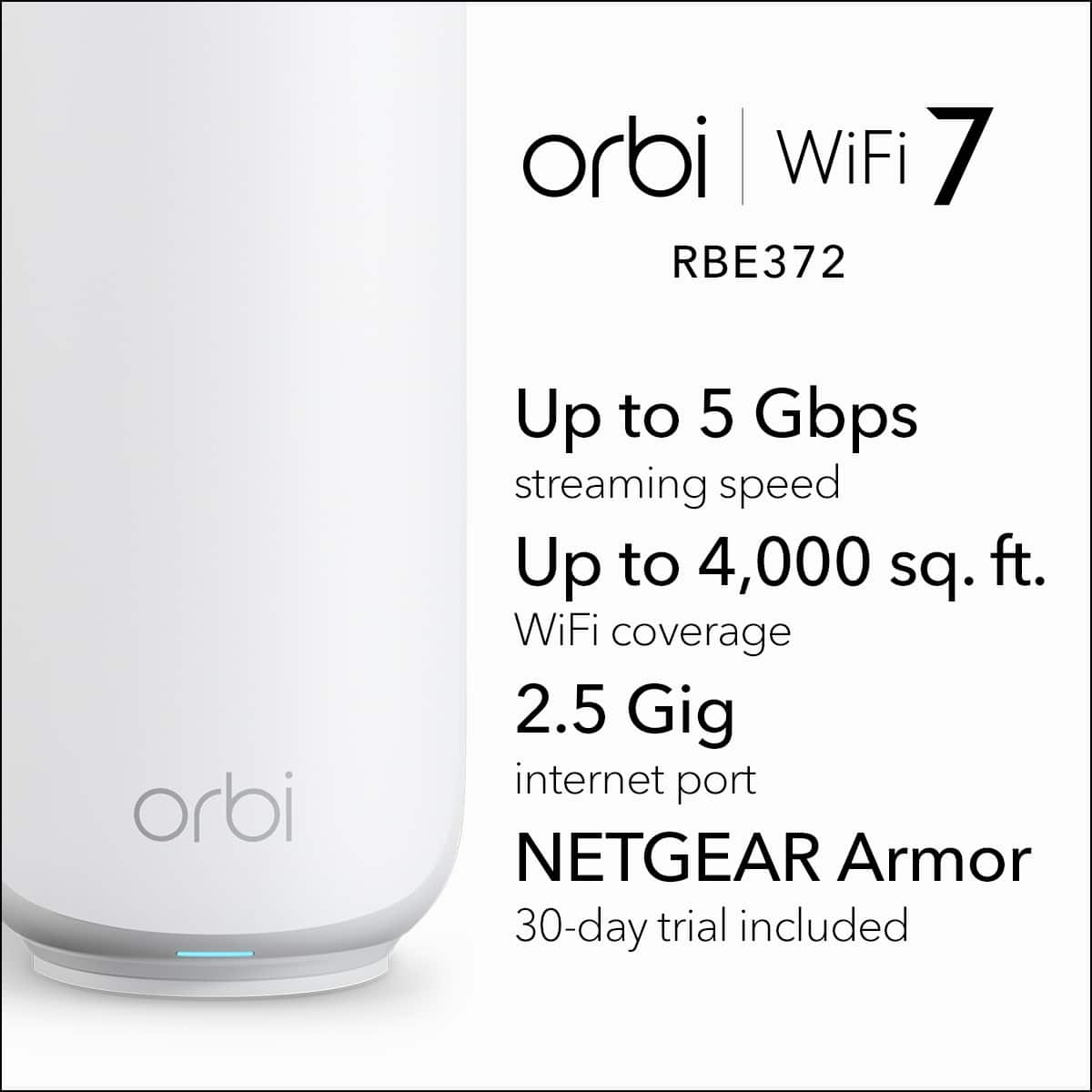
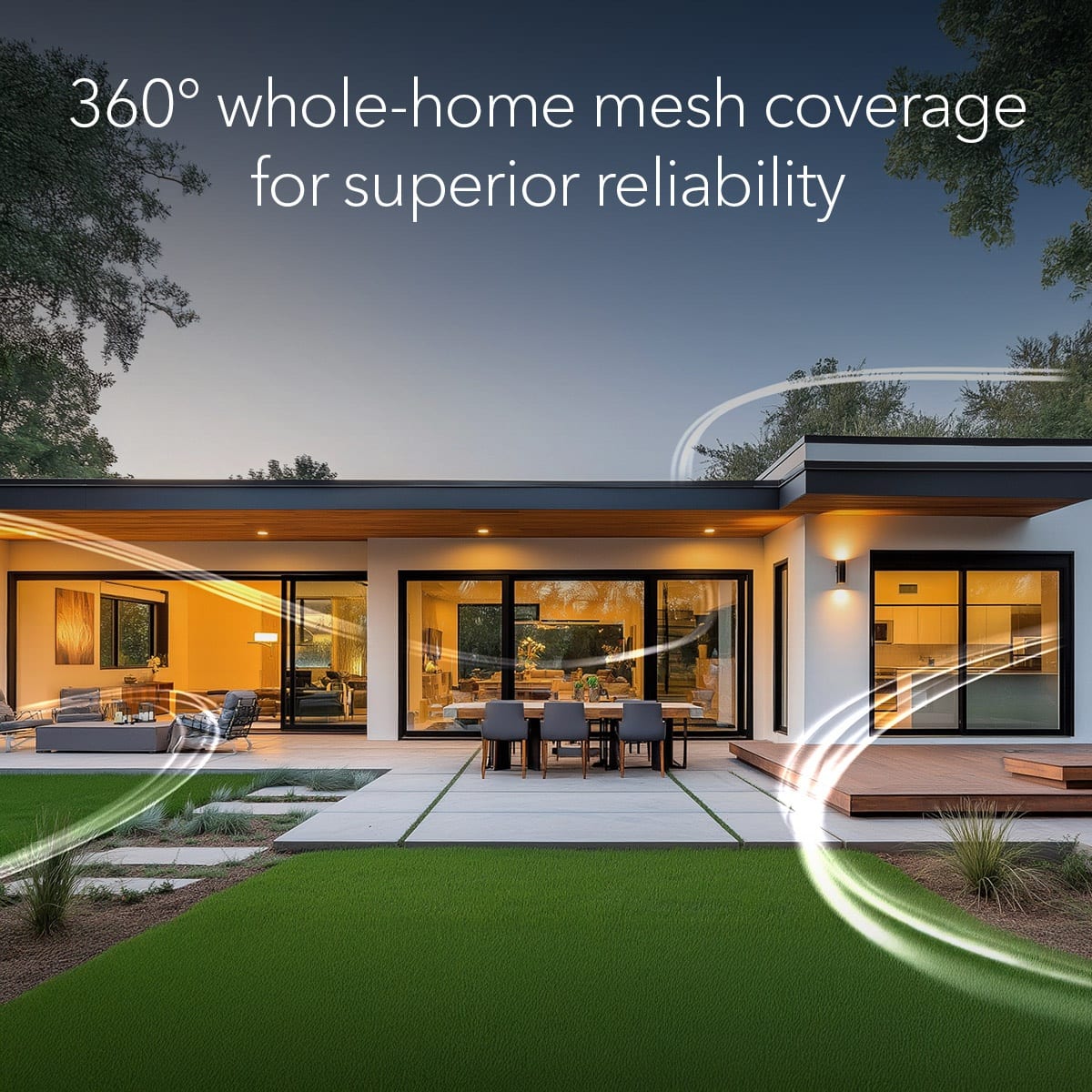
Netgear’s web site claims up to 6,000 square feet coverage; we have a 900 sf apartment and it works fine!
A user can create 3 networks in the home: It is easy to create up to 3 separate WiFi networks for your family’s primary and smart home devices: A Main network, a Guest network and a third for all your smart devices that Netgear labels IoT (Internet of Things).
You can create different passwords for each WiFi network or not. It is not difficult to do this using the app.
Our 3 smart TVs have little to no buffering, our many Alexa speakers work fine either with audio or when streaming video on the Show models, and our many smart switches respond quickly. I reconnected all of the smart devices to the IoT network I created to keep them on a 2.4 Ghz network versus the 5 Ghz that our newest laptop computers can utilize.
Important Note: After installing this Orbi 370 system, I then reinstalled every smart device with the WiFI name and password I created for the IoT 2.4 Ghz WiFi networks I created. All this is easy to do if following instructions and using the app Netgear provides.
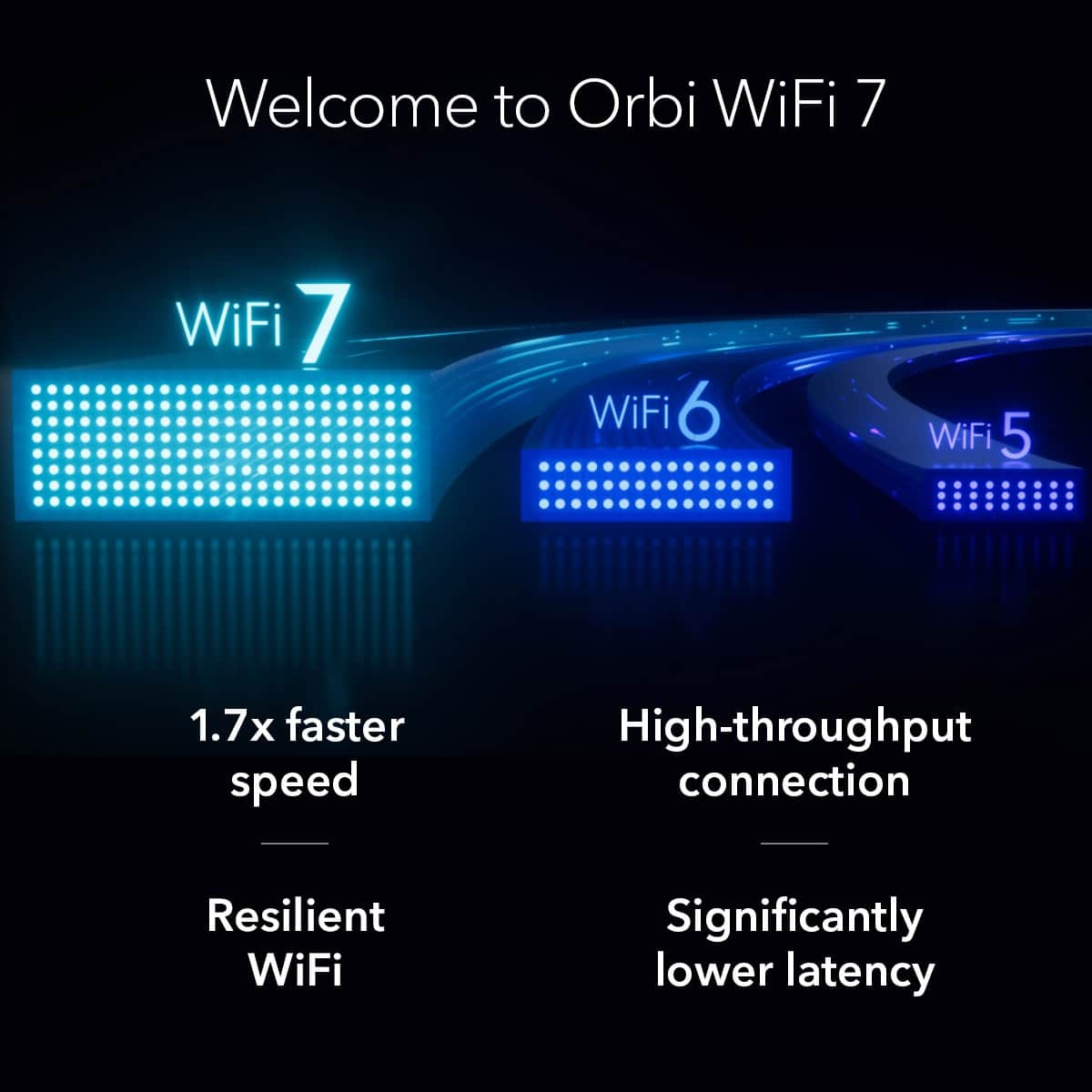
Netgear indicates the WiFi 7 protocol is 1.7 X faster than WiFi 6. Netgear’s website also claims that using the WiFi 7 protocol in the Orbi 370 devices, download speeds up to 5 Gbps are possible.
Our home internet service does not supply that speed but we have measured using Speedtest.com WiFi speeds that are indeed stronger than before using the Orbi 370. Late, late at night our TMobile Home Internet provides speeds of approx. 400 Mbps and no matter where we are in our apartment we see that consistently as I performed repeated speed tests with a laptop in different rooms late at night. It is good to know that if we change to another internet provider (competition is great for driving down costs to consumers) that our home WiFi equipment is ready.
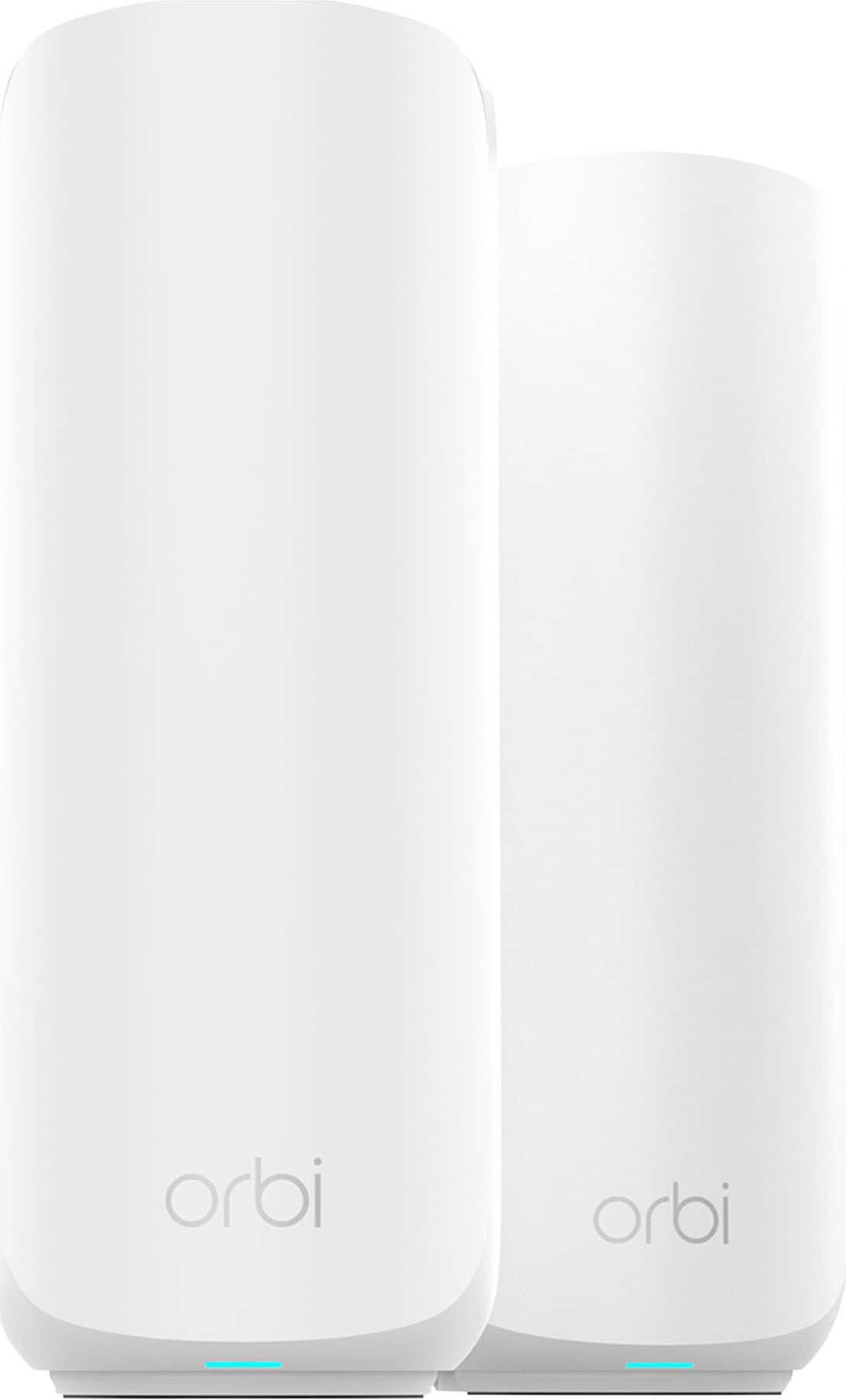
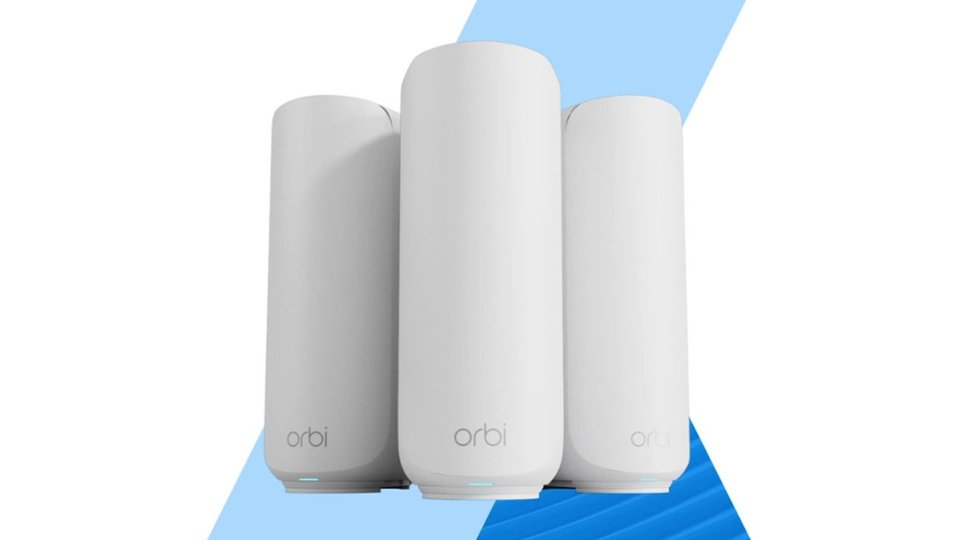
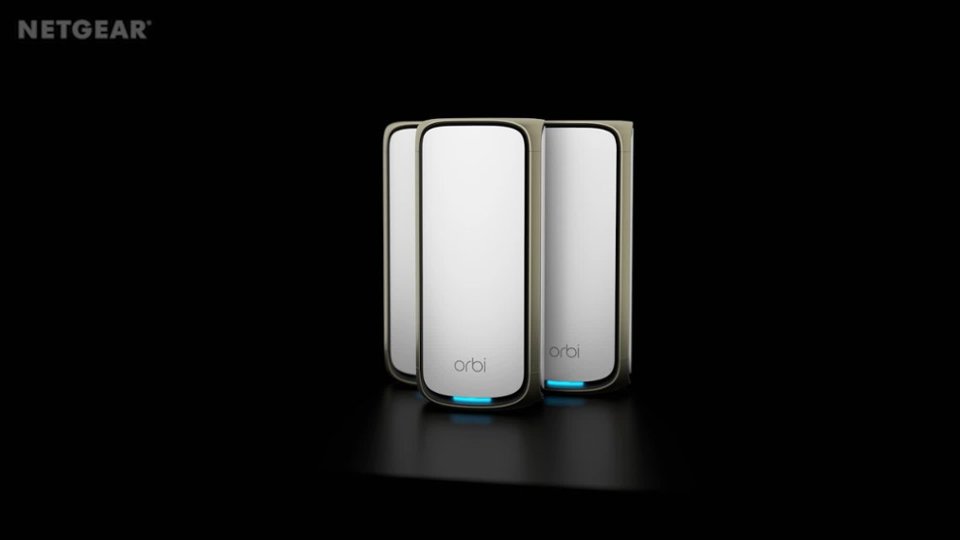
Each device has a sleek white design with a small glowing blue LED to indicate power.
It is a great product and will be an improvement to any household that installs it.
This reviewer received promo considerations or sweepstakes entry for writing a review.
Product claims to cover 6000 sq. ft., my home is 2400…Hired Geek squad to install and then couldn’t get a proper signal in either my bedroom or living room. Geek squad left and said I should buy an additional router! I did…I returned this one and purchased one that works!
This reviewer received promo considerations or sweepstakes entry for writing a review.
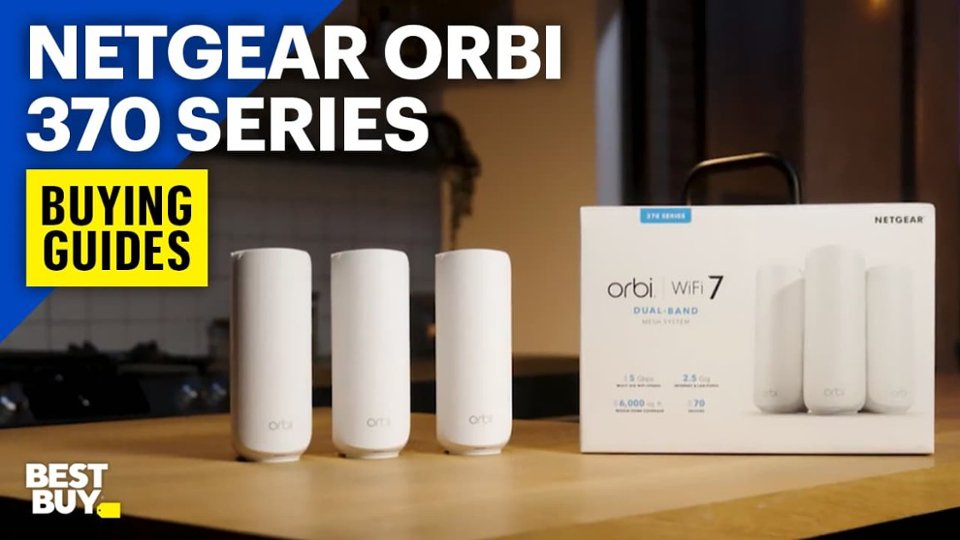
This dual band mesh router set comes with 1 router, 2 satellites, 3 power cords and an Ethernet cable. The router and satellites come in white and have a nice style to them. The system has WiFi 7, so any newer devices will work great with this. If you still have older devices that work with WiFi 5 or 6 this will still work with those also. So many new devices will come with WiFi 7 it is a no brainer to have a system like this.
With this three pack system, you can cover up to 6000 square feet and can be about 100 feet away from the nearest unit. I set this up so that I have internet throughout the whole house, garage and patio (where I spend most of my time). I even get reception out into most of my yard. I can use my devices just about anywhere inside my home and outside.
To set up this system you will need to download the Orbi app to your phone or tablet and follow the instructions. With the app you can do more than just set up the system. You are able to run a speed test, see what devices are connected, check WiFi settings and even pause your internet so no one can look at their devices during family dinner.
If you have a lot of different devices that need to be hooked straight to a router, you will be a bit disappointed. These only have one Ethernet port for outgoing internet per unit. I solved this by buying an Ethernet hub. All my devices hooked into one hub, so I no longer have to worry about having one device attached to each unit. They can all be in one place on the one main hub in my home.
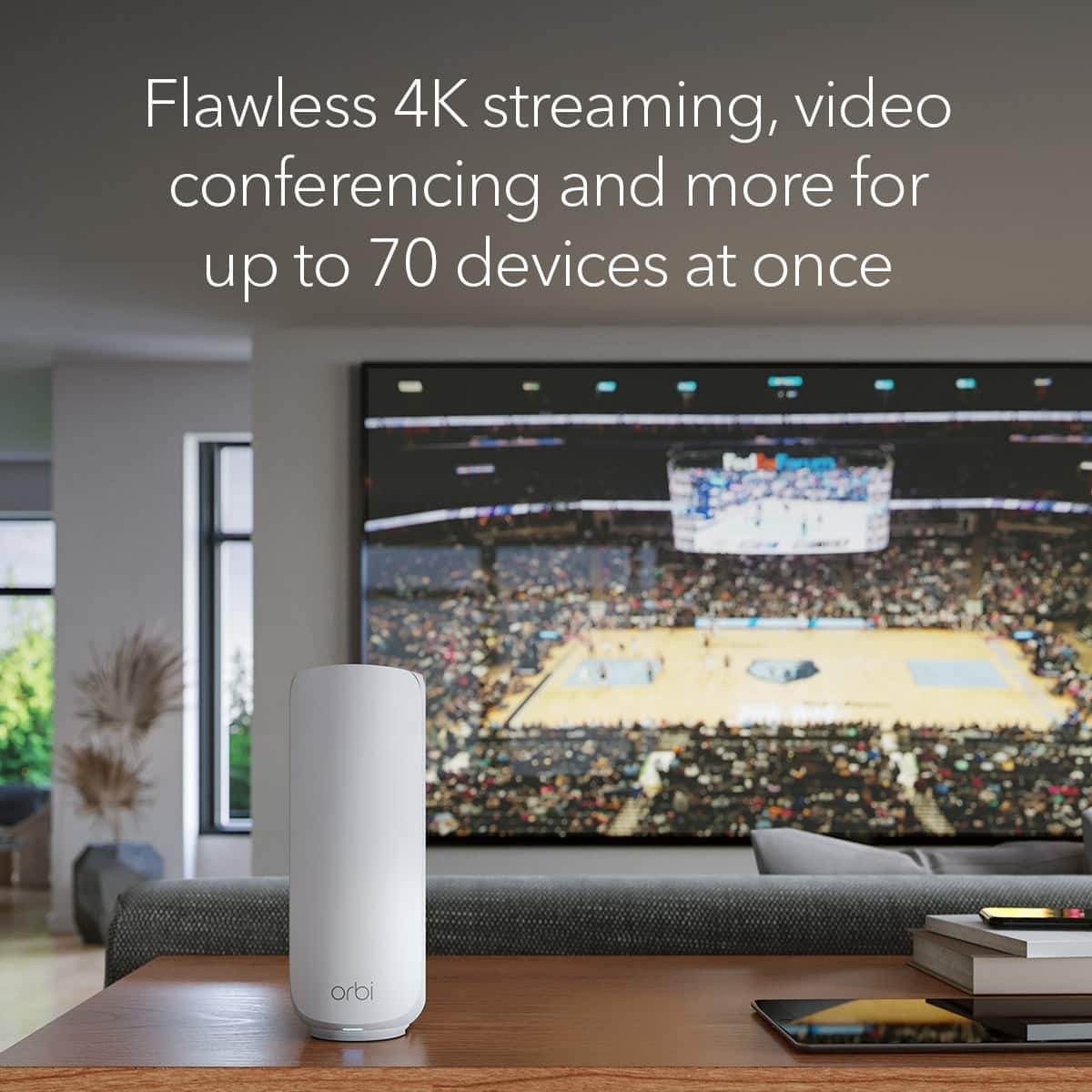
I am a bit of an electronic gadget person and have quite a few smart lights, smart devices, televisions, computers, laptops, and phones all vying for internet. This system can work with up to 70 devices all at once. I have had no problems with telling my smart devices to turn on lights, etc. while working on my computer in another room.
If you are looking for the next generation Wi-Fi 7, for a reasonable price, this is a good system to get. It seems reliable, easy to set up and very affordable for all it has. I would definitely recommend this to anyone who wants to upgrade their old router and needs to extend their WiFi area a lot further for more convenience.
This reviewer received promo considerations or sweepstakes entry for writing a review.
You know how Batman is always ready with a plan to protect Gotham City and with enough prep time he can defeat almost any foe? Well, these guys are like little vigilantes for your Wi-Fi network. Coverage up to 6,000 feet seems like it might be possible with these. The Wi-Fi 7 is pretty slick. Don't have a lot of things that can take advantage of it, but my phone and laptop were pretty pleased with the upgrade. Only having two ports was kind of a letdown but the computers that are hard wired to my network are just happy the laptops and phones are no longer begging for speed and slowing down the rest of the network😂
The ability to have my security cams on a different network than everything else was something I have been looking forward to being able to do. Dual band and lets me enjoy watching movies on the deck in the backyard at night which had always been a issue with buffering. Having to not rely on the cellphone data plan made this a huge plus.
Whole thing was easy to setup and the app falls along the same lines. Patience and stress are things you won't have to worry about when setting this up. Dead zones are gone thank to this kit.
I would definitely suggest anyone who has dead spots and are running an old router and you've been sitting on the fence to upgrade. Go to the store and pick this up.
This reviewer received promo considerations or sweepstakes entry for writing a review.
Netgear is a name in networking that’s been around in computing since 1996 and back then home networking looked a lot different. A lot has changed since then and gone are the days of big clunky routers with giant antenna and range extenders. Now under a different moniker “Orbi”, Netgear still makes routers but more commonplace in todays home are Mesh Wifi Systems, which look like small pods or speakers that sit throughout the home to provide internet to every room! Today we will be reviewing the Orbi 370 Dual Band Mesh System!
Initial setup out the box was an absolute breeze. The 370 comes with one router and 2 satellites. I hooked the router up to my modem and followed the on-screen instructions. Step by step worked to a T and within 5-10 minutes had everything completely set up. Sometimes I’ve had issues with setting up additional satellites with Linksys or Eero that caused me to have to try more than once to get them to pair. With the Orbi the app automatically found the satellites that were upstairs in the loft and master bedroom with zero issues. If I were someone who wasn’t familiar with setting up a router or mesh system I would probably lean towards the 370 alone for ease of setup. My mom is 72 and awful at anything tech related and I’m certain she could have handled setting these up no problem!
Once my Wifi network was setup I hooked everything in the house up to the new network and ran some speed tests. I currently have 1000 Fiber with AT&T and generally in the past got around 400-700 Mbps when testing with my phone or other devices. With the Orbi 370 my testing peaks at 930kb for Download and 925kb for Upload. I can notice a big difference in app loading time on our family room tv along with less pixelation when streaming during heavy congestion times. I tested streaming on 3 tv’s at the same time while downloading files on my computer and it handled the stress test beautifully! Not sure why my other router wasn’t getting the top end speed my internet could provide, but the Orbi 370 definitely pulls every bit of juice out of my internet speed capabilities!
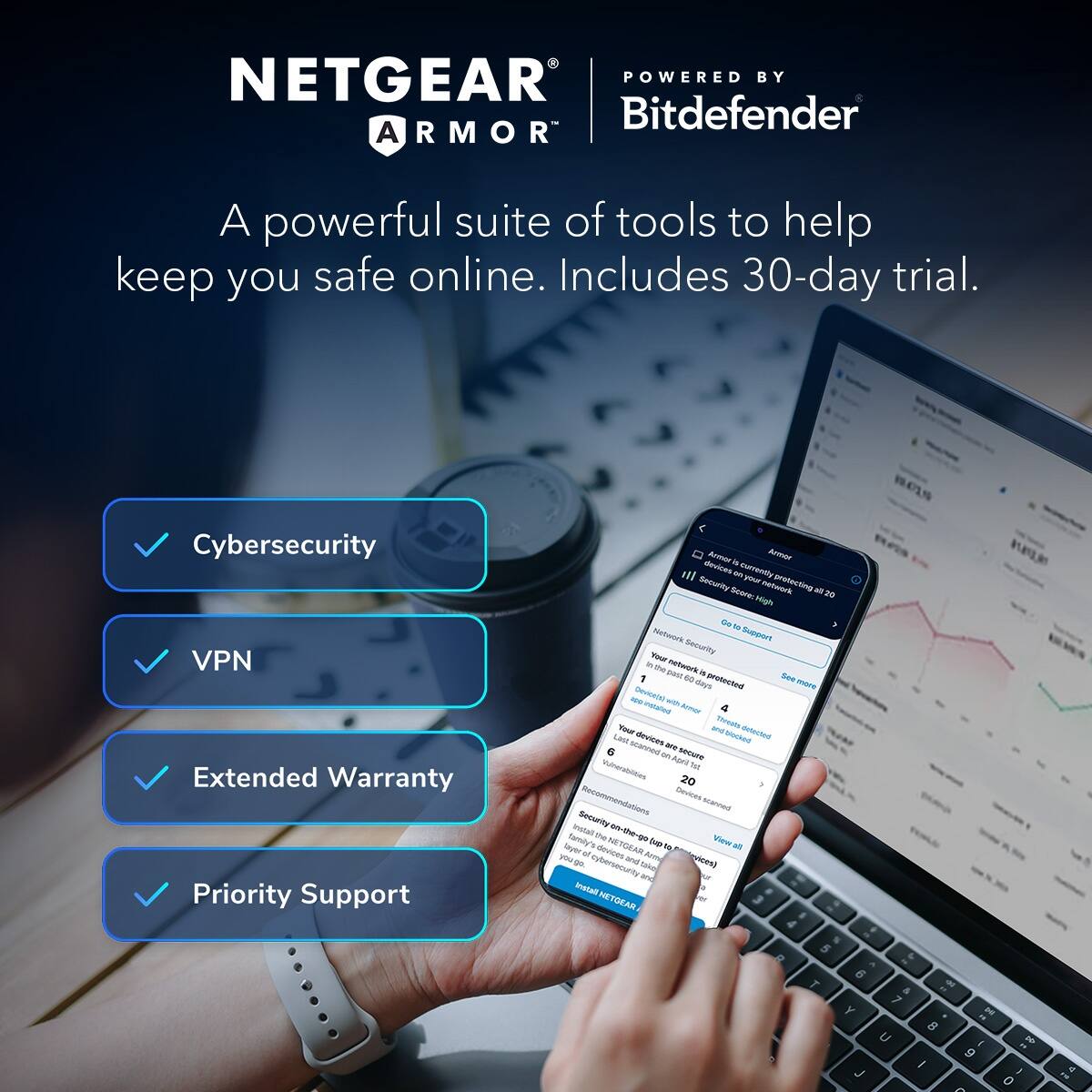
The Orbi app is easy to use and adds a lot of functionality with Guest Networks, Parental Controls and Device Managers. Guest Networks allow you to create networks for people when they come to visit. Device Managers allows you to monitor the devices currently logged into your network. Parental Controls will allow you to set time limit and block apps and websites, but does require Premium Access which is an additional fee. There’s also a Armor feature that comes free for 30 days with the Orbi370 and it acts as sort of a firewall/monitoring system for your network. It has scanned multiple devices on my network to make sure they aren’t compromised. It is a paid feature after 30 days and if you’re a person who might be worried about added security and extra measures this would be something to consider! You can also check for updates for the router and access it outside of the home by using Anywhere Access! Overall, the app is super user friendly, straightforward and easy to use!
I have been very impressed with the Orbi 370 Mesh System. It’s very simple to install and navigate and provides a useful amount of features with additional security features if you feel they’re necessary. The Mesh system utilizes every bit of my internet speed and provides fast WiFi throughout our home. If you’re looking for a new Mesh system and need one that’s user friendly with easy to use features the Orbi 370 would be at the top of my list!
An entry-level, easy to setup mesh network system.
|
Posted .
This reviewer received promo considerations or sweepstakes entry for writing a review.
The Orbi 370 is Netgear’s entry-level Wi-Fi 7 mesh system, brining next-gen wireless tech without the $1000+ price tag. It’s only dual-band as opposed to those pricier tri/quad band higher-end models. But supports speeds up to 5Gbps, with coverage up to 4,000 sq ft per node. I was using a Linksys Triband 3 node system but had odd connection issues where it would drop wifi intermittently causing issues with apps that needed to stay connected online or it would crash out and be forced to restart.
So far the Orbi 370 has been giving me solid performance with a stable connection and the same if not better coverage than my previous mesh system. Setup was simple and I was able to get everything connected and configured a good deal quicker than my old system. The phone app is fairly basic, it allows for quick setup, but advanced users should look elsewhere. The Orbi 370 stated to have a 5Gbps throughput so I am able to take full advantage of my 1Gb fiber and have moderatly fast wireless connection for data transfer between my devices within the Orbi mesh network. The Orbi is a secondary mesh network within my home that is used for spreading internet connection across my home and not necessarily for my smart home/data intensive applications. My main PC/Laptops are hardwired to a switch that feeds into the ISP router. All smart home devices are on that wireless router so they are separate from the entertainment network. I could run the Orbi 370 in bridge mode, but I prefer having the separate networks and a guest network so everything/one has their place.
While I am satisfied with the setup as it is, there are a few negatives that I feel is worth noting:
Although being branded as Wi-Fi 7, it lacks the 6GHz band that bears the true mark of Wi-Fi 7. That means no ultra-wide channels or low-interference performance you'd get from tri/quad-band systems. It’s a dual-band WiFi 7 system with limited ability to fully exploit the spectrum and bandwidth improvements Wi-Fi 7 offers. So you will only see Wi-Fi 6 when identifying the wireless network.
The router and satellites offer only a couple of 2.5Gbps ports. If you’re running a wired-heavy setup or want link aggregation, this system feels cramped.
Barebones customization with the app. Now even routers have subscription model to keep hitting you for cash. Parental controls and the Netgear Armor for network security monitoring is something Netgear would like to have you pay $100 a year for. Own nothing pay to play.
Netgear Orbi 370 Series BE5000 delivers a stable, easy-to-deploy mesh network that is (for me) an improvement over glitch-prone Linksys tri-band mesh. Its performance and coverage are solid, especially for users who prioritize simplicity and reliability over deep customization or bleeding-edge specs. However, calling it a true Wi-Fi 7 system feels like a stretch without the 6GHz band, it’s more of a transitional product than a future-proof investment. The limited port selection, barebones app, and creeping subscription model make it clear that this is a compromise between affordability and capability. If you’re okay with that trade-off and want a secondary network that just works, the Orbi 370 fits the bill. But if you’re chasing full-spectrum Wi-Fi 7 performance or demand granular control, you’re better served with higher end models.
This reviewer received promo considerations or sweepstakes entry for writing a review.
The Orbi 370 are a set of mesh wifi units. You get one router unit, which has a WAN port for internet input and LAN port for your local network and two mesh units each with a single LAN port. The LAN port also supports wired backhaul, though wireless backhaul is enabled by default. Aside from that, the only other thing you need to do is plug in power. The units are white, not quite cylindrical in shape. They look nice on one’s desk, unassuming, almost like a speaker or diffuser. They’re surprisingly light and take up very little space.
I set these up in a 3000 sqft three story home. The main router went on the main floor on one side of the house in between the living and dining room. One mesh unit is upstairs, above the main unit in the master bedroom. with the third also upstairs on the opposite side of the house. I placed the mesh units in areas that were weak spots with my previous single-router setup. The basement only partially extends under the house and most things there connect via ethernet. I previously had a 5 port unmanaged switch which I replaced with the old wifi router. With the Orbi’s placement, the basement still is the most poorly served portion of the house, though the connection to the router unit is still stronger than it had been to the old wifi router, despite it’s many directional antennas that you could position. But now, instead of having a weak wireless connection to the main house SSID, there’s now a very strong connection to the basement SSID.
It’s a tradeoff I’m happy to make, especially considering that the rest of the house now has great wireless coverage. Now, instead of having spots on the main and second floor where connectivity was poor to ok, I now have good to great coverage everywhere. My main ISP provides gigabit fiber. Speeds connected to the main Orbi router are pretty much the same as when connected directly to the ISP modem. Speeds at the satellites are a bit slower, but not my much. Download drops from around 980Mbps to 800Mbps and uploads take a bigger hit, from around 900Mbps to 500Mbps. In the basement, 100 feet away by ethernet cable, the speeds are the same as previously and what I’m seeing with the Orbi satellites. Another improvement is wifi coverage to my yard and garage. I have a wireless garage door controller that would sometimes lose connection to the house wifi. Now that never happens (or at least has not happened in almost two weeks of use). My phone still has good connection near my mailbox which is about half a block from the house itself where before that’s where it would give up and switch to cell service. I can’t say that I’ve noticed lower latency to any of my smart home devices - it still takes about the same 4-8 seconds to connect to my video doorbell and video quality to it and other cameras are the same, but devices that sometimes would drop off the network no longer do so.
Setting things up was easy though annoying as I had to go through the process a few times. The app walks you through everything but if it gets interrupted for some reason, you pretty much need to fill out most of the same information again. After pairing the main unit to the app, you’d connect the satellites, then answer some questions to configure your home network. Then it will write all that info to the router. As part of that process, you connect to the routers wifi network and set an admin password or keep the default. The first time around, I’d set a new admin password and updated the SSID. But I decided I wanted to move where I had one of the satellites so I interrupted the setup. When I came back, the router still had the new SSID and admin password which the app remembered, but I had to enter again all the info regarding the house. For some reason, the second attempt to write the final configuration failed. Same deal - re-enter everything. I started the third attempt, but had to rush out the house for an appointment before it completed so again repeated this on the fourth which ran to completion. Another annoyance with this is that when it’s writing the final settings, it has a 2 minute timeout to wait for the router to connect to the internet before it actually completes the writing. Given that I never unplugged or restarted the main router at any point, it always had the internet connection, but it was clear from the status messages that the app just was waiting for time to elapse before it every tries to see if the router has connected. This might be nice on first set up so people don’t get worried by seeing messages saying it’s attempting to connect to the internet and failing to do so, but it really sucks when the router is already connected because it’s just wasting time. That’s an area where Netgear’s setup process could be smarter.
Otherwise, I like the UI. The network topology diagram is nice and you can quickly see what devices are connected to which unit. You can even move things around though I figured I’d let the router handle that itself. It would be nice to have another LAN port on the main router but I wasn’t already using an extra port when I had the wifi router with 4 lan ports. If the use case comes up, I’ve got some USB powered 3 port switches that I can drop in. From what I can tell, the basement won’t really be affected as it’s bandwidth limitation is more due to being on the other side of a 100 foot cable than sharing a single gigabit port on the router.
I wasn’t sure the Orbi 370 system could cover a large, three-story home with challenging layout, especially reaching the garage. But it has exceeded my expectations. I now have stable, fast coverage across the house, yard, and even near the mailbox. Setup had its hiccups, and speeds do dip slightly at the satellites, but the gains in coverage and reliability make it a worthwhile upgrade. Looking back, I wish I’d tried mesh Wi-Fi sooner. Then again, if I’d started with a weaker system, I might have written off the whole idea. Instead, the Orbi 370 proved that mesh can be clean, reliable, and easy to live with.
This reviewer received promo considerations or sweepstakes entry for writing a review.
Firstly this came in a weird box that said one of two incomplete but I had my router and two towers. Inside the box I had my three towers and charging cables with a QR code sticker on the router I figured setting up was going to be simple but I ran into some major headaches. For starters, downloading the app and starting off was super easy. You plug your router into your current modem and then reset everything. Simple right?! Nope!! The unit like most tech items wants you to connect to the devices Wi-Fi and then I had major problems getting the two to merge. For starters, my Sonos sound system went offline and no speakers could be found but unplug this mesh system and boom there they are. Secondly my cable TV stopped working. I got panicked because my wife works from home and gets up at 3:30am and I didn’t want to cause her problems so I had to wait another day before really making time to get this to work. Eventually everything connected but I don’t like the size of the towers they are a bit of an eye sore and connecting this system was a bit of a process. Overall it’s a fast system that works good and I recommend
This reviewer received promo considerations or sweepstakes entry for writing a review.
The installation of this Netgear super ‘mesh router’ system went smoothly although there are some pros and some minor cons. You start by installing the ORBI app and then follow the prompts to setup the base router; next you proceed to setup the two nodes. Unlike other systems, you don’t need to put the nodes near the base router during setup. You can put them at their expected locations right away when you first configure them – that’s nice. The nodes are installed last, and they picked up communication from about 30 feet away from the base (and through walls and doors) very easily - excellent. Firmware updates also went smoothly. I had no trouble using the app to create an additional access point and told it to run at 5.0 GHz only. The app does include many features to check speeds, configure extra access points, parental controls, a signal strength meter and will show you a nice network map – great.
Every time you do something in the cell phone app to reconfigure, it takes several minutes for the ORBI system to execute the change. You always get these messages to wait while ORBI makes sure your phone is on the ORBI access point (which it already is). Another negative is you are forced into a subscription to Armor Active Security. I’m left with a ‘to-do’ to cancel the Armor Active Subscription which you can’t do from the app; you must go to a web site. You can disable it using the app. In fairness, you can just let the trial for Armor Active expire.
A minor problem is that the LED ‘off’ state is left for you to guess. When this LED, which is on the front of each of the three units is flashing-white, it is syncing; then it becomes solid-white when ready for setup – this information is clearly indicated as you do your install. But in the app, it is shown as green in the instructions, leading you to believe this means all is well. However, you can google it and see that when all is well this LED is off. The process should tell you that the LED ‘off’ state means good. The instructions should be amended to be clearer in this area.
I think this router needs some work to improve the speed of configuration and setup. I was impressed with the distance the nodes can be away from the base unit and connect very easily. I see these nodes do stay connected without any need to reset or resync. Other than some minor issues as mentioned, I really like the solid physical build and the top rate specifications – well done. I finally have my garage covered with a router that really works. I can certainly recommend this unit to help you provide complete internet WiFi coverage for larger houses.
This reviewer received promo considerations or sweepstakes entry for writing a review.
The Netgear Orbi 370 WiFi7 Mesh Router provides very good WiFi performance on a budget. It replaced an older 802.11ac mesh router which also had two satellites. Although my router and satellite placement is the same as the older system, the Orbi 370 provides much better and consistent coverage and throughput. An additional note, I had to contact Netgear/Orbi support for help at one point and their support was really excellent. More on this later.
The Orbi 370 mesh package consists of a router, two satellite units, power supplies, and an Ethernet cable. Each unit has a single 2.5gb port for peripherals and the router has an additional 2.5gb port for internet connection. The router and satellites are otherwise identical, standing about 8in and roughly cylindrical. They are very unobtrusive, lights only come on during power up, configuration and when errors are detected.
Initial installation (cable modem system) should have been very easy. First step, download the Orbi phone app to do the initial configuration and scan the QR code on the router. Then: Unplug modem, connect router and modem via ethernet, plug in router, connect the app, plug in the modem, and follow the instructions in the app. Unfortunatly, I ran into an error that caused the app to loop continuously. Netgear tech support responded very quickly, set up a time convenient for me, and walked me through the workaround. Very patient, knowledgable, and helpful. Definitely a plus point for Netgear!
Once the router was up, I could connect the satellites which was very simple.
Streaming and gaming are both very smooth with no apparent lag or latency issues. I have about 40-50 devices, 30 or so may be active at any given time. Previous network I had the game systems connected via Ethernet, WiFi would occasionally lag. With the Orbi 370 installed, I've switched the game systems to WiFi with no perceptible issues. Very nice.
There are two 'security' add-ons, at a monthly subscription fee. The first provides Bitdefender enabled application type security and vulnerability scans for $99 a year. There is an additional addon for parental controls for an additional fee. It's kind of unfortunate that so much of the security and access controls have moved into the add-ons. There are some controls available in the app that are not in the web admin interface and vice-versa, also unfortunate. Finally, I believe remote administration now requires the security add-on because it it done via the Netgear proprietary vpn.
There is an option to enable a guest network and password, but no controls over access. The guest network shares the same subnet as the primary network without any firewall controls. There are also no rate limiting controls or other traffic shaping controls. Not totally unexpected at this price range, but it would have been nice to have some basic security options in the router.
Overall, I'm pretty pleased with the performance upgrade and the tech support has been superb. I am a little disappointed with the subscription model for what I consider basic router security. For anyone looking to upgrade to WiFi7, or just get a throughput boost on a budget, the Orbi 370 WiFi7 Mesh Router should be on the short list of candidates.