Holiday deals. Holideals?Either way, start saving.Shop now

Main Content
Skip to contentGo to Product Search

Holiday deals. Holideals?Either way, start saving.Shop now

Main Content

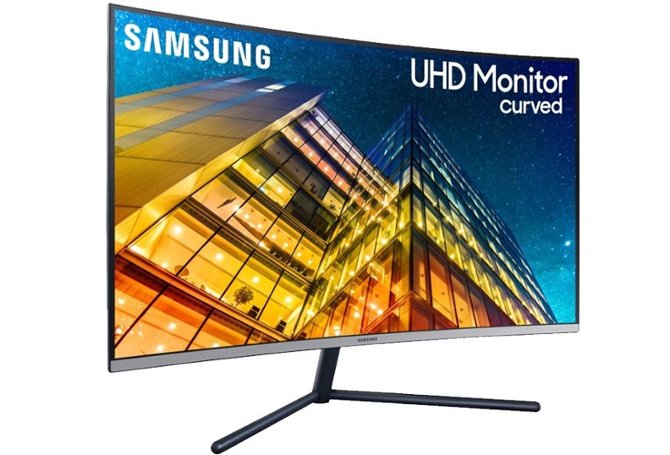
Curved 4K TV

Find a curved 4K TV that fits your space and viewing setup. Compare screen dimensions, HDMI connections, and placement requirements, and consider how the curved screen will work with your seating layout. Check each model’s listed features to choose a 4K Ultra HD TV that suits how you watch and the devices you connect.


Categories & Filters
Results

Curved 4K TV

A curved 4K TV pairs a gently arched screen with the detail of 4K resolution, creating a distinctive option for a living room, media room, or dedicated entertainment space. The screen’s edges curve slightly toward the viewer, which can give movies, sports, and games a more enveloping feel when viewed from a centered seat. With 3840 x 2160 pixels, 4K resolution provides four times the pixel count of Full HD, allowing compatible content to show fine textures and intricate detail. Screen size, viewing distance, and the quality of the source all influence how noticeable that detail will be. A larger screen can make the curved design more prominent, while a size that suits your seating distance helps keep the entire picture comfortable to take in. For shoppers drawn to the curved profile, picture quality remains just as important as shape: contrast, color accuracy, brightness, and motion handling all contribute to the viewing experience.

Room layout is an important consideration when comparing curved 4K TVs. A centered seating arrangement lets viewers experience the screen’s shape more directly, while a wide sectional or seats spread across the room make off-center picture quality worth considering. Viewing angles depend on the display technology as well as seating position, so curvature alone does not guarantee a consistent picture from every seat. Windows, lamps, and overhead lighting also affect the experience, since a curved surface can change how reflections appear across the screen. Beyond placement, useful picture features depend on what you watch. HDR compatibility can support a wider range of brightness and color with compatible content, but the resulting picture also depends on the TV’s brightness, contrast, and color capabilities. Upscaling can help lower-resolution programming fill a 4K screen, although it cannot reproduce all the detail of a native 4K source. These differences matter for households that switch among streaming movies, live broadcasts, and older favorites.

Connections, entertainment features, and physical fit help distinguish a curved 4K TV that suits your everyday setup. Enough HDMI inputs make it easier to accommodate a streaming device, cable or satellite receiver, and game console without frequently swapping cables. For gaming, supported resolutions and refresh rates, low input lag, and features such as variable refresh rate are useful comparison points rather than benefits to assume from the curved shape or 4K label. Smart TV software, app compatibility, and network connectivity matter for streaming, while compatible HDMI ARC or eARC connections can simplify an audio setup with a sound bar or receiver. Cabinet width, stand footprint, and clearance deserve attention alongside the screen’s diagonal measurement, especially because the curved profile affects the TV’s depth. Wall-mount compatibility, mounting hardware requirements, and access to rear connections are also practical considerations. Together, these details help match the screen’s distinctive appearance with the viewing habits, equipment, and available space in your home.

FAQs