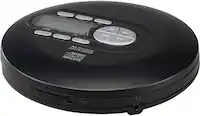
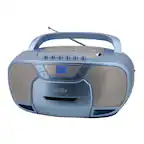
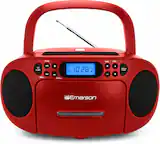
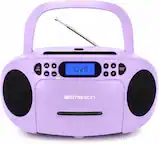
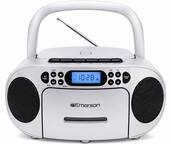
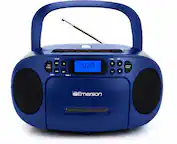
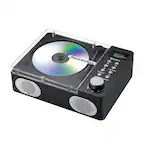
Kids’ sing-along CD players turn familiar songs into an invitation to join in, whether a child is singing a favorite chorus, acting out a story, or putting on a living room performance for family. Combining physical music playback with a microphone gives children a straightforward way to participate: choose a disc, press play, and add a voice to the recording. The experience can be especially appealing for children who enjoy handling their own music rather than navigating a phone or tablet. A small collection of clearly labeled CDs makes it easy to return to favorite songs, while the album artwork and track list give each recording a recognizable place on the shelf. These players can fit into independent play, sibling duets, dance breaks, and quiet listening between performances. Nursery rhymes, action songs, storytelling recordings, and family favorites each offer a different kind of listening experience, though the music and lyrics should suit the child’s age and interests. Singing along also gives children opportunities to practice remembering words, following a rhythm, and taking turns without turning playtime into a lesson. For a child who prefers a smaller audience, a bedroom concert for stuffed animals can be just as enjoyable as a performance for the whole household. The physical design matters to that sense of independence. Large, clearly marked buttons, an easy-to-read display, and a disc compartment that opens without much force can make everyday operation more manageable for small hands. A stable base helps keep the player steady when a singer reaches for the controls, and a comfortable carrying handle can make supervised moves between rooms simpler. Age recommendations remain important, since a player’s appearance alone does not establish its suitability for a younger child. Microphone cords, battery compartments, removable accessories, and the amount of help needed to load a disc all affect how comfortably a player fits into a family’s routine.
The most useful sing-along features depend on how children like to play. A microphone with its own volume control allows a voice to be balanced against the recording, so the singer does not have to compete with the music. A second microphone connection, when included, can support duets and make sharing more natural, although the number of microphones supplied and the number supported are separate details. Cable length affects where children can stand, while a microphone holder gives the accessory a place to rest between songs. Speaker clarity is more important than sheer loudness for hearing lyrics and backing tracks. A comfortably low listening level helps keep the experience pleasant for singers and everyone nearby; an adult-controlled volume limit, where provided, can help maintain that setting. Positioning the microphone away from the speaker can reduce the squeal caused by feedback, particularly when a child turns toward the player mid-song. Repeat functions are useful for a chorus that deserves another performance, and simple track skipping makes it easier to find a favorite without replaying an entire album. Some players offer additional playback connections or wireless audio features, but those capabilities vary and should not be assumed from the sing-along design. Likewise, a microphone generally adds the child’s voice to the existing recording rather than removing the original singer. Vocal reduction, recording, and sound effects are separate functions that need explicit support. Disc compatibility deserves similar attention: standard audio CDs are the starting point, while support for recordable discs, rewritable discs, or compressed music files depends on the player. Headphone output, if included, may be helpful for listening, but microphone playback through headphones is not necessarily supported. These distinctions matter when a child expects to hear a duet, practice with an instrumental track, or listen privately after the performance is over. Straightforward controls often contribute more to repeat enjoyment than a crowded panel of effects that requires an adult’s help every time.
A kids’ sing-along CD player also needs to fit the spaces where music happens. Lightweight molded plastic housings are common because they are easy to carry and wipe clean, while rounded edges and well-fitted controls can make a player more comfortable to handle. A sturdy handle, secure disc lid, and stable microphone storage are practical details for a player that travels between a bedroom shelf and a playroom floor. Durability does not mean drop-proof or spill-resistant, however, unless those protections are specifically stated. A level surface away from table edges, drinks, and busy walking paths helps protect both the player and its discs. CDs benefit from being held by the edges and returned to their cases after use; fingerprints and scratches can interrupt playback just as a favorite song reaches its chorus. Exterior care is usually simple, with the player switched off and unplugged before cleaning according to its instructions. Moisture should stay away from openings, connections, and the disc mechanism. Power options shape everyday convenience, too. An included or compatible power adapter can suit regular listening in one spot, while battery operation allows more flexibility where an outlet is inconvenient. Battery type, quantity, and expected runtime vary, and rechargeable batteries or built-in charging should never be assumed. For shared listening beyond microphone play, Battery-Operated CD Players With Speakers offer another way to bring favorite albums from room to room. Adults should handle battery changes and keep loose batteries out of children’s reach. As a birthday gift or a present marking a child’s growing interest in music, a sing-along player feels especially personal when it matches familiar songs and an appropriate level of independence. A place to store discs, room to stand comfortably, and household expectations about volume help make it part of daily play rather than an accessory brought out only for special performances.