How to Choose a Fitness Tracker
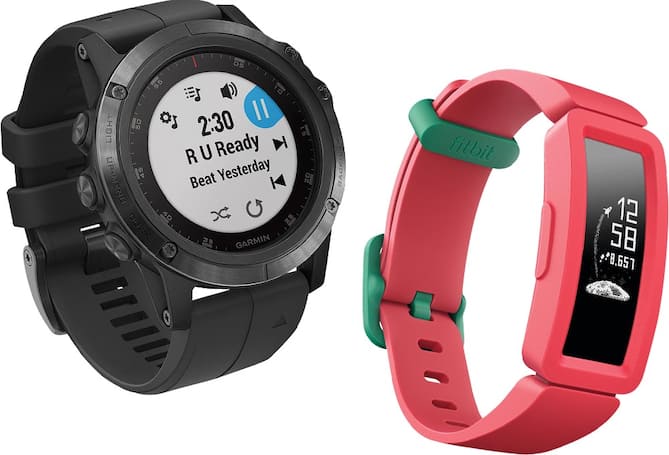
Best Selling Products carousel(6 Items)
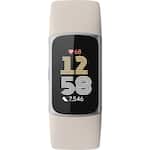
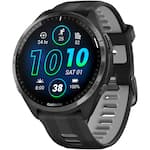
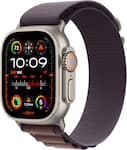
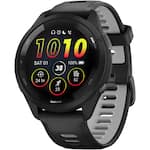
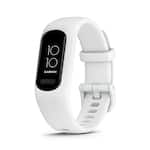
Finding the best fitness tracker for you
Tracking your health and activities from day to day can prove to be tricky, even with modern technology on your side. Fortunately, there are devices that make it a little easier. Depending on the type of exercises you do, it's important that you find a fitness tracker that works well for you on a personal level.
Fitness trackers and watches can monitor your steps, calories burned, heart rate, sleep patterns and more, all helping to provide valuable data to motivate you and help you reach your health and fitness goals. Keep reading as we delve into everything you need to know about fitness watches and fitness rings.
How can you benefit from a fitness tracker?
Using a fitness tracker can significantly help your workout experience. Whether you enjoy running, cycling, swimming or just getting in your daily steps, a health and fitness tracker can monitor your distance, pace and calories burned. In addition to just being interesting and important information, this data can help gauge your progress and set fresh challenges.
Goal setting can be a critical aspect of any fitness journey, and luckily, a fitness tracker watch or fitness tracker ring can help. You can establish specific targets or milestones to work towards. By tracking your progress and receiving real-time feedback, it can be easier to stay motivated and accountable as you strive to reach your fitness goals.
Although fitness trackers are often linked with smartwatches, they extend beyond that. While a smartwatch is essentially an extension of your smartphone, a fitness band tracker is specifically designed to monitor and track various aspects of physical activity, exercise and health across a wide range of metrics.See Disclosure 1
Fitness tracker features
Although exact functionalities can differ between different models, the features of a fitness tracker typically include:
- Step tracking. This counts the number of steps you take throughout the day using an accelerometer, helping you monitor your activity level and set daily milestones.
- Distance tracking. A fit tracker estimates the distance you’ve traveled based on the number of steps taken and stride length, giving you insights into your overall mobility.
- Calories burned tracking. By analyzing your activity level and other factors like age, weight and height, fitness trackers estimate the number of calories you burn throughout the day.
- Heart rate monitoring. Your heart rate is related to your cardiovascular health, so many fitness bands include optical heart rate sensors that monitor your heart rate.
- Sleep tracking. By examining the duration, quality and stages of sleep, sleep tracking helps you understand your sleep habits so you can make adjustments for a better night’s sleep.
- GPS tracking. Built-in GPS accurately tracks outdoor activities like running, cycling or hiking, providing detailed maps of the distance you’ve traveled.
- Water resistance. Water-resistant fitness watches and rings allow you to track swimming workouts and wear them in the shower without worrying about water damage.
Certain models are also equipped with sensors that can track your respiratory rate, particularly during physical activity or periods of rest.
What to consider before buying a fitness tracker
Even though there isn’t a direct correlation between better health and wearable technology, there are plenty of health benefits from partaking in physical activity.2,3 In addition to reducing the risk of certain diseases and improving sleep quality, regular exercise can help strengthen muscles, improve cardiovascular health, boost mood and enhance cognitive function.See Disclosure 4
Think about the cross functionality between your fitness tracker and other devices. A fitness watch or ring can sync data with your smartphone or computer. This allows you to track your progress over time and analyze trends in your activity levels. Additionally, you can integrate an activity tracking device with other health-related devices, such as heart rate monitors or smart scales. Some health care systems also allow you to sync your fitness tracker data so that you can share it with your doctor.
You should also consider the look and the feel of your exercise tracker. Although a fitness band and watch tends to be the more popular choice, there are plenty of reasons why a fitness ring could be right for you. First, the sleek and discreet design of a fitness ring is typically preferred in contact sports or other activities that could potentially damage a watch. Additionally, the lightweight and comfortable construction make it ideal for all-day wear with minimal disruption.
A fitness watch, on the other hand, offers a larger display screen, which provides more real estate for viewing metrics, notifications and other information at a glance. And, the versatility of a fitness watch extends beyond activity tracking, with many models allowing you to receive calls, texts and app notifications directly on your wrist. However, you will have to take the ring off while weight lifting to ensure they don’t get scratched. So, when it comes to fitness watch vs. fitness ring, the decision really comes down to your personal preference and workout routine.
Start your fitness journey now
References
1. Ferguson, Ty, Timothy Olds, Rachel Curtis, Henry Blake, Alyson Crozier and Kylie Dankiw. “Effectiveness of Wearable Activity Trackers to Increase Physical Activity and Improve Health: A Systematic Review of Systematic Reviews and Meta-Analyses.” The Lancet Digital Health Volume. August 2022. https://www.thelancet.com/journals/landig/article/PIIS2589-7500(22)00111-X/fulltext.
2. Tricás-Vidal, Héctor José, María Orosia Lucha-López, César Hidalgo-García, María Concepción Vidal-Peracho, Sofía Monti-Ballano and José Miguel Tricás-Moreno. “Health Habits and Wearable Activity Tracker Devices: Analytical Cross-Sectional Study.” Sensors (Basel), Multidisciplinary Digital Publishing Institute. April 12, 2022. https://www.ncbi.nlm.nih.gov/pmc/articles/PMC9031391/.
3. Warburton, Darrn E.R., Crystal Whitney Nicol and Shannon S.D. Bredin. “Health Benefits of Physical Activity: The Evidence.” CMAJ, Canadian Medical Association. March 14, 2006. https://www.ncbi.nlm.nih.gov/pmc/articles/PMC1402378/.
4. Mandolesi, Laura, Arianna Polverino, Simone Montuori, Francesca Foti, Giampaolo Ferraioli, Pierpaolo Sorrentino and Giuseppe Sorrentino. “Effects of Physical Exercise on Cognitive Functioning and Wellbeing: Biological and Psychological Benefits.” Frontiers in Psychology, Frontiers Media. April 27, 2018. https://www.ncbi.nlm.nih.gov/pmc/articles/PMC5934999/.
Additional information:
These statements and any information contained herein are intended for educational purposes only and are not meant to substitute for medical care or to prescribe treatment for any specific health condition. Carefully review product labels for instructions and important safety information and consider consulting with a health care professional regarding your use of health and wellness products.