LG - 75" Class 70A Series QNED AI 4K UHD Smart webOS TV (2025)
Series
QNED - 70A seriesScreen Size Class
75"FREE delivery to
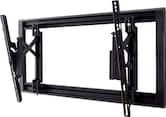 SANUS Elite - Advanced Tilt 4D TV Wall Mount for Most TVs 42"-90" up to 150lbs- Extends 6.8" for Easy Cable Access and Max Tilt - BlackBlack Friday Deal$127.49$169.99
Related Item

Highlights
- Key Specs
- Display Type: LED
- Resolution: 4K (2160p) (Refers to the number of pixels, both horizontally and vertically, used to capture video/images. The higher the resolution the finer the detail that can be seen.)
- Screen Size Class: 75 inches (The group size measurement of a screen. This differs from a screen size measured diagonally from corner to corner.)
- High Dynamic Range (HDR): true (An HDR-compatible 4K TV or other HDR-compatible product displays HDR video content when it's available from sources like 4K Ultra HD Blu-ray Discs and 4K streaming services.)
- High Dynamic Range Format: HDR 10, Hybrid Log-Gamma (HLG) (There are a few HDR formats that tell the TV or other HDR-compatible product how to best utilize its capabilities to display HDR content. HDR technology can support one or multiple formats, each with various benefits to picture quality.)
- LED Panel Type: QNED
- Backlight Type: Direct Lit (Edge-lit: lights are on the edges of the display with ~10 zones of vertical LEDs. Direct-lit: lights are on the edges and behind the screen for more light uniformity than Edge-lit. Full array: direct-lit with local dimming for greater contrast with up to 100 zones of LEDs.)
- Refresh Rate: 60Hz (The number of frames per second the device can produce natively without enhancement. Higher rates help produce smooth, seamless pictures.)
- Specific Manufacturer Technologies: Alpha 7 AI Processor Gen8 (This is technology that's specific to a TV brand (sometimes called proprietary technology). Here you'll see terms related to picture quality, brightness, processors and more.)
- Smart Platform: webOS (Just like a computer, a smart TV needs an operating system (also called a smart platform) in order to access the Internet, connect with entertainment apps, and play streaming content. Some common TV smart platforms are; Roku TV, Android TV, and Chromecast.)
- Featured Streaming Services: Netflix, Max, Disney+, YouTube, Prime Video, Apple TV+, Sling TV (Streaming services and other programs are available on this device. Keep in mind, there may be more services supported than just those shown here.)
- Number of HDMI Inputs (Total): 3
- TV Tuner Type: ATSC, Clear QAM
- Works With: Amazon Alexa, Google Home, Apple Home (Compatible with or able to be connected to other smart devices or applications.)
- Voice Assistant Built-in: Amazon Alexa (A digital assistant built into the device that uses voice commands to answer questions and control smart devices.)
- General
- Brand: LG
- Model Number: 75QNED70AUC
- Product Name: 75" Class 70A Series QNED AI 4K UHD Smart webOS TV (2025)
- Series: QNED - 70A series (Part of a group of the same product type with similar features.)
- Model Year: 2025
- Dimensions
- Product Height With Stand: 40.4 inches
- Product Width: 66.1 inches (The out of box width of the item. Width is measured as the horizontal distance from one side of the item to the other as it would be primarily used or placed.)
- Product Depth With Stand: 14.2 inches
- Product Height Without Stand: 38 inches
- Product Depth Without Stand: 2.4 inches
- Product Weight With Stand: 70.1 pounds
- Product Weight Without Stand: 69.2 pounds
- Stand Width: 52.9 inches (The horizontal measurement of the stand/base, or the distance from the outside of one leg to the outside of the opposite leg, as it is attached to the product.)
- Stand Depth: 14.2 inches
- Adjustable Stand Width: false (Whether the stand can adjust to have more than one measurement either between the legs or the base itself.)
- Display
- Display Type: LED
- Resolution: 4K (2160p) (Refers to the number of pixels, both horizontally and vertically, used to capture video/images. The higher the resolution the finer the detail that can be seen.)
- Screen Size: 75.1 inches (Size of the screen, measured diagonally from corner to corner.)
- Screen Size Class: 75 inches (The group size measurement of a screen. This differs from a screen size measured diagonally from corner to corner.)
- High Dynamic Range (HDR): true (An HDR-compatible 4K TV or other HDR-compatible product displays HDR video content when it's available from sources like 4K Ultra HD Blu-ray Discs and 4K streaming services.)
- High Dynamic Range Format: HDR 10, Hybrid Log-Gamma (HLG) (There are a few HDR formats that tell the TV or other HDR-compatible product how to best utilize its capabilities to display HDR content. HDR technology can support one or multiple formats, each with various benefits to picture quality.)
- Picture Quality Enhancement Technology: Dynamic Tone Mapping
- LED Panel Type: QNED
- Backlight Type: Direct Lit (Edge-lit: lights are on the edges of the display with ~10 zones of vertical LEDs. Direct-lit: lights are on the edges and behind the screen for more light uniformity than Edge-lit. Full array: direct-lit with local dimming for greater contrast with up to 100 zones of LEDs.)
- Curved Screen: false
- Refresh Rate: 60Hz (The number of frames per second the device can produce natively without enhancement. Higher rates help produce smooth, seamless pictures.)
- Closed Captioning: true (The text version of spoken audio displayed on the screen. Devices that can display closed captioning typically have the option to toggle the feature on or off.)
- Features
- Remote Control Type: Magic
- Specific Manufacturer Technologies: Alpha 7 AI Processor Gen8 (This is technology that's specific to a TV brand (sometimes called proprietary technology). Here you'll see terms related to picture quality, brightness, processors and more.)
- Smart Capable: true (Smart, or smart-capable devices are able to connect directly to your home network in order to stream content from the Internet, run Internet-based apps, or connect to other smart devices.)
- Smart Platform: webOS (Just like a computer, a smart TV needs an operating system (also called a smart platform) in order to access the Internet, connect with entertainment apps, and play streaming content. Some common TV smart platforms are; Roku TV, Android TV, and Chromecast.)
- Featured Streaming Services: Netflix, Max, Disney+, YouTube, Prime Video, Apple TV+, Sling TV (Streaming services and other programs are available on this device. Keep in mind, there may be more services supported than just those shown here.)
- Screen Mirroring: true (Casts the screen of one device onto another wirelessly, using a common protocol (typically Bluetooth).)
- Screen Mirroring Technology: Apple AirPlay 2, Google Cast
- Content Sharing: Mobile to TV (The device is capable of connecting to another device in order to send or receive streaming content. Share content from your mobile device to your TV or vice versa.)
- Indoor Or Outdoor Use: Indoor (Indicates the appropriate environment product was designed to be used in.)
- Text-To-Speech: true (A system that converts language text into speech.)
- TV Tuner: Digital (The ATSC TV Tuner is a component built into conventional TV sets or other devices for receiving over-the-air broadcast TV without a cable/satellite box. Digital tuners may be purchased separately and connected to a device if it does not have one built in.)
- Connectivity
- Number of HDMI Inputs (Total): 3
- Display Connector(s): 3 x HDMI 2.0 (The number and type of connectors used to connect to an external display.)
- Network Connector(s): 1 x LAN
- Audio Only Outputs: 1 x Optical digital audio
- HDMI Audio Return Channel (ARC): eARC
- Wireless Connectivity: Wi-Fi, Bluetooth (The manner in which a device sends data to another device over a short distance without the use of wires or cables.)
- TV Tuner Type: ATSC, Clear QAM
- RF Antenna Input: true (This input is used to connect devices such as antennas or cable boxes to a TV via a coaxial cable.)
- Number Of USB Port(s) (Total): 2 (The total number of USB ports including all generations and versions.)
- Wireless Networking Standard: Wi-Fi 5 (The wireless networking standard used by the device. Each iteration of the standard developed by the Wi-Fi Alliance corresponds to an existing IEEE 802.11 protocol; for example, standard 802.11ac (or AC) is termed Wi-Fi 5. Refers specifically to the standard the device is designed to use, but ultimately determines product interoperability and backward compatibility including previous versions.)
- Bluetooth Version: 5.1 (The Bluetooth specification formalized by the Bluetooth Special Interest Group. All versions of the Bluetooth standard are backwards compatible with previous versions.)
- Headphone Jack: false (The device features an interface that allows for the connection of headphones.)
- Compatibility
- VESA Wall Mount Standard: 400mm x 400mm (VESA wall mount standards refer to the spacing of screw holes built into a TV in order to fit with standard TV wall mounts. These standards are implemented into most TVs and monitors.)
- Works With: Amazon Alexa, Google Home, Apple Home (Compatible with or able to be connected to other smart devices or applications.)
- Voice Assistant Built-in: Amazon Alexa (A digital assistant built into the device that uses voice commands to answer questions and control smart devices.)
- Audio
- Built-In Speakers: true
- Built-in Speaker Type: Downward firing (Backward, downward, and front-firing speakers direct sound into the room from those respective directions. A soundbar is typically long and rectangular, and designed to act as an all-in-one speaker with greater sound production than that of a TV alone. An acoustic surface is the result of small sound actuators embedded directly behind the screen, turning the entire screen's surface into a speaker.)
- Number of Audio Channels: 2.0 (The number of discrete channels of sound output. This can be a single number or multiple numbers separated by decimal(s). The first number is the primary, horizontally directed audio channels. The number after the first decimal, if applicable, is the number of subwoofer outputs or channels. The number after the second decimal, if applicable, is the number of height or atmospheric channels designed to immerse the listener by producing overhead sound effects.)
- Power
- ENERGY STAR Certified: false (Devices carrying the ENERGY STAR service mark, such as computer products and peripherals, kitchen appliances, and other products, generally use 20% to 30% less energy than required by federal standards.)
- EPEAT Qualified: false (The Electronic Product Environmental Assessment Tool (EPEAT) was designed to provide an environmental assessment tool for purchasers. In order to qualify for EPEAT, a product must meet all 23 required criteria.)
- Estimated Annual Operating Cost: 44 United States dollars (Predicted cost of operating the product under average conditions for one year.)
- Estimated Annual Electricity Use: 277 kilowatt hours (Predicted amount of electricity needed to operate the product under average conditions for one year.)
- Included
- Wall Mount Included: false
- Stand Included: true
- Warranty
- Warranty - Parts: 1 year limited
- Warranty - Labor: 1 year limited
- Box Dimension
- Height: 43.9 inches
- Width: 71.7 inches
- Depth: 7.9 inches
- CubicDimension: 24866 inches
- Other
- UPC: 195174121139
LG QNED AI 4K TV's deliver vibrant colorful images for an immersive viewing experience. HDR10 Pro delivers a dramatic visual experience and elevated picture quality by enhancing each color on your screen for a "wow" effect. You'll enjoy outstanding picture powered by the Alpha 7 AI Processor Gen8, which uses AI to detect what you're watching and automatically improves the picture and sound quality. You'll also experience less searching and more streaming, thanks to LG’s award-winning Smart TV platform: webOS.¹ For gamers, you can quickly customize your gaming experience in one location with the LG Game Optimizer. And, with GeForce NOW & Xbox Cloud Gaming included, you can quickly stream and get int your favorite apps.²
- Dynamic QNED Color: LG's Dynamic QNED Color and next-gen AI provide vivid color on your screen for an immersive visual experience.
- Alpha 7 AI Processor Gen8 And Dynamic Tone Mapping: Enhanced brightness, improved sound, refined picture detail with 4K upscaling³ and Dynamic Tone Mapping. It all comes together for a thrilling watching experience powered by the Alpha 7 AI Processor Gen8.
- HDR10 Pro: HDR10 Pro delivers a dramatic visual experience and elevated picture quality by enhancing each color on your screen for a "wow" effect.
- Filmmaker Mode: Watch films just how the directors envisioned them with automatic preservation of the director’s original colors, settings and frame rates for a true at-home cinematic experience.
- Powerful Gameplay: Experience real-time action with virtually no tearing from FreeSync, VRR, GeForce NOW and Xbox Cloud Gaming.⁴ Plus, the LG Game Optimizer, Game Dashboard and four HDMI 2.0 ports get you (and keep you) in the action.
- AI webOS, LG Channels, webOS Re:New & Magic Remote: Search less and stream more with LG’s award-winning Smart TV platform – which delivers a smarter, more personalized experience. Browse all your favorite streaming apps and let LG Channels connect you to over 350 free channels and thousands of titles on demand. Plus, with LG’s Re:New Program enjoy future software updates and feature refreshes.⁵
- Personalized Picture / Sound Wizard: Personalized Picture & Sound Wizard for a customized experience.
- Personalized Search And Recommendations: Leveraging AI, LG makes it easier for you to find what you want to watch. The TV learns what your preferences are based on your interests and your previous viewing selections. Simply press the mic button and AI Concierge will offer tips and recommendations specific to the app or source you are watching at the time for relevant results.
- TV Mirroring: Seamlessly Connect And Share: Apple AirPlay 2 and Google Cast allow you to display the content from your smartphone, tablet, or computer directly onto your TV screen. Whether you're watching videos, playing games, or sharing photos, TV mirroring provides a larger, more immersive viewing experience.⁶
- Ready Assist With Your Connected Devices: Control your TV and connected devices with ThinQ, Google Assistant, Amazon Alexa, Matter and Apple HomeKit.
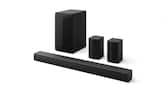
- Sharp, Colorful Picture Meets Immersive Sound With LG Soundbars: Create a home theater experience with this slim and compact soundbar. Packed with Dolby Atmos,⁷ this 3D spatial audio soundbar creates immersive sound giving you a realistic audio experience for all your shows, movies, games and more. Learn more about the LG S70TR Soundbar.
- Dynamic QNED Color: LG's Dynamic QNED Color and next-gen AI provide vivid color on your screen for an immersive visual experience.
- Alpha 7 AI Processor Gen8 And Dynamic Tone Mapping: Enhanced brightness, improved sound, refined picture detail with 4K upscaling³ and Dynamic Tone Mapping. It all comes together for a thrilling watching experience powered by the Alpha 7 AI Processor Gen8.
- HDR10 Pro: HDR10 Pro delivers a dramatic visual experience and elevated picture quality by enhancing each color on your screen for a "wow" effect.
- Filmmaker Mode: Watch films just how the directors envisioned them with automatic preservation of the director’s original colors, settings and frame rates for a true at-home cinematic experience.
- Powerful Gameplay: Experience real-time action with virtually no tearing from FreeSync, VRR, GeForce NOW and Xbox Cloud Gaming.⁴ Plus, the LG Game Optimizer, Game Dashboard and four HDMI 2.0 ports get you (and keep you) in the action.
- AI webOS, LG Channels, webOS Re:New & Magic Remote: Search less and stream more with LG’s award-winning Smart TV platform – which delivers a smarter, more personalized experience. Browse all your favorite streaming apps and let LG Channels connect you to over 350 free channels and thousands of titles on demand. Plus, with LG’s Re:New Program enjoy future software updates and feature refreshes.⁵
- Personalized Picture / Sound Wizard: Personalized Picture & Sound Wizard for a customized experience.
- Personalized Search And Recommendations: Leveraging AI, LG makes it easier for you to find what you want to watch. The TV learns what your preferences are based on your interests and your previous viewing selections. Simply press the mic button and AI Concierge will offer tips and recommendations specific to the app or source you are watching at the time for relevant results.
- TV Mirroring: Seamlessly Connect And Share: Apple AirPlay 2 and Google Cast allow you to display the content from your smartphone, tablet, or computer directly onto your TV screen. Whether you're watching videos, playing games, or sharing photos, TV mirroring provides a larger, more immersive viewing experience.⁶
- Ready Assist With Your Connected Devices: Control your TV and connected devices with ThinQ, Google Assistant, Amazon Alexa, Matter and Apple HomeKit.
- Sharp, Colorful Picture Meets Immersive Sound With LG Soundbars: Create a home theater experience with this slim and compact soundbar. Packed with Dolby Atmos,⁷ this 3D spatial audio soundbar creates immersive sound giving you a realistic audio experience for all your shows, movies, games and more. Learn more about the LG S70TR Soundbar.
Whats Included
- 75QNED70AUC
- Table Top Stand
- Magic Remote (MR25)
- Remote Control Batteries (AAA x 2)
- Power Cable (attached)
- Quick Start Guide
- 75QNED70AUC
- Table Top Stand
- Magic Remote (MR25)
- Remote Control Batteries (AAA x 2)
- Power Cable (attached)
- Quick Start Guide
Product Manuals
Documents
- Energy_Guide_PDF
- Energy_Guide_PDF
Disclaimers
- Web-based services and content require high-speed Internet service. Some services may require a subscription.
- ¹Internet connection and subscriptions to streaming services are required; number of LG Channels subject to change.
- ³Image quality of upscaled content will vary based on source resolution.
- #&8308;Subscription and compatible gaming controller are required.
- ⁵Internet connection and subscriptions to streaming services are required; number of LG Channels subject to change. Software update will automatically download for up to 5 years. Consumers who disable “auto-update” will receive a pop-up notification to accept or deny software update.
- ⁶Google is a trademark of Google LLC. Google Assistant is not available in certain languages and countries. Apple, the Apple logo and HomeKit are trademarks of Apple Inc., registered in the U.S. and other countries.
- ⁷Dolby, Dolby Atmos and the double-D symbol are registered trademarks of Dolby Laboratories.
- Web-based services and content require high-speed Internet service. Some services may require a subscription.
- ¹Internet connection and subscriptions to streaming services are required; number of LG Channels subject to change.
- ³Image quality of upscaled content will vary based on source resolution.
- #&8308;Subscription and compatible gaming controller are required.
- ⁵Internet connection and subscriptions to streaming services are required; number of LG Channels subject to change. Software update will automatically download for up to 5 years. Consumers who disable “auto-update” will receive a pop-up notification to accept or deny software update.
- ⁶Google is a trademark of Google LLC. Google Assistant is not available in certain languages and countries. Apple, the Apple logo and HomeKit are trademarks of Apple Inc., registered in the U.S. and other countries.
- ⁷Dolby, Dolby Atmos and the double-D symbol are registered trademarks of Dolby Laboratories.
Q: What is the viewing angle of the tv
A: Hi there. Thank you for your inquiry regarding the LG QNED LED TV, Model # 75QNED70AUC. We understand your inquiry regarding the viewing angle of the unit. Please be advised that the specific viewing angle degrees are not explicitly listed in the specifications for this model. However, this unit features a 4K QNED display with Dynamic QNED Color and a Direct Backlight designed to provide a vibrant picture experience. https://www.bestbuy.com/product/lg-75-class-70a-series-qned-ai-4k-uhd-smart-webos-tv-2025/JJ8VPZWWZR If you have any further questions about its features, please send us a private message on Social Media @LGUSSupport, and our team will be more than happy to assist you. —Renzo
A: The specifications for the LG 75" Class 70A Series QNED AI 4K UHD Smart webOS TV (2025) Model # 75QNED70AUC, on its product page on Best Buy list 70.1 lbs for Product Weight With Stand, and 69.2 lbs for Product Weight Without Stand...^Ivan.
Q: how is the viewing angle for LG 75" Class 70A Series QNED AI 4K UHD Smart webOS TV
A: The LG 75" Class 70A Series QNED AI 4K UHD Smart webOS TV (2025), Model # 75QNED70AUC, is still an LED TV that utilizes LED backlighting technology, along with Quantum Dot and NanoCell technologies, to enhance color accuracy and brightness. It also incorporates new color solutions, but it still relies on LED technology for backlighting, so it will have the same viewing angle as other LG QNED TVs. The viewing angle is not listed in the specifications for the TV, but it will be about 178° horizontally and vertically...^Ivan.
Q: Does it have picture in picture options available
A: Picture-in-Picture on LG TVs is called "MultiView". The LG 75" Class 70A Series QNED AI 4K UHD Smart webOS TV (2025), Model # 75QNED70AUC, does not support MultiView...^Ivan.
Q: How big of a stand do I need for a lg70" tv??
A: The third thumbnail image with a ruler icon for the LG 75" Class 70A Series QNED AI 4K UHD Smart webOS TV (2025), Model # 75QNED70AUC, and under 'Dimensions' in the specifications for the TV show 52.9" for the Stand Width...^Ivan.
Q: Why are most TVs on sale limited to 60 Hz refresh rate?
A: While higher refresh rates like 120 Hz or even 240 Hz are available, they are typically found on premium TVs that offer additional features and higher-quality motion handling. For most viewers, a 60 Hz TV provides a satisfactory viewing experience, especially for traditional TV shows and movies produced at 24 frames per second (fps), which can feel artificial or too smooth. With 60Hz, manufacturers can deliver a smooth picture without needing expensive components. This makes it a cost-effective option for various consumers, contributing to its widespread adoption. The reason TVs are still primarily 60 Hz is due to the balance between performance and cost. At the time of color TV's introduction, 60 Hz was chosen to match the frequency of AC electricity during the Blck and White days. This choice has been maintained over the years, contributing to its widespread adoption. However, for those who engage in fast-paced content like sports or action-packed movies, a higher refresh rate can be beneficial. If you are watching content up to 60FPS on your 120Hz TV, the image won’t be any different than it would be on a 60Hz TV. And since that makes for the majority of content, many find 120Hz unnecessary for TVs. An exception to this would be watching native 24 FPS content from a media source such as Blu-ray. If you just want to watch movies and TV shows, 120Hz is really not necessary. In case you’re sensitive to 24p judder, make sure that the TV has a feature that can fix it. Ultimately, 60Hz TVs are designed for the average viewer who enjoys regular TV programming without the need for the smoothest experience possible. For typical usage scenarios, this refresh rate strikes a practical balance, providing good quality at a reasonable price point. So, if you're shopping for a TV for regular viewing and don't need the bells and whistles of higher refresh rates, a 60Hz model could be all you need. It's tried, tested, and reliable, making it a solid choice for many households...^Ivan.
Q: what is the brightness level(nits)
A: There is no listed Brightness level in nits of Candelas per square meter (cd/m²) listed for the LG 75" Class 70A Series QNED AI 4K UHD Smart webOS TV (2025), Model # 75QNED70AUC. The decision for TV manufacturers to stop listing brightness specifications (in nits) is attributed to the complexity and variability of TV technology. Brightness is one of many factors that contribute to a TV's overall performance, and manufacturers may not want to oversimplify the product's capabilities. Additionally, the use of different measurement methods across brands can lead to confusion and make it difficult for consumers to compare products accurately. Brightness in today’s TVs means something very different than it did just nine or 10 years ago. That’s because in 2014 we started getting HDR — or high dynamic range — in both our TVs and the video itself, thus changing dramatically how brightness was used by a TV. Before we had HDR, we made do with standard dynamic range (SDR). The SDR standard was developed around the aging cathode ray tube in CRT TVs. What most TVs did was to just sort of raise the roof. So they would map out all the tones from 0.1 to 100 across a much broader range, let’s say, from 0.1 all the way up to 700. This meant that the brightest elements of the picture would be put out at 700 nits, while something that was coded for 80 nits might come in at 450, and so on. They just moved the scale. And this allowed us to have what we call high APL, or average picture level, even though SDR’s maximum information for brightness was pretty low. Now we can include information in a video signal that goes from 0.1 all the way up to 1,000, or 4,000. And if Dolby Vision had its way, it would go all the way up to 10,000 nits. HDR kind of flipped the script on what brightness meant for a TV and its viewer. In the early days of HDR, most TVs could not get as bright as the information in the video signal, so instead of tone-mapping everything up, they had to tone it down to the operable range of the TV. Most HDR is mastered up to 1,000 nits — sometimes up to 4,000. but that is rare. In many cases, HDR TVs can put out more brightness than the video signal calls for. The brighter the room, the more brightness you want from your TV so that the picture can still look like it has great contrast. This brings back the APL, or average picture level, with which a TV can just make everything it displays brighter for you so it is easier to see. APL defines in simple terms how much of the image you’re displaying is bright, and how much of it is dark. A simple measurement approach you will see in reviews is when the brightness of different sized white windows as measured against a black background. When the white box is a quarter of the size of the overall image this simulates a 25% APL. Half the screen would be 50% APL, and a full white screen would be 100% APL. And so on. Smaller sized windows like 1% and 5% APL simulate small highlights areas as well...^Ivan.
A: The LG 75" Class 70A Series QNED AI 4K UHD Smart webOS TV (2025), Model # 75QNED70AUC, is a Bluetooth-enabled TV which can be connected to a Surround Sound system in one of three ways. It can be paired wirelessly via Bluetooth if your surround sound system supports Bluetooth. It has an HDMI eARC port (HDMI 2) that can be connected to an HDMI eARC or HDMI ARC port on an audio system if your surround sound system has one, or it can be connected to an Optical Digital Audio Input on an audio system if your surround sound system has one, via the Optical Digital Audio Output on the TV. If your in-wall speakers are already connected to your surround system, then all you need is to connect the TV to your surround system using any of the above-mentioned methods...^Ivan.
Compare similar products

LG QNED AI 4K TV's deliver vibrant colorful images for an immersive viewing experience. HDR10 Pro delivers a dramatic visual experience and elevated picture quality by enhancing each color on your screen for a "wow" effect. You'll enjoy outstanding picture powered by the Alpha 7 AI Processor Gen8, which uses AI to detect what you're watching and automatically improves the picture and sound quality. You'll also experience less searching and more streaming, thanks to LG’s award-winning Smart TV platform: webOS.¹ For gamers, you can quickly customize your gaming experience in one location with the LG Game Optimizer. And, with GeForce NOW & Xbox Cloud Gaming included, you can quickly stream and get int your favorite apps.²

The combination of Quantum Dot and NanoCell technologies creates a vivid and immersive experience. Experience lifelike picture with more depth and rich colors thanks to our advanced α8 AI Processor 4K that adjusts picture and sound qualities to give you a fabulous experience no matter what you’re watching. Quantum Dot NanoCell Color Technology is worth a thousand words and more by delivering richer, more accurate colors for a beautiful picture every time. And just add popcorn on movie nights to get in the action the way directors intended with FILMMAKER MODE for the ultimate home theater experience. Big, Brilliant, LG QNED. Breaking LED TV barriers by combining new Quantum Dot and NanoCell color technologies.

Dive into a world of free content, thanks to over 300+ free LG Channels¹ and personalized recommendations for everyone you share the remote with.
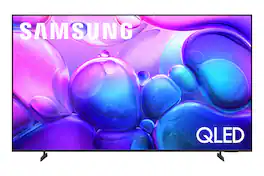
Endlessly stream your favorite content in stunning clarity with a smart processor that upscales movies and shows regardless of source resolution. With dazzling, boosted color plus deep blacks & vibrant brights, previously hidden details are revealed in the brightest and darkest of scenes. Kick back, relax and see your favorite content in a whole new light.
| Pros for LG - 75" Class 70A Series QNED AI 4K UHD Smart webOS TV (2025) | |||
|---|---|---|---|
| Picture Quality, Size | Picture Quality, Color, Ease of use, Price, Refresh Rate | Picture Quality, Ease of use, Price, Color, TV Quality | Picture Quality |
| Cons for LG - 75" Class 70A Series QNED AI 4K UHD Smart webOS TV (2025) | |||
| There were no cons for this product— | There were no cons for this product— | Remote Control, Operating System, Response Time, Internet Connectivity, User Interface | There were no cons for this product— |
Specs
Reviews
Customer Images
The vast majority of our reviews come from verified purchases. Reviews from customers may include My Best Buy members, employees, and Tech Insider Network members (as tagged). Select reviewers may receive discounted products, promotional considerations or entries into drawings for honest, helpful reviews.
- Rated 5 out of 5 stars
Buy One Now!
This is a fantastic tv, great picture, great sound, easy to use, HUGE. It’s exactly as advertised, maybe a bit more!
Posted by MikeB
- Rated 5 out of 5 stars
I absolutely love it!!!
I absolutely love this television!! The clarity, functionality, and ease of use! No direction, demonstration, or instruction needed!
Posted by EurydiceG
- Rated 5 out of 5 stars
BEAUTIFUL!!
This tv is absolutely beautiful! The picture quality is amazing. Highly recommend getting this if you can!
Posted by BreeanaD