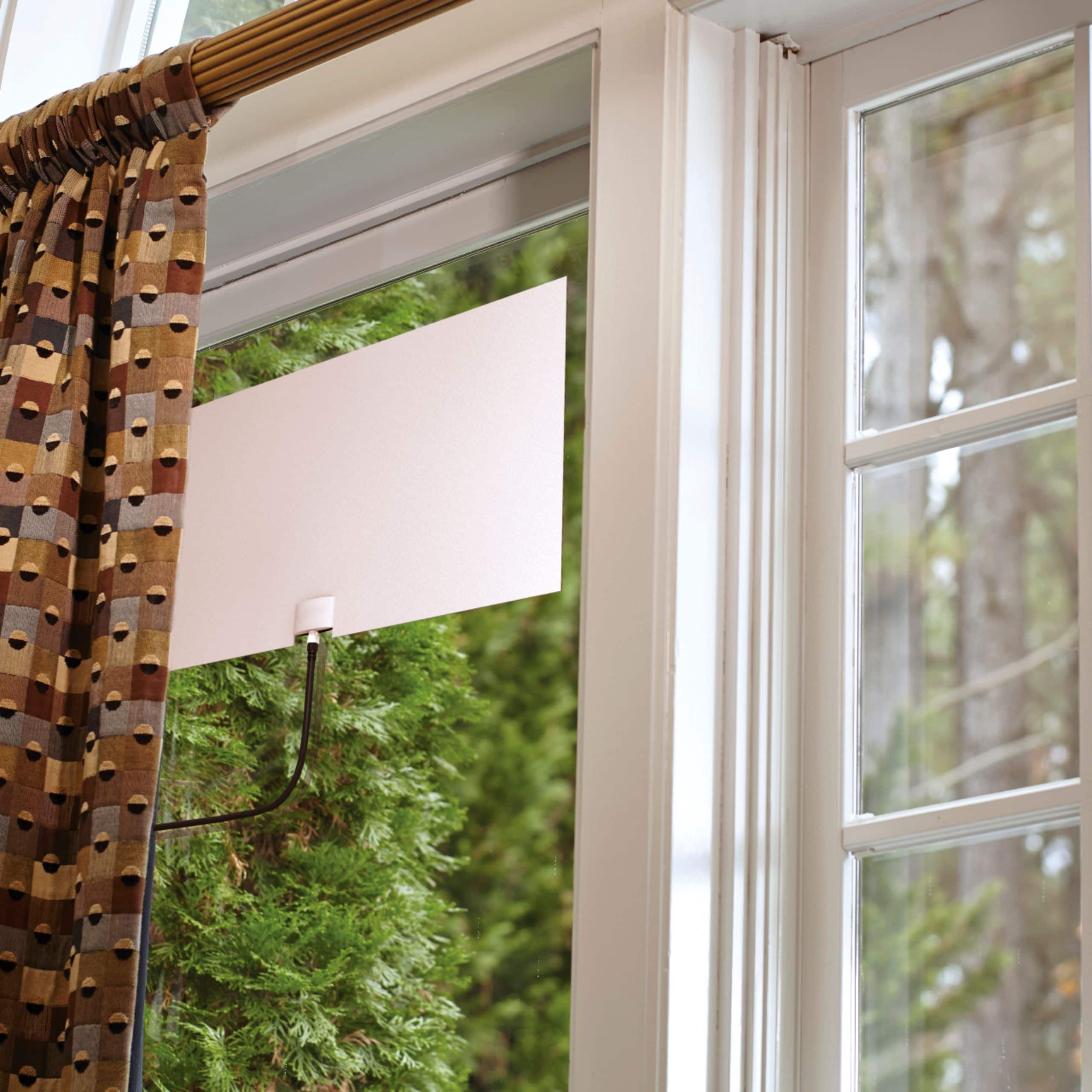
A:AnswerTotally depends on your location. Many apartment or condo dwellers find that the higher the unit the better the reception. This is all dependent on the signal strength in the area and the location of the unit in relation to the transmitting tower. If the signals are transmitting to the south side of your location but you only have a north facing window you may not get as many signals as you would with a southern window placement. The signals are also weakened because they have to travel through the building materials and often will not be obtainable. In some apartment/condos customers get many channels in one side of the unit and little to no channels on the other side. When possible placing the antenna in a window that is facing the direction of the towers for the best reception chances.
A:AnswerThe Leaf Glide is Mohu's version of the antenna and the Leaf Supreme is the Best Buy exclusive version of the antenna. Many retailers request that a "special" name be given to products they offer so they are different from other offerings.
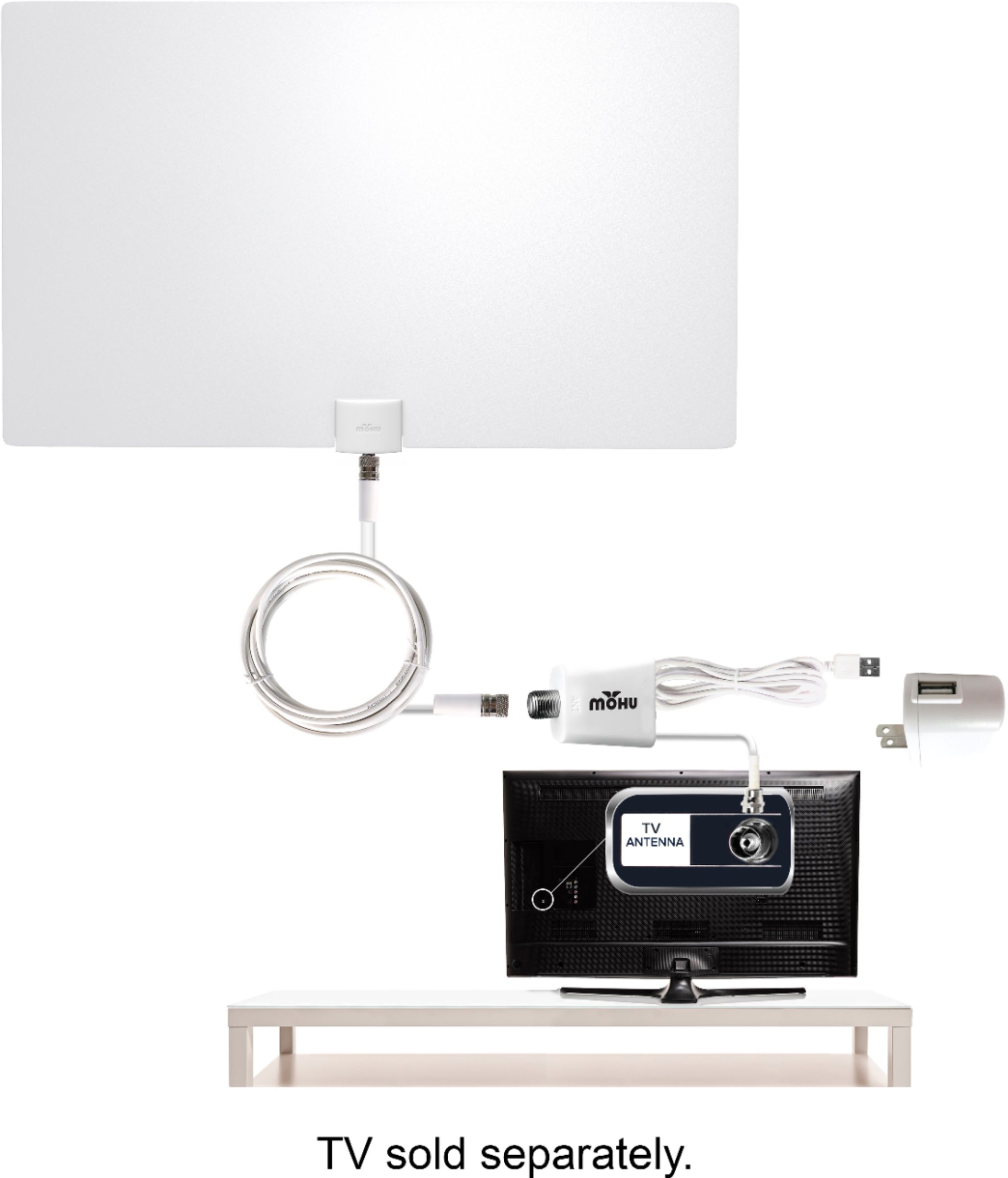
A:AnswerThe Roku and the antenna work independently of each other but on the same TV. The antenna connects via the coaxial port and the Roku the hdmi port. You switch the source when you want to use one or the other.
A:AnswerYou can add up to 25 additional feet of coaxial cable in addition to the 16 feet that comes with the Supreme before potentially experiencing signal loss.
A:AnswerOur Leaf antennas not designed to be exposed to the elements in any capacity.
Outdoor Use:Our Leaf and Curve antennas are not waterproof or weather resistant so using them in a location that would expose them to the elements would cause the antenna to fail.
Attic Use: They are also not made to withstand the heat and humidity that can occur in an attic. Using in an attic will cause the Leaf antenna to curl and will ultimately ruin the antenna.
In some locations an indoor antenna may possibly be able to support splitting to more than 1 TV. We suggest that you test this with your indoor antenna to see if it will work in your area. Each time a signal is split to another TV the signal becomes weakened by 1/2. Historically the smaller indoor antennas are not always able to send signals to more than one TV in some locations where the signal strength will not support this. Testing at your specific location is suggested to see how the antenna will perform when connected to more than one TV.
A:AnswerWell part of the allure of camping is being able to disconnect and more times than not, Mother Nature takes care of the signals by blocking them with terrain. A good rule of thumb when camping is if you don't have cell service chances are you won't have antenna signals. Usually you have the best chance at reception when close to a metro area. There are a few sites out there you can use to enter in the address of the campgrounds you're planning on staying in to see if there are any viable signals in the area. If there are signals within range the antenna will pull them in.
A:AnswerI used the Mohu amplified antenna. It works for the situation you are describing. The higher you can get it the better and avoid having a brick wall between it and the outside. The Mohu can go on a window and isn't obtrusive a it has a white background, but my wife didn't care for the look.