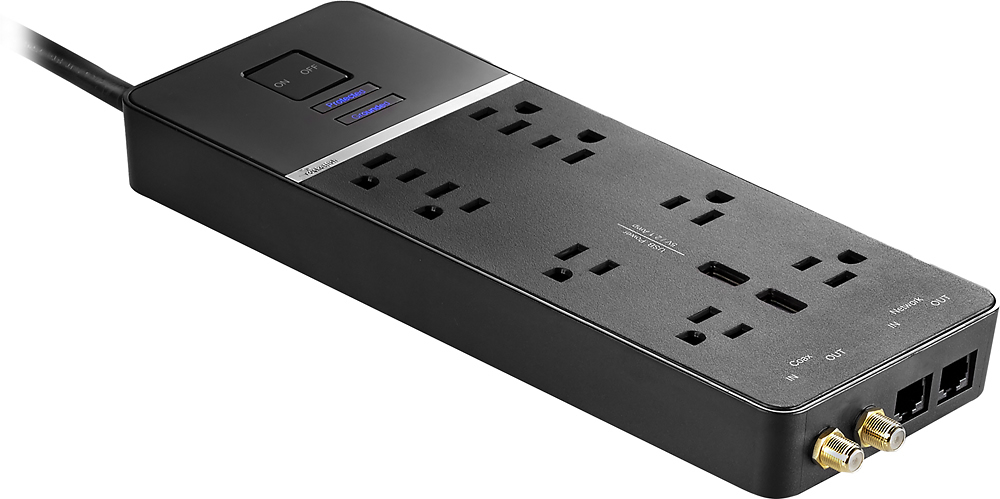
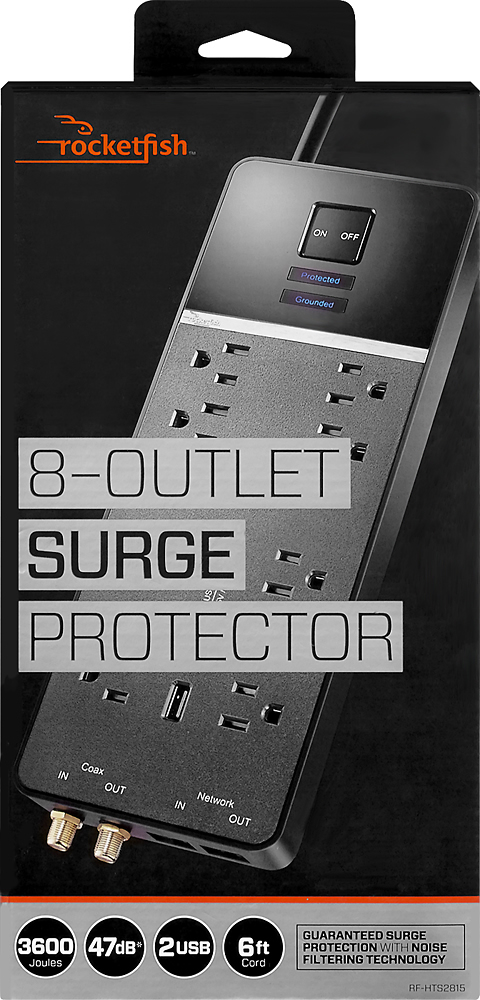
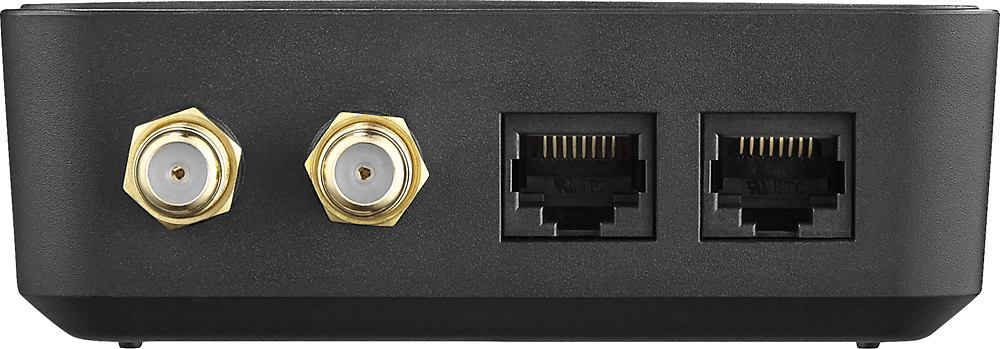
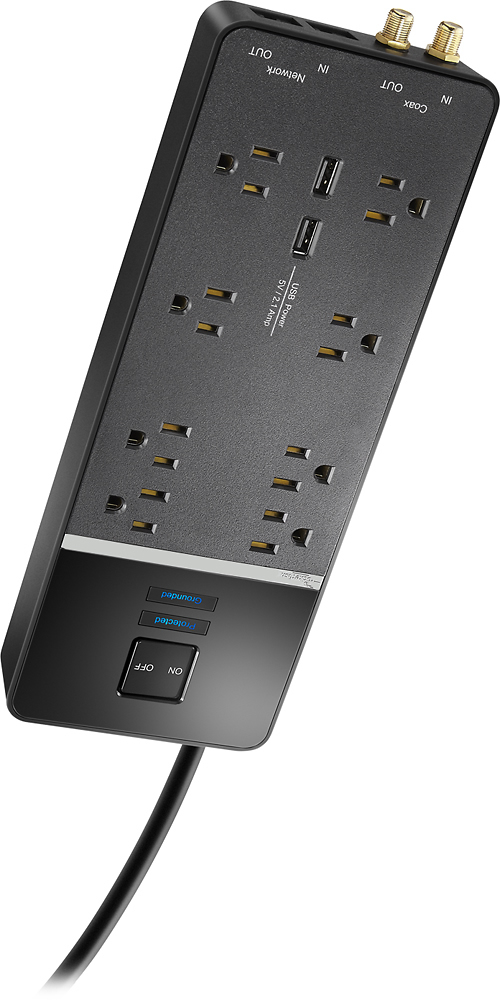
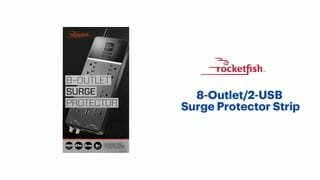
A:Answer Having worked for 25 years in industry as a "Technical Support" technician supporting various electronic devices for Fortune 500 companies, I developed the following guidelines: Line voltage surges are not always a "one-shot" experience, they have an accumulative effect, and result in the premature death of many electronic devices.
1. The surge protector not only protects the devices plugged into it, but it also protects itself from being fried.
The joule rating is how much excess energy the device can withstand before frying. Once fried from a surge larger than its joule rating, it no long protects anything.
2. The joule rating is only half of the protection story. The other rating is the clamping voltage, which is at what over-voltage will the protector begin to work.
If not listed in the specs, then the seller is probably not proud of the rating.
3. The absolute minimum joule rating that I would suggest would be 2,000 joules. However, for anything really valuable, I would highly suggest 3,000 joules or more. Remember this number is the sum of protection for all three legs, hot to neutral, hot to ground, neutral to ground. So, any one leg is only protected at 1/3 the specified "joule" rating.
4. The "clamping voltage" should be low. It is normally rated in "voltage peak", and should be 330 volts or less. This is the minimum voltage at which protection kicks in! (That's 233 volts RMS, or approximately twice the normal line voltage). 400 volts is marginal and 500 volts is too little, too late.
So, IMO, in summary, shoot for 3,000 joules or higher (energy absorption), and 330 volts or less (clamping voltage)!!!