A:AnswerThe TV will only let you select output from the built in speakers OR other devices. Therefore if you select the Bluetooth connection you will not have sound from your TV speakers. However, if you have an external device (i.e., sound bar) connected via the optical audio connection you will be able to hear the sound from both devices. That is, from the wireless speaker (Bluetooth) and the sound bar. Hope this helps.
A:AnswerHonestly? I have the best results for most things by turning auto-motion plus off altogether. Rather than messing with the individual settings, I've found turning off Auto Motion and using the "natural" picture setting to give me the best results across the board. (Movies, sports, gaming).
A:AnswerNot really. The design, and the local dimming is better on the 9000... but in all honesty, the 8000 is just about as good as you can get without going QLED or OLED.
A:AnswerHi -
Can you tell me how to pair my Bose Soundsport wireless earphones to my Samsung 55” MU8000? I l know the Samsung is Bluetooth-capable, but I cannot findthescreen that let’s me pair it.
Thank you.
A:AnswerThe short answer is Yes, maybe. On most of the websites I've visited (Rtings.com and AV Forums, for example), the TV most recommended for console gaming is the LG OLED. But, the OLED is much more expensive, and has issues with permanent "burn-in". (I did NOT buy a LG OLED because of the burn-in issue). But from a price / performance measure, this TV is very good for gaming. In addition, I have read about a dozen "expert" reviews of the new Xbox One X console, and most reviewers used a version of this TV (e.g., the KS8000) for their reviews, and for their comparisons of the One X to the PS4 Pro. HOWEVER, on Rtings.com, the MU8000 does not rate as favorably as the older model KS8000). That being said, as of today, if I were shopping for an excellent 4K/HDR TV for gaming, I would look at this TV, and the Sony X900E.
Hope this helps.
A:AnswerI believe any TV would work as long as you have a video processor (Extron/AMX or some software) that can do the work of splitting up the image. All the TV really needs is an input and it doesnt know what the source is. The video processor will do all the work
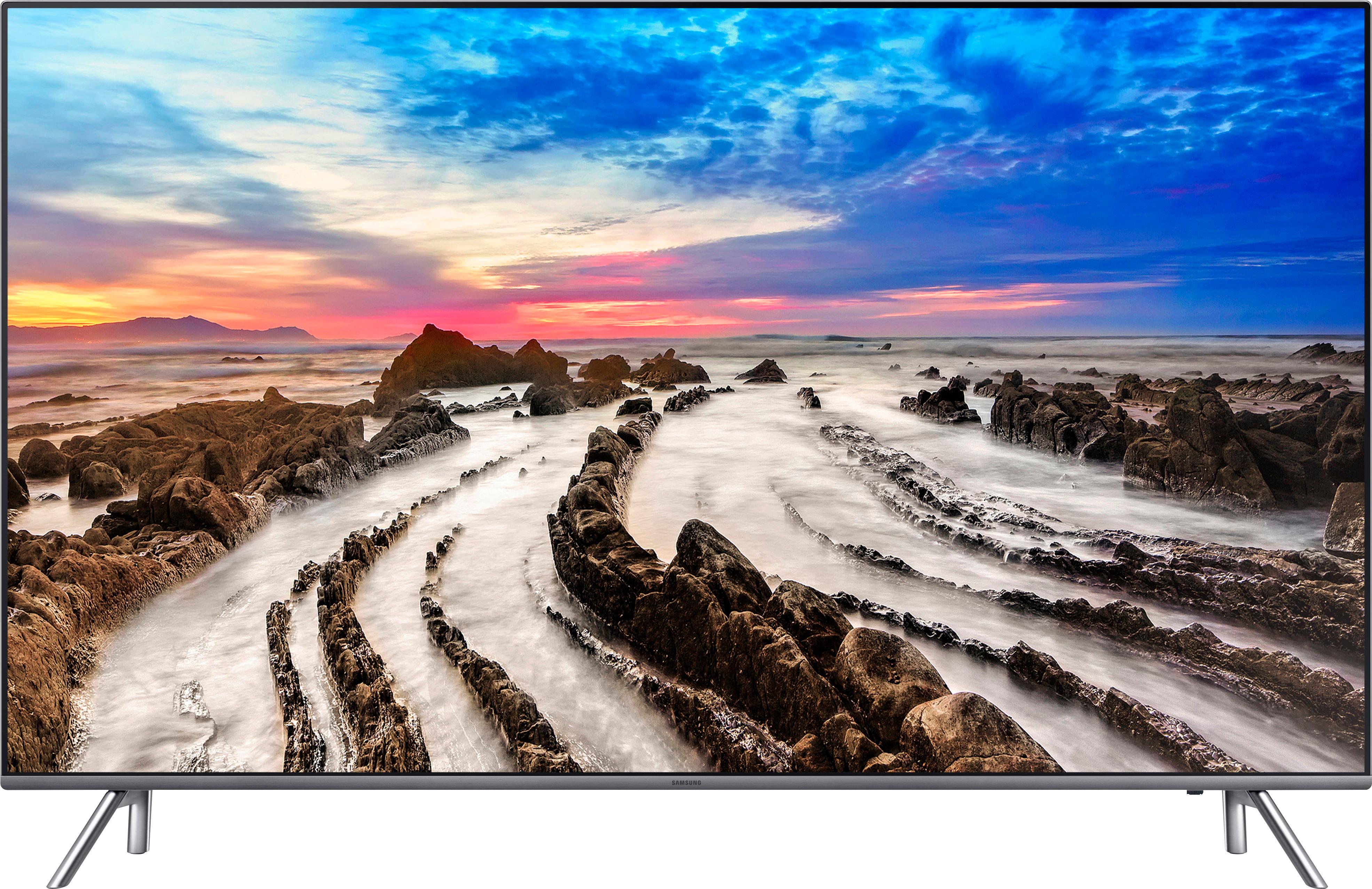
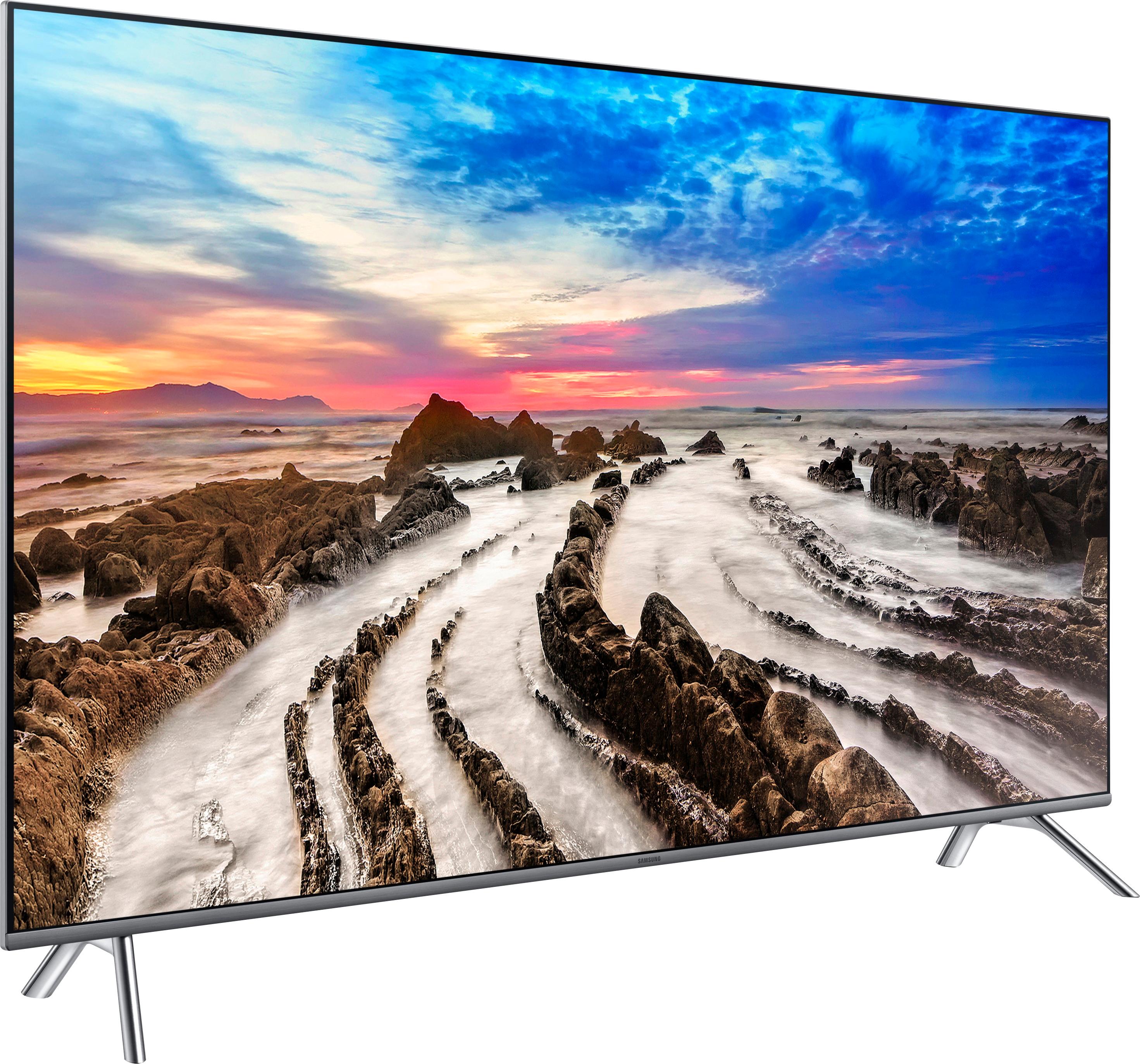
A:AnswerThis is a Ultra High definition (UHD) TV, which is commonly referred to as a 4K unit, with a horizontal resolution of 2160 pixels across the screen, which is exactly twice as many pixels as an older1080p High Definition set, resulting in a much higher resolution image. The set also has High Dynamic Range (HDR). which broadens the color palette to many millions more colors than those from a regular 1080p set, resulting in a more realistic looking picture. HDR is not usually available on 1080p TV sets.
Many, if not most 4K UHD sets are capable of upscaling a 2K HD picture source, such as a movie on a Blu-ray disc to near 2160p image quality, and may even work some magic on older DVD format video discs. If you are able, do a side-by-side comparison of a 4K set to a regular 1080p set, and you will immediately see the improvement in the clarity of the picture, as well as the color resolution. But currently there are no TV station or cable channels broadcasting in 4K UHD, and to get the finest picture quality, one would need to get a new 4K Blu-ray player and play the new format UHD Blu-ray discs, which are identified, usually by a black band across the top of the plastic disc case, as opposed to the bright blue band across the top of regular Blu-ray discs, or other devices that support 4K video downloads from the internet. Talk with a Best Buy product specialist to find out more information about such devices.
Since their introduction several years ago, the new 4K UHD sets, have really captured the attention of the American consumers, and now, in 2017, 4K sets are the best selling category of all TVs sold, and due to demand, prices have fallen dramatically, from 4K sets previous years, and are very affordable. For a new set in a main viewing room, such as a living room, family room or den, for critical viewing, 4K is definitely the way to go. 1080p sets have now dropped to the entry-level position of the TV manufacturers' line-ups, and are now more suitable for rooms with occasional use, such as a basement or garage, or maybe a bedroom of a pre-teen child, who may mostly watch older broadcast and cable shows, or animated cartoons, that are not high definition.