Deals for every list.Start early, save early.Shop now

Main Content
Skip to contentGo to Product Search

Deals for every list.Start early, save early.Shop now

Main Content

NFC Security Keys For Compatible Phones

Find NFC security keys for compatible phones to add hardware-based authentication to supported account sign-ins. These physical keys use near-field communication to let you verify your identity with a tap on an NFC-enabled phone. Before choosing, check each key’s compatibility with your phone, operating system, and the accounts or services you want to protect.

Read More
Results
Main Results
  1. Yubico - YubiKey 5C NFC - Two-Factor authentication (2FA) Security Key, Connect via USB-C or NFC, FIDO Certified OnePack - Black

    SKU: CLXCPZHZHV

    I also love the fact that it can be used for more accounts than I’ll ever have....Well built, nice design and works great....Best yubikey for work and personal use...Works great!

    Product Description

    A compact black security key offering strong, fast multi-factor authentication with effortless tap-to-login protection.
    See all Multi-Factor Authentication (MFA)
    Your price for this item is $58.00
  2. Yubico - YubiKey 5 NFC - Two-Factor authentication (2FA) Security Key, Connect via USB-A or NFC, FIDO Certified One Pack - Black

    SKU: CLXCPZHZH7

    Followed advice of Best Buy staff who recommended it, as well as engineer friends....Works great

    Product Description

    A compact black security key offering strong, fast multi-factor authentication with effortless tap-to-login protection.
    See all Multi-Factor Authentication (MFA)
    Your price for this item is $58.00
  3. Yubico - Security Key C NFC - Two-Factor Authentication Security Key, Connect via USB-C or NFC, FIDO U2F/FIDO2 Certified - Black

    SKU: CLXCPZHK9J

    Great...These work great for work and i i love getting them from Best Buy there always available...Security at its best...Great tool to have when safe guarding your I information.

    Product Description

    A black hardware security key offering FIDO U2F/FIDO2 certified two-factor authentication via USB-C or NFC.
    See all Multi-Factor Authentication (MFA)
    Your price for this item is $29.00
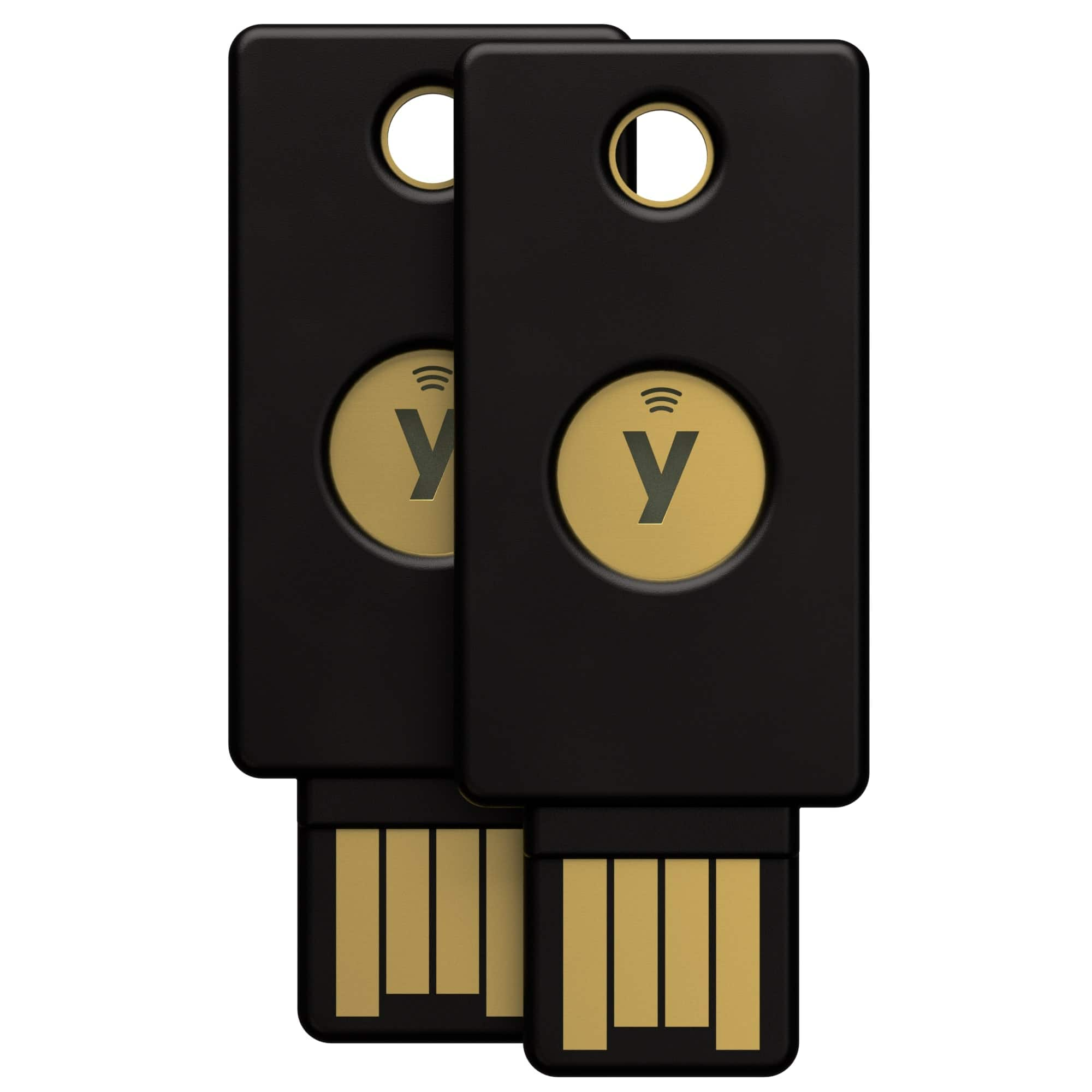
  4. Yubico - YubiKey 5C NFC - Two-Factor authentication (2FA) Security Key, Connect via USB-C or NFC, FIDO Certified TwoPack - Black

    SKU: CLXCPZHZT8

    Best tool...Works great and great toood for keeping the accounts secure...Great Device! Love it!...It is small but works great!

    Product Description

    A pair of black security keys offering fast, strong multi-factor authentication with NFC and USB-C support.
    See all Multi-Factor Authentication (MFA)
    Your price for this item is $105.00
  5. Yubico - YubiKey 5 NFC - Two-Factor authentication (2FA) Security Key, Connect via USB-A or NFC, FIDO Certified Two Pack - Black

    SKU: CLXCPZHZHG

    Great...Great product

    Product Description

    A pair of black security keys offering fast, strong, and effortless multi-factor authentication for digital protection.
    See all Multi-Factor Authentication (MFA)
    Your price for this item is $105.00
  6. Yubico - Security Key NFC - Two-Factor Authentication Security Key, Connect via USB-A or NFC, FIDO U2F/FIDO2 Certified - Black

    SKU: CLXCPZHKSZ

    The best...Love it!

    Product Description

    A black hardware security key offering phishing-resistant two-factor authentication via USB-A or NFC connectivity.
    See all Multi-Factor Authentication (MFA)
    Your price for this item is $29.00
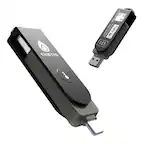
  7. THETIS - Pro-A FIDO2 Security Key – Passwordless MFA, USB-A/NFC, 360° Rotating Metal Cover - Black

    SKU: J3R84WY6PL

    Product Description

    A black metal security key offering USB-A/NFC connectivity, passwordless FIDO2 login, and multi-factor authentication.
    See all Multi-Factor Authentication (MFA)
    Your price for this item is $29.99
  8. THETIS - Pro FIDO2 Security Key -10 Pack - Black

    SKU: J3R84WY6R4

    Product Description

    A black multi-factor authentication key offering passwordless protection, NFC compatibility, and dual USB Type-A/Type-C ports.
    See all Multi-Factor Authentication (MFA)
    Your price for this item is $299.99
  9. THETIS - Pro FIDO2 Security Key - Dual USB-A/C + NFC, Passwordless 2FA/U2F, Durable Rotating Metal Cover, No Battery - Black

    SKU: JJG8GTFZ7L

    Product Description

    A black multi-factor authentication key offering passwordless protection, NFC compatibility, and dual USB Type-A/C ports.
    See all Multi-Factor Authentication (MFA)
    Your price for this item is $32.99
  10. THETIS - Pro FIDO2 Security Key -2 Pack - Black

    SKU: J3R84WY6RR

    Product Description

    A durable black security key offering passwordless protection, NFC compatibility, and dual USB Type-A and Type-C ports.
    See all Multi-Factor Authentication (MFA)
    Your price for this item is $59.99

NFC security keys for compatible phones are physical authentication devices that use near-field communication to help verify identity during supported account sign-ins. Instead of receiving a text message or copying a code from an app, a person presents the key near the phone’s NFC reader when prompted. The phone and key communicate over a very short distance, making the interaction feel similar to a contactless tap while serving a different purpose: confirming access to an online account. Depending on the key, service, and account settings, that verification can work as a second factor alongside a password or support passwordless sign-in with a passkey. FIDO2 and FIDO U2F are important standards in this category, though their capabilities differ. FIDO2 supports modern authentication methods, including passkeys on supported services, while U2F is primarily associated with second-factor authentication. With FIDO-based authentication, the key uses cryptographic credentials rather than handing a reusable account password to a website. Authentication is tied to the legitimate service, helping resist phishing attempts that try to capture credentials on look-alike sign-in pages. That protection makes these devices particularly relevant for primary email accounts, work portals, cloud storage, and other supported services where an account takeover could have consequences beyond a single login. Compatible Android phones and iPhones can use NFC security keys, but support depends on the phone, operating system, browser or app, and online service—not simply the presence of an NFC reader. Typical passive NFC security keys draw power from the phone’s NFC field, so tapping does not require Bluetooth pairing or charging a battery in the key. The phone still needs whatever connectivity the service requires to complete its sign-in process. A security key strengthens account authentication; it does not replace screen locks, software updates, careful account recovery settings, or other protections for the phone itself.

Compatibility is often the most meaningful distinction between otherwise similar-looking security keys. A key may include NFC for phone use and a USB-A or USB-C connector for a physical connection to another supported device. That combination can suit someone who checks email on a phone but handles documents, account administration, or financial records on a laptop. The connector needs to match the intended equipment, and a wired connection still depends on support from the operating system and service. NFC can reduce reliance on a phone’s charging port, which is useful when the same key moves between compatible phones with different connectors. Phone design matters, too: NFC reader placement varies, and the position that works for contactless payments may help indicate where the key needs to be presented. A thick case, metal plate, or magnetic accessory can interfere with communication, so the relationship between the key’s shape and the phone’s case deserves attention. Compact bodies with smooth edges are comfortable to carry, while an integrated key-ring opening makes it easier to keep the device with everyday essentials. Polymer housings are common because they can be lightweight and practical for frequent handling, but materials alone do not establish resistance to water, crushing, or repeated impacts. Published durability ratings and care instructions provide a more reliable basis for those expectations. The authentication features inside the housing also vary. Some keys focus on FIDO authentication, while others add functions such as one-time passwords or smart-card credentials for supported environments. Those extra functions are not interchangeable with FIDO’s phishing-resistant authentication, and their usefulness depends on the organization or application involved. For hardware-stored passkeys, capacity can matter when many accounts will share one device; capacity for discoverable credentials varies by key, and not every registered account consumes storage in the same way. PIN requirements, supported verification methods, and workplace policies can also affect the experience. A phone’s fingerprint or face unlock does not automatically substitute for verification required by an external key.

The best fit is often shaped by where and how the key will be carried. A commuter who signs into a work account from a phone may value a slim, key-ring-friendly shape that is easy to locate in a bag. Someone managing several personal accounts across a phone and home computer may prefer the flexibility of NFC plus an appropriate USB connector. Travelers, remote workers, students, and people who administer sensitive accounts can all have reasons to favor a physical authentication device, provided their services support it. For a different form factor centered on a small USB footprint, Nano Security Keys offer a related category to consider; a compact USB design should not be assumed to include NFC. Everyday care is straightforward but still important for something that may spend years alongside metal keys and pocket debris. Keeping connectors free of buildup, avoiding bending or crushing, and following the stated cleaning instructions help protect the parts that make repeated use possible. Water resistance should never be treated as permission to put a key through the laundry, and an exposed connector benefits from protection during rough transport. Planning for loss matters just as much as physical durability. Where a service permits multiple security keys, a separately enrolled backup stored in a secure location can help preserve access if the everyday key is misplaced or damaged. Recovery codes and other recovery methods also deserve secure storage, since a strong sign-in method is only one part of an account’s overall protection. A replacement key generally cannot restore a lost key’s credentials merely by looking the same; it needs its own enrollment with each supported account. As a practical gift, an NFC security key can suit a technology enthusiast or someone interested in stronger account protection, especially when their phone and frequently used services are known to be compatible. Its lasting value comes from dependable daily use: a small physical device that brings an additional layer of control to supported phone sign-ins without making a separate charging routine part of the day.

FAQ

An NFC security key is a physical device used to sign in to supported accounts by tapping it near a compatible phone’s NFC reader. Depending on the service, it can serve as a second sign-in step or store a passkey for passwordless sign-in.

Check your phone’s specifications for NFC support, then review the security key’s operating system and browser requirements. The account or app you want to use must also support security key sign-in over NFC; NFC hardware alone does not guarantee compatibility.

Some email services, password managers, cloud storage platforms and workplace accounts support physical security keys. Check each service’s sign-in documentation for supported standards, such as FIDO2 or WebAuthn, and any requirements for NFC use on phones.

Open the account’s sign-in or security settings and look for an option to add a security key or create a passkey on a security key. Follow the prompts and hold the key near your phone’s NFC reader when requested. Setup steps and available options vary by service, browser and phone.

NFC lets you present the key by tapping it near a compatible phone, while USB requires a physical connection to a compatible port. Some security keys offer both connection methods, but support depends on the key, phone and service you use.