Physics Graphing Calculator
-
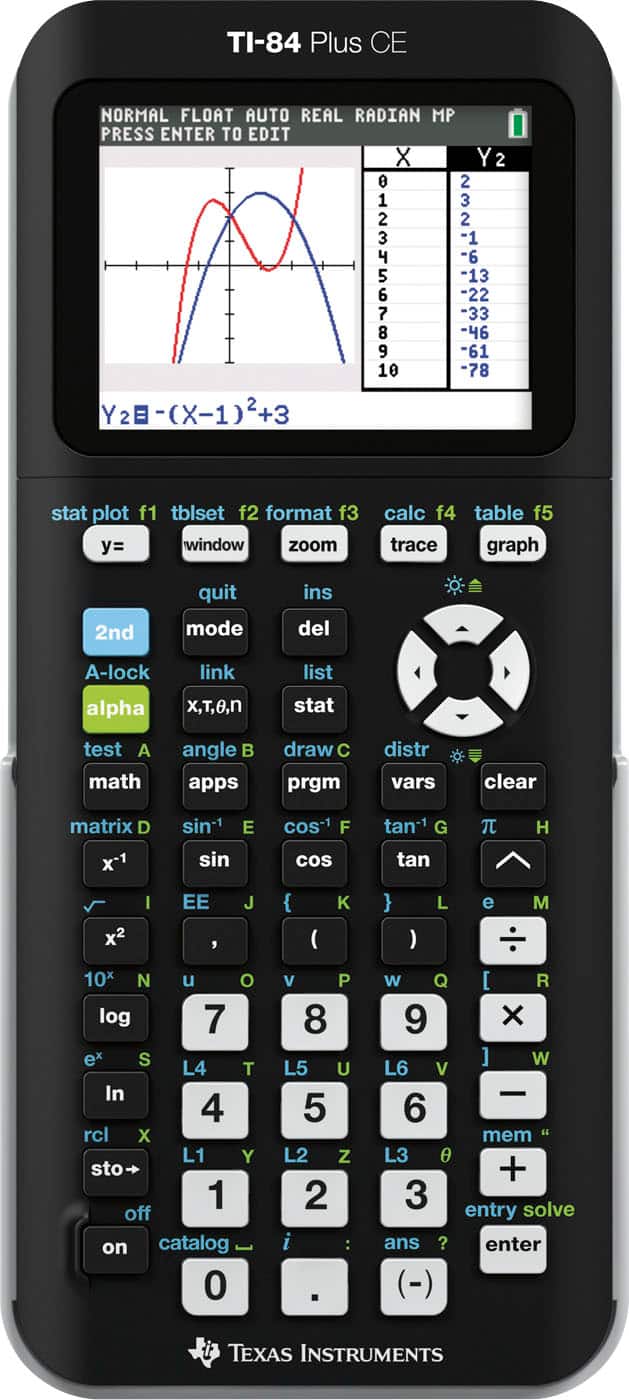
Texas Instruments - TI-84+ CE Graphing Calculator - Black
SKU: J73SSTJ3HTA Great Calculator
See all CalculatorsProduct Description
A rechargeable black graphing calculator with sequence graphing mode and included USB cable for advanced exams.Your price for this item is $140.92Save $9The previous price was $149.99 -
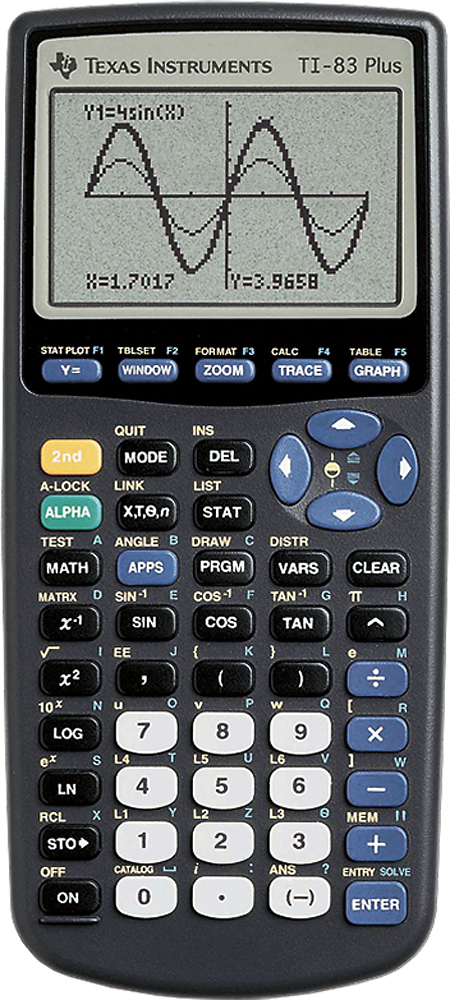
Texas Instruments - TI-83 Plus Graphing Calculator - Blue
SKU: J73SST7T4LSee all CalculatorsProduct Description
A blue graphing calculator with flash technology, ideal for math and science courses from algebra to physics.Your price for this item is $109.09Save $0The previous price was $109.50 -
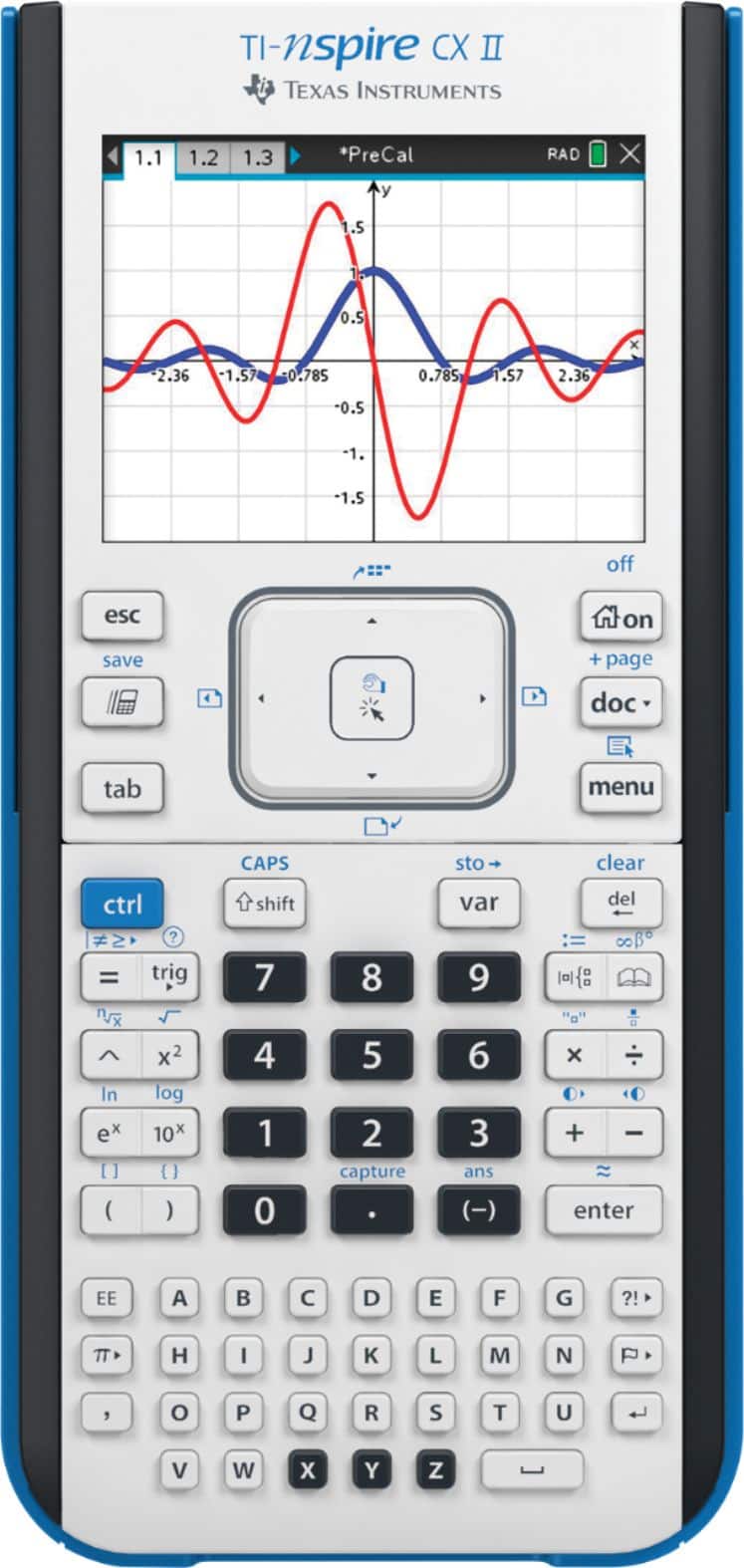
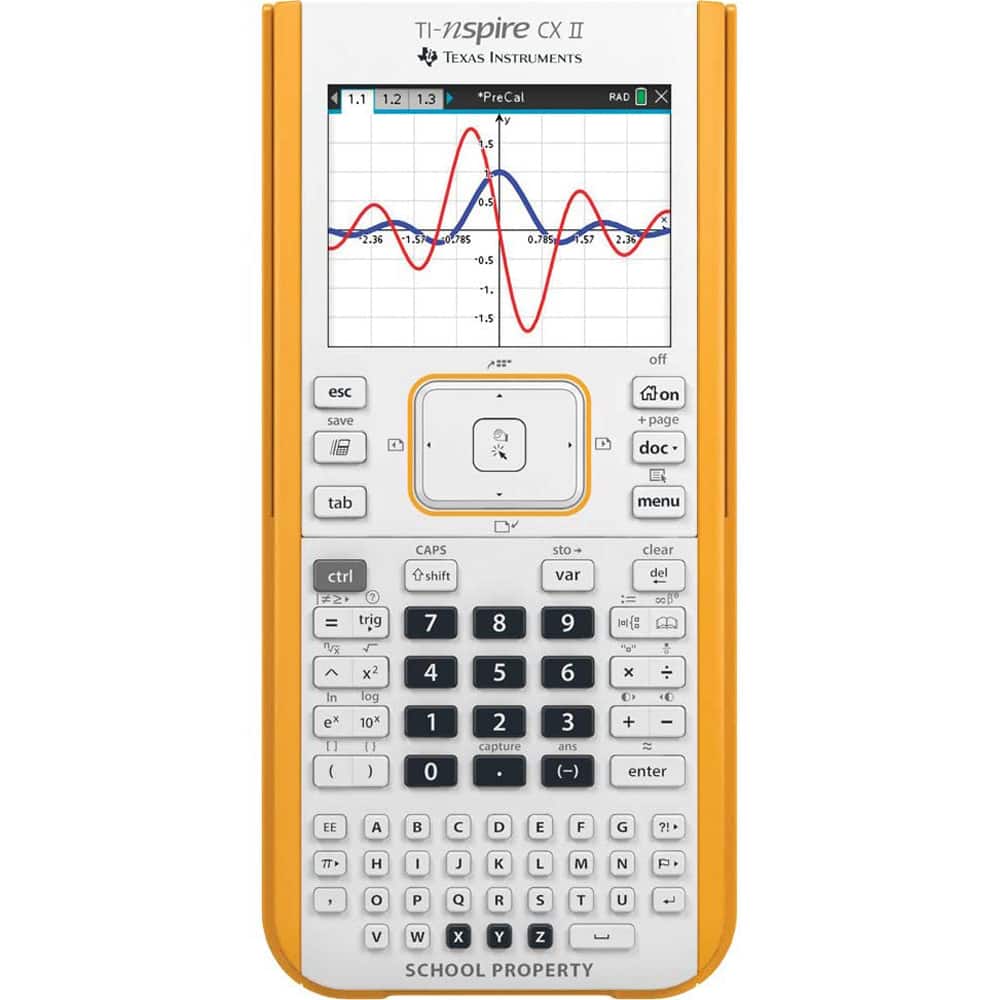
Texas Instruments - TI-Nspire CX II Handheld Graphing Calculator - White
SKU: J73SSTJL6Zreally helps with my statics class, a great crutch and helps you crunch the numbers
See all CalculatorsProduct Description
A white handheld graphing calculator with a high-resolution LCD screen, rechargeable battery, and USB cable included.Your price for this item is $153.99Save $24The previous price was $178.22 -
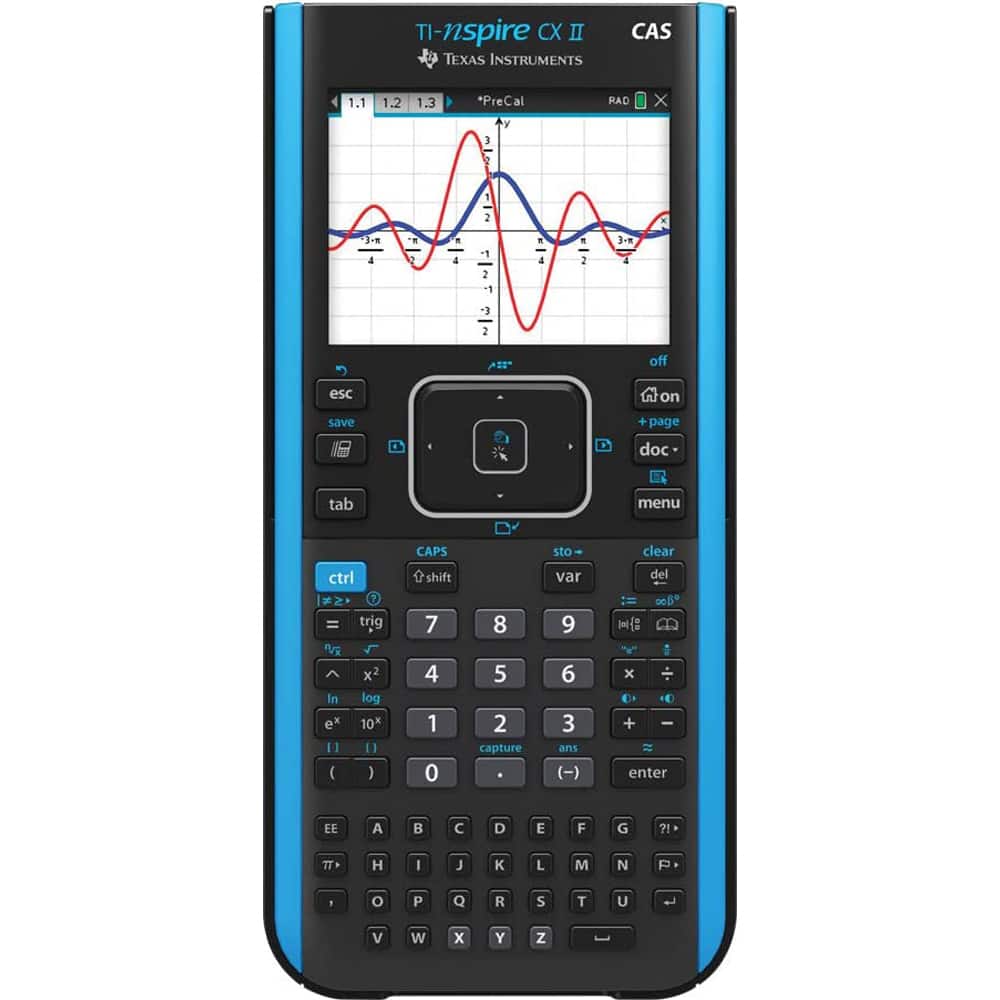
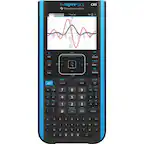
Texas Instruments - TI-Nspire CX II CAS - Color Graphing Calculator
SKU: J73SSTJL9VBest calculator to have for an Engineering Student...Best calculator to have for an Engineering Student, my kid loves it!!...Overall, all great calculator and would suggest buying if it is in your budget....
See all CalculatorsProduct Description
A full-color graphing calculator with CAS functionality, rechargeable battery, and enhanced math and science features.Your price for this item is $158.65Save $25The previous price was $184.21 -
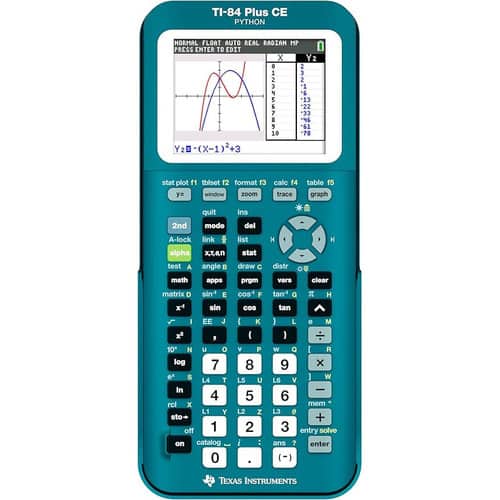
Texas Instruments - TI-84 Plus CE Graphing Calculator 84CEPY/FC/1L1/E10
SKU: J73SSTJLF5See all CalculatorsProduct Description
A trinomial teal graphing calculator with color LCD, MathPrint technology, and rechargeable lithium-ion battery.Your price for this item is $177.23Save $2The previous price was $179.90 -
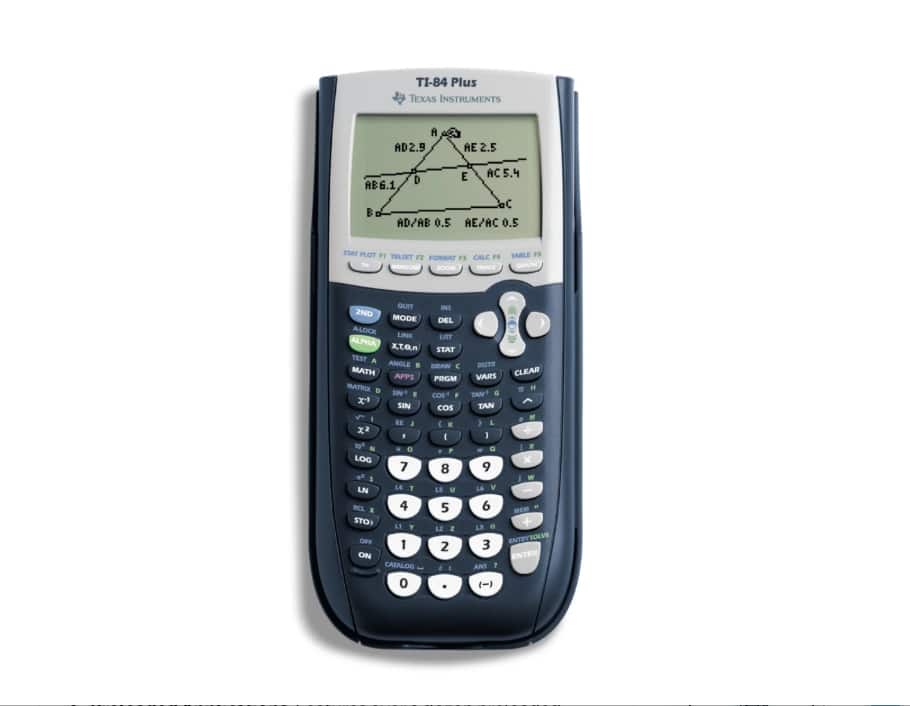
Texas Instruments - TI-84Plus graphing calculator
SKU: J73SSTJYYGSee all CalculatorsProduct Description
An all-purpose graphing calculator with preloaded apps for geometry, inequality graphing, and data analysis.Your price for this item is $134.99Save $5The previous price was $139.99 -
Texas Instruments - TI-Nspire CX II EZ Spot Graphing Calculator Teacher Kit (10 pack) NSCX2/TPK/2L1
SKU: J73SSTJLH8See all CalculatorsProduct Description
A classroom-ready graphing calculator kit in yellow with interactive visuals, Python programming, and easy-to-read graphics.Your price for this item is $1,691.05
Best Sellers



Related Pages
FAQ
When choosing a physics graphing calculator, look for advanced graphing capabilities, support for complex equations, programmable functions, and compatibility with statistical and scientific calculations. Additional features like a high-resolution display, intuitive interface, and long battery life can also enhance your experience.
Yes, most graphing calculators are designed to handle a wide range of scientific and mathematical computations, making them suitable for both physics and math coursework. Many models offer functions specifically tailored for algebra, calculus, trigonometry, and statistics in addition to physics applications.
Absolutely. Physics graphing calculators typically allow users to solve equations, plot graphs, and analyze data sets. These features are essential for visualizing physics concepts and solving complex problems efficiently.
Yes, several graphing calculators offer the ability to program custom functions and scripts. This feature is especially useful for physics students who want to automate repetitive calculations or create simulations for experiments.
Many standardized tests, such as the SAT, ACT, and AP Physics exams, permit the use of certain graphing calculators. Be sure to check the approved calculator list for your specific exam to ensure your model is allowed.