“What does the minimum extended height mean? When stood up it does not go shorter than that height mentioned?”
Answer This Question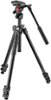
1-2 of 2 Answers
If you have the legs collapsed to the shortest length, and angled all the way out (the grey lever at top of each leg has two positions for setting how far the leg can be angled out -- the further out, of course the lower the tripod sits), and with the center post all the way down, then you have it set up for minimum extended height. Check the specification, but I'm fairly certain (from work I've done) that it's less than 17 inches. You can also remove the center post and insert it from the bottom. This means your camera would be mounted upside down, so it's possible to have it set with the top of your camera against the ground (depending on the size of the lens used).
Sorry, there was a problem. Please try again later.When you are transporting the tripod, the legs would be pushed together. For use, the legs are extended at some angle from the center, and there are two positions for that -- obviously when angled at the second position Furthermore, each leg has multiple segments that can be extended for adjusting height (when legs are extended longer, height is taller). Minimum extended height thus refers to the lowest height you can set the tripod to for use, so this would be when each leg's additional segments are not extended and the legs are angled out to the larger angle. Lastly the center column would be set to its lowest position. This then gives you the lowest working height of the tripod. In principle you could also removed the center post and insert it upside down from the bottom such that you get your camera down at ground level, but minimum extended height applies to normal configuration with the center post inserted from the top as shown in the product images.
Sorry, there was a problem. Please try again later.
