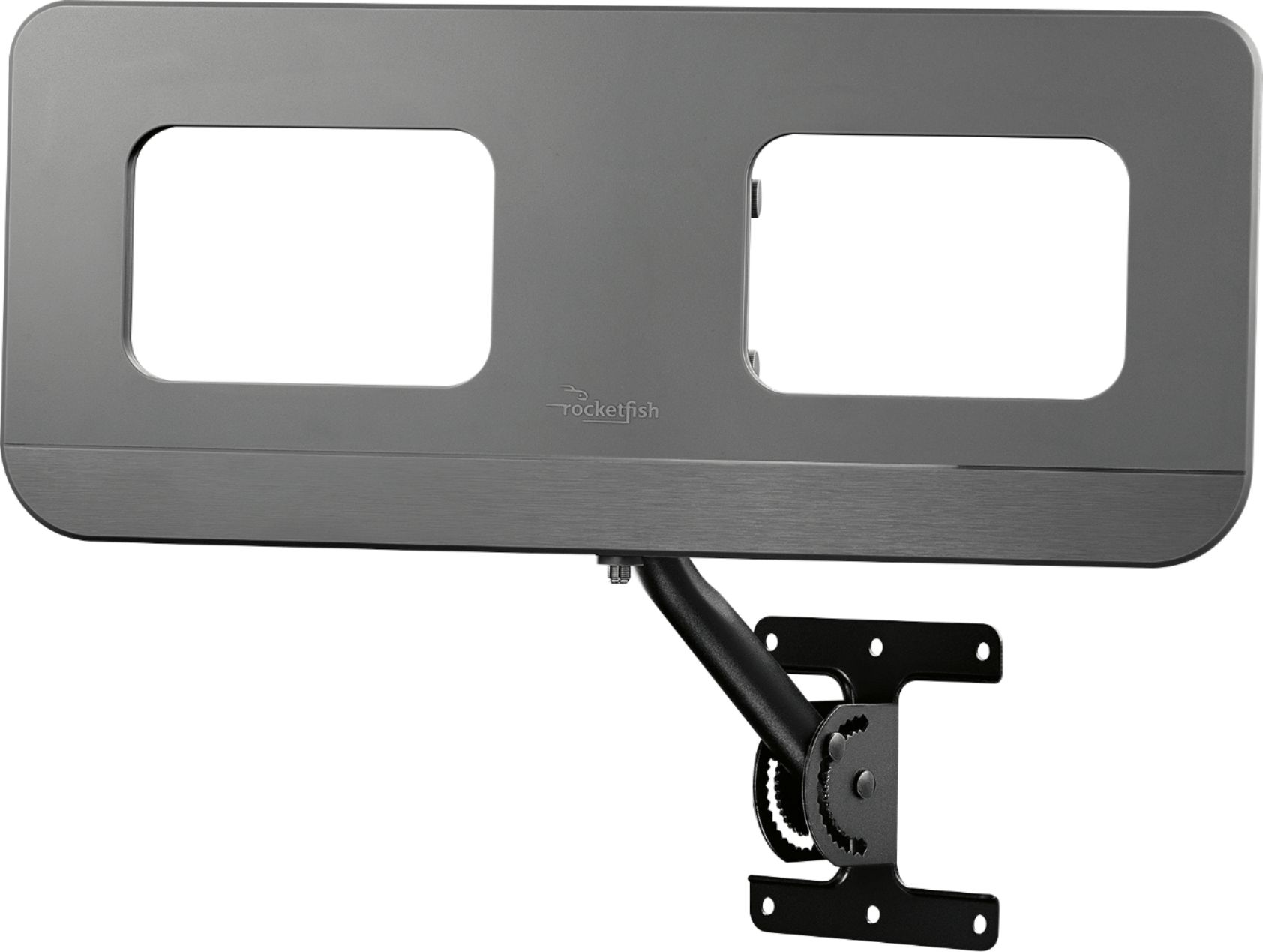
A:AnswerYes it hooks right to the antenna IN connection on the back of your tv. The signal booster is made in to the cable connection and will need to be plugged in to regular house current.
A:AnswerYou can - I did. You will need to visit the hardware store to do so as the tubes are different sizes, but it's not hard. Just be sure that it is up high enough.
A:AnswerYes, I find that I need to use an amplified antenna to get a strong signal so I don't get those annoying gaps and ghosting images and sound drops. I'm in range of LA stations but not by much so I need an amplified antenna to get consistently good reception.
A:AnswerThe signal coming in the coax will be boosted prior to being received by the TV. There is a small amplifier that is on a short coax piece before the TV.
A:AnswerHello,
Yes, all antennas are installed in attics all the time and in most cases they function well enough to receive most if not all TV signals at a location.
- Arin A.
Rocketfish Products
Contact us: https://www.rocketfishproducts.com/contact-us
A:AnswerIt’s best to point it in the direction of the signal. You may have to adjust its direction depending on distance and obstacles to the station you wish to pick up.
A:AnswerYou would probably need a splitter for that to work. I would ask a bestbuy rep to show you what that is. You may already have it at home if you have/had cable tv.
A:AnswerSo far the only thing that has effected the reception was low flying helicopters last month. We don't get bad weather in Los Angeles but we've had some showers and I didn't see anything affected.
A:AnswerYes, this antenna receives both the VHF and UHF band. The frequency range is 174-230MHz, 470-862MHz. Some antenna frequency have a lower range for VHF (47-250MHz). I am 35 miles from the Phoenix AZ South Mountain broadcast antenna location and receive over 80 channels. The channels received range from 3.1 to 61.5. The majority in excellent HD quality. I installed this antenna outside on the house wall at a height of about 10 feet.
A:AnswerThat is almost impossible to answer without more information. I would suggest going to AntennaWeb.or or TVFool and putting your address into the search option. It will estimate the signal strength in your area and what direction to point the antenna (and if you need more than one antenna or a rotor).
Pay close attention to what real channel the stations are being transmitted on. We have a channel 15 that is transmitted on channel 3. This antenna will not receive channels 2 - 6, known as low-VHF. Some TV stations are moving to that band as a result of FCC re-packing.