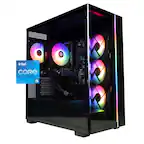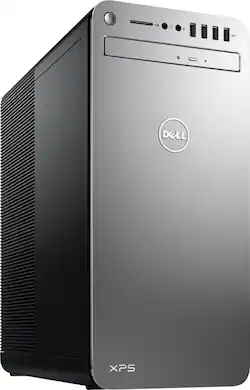
Dell - XPS Desktop - Intel Core i7 7700 - 16GB Memory - 1TB Hard Drive + Intel Optane Memory
- Key Specs
- Processor Model: Intel 7th Generation Core i7 (Your computer's processor is like its brain. Working in combination with system memory, the power of the processor determines the complexity of software you can run, how many programs you can have open at the same time, and how fast those programs will run. Most computers feature an AMD, Intel or Snapdragon processor.)
- Storage Type: HDD
- System Memory (RAM): 16 gigabytes (Random-access memory (RAM) is a computing device's short-term data storage, which allows active information to be accessed quickly. The size and type of RAM determines how efficiently the device can handle large amounts of information at one time. For example, gaming or video editing requires more RAM for optimal performance.)
- General
- Product Name: XPS Desktop - Intel Core i7 7700 - 16GB Memory - 1TB Hard Drive + Intel Optane Memory
- Brand: Dell
- Model Number: XPS8920-7107SLV-PUS
- Processor
- Processor Brand: Intel
- Processor Model: Intel 7th Generation Core i7 (Your computer's processor is like its brain. Working in combination with system memory, the power of the processor determines the complexity of software you can run, how many programs you can have open at the same time, and how fast those programs will run. Most computers feature an AMD, Intel or Snapdragon processor.)
- Processor Model Number: i7 7700
- Storage
- Storage Type: HDD
- Hard Drive Capacity: 1000 gigabytes (The amount of data that can be stored on the device's mechanical hard drive. Hard disk drives (HDDs) typically have larger capacities than solid state drives (SSDs) but may have slower speeds.)
- Hard Drive RPM: 7200 revolutions per minute (A hard drive's data is stored on disks, or platters, that spin while transferring information to the host system. The higher the RPM, the faster the hard drive's performance.)
- Memory
- System Memory (RAM): 16 gigabytes (Random-access memory (RAM) is a computing device's short-term data storage, which allows active information to be accessed quickly. The size and type of RAM determines how efficiently the device can handle large amounts of information at one time. For example, gaming or video editing requires more RAM for optimal performance.)
- Type of Memory (RAM): DDR4 SDRAM (Each type of RAM delivers a different level of speed, bandwidth, energy efficiency and performance.)
- System Memory RAM Speed: 2400 megahertz (How fast the information-storing hardware operates. The faster the RAM, the faster memory can be transferred to other system components. Ultimately, faster RAM improves operational efficiency.)
- System Memory RAM Expandable To: 64 gigabytes (Adding more random-access memory (RAM) to a computer speeds up performance and improves efficiency. Upgrades to memory are limited by the number of expansion slots for additional RAM and existing RAM installed on the device.)
- Compatibility
- Operating System: Windows 10 Home (The operating system manages all software and hardware, including files, memory and connected devices. Most importantly, it lets you interact with your device and your programs in a visual way; otherwise, you'd be typing computer code to get anything done.)
- Operating System Architecture: 64-bit (An operating system (OS) manages computer hardware, software resources, and programs in conjunction with the system's processor. 64-bit operating systems can handle more data at once than 32-bit systems, resulting in faster speeds, more effiency, and overall improved performance.)
- Features
- Media Card Reader: true (A hardware device that allows for access to data on a memory card and enables the transfer of its files to a computer. These devices may have one or multiple slots for various types of memory cards, and may be integrated into the computer or available as an external device.)
- Audio Technology: Integrated 5.1 with Waves MaxxAudio® Pro
- Size: Standard
- Dimensions
- Product Height: 15.1 inches (The out of box height of the item. Height is measured as the vertical distance from the bottom of the item to the top as it would be primarily used or placed.)
- Product Width: 7 inches (The out of box width of the item. Width is measured as the horizontal distance from one side of the item to the other as it would be primarily used or placed.)
- Product Depth: 13.3 inches (The out of box depth of the item. Depth is measured as the distance from the front of the item to the back as it would be primarily used or placed.)
- Certifications Listings & Approvals
- ENERGY STAR Certified: false (Devices carrying the ENERGY STAR service mark, such as computer products and peripherals, kitchen appliances, and other products, generally use 20% to 30% less energy than required by federal standards.)
- EPEAT Qualified: false (The Electronic Product Environmental Assessment Tool (EPEAT) was designed to provide an environmental assessment tool for purchasers. In order to qualify for EPEAT, a product must meet all 23 required criteria.)
- Included
- Included Software: Microsoft Office 30 Day Trial, McAfee LiveSafe 12 Month Subscription
- Keyboard Included: true
- Other
- UPC: 884116275107
Take your productivity to a new level with this Dell XPS tower PC. The Intel i7-7700 processor and 16MB of RAM provide lots of power, while the easy-open chassis and expansion slots are ready for future upgrades. This Dell XPS tower PC has nine USB slots, including seven USB 3.1 ports, and a 1TB hard drive for ample file storage.
- Windows 10 operating system: Windows 10 brings back the Start Menu from Windows 7 and introduces new features, like the Edge Web browser that lets you markup Web pages on your screen. Learn more ›
- 7th Gen Intel® Core™ i7-7700 processor: Powerful quad-core processing performance. The Intel Turbo Boost technology delivers dynamic extra power when you need it, while increasing energy efficiency when you don't.
- 16GB system memory for basic multitasking: Adequate high-bandwidth RAM to smoothly run multiple applications and browser tabs all at once.
- DVD/CD burner: Reads and writes to a variety of media formats, including DVD+R/RW, DVD-R/RW and CD-R/RW.
- 1TB Hard Drive plus Intel Optane Memory: Holds your extensive collection of digital photos, music, games, and videos. Intel Optane Memory is designed to reduce performance bottlenecks and accelerate hard disk drives (HDD).
- Built-in media reader for simple photo transfer: Supports Secure Digital memory card format.
- USB 3.1 and USB Type-C ports maximize the latest high-speed devices: Also includes 7 USB 3.0 and 2 USB 2.0 ports to connect more accessories and peripherals. The USB 3.0 ports are backward-compatible with USB 2.0 devices (at 2.0 speeds).
- Next-Gen Wireless-AC connectivity: Connect to a Wireless-AC router for nearly 6x the speed, more capacity and wider coverage than Wireless-N (150 Mbps). Backward-compatible with all other Wi-Fi networks and hotspots.
- Bluetooth 4.2 interface syncs with compatible devices: Wirelessly transfer photos, music and other media between the desktop and your Bluetooth-enabled cell phone or MP3 player, or connect Bluetooth wireless accessories.
- Basic software package included: McAfee LiveSafe 12 Month Subscription. 1-month trial of Microsoft Office 365.
- Additional ports: HDMI output for a high-def monitor or HDTV. 1 DisplayPort. 3 audioports.
Whats Included
- Dell XPS Desktop - Intel Core i7 7700 - 16GB Memory - 1TB Hard Drive + Intel Optane Memory
A: There is no graphics card as this unit comes with integrated graphics, specially Intel HD Graphics 630.
Q: What is the size of the Optane memory on this computer?
A: The Optane Memory unit is a 16GB unit and seems quite adequate for this unit. It really speed things up an makes the whole unit work a lot quicker.
Q: CAN I INSTALL A GRAPHICS CARD I NEED 2 HDMI CONNECTIONS
A: To answer your question yes this tower supports up to a 225Watt full size graphics card that can be added to the unit. However the unit comes standard with both an HDMI and a display port. Displayport is a newer technology display connection. You can buy an adapter to adapt displayport to just about any type of monitor including a second HDMI port. This adapter will be the cheaper way to go if you need two HDMI ports. So basically it will support two monitors right out of the box. Also many new monitors will have a display port connection right on them and then you don't even need the adapter. Just connect one monitor with HDMI and the other with display port. So you have options to do either a new graphics card with the support you want or connect two monitors the way it is with simply buying a displayport to hdmi adapter.
A: I don't know what you mean by "any audio". I have connected my speakers using the rear audio out ports (3.5mm), and also used the front audio in port with no problems, right out of the box.
Q: Which version of Windows 10 does this come with, Home or Pro?
A: This unit comes with Windows 10 Home 64-bit Edition.
Q: Can I use TWO monitors with this or will I need an additional graphics card of some type?
A: Yes you could use two - you can use the HDMI and the Display Port and even the USB C port (which is display port).
Q: is memory expandable to 32 Gig
A: Expandable to 64 gigs
Q: Does it have an extra 6 pin Molex connector to add a video card?
A: There is one extra inside