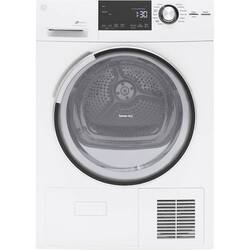
GE - 13-Cycle Electric Dryer
- Key Specs
- Product Height: 33 1/4 inches (The out of box height of the item. Height is measured as the vertical distance from the bottom of the item to the top as it would be primarily used or placed.)
- Product Width: 23 2/5 inches (The out of box width of the item. Width is measured as the horizontal distance from one side of the item to the other as it would be primarily used or placed.)
- Product Depth: 25 1/4 inches (The out of box depth of the item. Depth is measured as the distance from the front of the item to the back as it would be primarily used or placed.)
- Depth With Door Open: 42 81/100 inches (Measurement from the back of the product to its front, with door fully open.)
- Capacity: 4 cubic feet
- Steam Function: false (In washers, this feature may be employed before, during, or after the main wash cycle. Steam aids in stain removal, activating detergent, sanitizing, and softening wrinkles. In dryers, this feature can be used to remove wrinkles or quickly freshen clothing items.)
- Dryer Heating Source: Electric
- Moisture Sensor: true (This feature automatically senses moisture levels of the items in the cycle to determine the proper drying time.)
- Stackable: true (To stack with similar products, ensure that the necessary support and/or installation hardware is in place to reduce safety hazards.)
- Stacking Kit Model Compatibility: GFA24KITL
- Color Finish: White
- General
- Product Name: 13-Cycle Electric Dryer
- Brand: GE
- Model Number: GFT14ESSLWW
- Color Finish: White
- Dimensions
- Product Height: 33 1/4 inches (The out of box height of the item. Height is measured as the vertical distance from the bottom of the item to the top as it would be primarily used or placed.)
- Product Width: 23 2/5 inches (The out of box width of the item. Width is measured as the horizontal distance from one side of the item to the other as it would be primarily used or placed.)
- Product Depth: 25 1/4 inches (The out of box depth of the item. Depth is measured as the distance from the front of the item to the back as it would be primarily used or placed.)
- Depth With Door Open: 42 81/100 inches (Measurement from the back of the product to its front, with door fully open.)
- Product Weight: 95.02 pounds (The out of box weight of the item.)
- Capacity
- Capacity: 4 cubic feet
- Features
- Steam Function: false (In washers, this feature may be employed before, during, or after the main wash cycle. Steam aids in stain removal, activating detergent, sanitizing, and softening wrinkles. In dryers, this feature can be used to remove wrinkles or quickly freshen clothing items.)
- Dryer Heating Source: Electric
- Moisture Sensor: true (This feature automatically senses moisture levels of the items in the cycle to determine the proper drying time.)
- Child Lock: true (Setting that allows appliance to be temporarily locked to prevent use.)
- Delay Start: true (Allows you to program the appliance to automatically run at a later time. This feature helps you coordinate with your household’s water needs, noise preferences, and more. Additionally, operating your appliance during off-peak hours may reduce energy costs.)
- End-Of-Cycle Signal: true (An audible alert and/or visual indicator that notifies you when a pre-selected cycle is complete.)
- Time-Remaining Display: true
- Interior Light(s): true
- Drying Type: Condenser (Vented dryers take in room temperature air, heat it to dry clothing, then exhaust the resulting moisture-laden air outside through a duct, and typically have shorter trying times than ventless dryers. Ventless dryers (condenser and heat pump) do not require external ventilation. Instead, condensers cool the warm air and drain or store the resulting water. Heat pump systems reheat the cooled air for another cycle. Overall, ventless dryers are more energy efficient than vented.)
- Design
- Exhaust Vent Location: Ventless
- 4-Way Venting: false (The appliance has four possible vent locations (right, left, front, or rear), which allows for placement versatility.)
- Control Location: Front panel
- Drum Material: Stainless steel
- Window: true
- Cycle Specifications
- Number Of Drying Cycles: 13
- Options and Programs: Delicate, normal, heavy duty, towels, damp dry, air fluff, time dry, My cycle, rack dry, cottons, mixed load, dewrinkle, active wear, casual
- Compatibility
- Pedestal Available: false
- Matching Washer Available: true
- Stackable: true (To stack with similar products, ensure that the necessary support and/or installation hardware is in place to reduce safety hazards.)
- Stacking Kit Model Compatibility: GFA24KITL
- Electrical Specification
- Amperage: 30 amperes (Strength of electrical current.)
- Voltage: 240 volts (Amount of power needed to support an electrical current.)
- Certifications Listings & Approvals
- ENERGY STAR Certified: false (Devices carrying the ENERGY STAR service mark, such as computer products and peripherals, kitchen appliances, and other products, generally use 20% to 30% less energy than required by federal standards.)
- ADA Compliant: false (Meets standards set by the Disabilities Act (ADA) Standards for Accessible Design)
- Other
- UPC: 084691824169
Get fluffy towels and comfortably dry clothes with this quiet GE electric dryer. Thirteen cycles, four heat options and touch controls make custom drying each batch of laundry simple, and the stackable front-loading design saves space in your laundry room. This GE electric dryer has a 4 cu. ft. capacity to handle larger loads.
- Ventless condenser dryer: Can be installed conveniently in a closet, placed under a counter or stacked in a corner without the need to vent externally
- Stainless steel drum: Resists rust and helps protect clothes
- HE Sensor Dry with dual thermistors: Continually monitors moisture and temperature to prevent clothing wear and tear due to over-drying and inconsistent heat
- Electronic touch controls: Enjoy easy operation and cleanability with streamlined controls
- Damp Alert: Alerts you when clothes are the ideal dampness for ironing, for perfectly wrinkle-free results
- Extended Tumble: Tumble clothes without heat to help prevent creasing and wrinkling
- Sanitize cycle: This option reduces certain types of bacteria by 99.8%
- LED dryer interior light: Find that last sock in the dryer thanks to a bright, energy-efficient and long-lasting LED light
- Dryer rack: Allows tumble-free drying of items like sneakers and stuffed animals
- Quick Dry: Quickly dries items and small loads for families on the go
Whats Included
- GE 13-Cycle Electric Dryer
Product Manuals
A: The unit does not require a vent in the door. The heated water condenses inside the unit and is rinsed down the drain. There is no significant heat build up outside the unit.
A: Hi NewToTheSouth- The water tank is located on the front, left side of the washer. There are two options for draining water out of the Ventless Condenser Dryer: 1. Pump to a removable water tank in the dryer. Remove the condensed water in the tank after every drying cycle. 2. Drain directly out of unit into a standpipe or washstand through the included drain hose (wire ties also included). Standpipe or washstand should be 36-58" off the ground or platform to accommodate both washer and dryer drains in all configurations. Dryer drain hose can drain alongside the washer hose. Do not push either drain hose into the standpipe any further than 4". Pushing further into standpipe can cause leaking. Also, the tank holds approximately one gallon. Thanks for considering GE! SUE@GEA
A: Hi appshopper- Thanks for viewing! This ventless condenser dryer can be installed conveniently in a closet, placed under a counter or stacked in a corner without the need to vent externally. We apologize for any confusion. Ventless condenser dryers use a dual loop airflow system. The first loop draws in a small amount of ambient air which passes through the condenser for initial heating. The heated air is then pushed into the drum, where it heats up the wet laundry and causes water to evaporate. This air is then looped back into the condenser where it's cooled down - that's the second loop. The air that's already inside the condenser is reheated and sent back into the drum to repeat the process until the clothes are dry. The water that is extracted goes to a tank or an external drain. Thanks for reaching out to us. Keep in touch! SUE@GEA