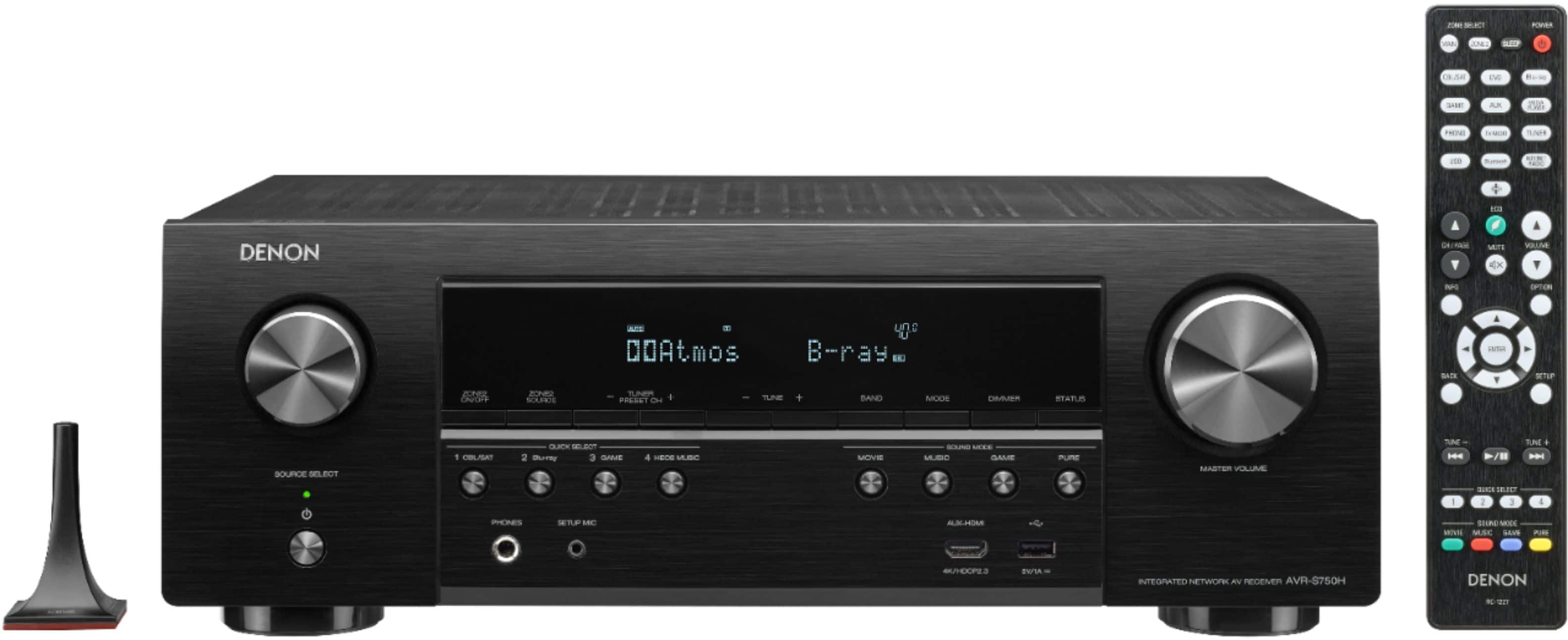
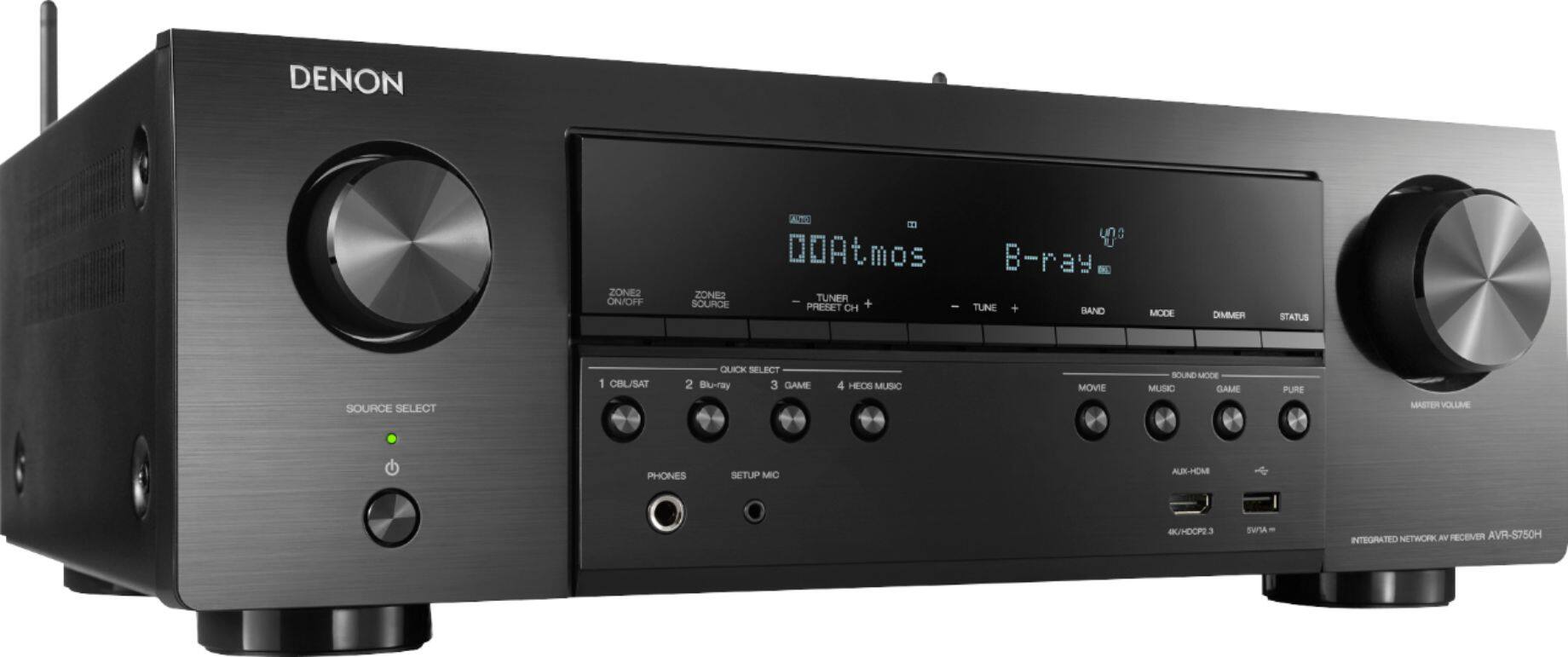
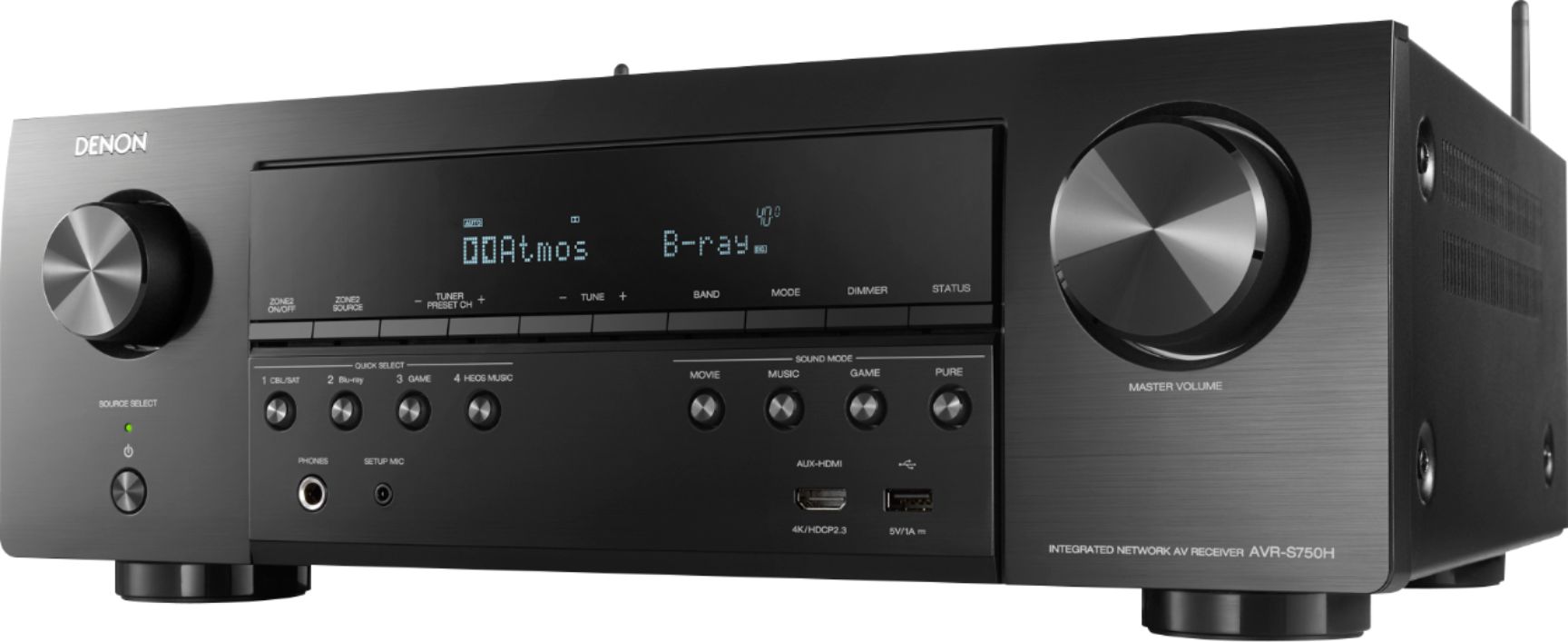
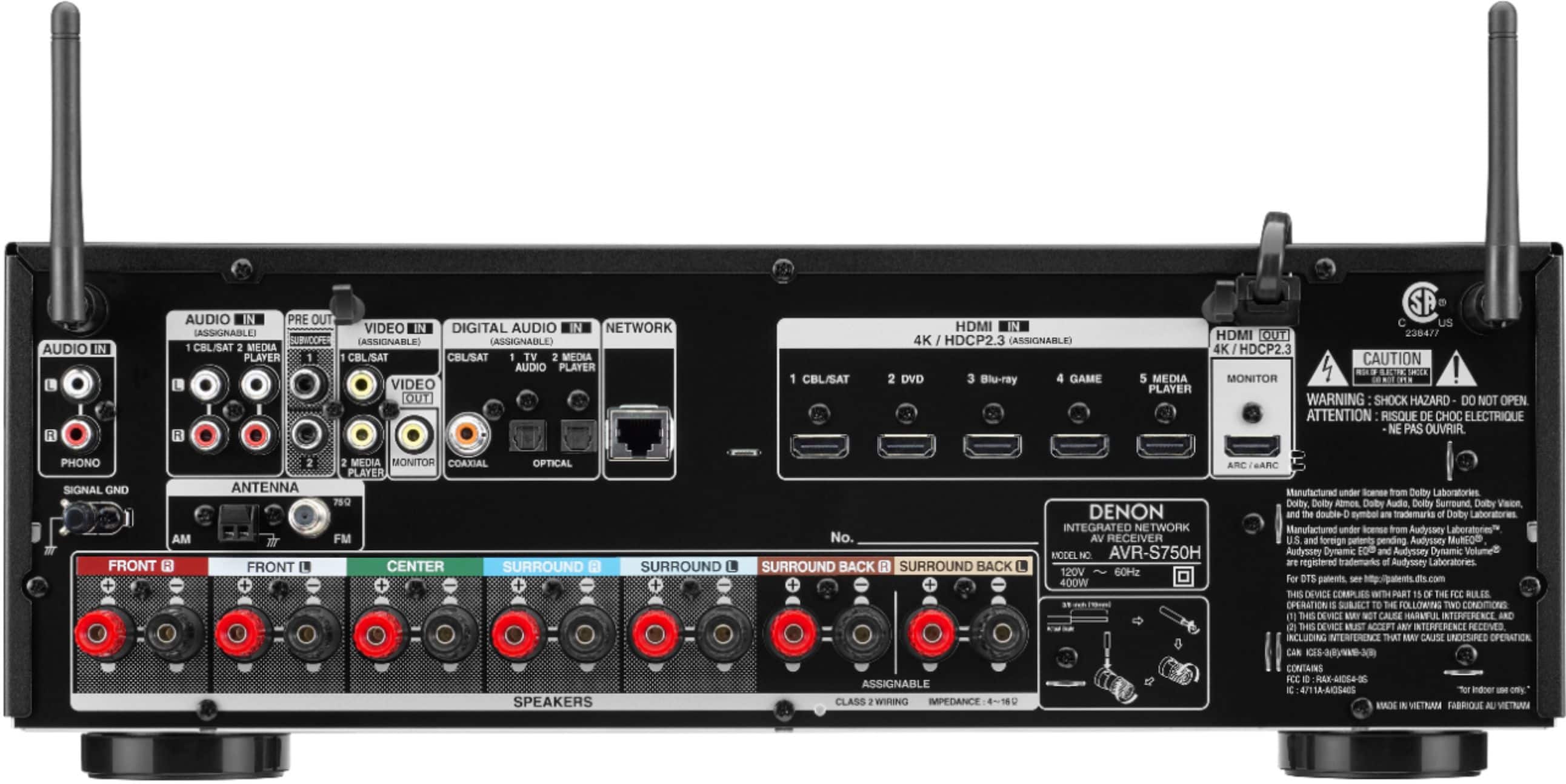
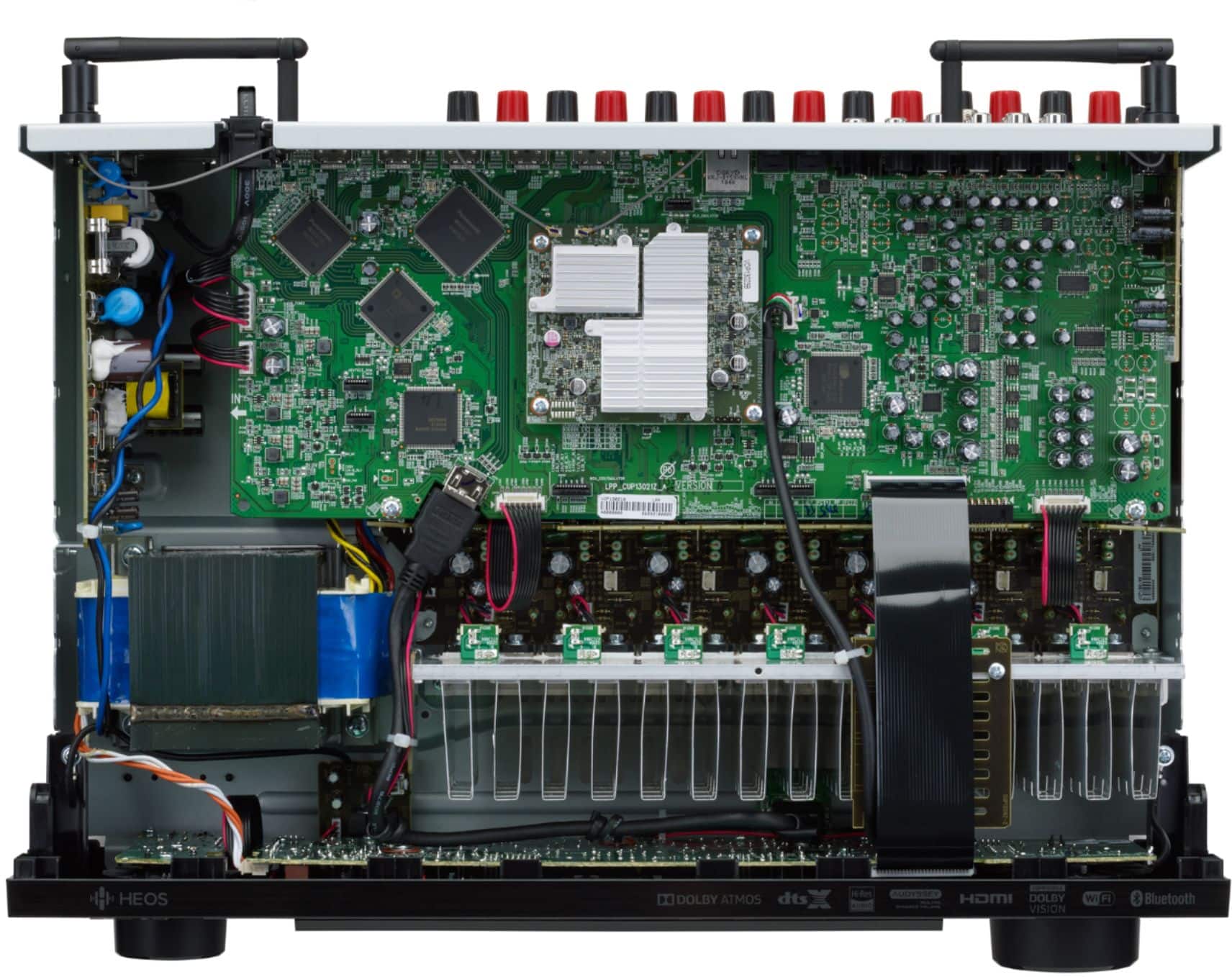
Yes, the AVR-S750H is capable of playing audio in multiple rooms with its Zone 2 capability. You will be able to play audio in the Main Zone in a 5.1 setup and a set of stereo speakers in Zone 2.
A:AnswerObjectively, the AVR-S750H is a better model but it includes features that may not be needed based on individual setup for the extra $100. Main differences between the two models follow:
AVR-S750H: 6 HDMI inputs
AVS-S650H: 5 HDMI inputs
AVR-S750H: 165 w per channel (7)
AVR-S650H: 150 w per channel (5)
AVR-S750H: Multi-room (dual output zones) - Yes
AVR-S650H: Multi-room (dual output zones) - No
AVR-S750H: Dolby Vision, Dolby Atmos, DTX
AVR-S650H: Dolby Vision
AVR-S750H: 5.1, 7.1
AVR-S650H: 5.1
A:AnswerStaying with all one brand is probably one expensive way to solve it. I’ve soured on Sony receivers, but I’d go all Sony, or no Sony.
You’re not alone, I had the same volume issue with a Sony AVR, along with now the Samsung TV remote and my new Denon. My TV/all remote will successfully control the stereo volume, then not, then maybe. Like it loses the signal or something. Both are new products. I’ve heard and tried several things: turn on the tv or dvd first, unplug the TV to reset it, maybe try that with the blue ray? I think the HDMI cable may be an issue as well, because the remotes all work fine with their own products. I’m going to get a better cable and see what happens. Or maybe eARC just isn’t quite ‘there’ yet? Good luck!
I’m actually pretty happy so far with the Denon AVR Itself and It’s features. Love Airplay and internet radio, I’m listening to more music now because of it.
A:AnswerImpedance is the total resistance (reactive & DC) that a speaker or any electrical component has to electrical current flow. The less impedance, the less resistance to current flow, or put another way, the more current will flow through the device. Higher impedance "impedes" current flow, so the amplifier will deliver less current through the speaker. Impedance varies depending on frequency, so a quoted ohm rating for a speaker is just an average - although good speaker design should have the impedance curve without sharp peaks or substantial variations. These can cause an amplifier to overload, cause distortion, or even damage the amplifier. Older analog amplifiers were usually capable of driving 4 ohm loads, or two parallel 8 ohm speaker sets. New "digital amps" have switching power supplies and outputs which do not have the high current, low impedance capabilities of the older analog amps... so you most often see amplifiers today rated for 6-8 ohm loads. When presented with a lower impedance load (for example, 2 sets of 8 ohm speakers in parallel), the amplifier safety circuit may shut down or disconnect the load to prevent damage to itself.
Older analog amps were often capable of driving low impedance loads with ease, due to the nature of their design (and the massive high current stepdown power transformers & full wave line voltage bridge rectifiers used in the power supply).. But, they were bulky, heavy, and not as efficient as modern switch-mode power supplies, and the digital switching type output amplifier itself (class D or above). My old MacIntosh MC2300 amp can drive 16, 8, 4, or 2 ohm loads with ease... sounds great even today, but does weigh over 100 lbs. If your amplifier output is rated for 4 ohms, then it could not only drive a pair of 8 ohm speakers in parallel, but had twice the power output at 4 ohms than it would at 8 (in theory). I.E., if your amp is rated at 100W at 8 ohms, but can safely drive 4 ohm loads, then in theory the amp can produce 200W. So, your 6 ohm rated amp output is better than 8 ohms, because it can produce more current (power) in theory. But, you would need speakers rated at 6 ohms to take advantage of that. Another reason to want lower output impedance in your amp output is for something called damping factor. The lower the impedance, the higher the damping factor. It's complicated, but basically high damping allows the amp to control unwanted speaker cone movement better, especially a woofer which has a lot of mass and therefor inertia. High damping factor helps reduce speaker overshoot and ringing, which are forms of distortion. SO, you can safely use 8 ohm speakers on your receiver/amp with 6 ohm output impedance (and that is a MIN rating, not max)... but you should NOT use 4 ohm speakers on a 6 ohm rated amp. Most amps these days have overcurrent and other safety circuits built in, but you could possibly still damage the amp or speakers under certain circumstances. Anyway, lower amplifier output impedance is usually a good thing, so just make sure your speaker are the same NOMINAL impedance or HIGHER and you should be fine.
A:AnswerUnless those volume controls are impedance matching you run the risk of damaging the AVR's amp channels for Zone 2. Even then, 14 speakers is a lot for 2 amp channels to handle. Regarding digital connection for Zone 2, this model only allows output to Zone 2 from an analog input signal or from an internal source like AM/FM, HEOS Music, Bluetooth, USB. You can use the All Zone Stereo feature, but that only takes an HDMI based input signal and outputs it to all zones simultaneously for the source being used in the Main Zone.
A:AnswerThe S750H is limited in how it outputs HDMI based sources to Zone 2. There's a feature called All Zone Stereo (OPTION button on remote) that allows for this, but it just mimics the Main Zone HDMI source for Zone 2. You don't get true independence for HDMI sources to Zone 2 until you get to our X3700H model. That model allows for 2 independent HDMI based sources for the Main Zone and Zone 2. The TV Audio source (ARC) can be used when in All Zone Stereo mode or when the Zone Select feature is activated.
A:AnswerThere is very limited functionality without the remote and many features and menus are not available from the front panel. You can change sources, modes, tune radio stations and the like. There is a Denon Heos app available for Android and ios that duplicates many functions of the included remote, but it does not replace it for setup purposes. Once set up, you can turn it on, select sources and see certain modes, trim levels, but again, the remote is needed to get into the deeper levels of the setup configurator.
Yes, you will be able to stream audio into Zone 2 such as Bluetooth and Pandora from the HEOS app as well as other streaming services within the HEOS app.
A:AnswerIf you plan on using you're Samsung built in Netflix TV app the best connection would be HDMI ARC channel that is your audio return channel it will send audio through the HDMI cable back to the receiver just make sure you're plugged into your HDMI ARC input on the Samsung TV it will be marked, the only downfall of doing this is you will not have a volume display or GUI displayed on your TV through the Denon the only way to get a volume display on your TV would be to use a third-party streaming device such as a Apple TV, Roku, fire TV and so on. If you have issues with the HDMI ARC channel you could always use a optical audio cable from your TV to this Denon receiver but again you will not have a graphical volume display on the TV if you are using your Samsung TV to load Netflix.