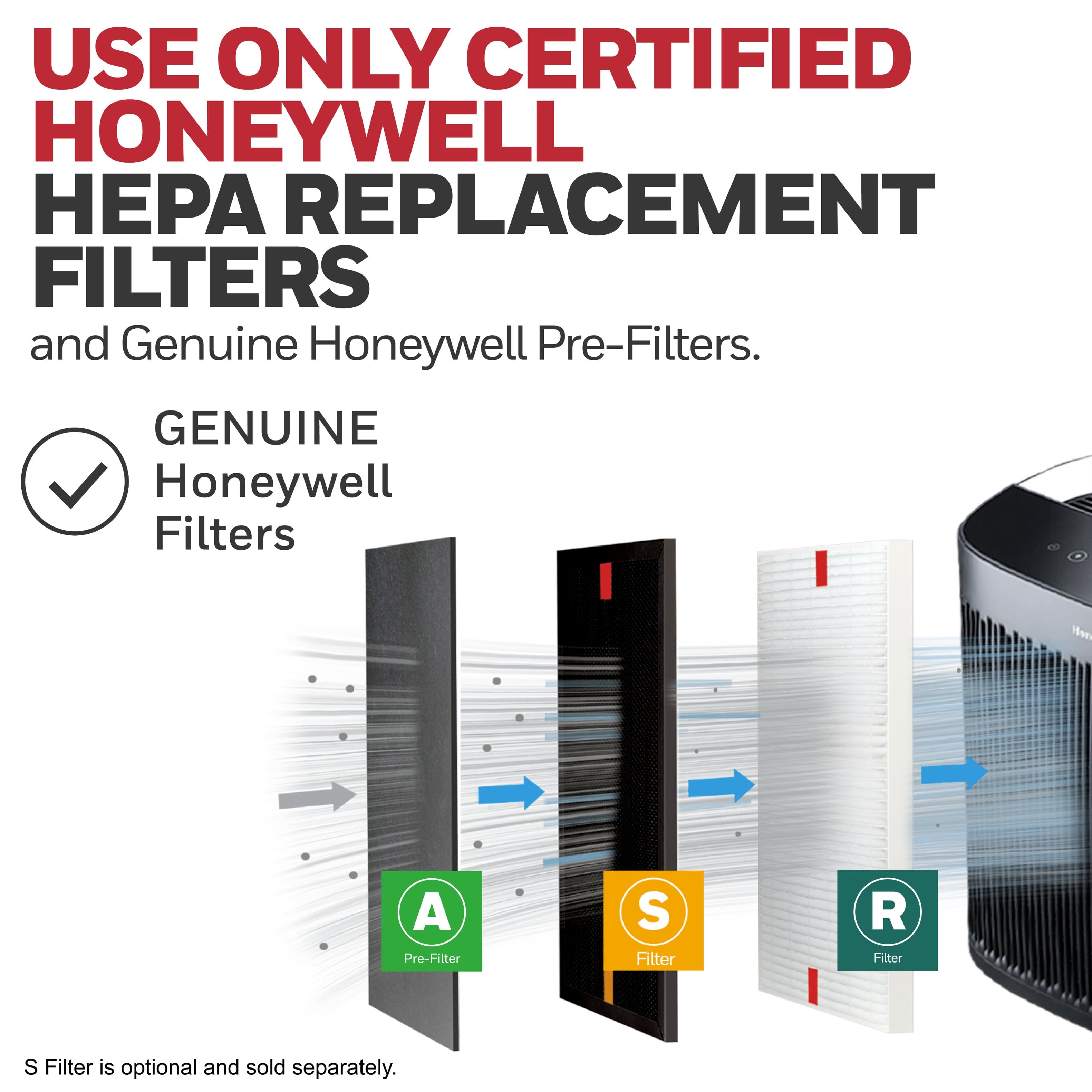
A:AnswerWhat I've learned... VOC absorbtion is accomplished by activated charcoal filters placed ahead of final HEPA filtration. Increasing total thickness of carbon ahead of HEPA increases VOC absorbtion.
AP1, APP1 (pre-filter) & SP1 (pet) are all made from activated charcoal, treated w/ anti-microbial, hypoallergenic zeolite (mineral salt).
SK1 (kitchen) is activated charcoal treated w/ potassium permanganate (KMnO4) to improve absorbtion of common kitchen solvents, but not cooking oil vapor.
SC1 (remodeling/rennivation) is activated charcoal, with pelletized activated charcoal, to maximize the carbon surface area available to absorb construction solvent VOC-s, like benzene & formaldehyde.
SS1 (smoke) is activated charcoal, with an as yet undisclosed smoke absorbtion enhancement.
Placing 1 S filter directly on top of an already installed R/HEPA filter guarantees that every sq inch of each S filter is filtering VOCs/odors prior to final R/HEPA filtration. In contrast, the entire surface area of the larger, one piece, AP1/APP1 pre-filter is not equally engaged in VOC absorbtion. The sections of A/pre-filter directly in front of R/HEPA filter openings will become VOC saturated long before the outer edges of the A/pre-filter, because of direct vs tangential airflows.
The system mostly makes sense, but Honeywell could explain it much better than what they default to.
A:AnswerThank you for your inquiry. This unit is rated for 500 square feet. We would advise getting a second unit, and possibly a fan to help with air circulation to get air flow between all three rooms. If you have any other questions please do not hesitate to contact our consumer relations team by emailing us at [email protected]. Thank you.
A:AnswerHoneywell said that the fan in the 5300B uses an AC motor. The entire unit plugs directly into an 120VAC wall outlet. It reads like marketing hype.
The rest of the question is devoid of necessary and sufficient room EM context to honestly address. It is abstracted from the reality of actual EM/RF room risks, so as to be academic with regard to safety. The AC wiring inside the walls is always radiating EM when the circuit is in use. Switched power supplies that convert AC to DC radiate EM. EM fields combine constructively and destructively, too.
I hold the utmost regard for anyone who is medically diagnosed as (hyper) "electro-sensitive." So there is no disrespect intended or even implied here.
The inverse square rule applies to all radiated EM/RF, whether from an AC or DC motor. How physically close do you expect to routinely be to a 5300B that maximally draws 167watts in Turbo mode? Will you use the 5300B continuously in Turbo mode, in order to HEPA filter 5 room volumes of air per hour, for medical reasons?
The nearest I ever get to mine is 4 feet, which I suspect is a typical use case. I sleep in that same close proximity to my 5300B, without disturbance - which might be unusually close.
Do you avoid LED lighting because of its radiated EM? If you use a hair drier, does it have a DC motor? What other EM radiating appliances will be in the same room and at what proximity to you, the 5300B? Where does the wall wiring run and have all wire splices/junctions been made to minimize radiated EM? Has that room been profiled for constructive & destructive (combined) EM zones? These are some concrete factors to address when assessing the electro-sensitive safety of any given room.
If you can safely be close enough to a notebook computer to use it, then AC vs DC fan motor is an academic distinction that does not actually matter for electro-sensitivity. If/when motor type does matter, I would expend my efforts and energies on room EM zone profiling, optimal purifier placement and EM shielding, in that order.
I hope this clarifies that EM safety is a bigger picture issue than AC vs DC fan motor.
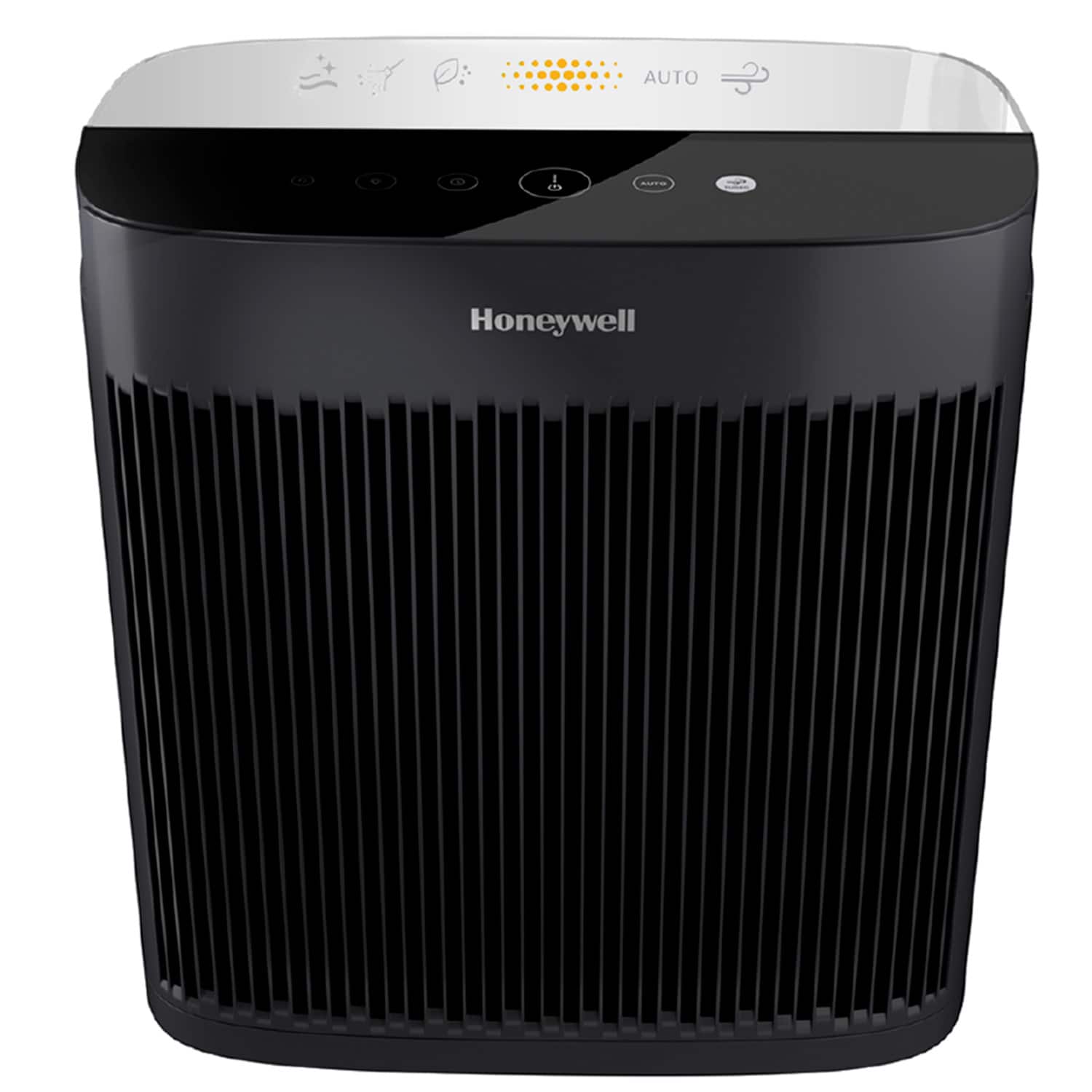
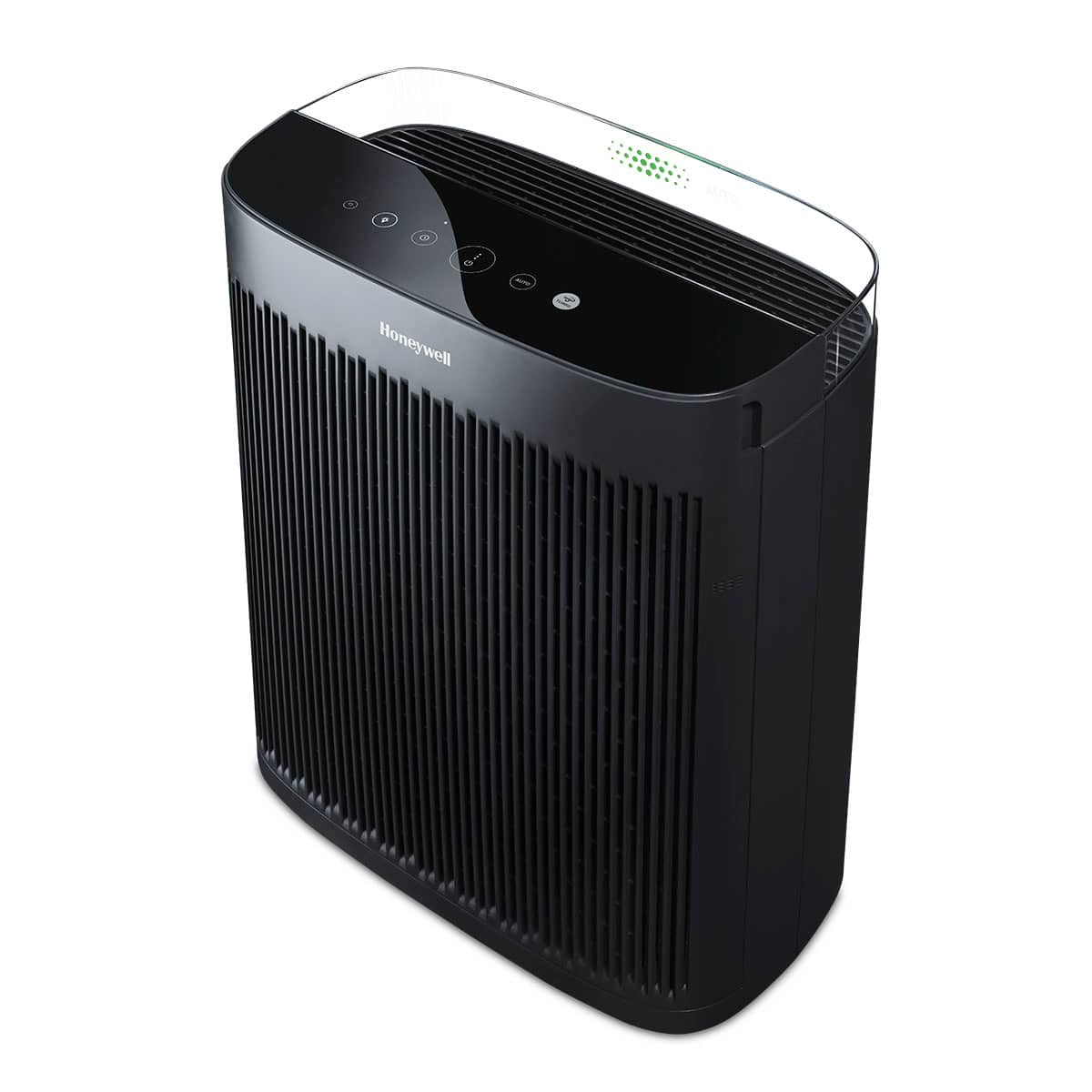
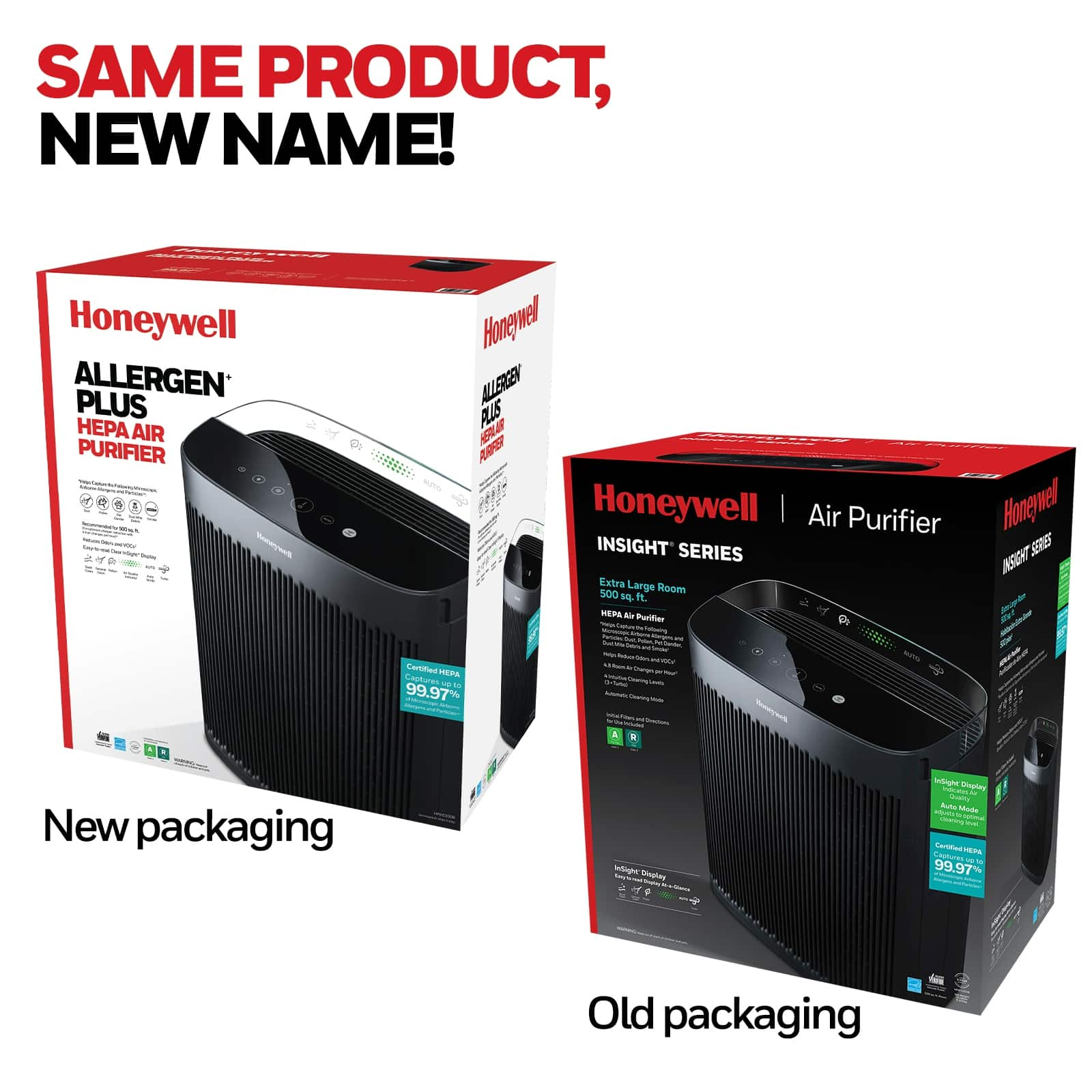
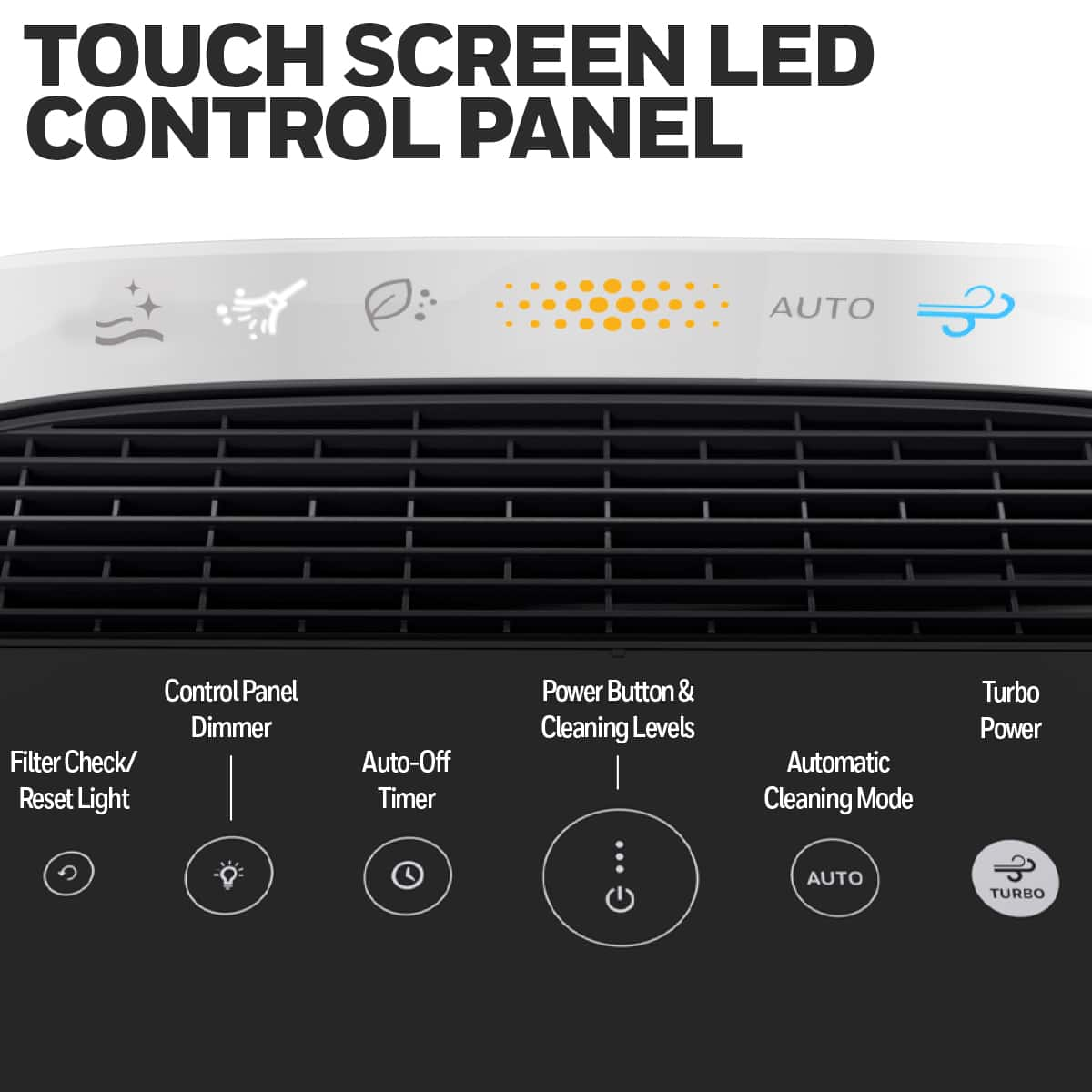
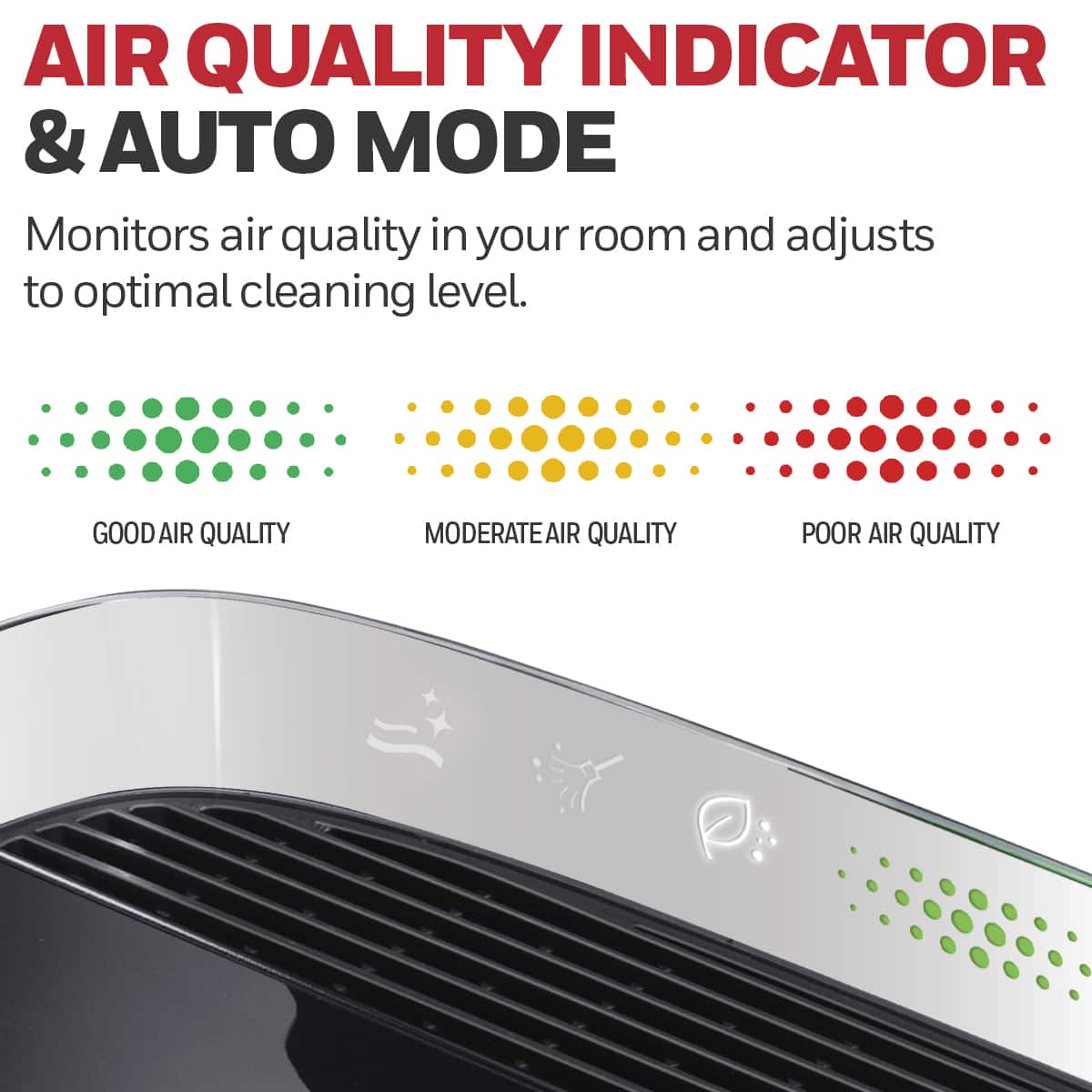
A:AnswerThank you for your inquiry. The Power Plus series (HPA3300) is a Home Depot Exclusive unit while the InSight series (HPA5300) is more widely available. The HPA5300 has an easier to read control panel, meaning you can determine the quality of the air, as well as the current settings from farther away. If you have any other questions please do not hesitate to contact our consumer relations team by emailing us at [email protected]. Thank you.
A:AnswerThank you for your inquiry Tony. Unplugging the unit will not reset the timer for the filter change reminder. However, this is a timer that counts the amount of time the unit is running. If you only run the unit for 8 hours a day, the timer will only advance 8 hours that day, not a full day. If you have any other questions please do not hesitate to contact our consumer relations team by emailing us at [email protected]. Thank you.
A:AnswerThank you for your inquiry Evie. This unit is rated to provide 5 air exchanges per hour in a 500 square foot room. Using it in a 700 square foot room will allow the unit to provide around 3.5 air exchanges per hour. If you have any other questions please do not hesitate to contact our consumer relations team by emailing us at [email protected]. Thank you.
A:AnswerThank you for your inquiry. The VOC sensor is only for VOCs, not particulates. This part is not modular and is not made to be replaced. Doing so can damage the unit and will void the warranty. If you have any other questions please do not hesitate to contact our consumer relations team by emailing us at [email protected]. Thank you.
A:AnswerNo reputable manufacturer of non-commercial HEPA air replacement systems will make truthful statements about protecting you indoors from SARS-CoV2/Coronavirus-19.
That said, this is what you need to think about...
There is a research-driven, national Healthy Building Code proposal that has been coming out of Harvard from pre-pandemic days. HBC is intended to be incorporated with existing building/electrical/plumbing/fire codes - but has gained no traction until now.
One part of the proposed HBC is to guarantee HEPA (minimum H 13 HEPA) filtered, full room volume (cubic ft), forced air replacement 4-6x/hr. The replacement air must be HEPA filtered w/ forced circulation through out the room.
When combined with proper masking protocols, the proponents of the HBC *claim* that this level of forced air HEPA filtration will render aerosolized SCV2 loads too low to be infectious. YOU STILL HAVE TO MASK, but you don't need UVC or ozone to effectively suppress SCV2/C19 indoors with this level of forced air HEPA filtration. Search Healthy Building Code, then read the peer reviewed scientific publications.
Well meaning idiots will proclaim that HEPA is only rated down to 0.3 microns, when virii & SCV2 are much smaller, ~0.1 microns. Smarter people know that 0.3 micron HEPA limits are based on *penetrative* particulates. Low mass particles, like biologic vapors, can be HEPA captured down to 0.1 microns - with timely HEPA filter replacements (before saturation).
Make sure your HEPA is minimally H 13. Guarantee forced air HEPA complete room volume replacements 4-6x/hr. Prevent pockets of dead (non-circulating) room air. Change HEPA filters on time. Properly wear an effective mask. Sterilize high contact room surfaces.
It requires ALL of these measures to effectively suppress SCV2/C19 aerosols indoors. HEPA air is only one variable in this research driven HBC proposal, but the complete solution is fully achievable. (Lots of good paying, UNEXPORTABLE, skilled jobs to make it happen, too!)
A:AnswerThank you for your inquiry. This air purifier carries a 5 year manufacturer's limited warranty. To register your product, please visit our website at Honeywellpluggedin.com, call us at 800-477-0457 (M-F 8:30AM-5:00PM EST), or reach out to us at [email protected]. We're here to help!
A:AnswerNo remote, or remote compatibility. If you only want to turn it on/off with a remote, you can consider getting a plug with a remote or wifi controlled one like this one
https://www.bestbuy.com/site/tp-link-kasa-smart-wi-fi-plug-mini-with-homekit-white/6472520.p?skuId=6472520
A:AnswerThank you for your inquiry. That depends on the quality of the air. More often than not, when VOCs are released into the air, it is at levels that would jump the sensor to the red zone. There are times where the sensor will jump to yellow rather than red. If you have any other questions please do not hesitate to contact our consumer relations team by emailing us at [email protected]. Thank you.
A:AnswerThank you for your inquiry. This unit does not generate any Ozone. If you have any other questions please do not hesitate to contact our consumer relations team by emailing us at [email protected]. Thank you.
A:AnswerAs late as Mar 2021, BB has been misleadingly selling 200-series filter kits to 5300B owners.
R (HEPA) filters are all the same for 100/200/300 series Honeywell HPA models. What differs is how many R filters are used per series: 1 for 100 series, 2 for 200 series and 3 for 300 series. BB really wants you to buy 2 200 series R/HEPA filter kits and set the 4th R filter aside for later.
What you want from honeywellstore.com is the "HRF-R3" filter pack. It contains 3 R filters, exactly the number you need to replace the HEPA filters in the 5300B. The 3-pack is slightly cheaper than buying 3x single R/HEPA filter units.
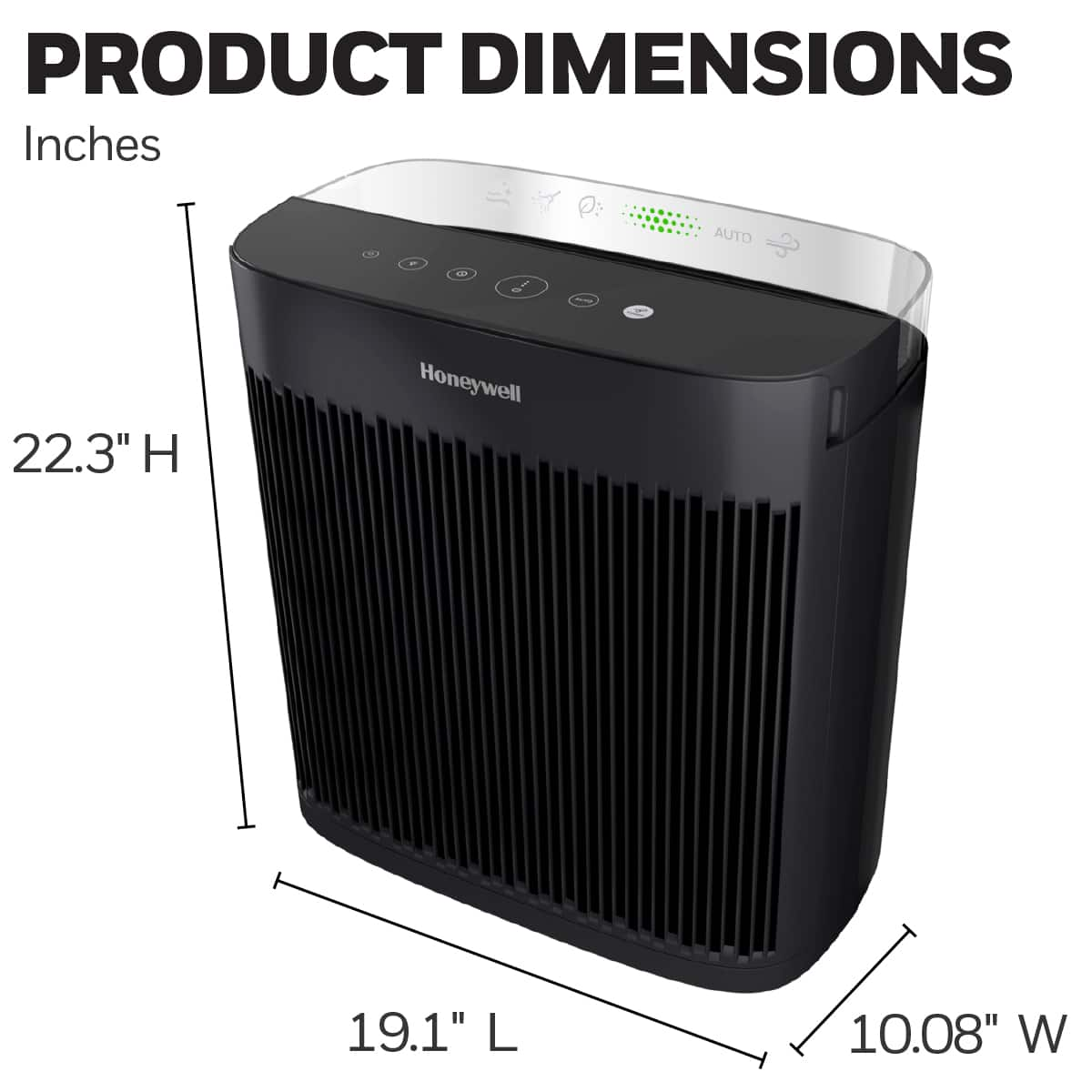
A:AnswerThank you for your inquiry. This unit, with the filters in it, weighs 27 pounds. If you have any other questions please do not hesitate to contact our consumer relations team by emailing us at [email protected]. Thank you.
A:Answer3 hepa filters and one prefilter. Cost depends on where you purchase the filters. They are available from Honeywell and can be purchased on Amazon. I have not seen a washable option on either site.
A:AnswerI checked with the HoneywellStore & they informed me that Amazon is not an authorized reseller of Honeywell HPA air purifiers &/or parts.
I buy my 5300B replacement filters from honeywellstore.com, because BB doesn't stock/sell *300 series* filter kits.
Several air purifier manufacturers had 2020 supply chain problems, resulting in filters being out-of-stock, not just Honeywell. I choose to always keep one full set of replacement filters on hand. That keeps my unit in production, while I wait out any unforeseen shortages. Buying just-in-time sets an eventual trap when there's suddenly nothing to buy.
Worth thinking about.