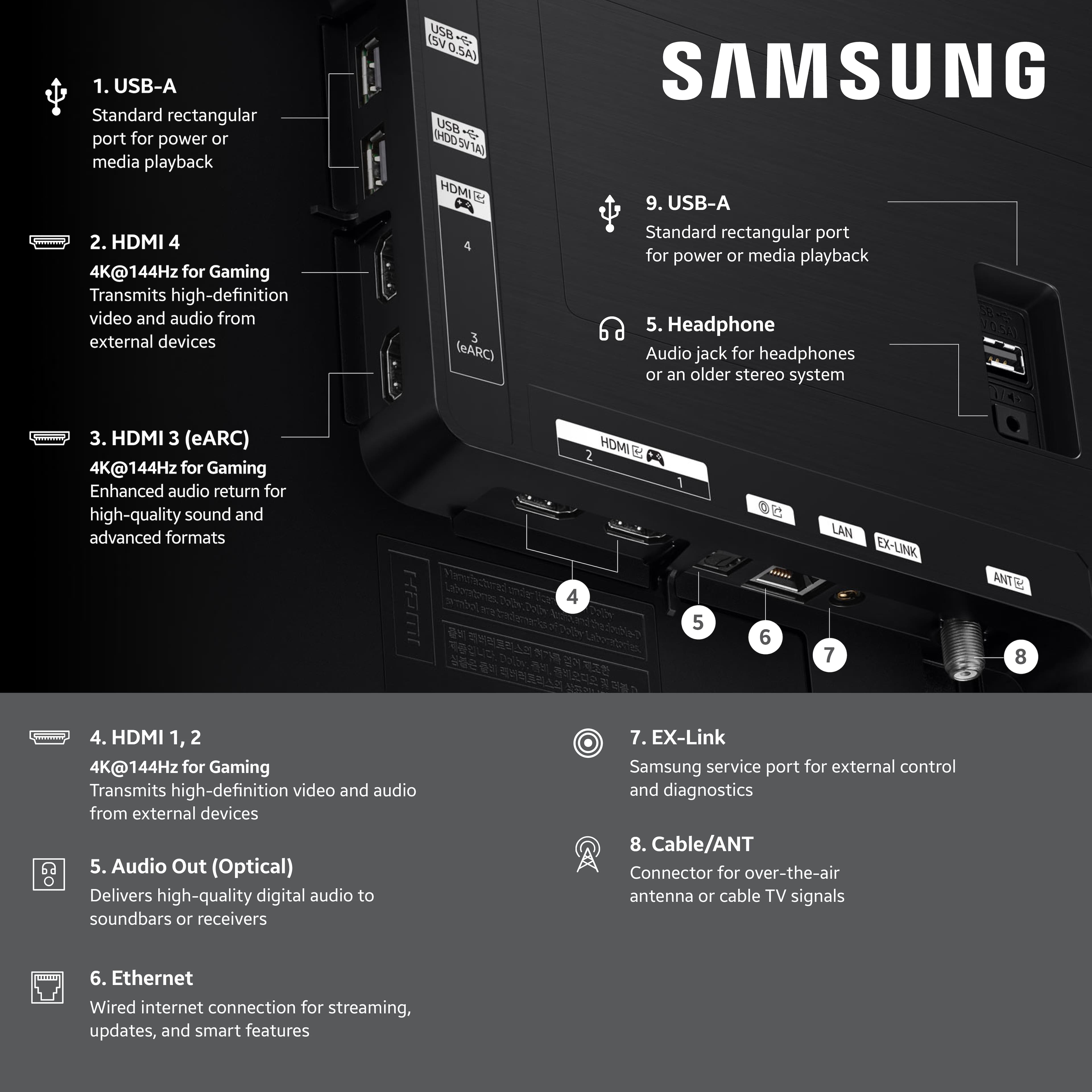
A:AnswerYes, but it is limited. If you expect to use it in addition to a sound bar, think again. The soundbar will not have ATMOS if the optical out is set for PCM.
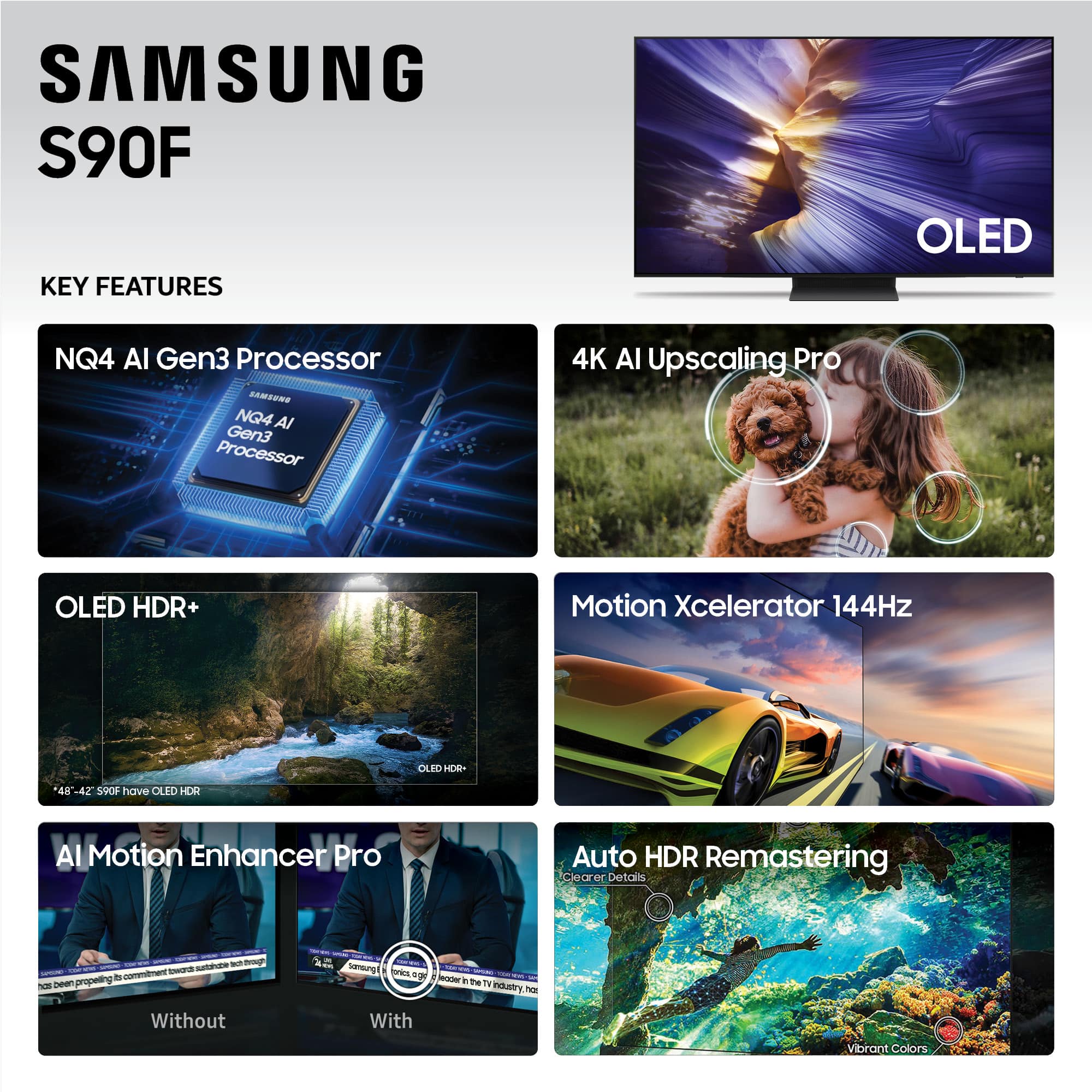
A:AnswerRR - All 4 HDMI ports on the S90F are capable of Auto Low Latency Mode (ALLM), Dynamic Metadata (HDR10+), Variable Refresh Rate (VRR), and 4K@120Hz (up to 144Hz for PCs). eARC support can further be found in HDMI port 3.
~ Samsung Specialist
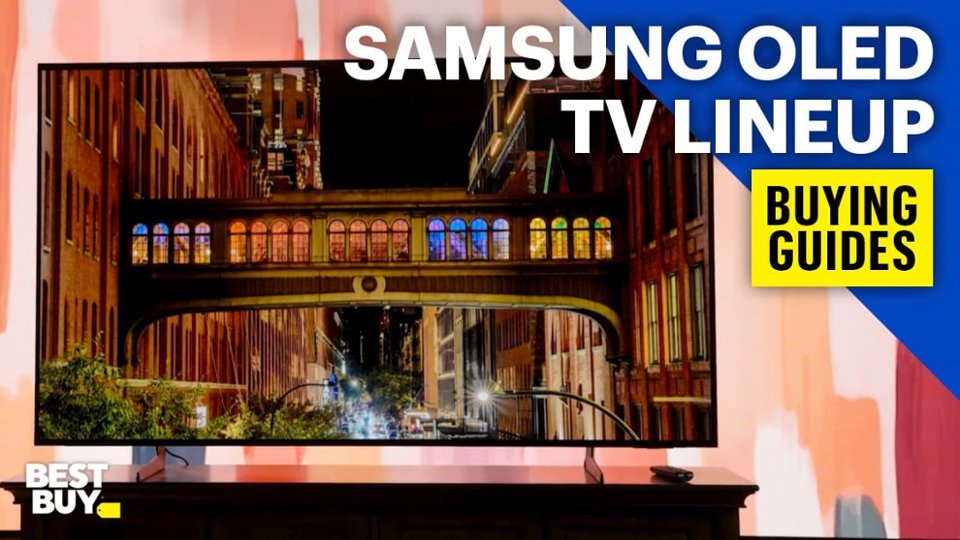
A:AnswerJust wanna start with I am not an expert and my answer comes from research I did myself. Okay so like I said, I did some research to figure this one out so thank you for asking it as I did not even think about it myself. Based on what I had found, it seems like in North America it depends on the size you get, the 42”, 48”, and 83” use WOLED while the 55”, 65”, and 77” uses QD-LED.
A:AnswerWe’re continually evolving our TV portfolio to provide our customers with new and exciting innovations and experiences. Samsung OLED TVs consistently offer a premium experience while delivering excellent viewing performance, regardless of the specific panels that are integrated into the product.
~ Samsung Specialist
A:AnswerIn the US, the 55", 65", and 77" are QD OLED while the 42", 48", and 83" are WOLED. Globally, most model sizes use a WOLED screen, but often at least one size uses a QD-OLED screen, which can be identified by the last four digits of the long model code in your region; if the fourth to last digit of the model code is an 'E,' the TV probably uses a WOLED panel. For example, in the UK the 65-inch model ends with TXXU, so you should end up with a QD-OLED panel if you buy that size. See rtings dot com for detailed information.
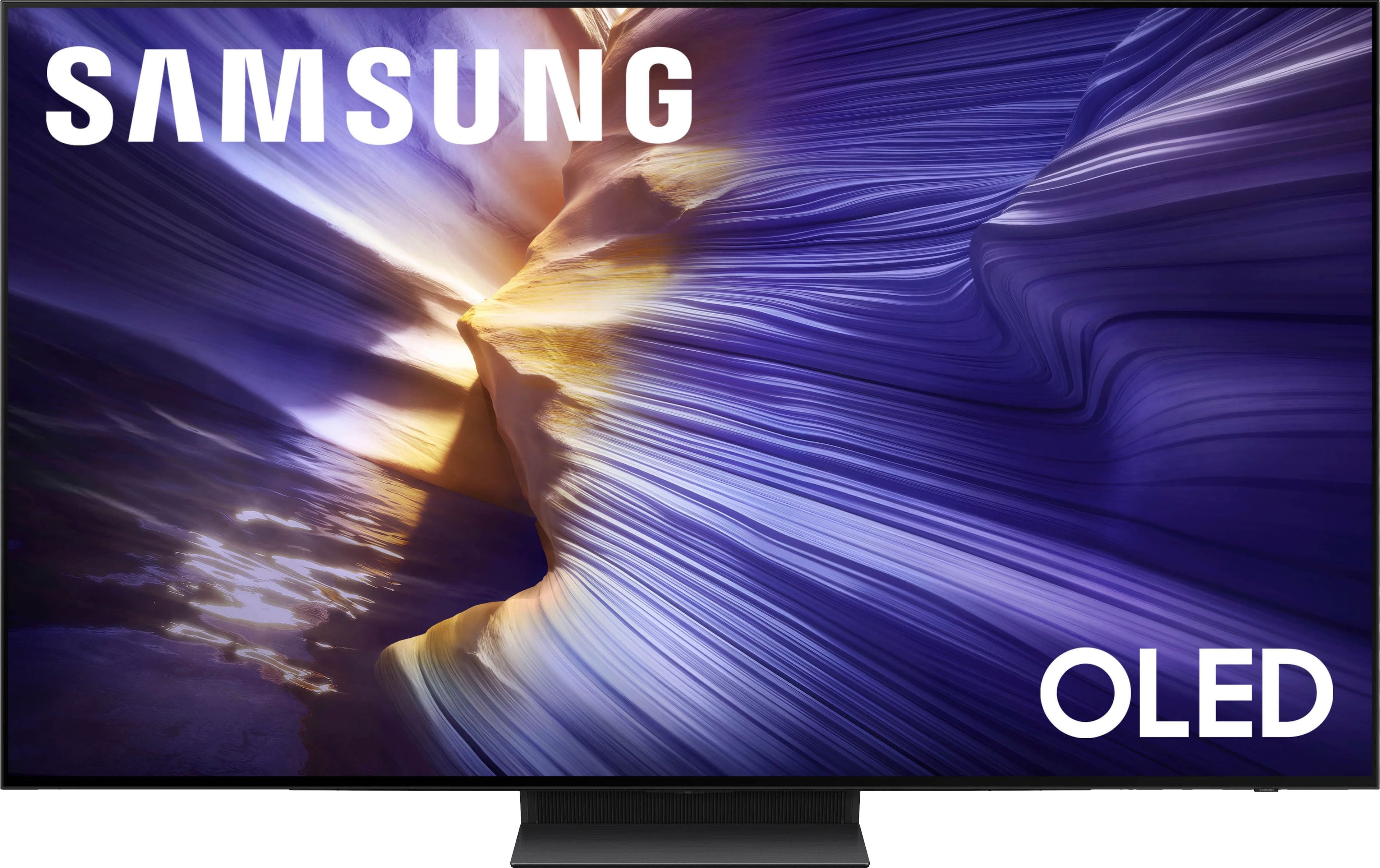
A:AnswerHi DoomChief - We’re continually evolving our TV portfolio to provide our customers with new and exciting innovations and experiences. Samsung OLED TVs consistently offer a premium experience while delivering excellent viewing performance, regardless of the specific panels that are integrated into the product.
~ Samsung Specialist