Customer Ratings & Reviews
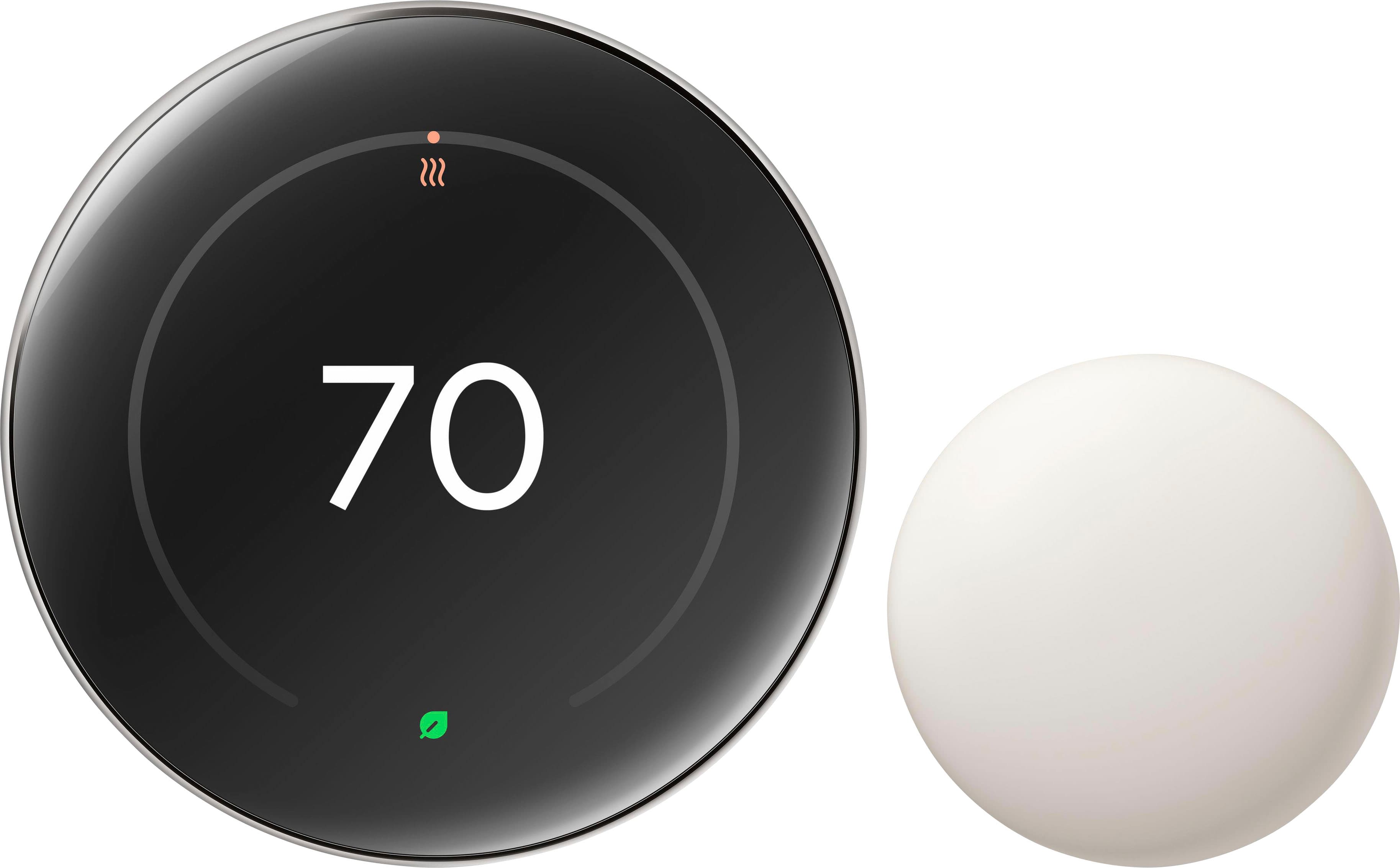
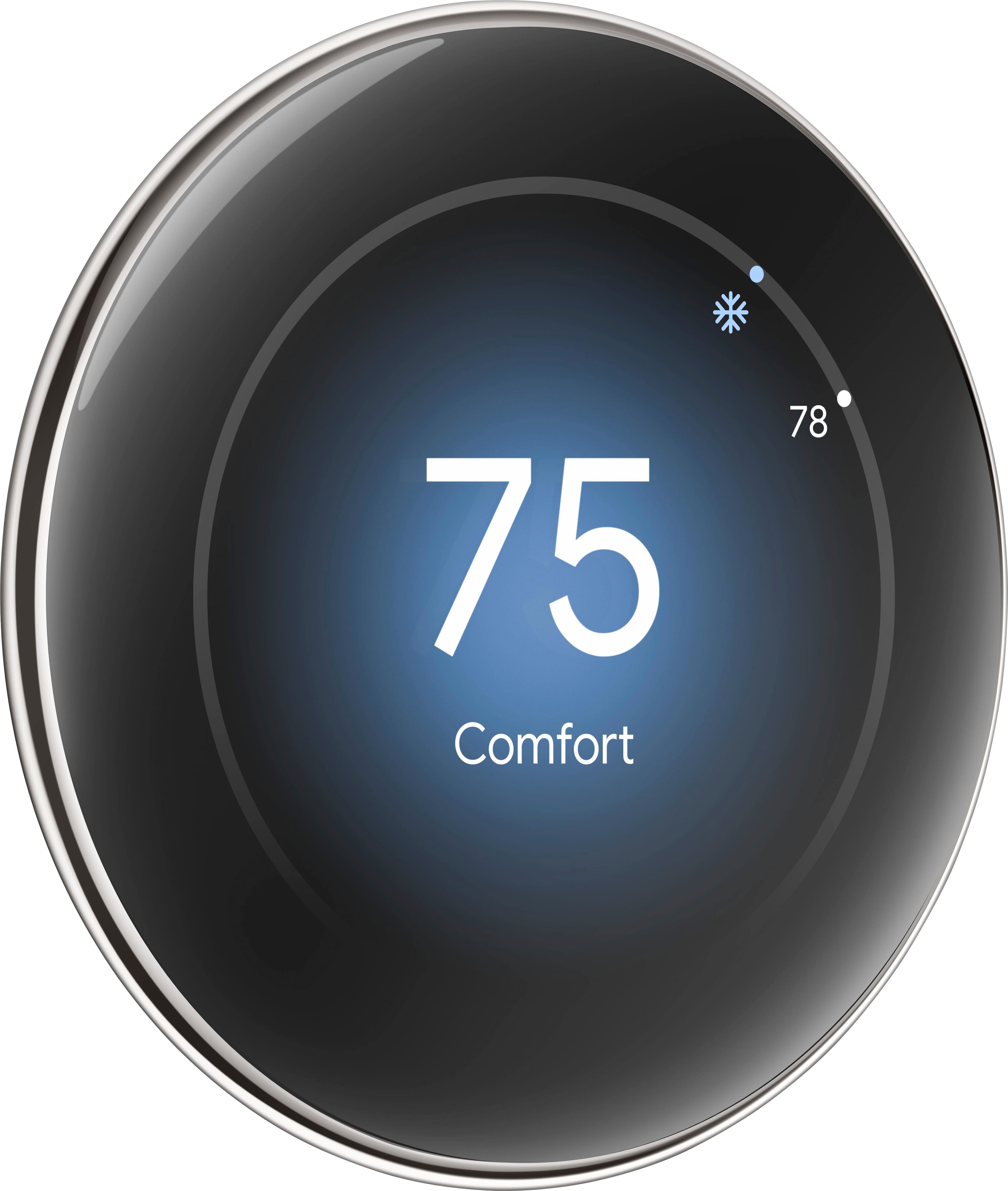
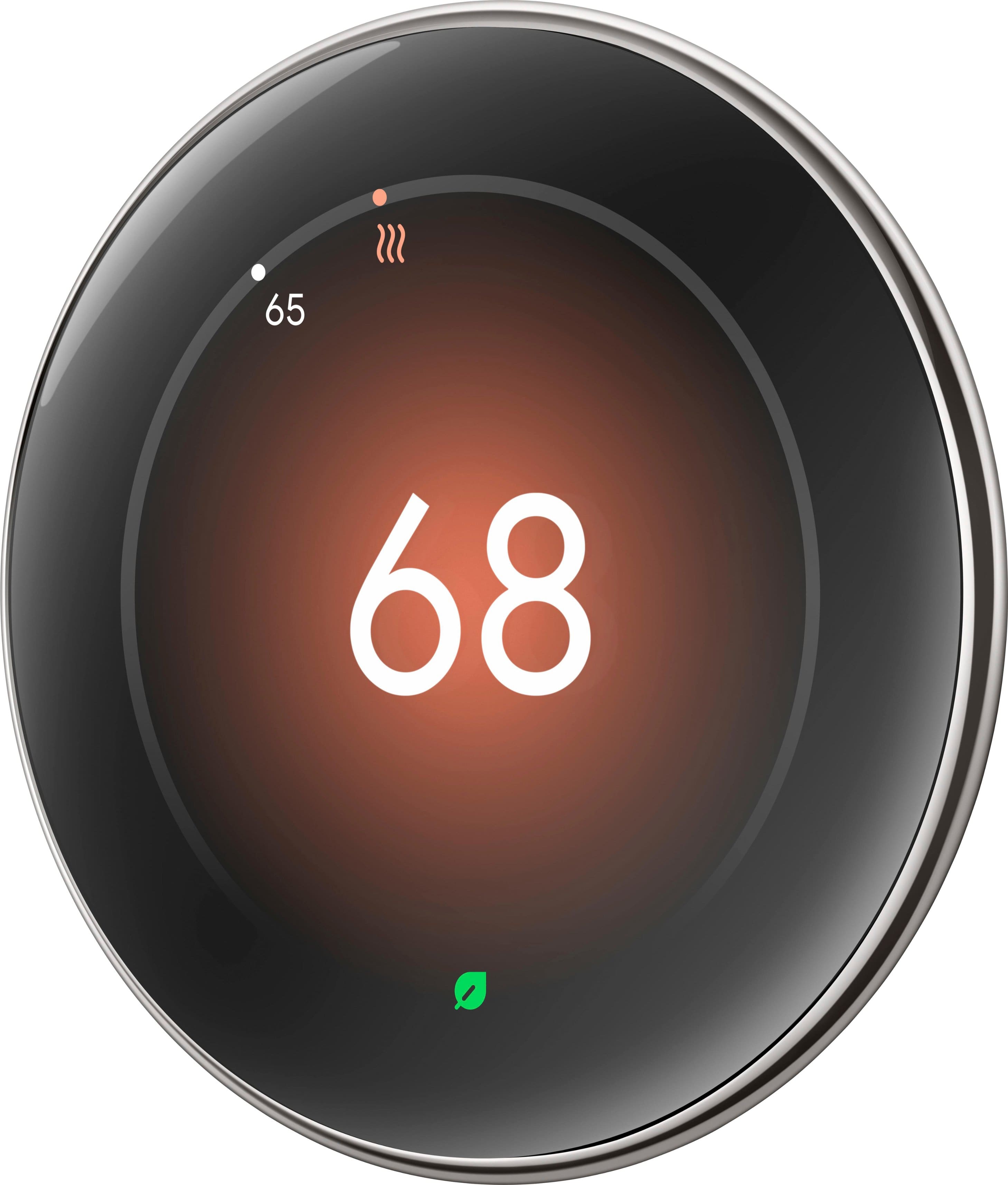

- Model:
- GA05551-US
- SKU:
- 12219911
Rating by feature
- Value
Rating 4.4 out of 5 stars
- Quality
Rating 4.7 out of 5 stars
- Ease of Use
Rating 4.7 out of 5 stars
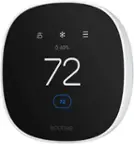
Google Nest Learning Thermostat
||Posted . Owned for 3 weeks when reviewed.This reviewer received promo considerations or sweepstakes entry for writing a review.The Google Nest Learning Thermostat is extremely user friendly, easy to read, and I highly recommend it to anyone above the age of 60. An added bonus was it was on sale when I purchased it.
I would recommend this to a friendBrand response from Google Team
Posted .The perfect temperature is a breeze, PearsonW!

Nice thermo Stat.
||Posted . Owned for 1 week when reviewed.This reviewer received promo considerations or sweepstakes entry for writing a review.A Verynice unit ..works perfect..made extremely Nice ..easy to program .and is high quality.
I would recommend this to a friendBrand response from Google Team
Posted .Thanks for the kind words, ROBERTM!

Awesome if you have other google products
|Posted . Owned for 2 weeks when reviewed.This reviewer received promo considerations or sweepstakes entry for writing a review.i love my new nest thermostat it works super well with my other google products in home!
I would recommend this to a friendBrand response from Google Team
Posted .Great to hear, Ryan! We're thrilled that your Nest Thermostat is working seamlessly with your other Google products. Enjoy the convenience and control it brings to your home!
Elegant and blends well into a room
||Posted . Owned for 3 weeks when reviewed.This reviewer received promo considerations or sweepstakes entry for writing a review.Everything just works. Setup was super easy. It looks super fancy too.
I would recommend this to a friendBest upgrade Nest 4 years looks amazing Screen
||Posted .This reviewer received promo considerations or sweepstakes entry for writing a review.Best upgrade to Nest 4 in years looks amazing hasatter connectivity large screen fast UI in App must have I bought 3 Nest 4 highly recommend
I would recommend this to a friendBrand response from Google Team
Posted .Thanks for the kind words, rrabg5!
Better refined
||Posted . Owned for 1 week when reviewed.This reviewer received promo considerations or sweepstakes entry for writing a review.Loving this product this far! Way better in my option than the 3rd gen.
I would recommend this to a friendGreat upgrade from the Gen 3
||Posted .This reviewer received promo considerations or sweepstakes entry for writing a review.Big upgrade from the Google Nest Thermostat Gen 3. The screen size is nice and the display shows so much more useful information.
I would recommend this to a friendBrand response from Google Team
Posted .Thanks for the 5 star review, LonelyScythe!
Very nice
||Posted . Owned for less than 1 week when reviewed.This reviewer received promo considerations or sweepstakes entry for writing a review.I love it! I ended up going with gold but the silver is so nice.
I would recommend this to a friendNest Learning Thermostat 4th generation
||Posted . Owned for 1 month when reviewed.This reviewer received promo considerations or sweepstakes entry for writing a review.Great purchase. I am very happy with using my cell phone to control the temperature. The features are really cool and convenient. 10 out of 10. The only thing I would say is be patient when installing. It took some time to get it right. Thanks
I would recommend this to a friendBrand response from Google Nest Support
Posted .The perfect temperature anytime, anywhere, FrancineH. Thanks for the five stars!

Worry Free thermostat
||Posted . Owned for 3 weeks when reviewed.This reviewer received promo considerations or sweepstakes entry for writing a review.Google Nest is a great product that is efficient and reliable. Can be controlled remotely from anywhere. Also have an app and tracking disc to track the temperature of every room and apartment in your home .
I would recommend this to a friendBrand response from Google Nest Support
Posted .The perfect temperature, anytime, anywhere, SumintraJ. Thanks for being part of the Nest family!
Great upgrade to the latest available features
||Posted . Owned for 3 weeks when reviewed.This reviewer received promo considerations or sweepstakes entry for writing a review.Excellent new version that replaced the four year old model that was in use. Really like the remote temp sensor feature as well. Planning to upgrade the second thermostat in our home next.
I would recommend this to a friendBrand response from Google Team
Posted .We're so happy to hear you're enjoying your new Nest Thermostat Gen 4! It sounds like it's settling in to its new home perfectly — we know it will become the best pal of your future device, too. Together, your Thermostats will make the perfect team!
New and improved !
||Posted . Owned for 2 months when reviewed.This reviewer received promo considerations or sweepstakes entry for writing a review.Slick device! Love the new nest thermostat! If you want to save money, get one now!
I would recommend this to a friendBrand response from Google Nest Support
Posted .Keeping your home in its comfort zone. Thanks for being part of the Nest fam!

Improves on several aspects of the great 3rd Gen
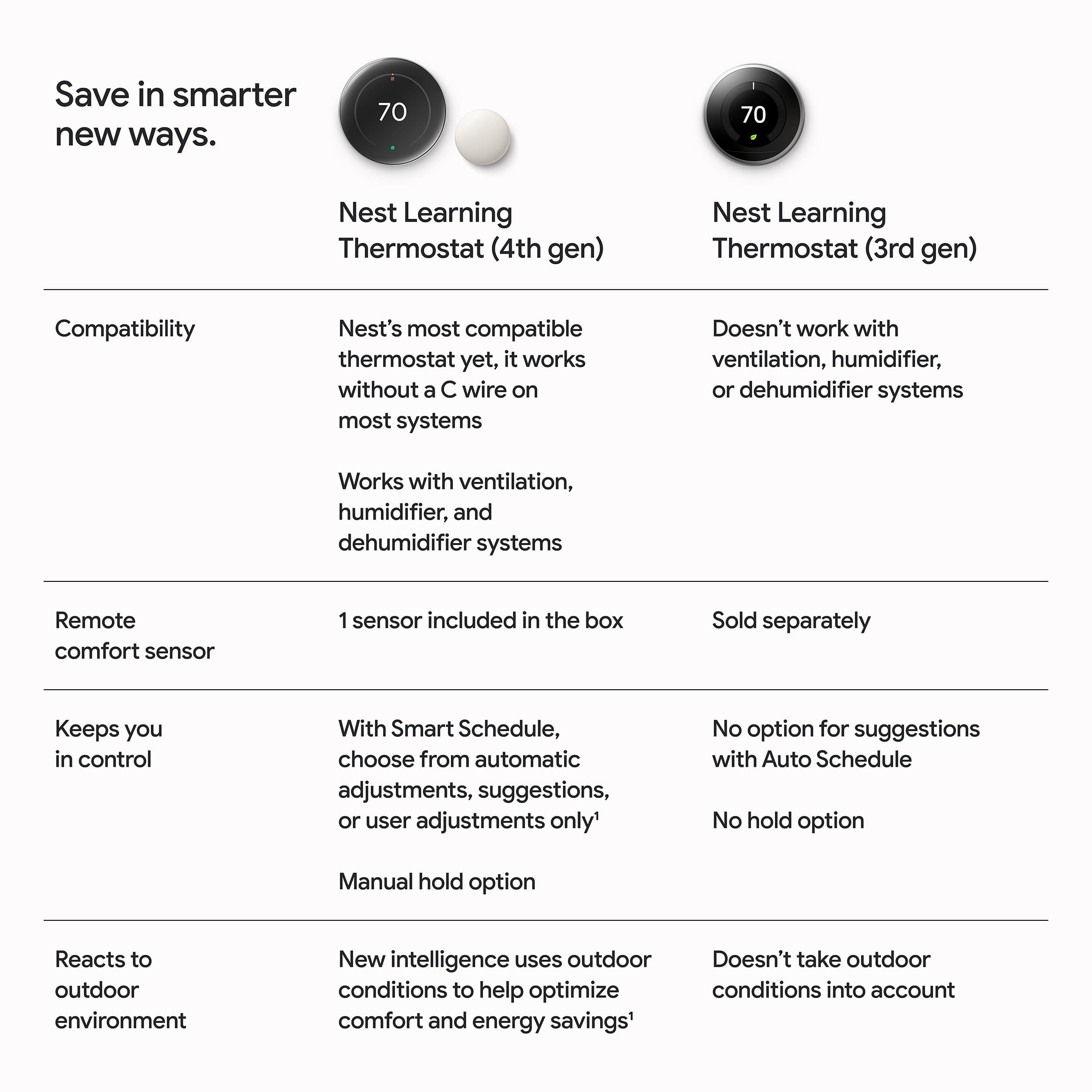
|Posted .This reviewer received promo considerations or sweepstakes entry for writing a review.It feels like I've had the Gen 3 Nest Thermostat all my life. It's followed me through three moves over the last nine years! It's been a truly "plug in and forget" item throughout all that time. I never once had any issues with it. I've grown to appreciate it throughout the years and talked several family and friends into getting their own. When hearing about the release of the fourth-generation thermostat, I wondered why I should upgrade because of how well the third-gen performed. But then I got to thinking about some things that irked me. And one of the things I did was set up my comfort settings. On the third-gen, I had to go hour by hour and adjust the desired temps. This wasn't too much of an issue because I only had to do it a handful of times throughout the years. After all, once it's set, it will be consistent in its ability to do what you want, but it was cumbersome when I had to do it. I've also had some nights where I woke up, and it was 63 degrees in the house when I had it set to 68. Much of that probably happened with my local electric company implementing their "rush hour," but I couldn't figure out how to fix it alone. My issues with it were minimal, considering I owned it for nine years. Anything connected to the internet usually has many connectivity issues and errors, but I'm delighted with the performance of the 3rd gen. That said, hearing about the differences between the 4th gen intrigued me. Some of the additions/differences from the third-gen are: * Sleeker design with a thinner profile and a mirrored finish (very nice looking on the wall and gets me to look at it more often than the 3rd gen) *An updated display that shows the temperature, weather, and time at a glance (this is the most significant visual change for me - the live weather animation and the hour-by-hour breakdown the closer you get to it is all excellent information to have so quickly) *Compatibility with more HVAC systems, including dual-fuel systems (I don't have any complicated systems, but I know a lot do, so this is welcomed to broaden the consumer base) *The ability to detect when you are away from home and adjust the temperature accordingly (this is an ideal addition because I felt like the third-gen did suffer from geolocation a bit) * Improved energy-saving features that can save you even more money on your energy bills (this is the most significant addition; any additional savings are welcomed, especially with rising power costs) This package has a sensor to place the thermostat anywhere you'd like it to prioritize. For example, if you live in a two-story home that gets hotter upstairs on a summer day, you can prioritize the sensor to be 71 degrees rather than the downstairs (where the thermostat is). This makes it cooler than 71 downstairs but will get your room to the desired temperature. If you use the sensors from the third generation, then you'll know how to use them. I don't remember any differences with the sensors other than their looks. Could they have better battery consumption? You can purchase a 3-pack of the sensors for $99, which I did to place one in each bedroom of the house. It can't be said enough how sleek this device looks on the wall. I opted not to install the base because I liked the clean look and didn't have to cover up any blemishes from the old thermostat. If you've seen a Pixel watch in person, it has the same aesthetics but is much larger in diameter. The rotation is still just as satisfying as the third-gen. This new 4th-gen thermostat improves everything the third has - positive and negative. That's what you want from a new-gen product. But unlike a PC, laptop, phone, or TV, you won't miss out as much as you think if you keep the third-gen. These thermostats are "bulletproof," I don't think the third gens will quit unless Nest decides to stop supporting them, which I don't think will happen soon. For $280, it's still a decent value because you'll own it for another nine years. However, if you're money-conscious and still have the third-gen, you can always wait for a sale - because you still have one of the best thermostats in the market with the third-gen.
I would recommend this to a friendSkeptical 3rd gen owner upgraded - I'm impressed!
|Posted .This reviewer received promo considerations or sweepstakes entry for writing a review.I've been using two Nest thermostats for years, the original model and the 3rd gen. They work great, although the main reason I bought it to begin with is so I could change the temperature without getting out of bed (at least I'm being honest). Fast forward nearly 12 years later, I ask myself "what else can Google really do? It's just a thermostat connected to wifi." That's mostly correct, but I decided to pick up the gen 4 Nest Thermostat anyway. First impressions are, wow, this thing looks super nice, almost like a Pixel Watch. It really is beautiful, for a thermostat at least. Big, thin, classy looking. The packaging is modern and slim and the face of the dial is a metallic-y silver that looks great when the screen is on or off (I got the polished silver trim). Installation was straightforward, remove old Nest (or thermostat) and it's mounting plate, install new mounting plate and new Nest; exact wiring configuration as the previous generations. One nice attention to detail is when installing the mounting ring, the little bubble level is backlit! Didn't expect that and it's a nice bit of polish Google engineered into the design. It did come in handy as I didn't have to use a flashlight in one hand and screwdriver in the ther other when making sure it was level. Set up is exactly as you would expect. Straightforward, although I had an issue where setup kept stopping, tell me the "R" wire wasn't connected. I triple checked the wiring and re-ran the setup from the beginning, only to have the unit tell me I was missing the Y1 wire. Turns out the wire check prompted me to re-check the Y1 wire, rather than the generic R wire message. Sure enough, it, not the R wire, wasn't fully seated. If you are coming from a previous gen Nest, I'd suggest running the setup from the beginning even though you may choose "skip." This will ensure the unit communicates back to you any actual wiring issues that may exist. It likely saved me a lot of frustration because I was 100% certain the R wire was inserted correctly. It was a bit strange that the setup flow didn't tell me the the Y1 wire was the issue, it just defaulted to the R wire. The remote sensor is a nice inclusion since I never purchased one with the prior generations. Unsure how that will change my cooling/heating habits but it's a nice to have. The display shows the remote sensor temp on the main display, which is a nice touch. I'm not sure what technology is packed into this, but the screen and overall display is gorgeous vs. the prior gens. It's a nice large color screen that shows rich and colorful graphics of the weather, temps inside/outside, etc. Really classy looking. Outside of that, it's too soon to tell if it's better at energy conservation, but I normally bypass all that stuff since I like it cold in the summer, no matter the cost (again, just being honest here!). Time will tell but I anticipate it would be the same as prior generations in the energy management area. Overall, this may seem like a frivolous update if you already have a Nest; in many ways it is, but there is enough polish to warrant an upgrade, especially if you have access to a utility rebate. Highly recommended.
I would recommend this to a friendThe Future is Nest
|Posted .This reviewer received promo considerations or sweepstakes entry for writing a review.Google-Nest has released their newest thermostat for 2024 after initially releasing their first smart thermostat back in 2011. Google-Nest really set the bar with their design and the intuitiveness of their app. Since then, many other manufacturers were able to gain popularity. Fast forward to now, it looks like Google has primed the Nest 4th Gen to take back the crown. Testing all the features couldn’t have come at a better time as I just replaced by whole ac system. I wanted to see if it would be worth the upgrade from the 3rd gen Nest thermostat. Design First of all, the new Nest 4th gen thermostat is a pleasure to look at. My kids have caught me staring in awe of the elegant design of the device. I’ve owned the 1st and 3rd gen of the Nest learning thermostat, and this is by far my favorite. It’s still pretty early as I have not had the device long enough to test for all the bugs and shortcoming just yet. I’ve had two brand new 3rd gen Nest thermostats fail on me, so I may be best suited to review the newest entry with the years of experience I’ve had with the Nest thermostat. Hardware and install I was able to use the existing screws and the existing placement of my 3rd gen Nest Thermostat. I was able to remove the existing and setup within 15 minutes. I love the fact that I was able to connect to Wi-Fi by using my phone instead of manually entering my password like on my 3rd gen Nest. I made sure to take a picture before removing and installing my new thermostat. Google Home App Most of hardcore Nest lovers really like the Nest app interface. The Google Home app was not widely accepted due to its interface. Now Google has made some updates in preparation for the 4th gen thermostat. I must have opened the Nest App 40 times trying to control the new thermostat. I’m still getting adjusted with using the Google Home app. Its not bad, but its not the Nest app. Features Smart schedule is really cool. Nest learns my patterns and sets my desired temperature based on the usage patterns. The cool feature I really love is that now you are able to let the thermostat suggest schedules without having it perform the action. This is a neat feature since I have to adjust the schedules that the Nest sets sometimes in the past. Having the Nest temperature sensor included is a huge plus. I have a 2-story home, so having the ability to set the thermostat temperature based on the second level is a major plus. I don’t mind the sensor not having any motion capabilities as I have other smart devices that can detect motion. Conclusion The Google Nest thermostat is a device that gets a lot of things right. Seeing the device in person, it looks really good. I was a bit surprised of the feel though. You have to be careful installing since it feels to be mostly made of plastic. I removed the base a few times and had to be extra careful handling the device. The device is made up of mostly recycled material, so I can appreciate Google for being committed to sustainability. The new Nest thermostat is jam-packed with advanced AI features such as smart schedule, adaptive eco and proactive alerts. These features are designed to reduce energy consumption and save money. If you are current Nest user and have no issues with using the Google Home app, I definitely recommend upgrading. You won’t be disappointed.
I would recommend this to a friendNest Gen 4: Smart, Stylish, and Built to Save Ener
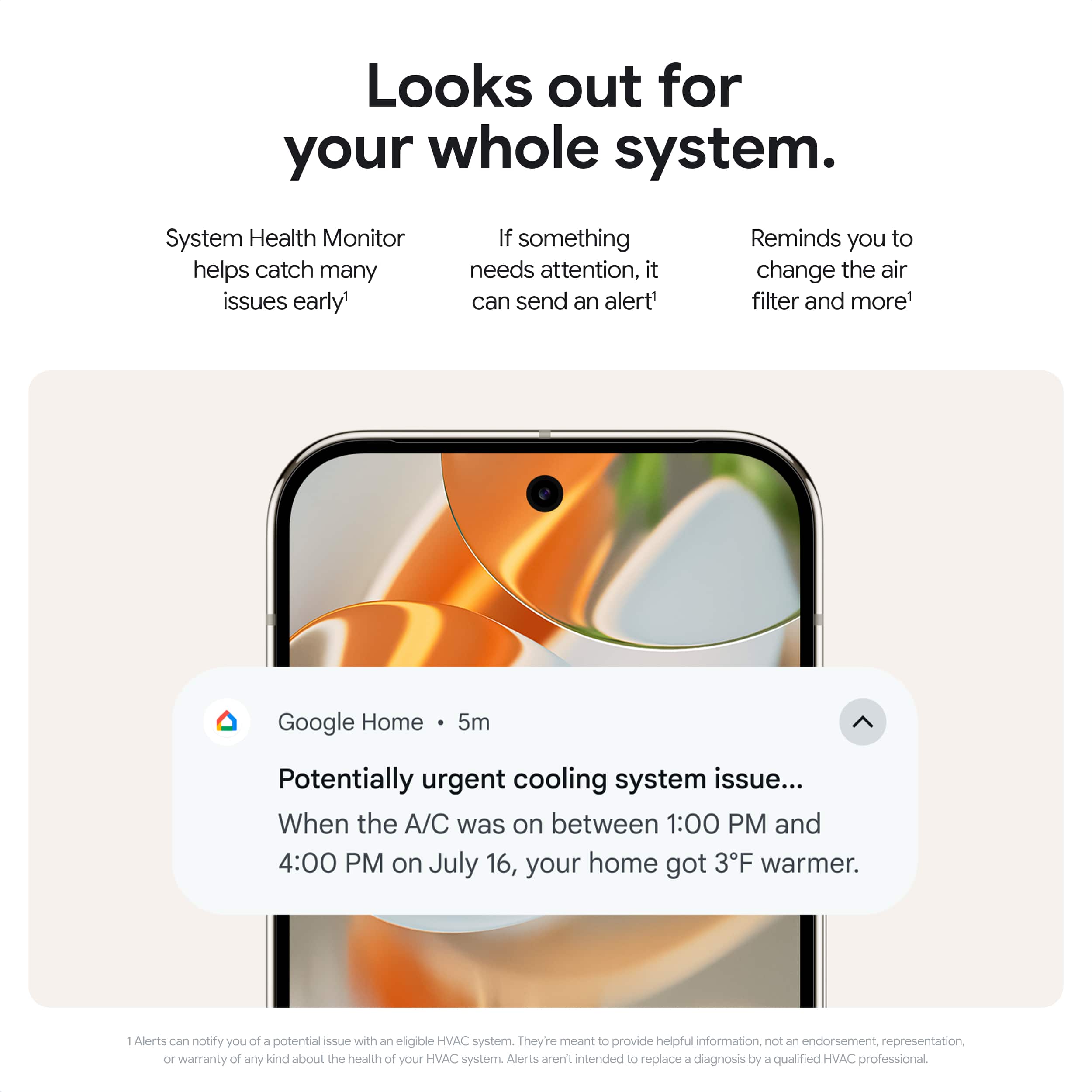
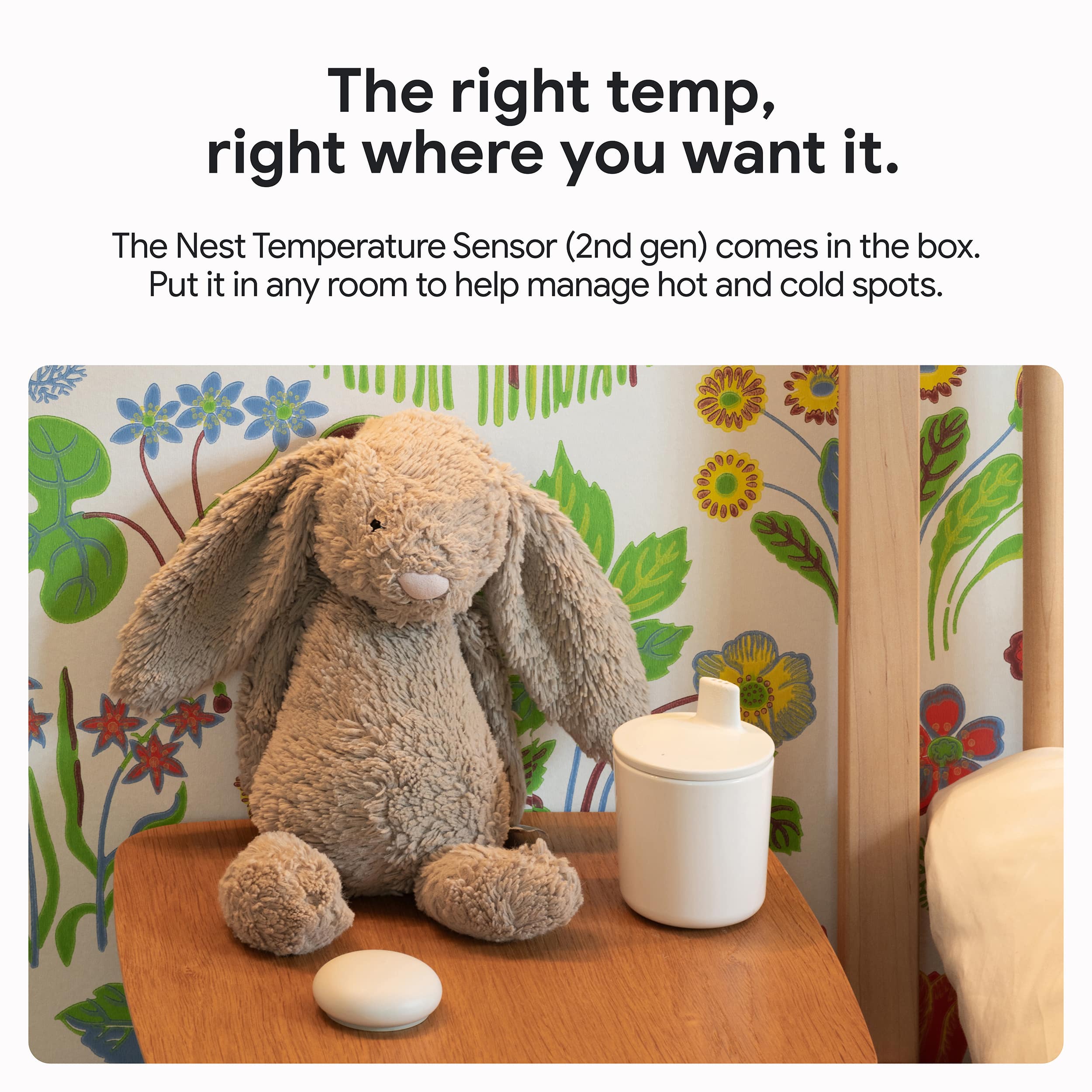
|Posted .This reviewer received promo considerations or sweepstakes entry for writing a review.The Google Nest Learning Thermostat is a solid upgrade that blends intelligence, efficiency, and sleek design. After using it, I’m really impressed by how well it adapts to my routine and the changing weather, making my home comfortable while also saving energy. First off, the installation was straightforward. I had it up and running in about 30 minutes, even without a C-wire, thanks to Google’s Power Sharing feature. The setup process through the Google Home app was intuitive, and I appreciated the detailed step-by-step instructions. The design is a major highlight. The new slim profile and polished glass dome make it look modern and stylish on my wall. The 60% larger display is not just easy to read but also smart. The Dynamic Farsight feature is a game-changer—it adjusts the display based on where I am in the room, showing the temperature, time, or weather as needed. In terms of functionality, the thermostat’s ability to learn and adjust is exceptional. The Smart Schedule feature learns my preferred temperatures and daily habits, offering suggestions that I can easily accept or reject via the app. I love how it uses AI to factor in outdoor conditions to optimize heating and cooling, which has noticeably lowered my energy bills. The inclusion of the second-gen temperature sensor is also a big plus—it’s helped manage hot and cold spots in my home by prioritizing the temperature in the most used rooms. Another cool feature is the System Health Monitor, which keeps tabs on my HVAC system and alerts me if something needs attention. I also love being able to control and view from temp from the app. Overall, the Nest Learning Thermostat (4th gen) is an excellent investment. It’s not just smart—it’s thoughtful, with features that cater to both comfort and savings. If you’re looking to upgrade your home’s heating and cooling system with something that’s easy to use and highly effective, this is the thermostat to get.
I would recommend this to a friendThe Original Smart Thermostat Gets an Upgrade!
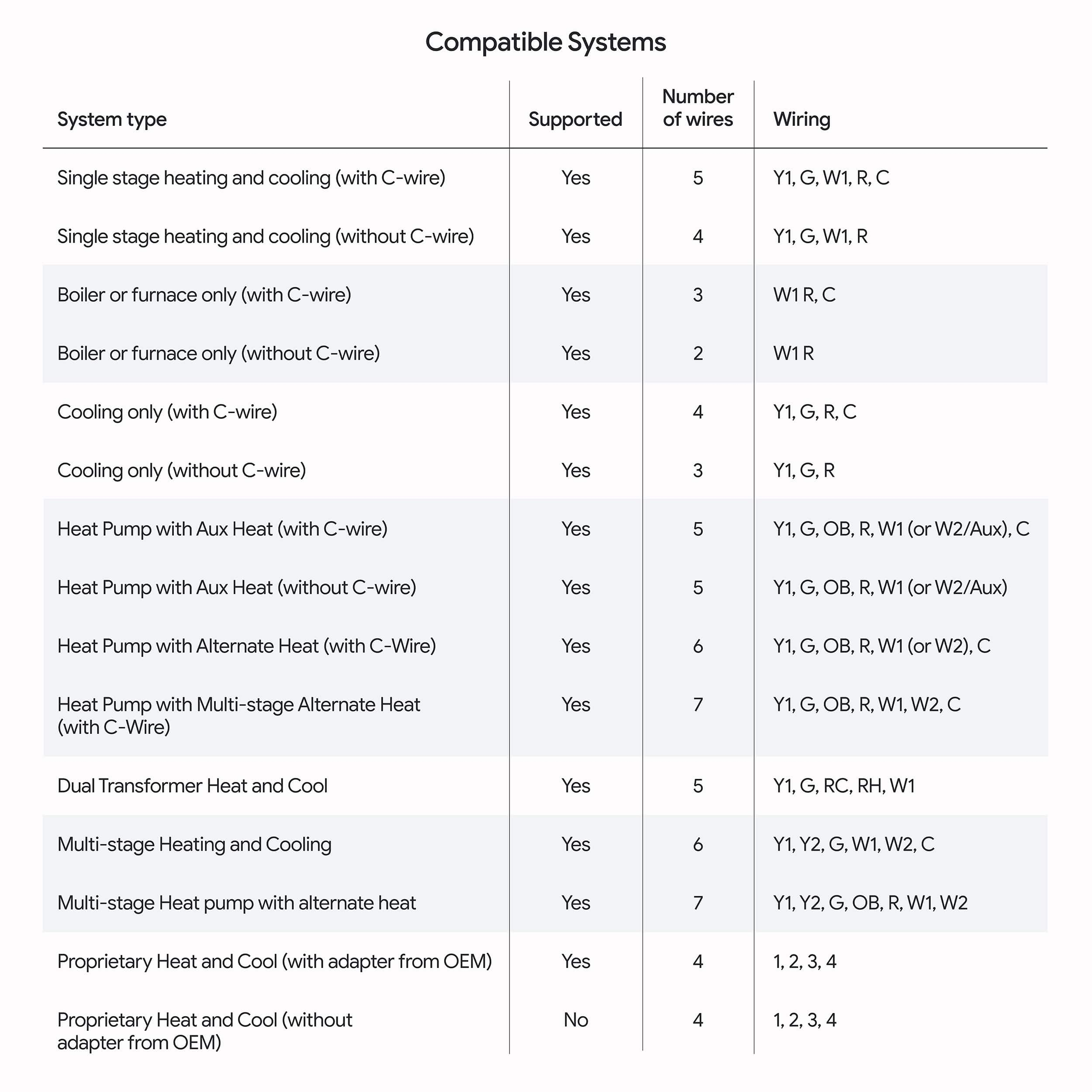
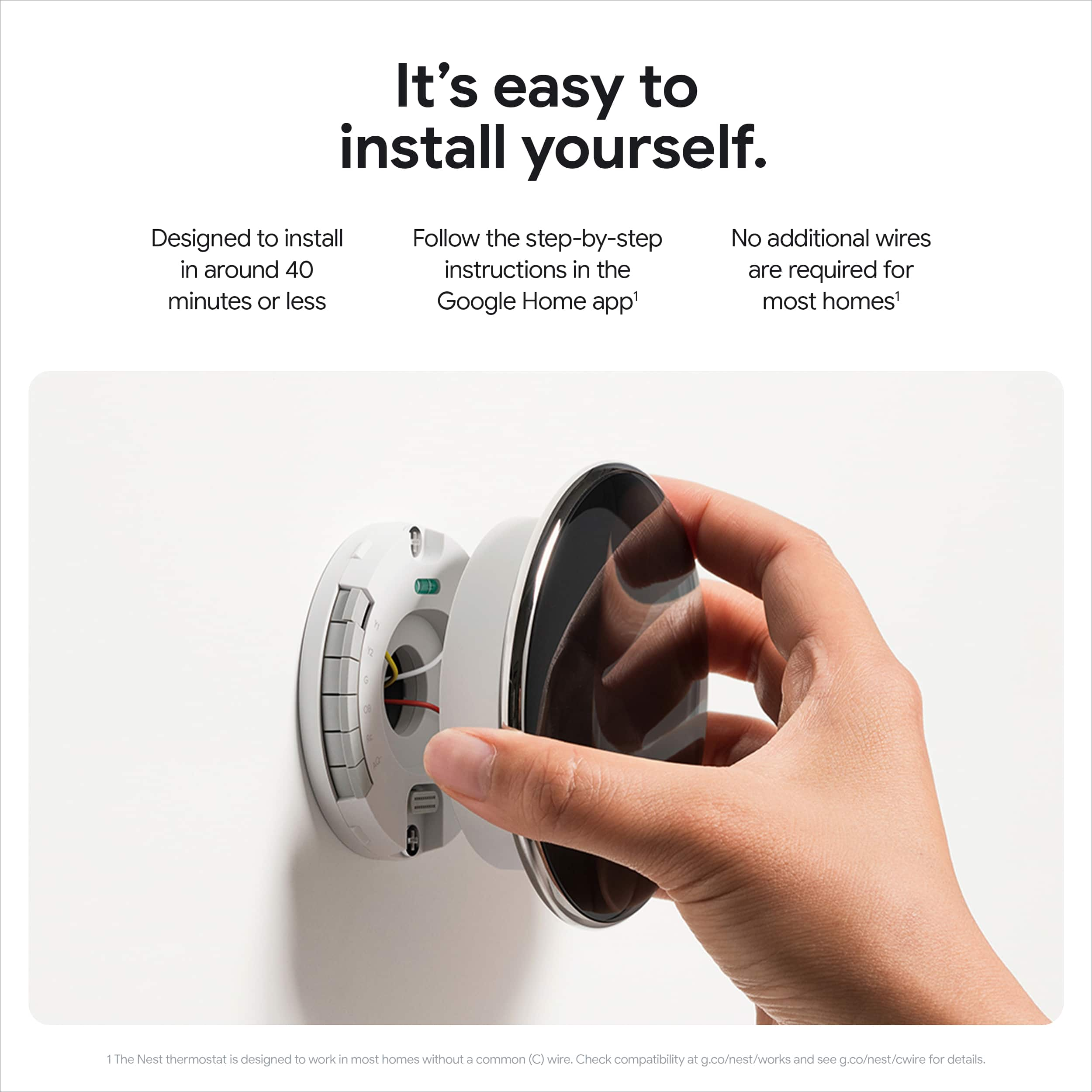
|Posted .This reviewer received promo considerations or sweepstakes entry for writing a review.The Google Nest 4th Edition Learning Thermostat feels like the next evolution for the design of the Nest thermostat. Upgrading to the Nest from a traditional thermostat was relatively easy. I have used Nest thermostats in the past, but this is my first time to own. The insights and ability to coordinate my thermostat with a sensor in another room is great. Unfortunately, it will take some time to see if the learning and ECO features translate to a lower utility bill but based purely on my experience over the last few days, I am impressed. Installation: Inside the box, you get both the front and back half of the thermostat, a remote sensor, a junction box mounting plate, and a face plate to cover up the holes from an existing installation. Google also includes screws for drywall and electrical box mounting. Google has a Nest thermostat compatibility checker. If you search for “Google Nest thermostat compatibility checker,” you can locate the checker easily. You go to the website and, based on your current wire hookup, Google will tell you if your existing set up is compatible or not with the Nest Learning Thermostat. It is all very straightforward, but I would recommend checking out the site and as I discovered I needed an electrician to get things squared away before I could install the thermostat. The wiring looked fine based on the compatibility check, but prior owners had the house wired a bit oddly with a no longer present security system. When it comes to physically installing the thermostat, Google has the mounting brackets on the top and bottom of the Nest. I appreciated that as the prior thermostat attached on the left and right. Inserting the cables is easy. You just press on the release and insert the cable. Google will verify that all cables are attached during the app set up process. There is even a small LED light, and a bubble leveler built into the back of the thermostat to aid in installation. If you currently have a jumper for the RC to RH on your thermostat, you should note that you will not use an external wire or metal jumper. The Nest has that feature built-in to the thermostat itself. Once all wiring issues were sorted, physical installation was painless. Except, I will say that if you are installing directly onto drywall, you need to invest in drywall anchors. I do not know why Google did not include drywall anchors as the screws simply did not hold during my installation. And because you are physically turning a large dial to change the thermostat, you need the device to be as secure to the wall as possible. Experience: To finalize setup, you will need to use the Google Home app. Google has included Linked Matter support with the thermostat, but, as far as I can tell, you still need the Google Home app to complete set up. I tried adding the thermostat via the Nest app, but I had no luck. Set up was easy. This is a Wi-Fi device. Adding the thermostat to my smart home via Alexa or Google Home was obviously amazingly simple. It is great to be able to access the thermostat from Alexa devices. My house is primarily using Google and Alexa devices, but the Matter support for Apple is a nice addition. The Thermostat has a humidity helper function. Smart features all the thermostat to use outside air as opposed to the AC to cool the house. The interface is very sharp and clean. The dial works well (when properly secured.) My wife and I want to make sure that the baby’s room stays at a certain temperature. The remote sensor allows us to run the thermostat to get temperatures right for that room. You can also use the remote sensor as a way of closing and redirecting vents to establish the best way to keep temperatures even across the house. Conclusion: I really like the Nest 4th Generation. Most of my installation struggles were unique to my set up. But assuming everything is wired properly, it is extremely easy to install the thermostat. My only nitpick is that I wish Google had included drywall anchors as they are necessary for a secure installation. But beyond that, if you currently do not have a smart thermostat or if you are thinking about upgrading from an older model, I think the current 4th generation Google Nest is worthy of the upgrade. I look forward to the insights (and hopefully lower utility bills) in the months to come. 4.5/5
I would recommend this to a friendLooks great, it is efficient and smart.
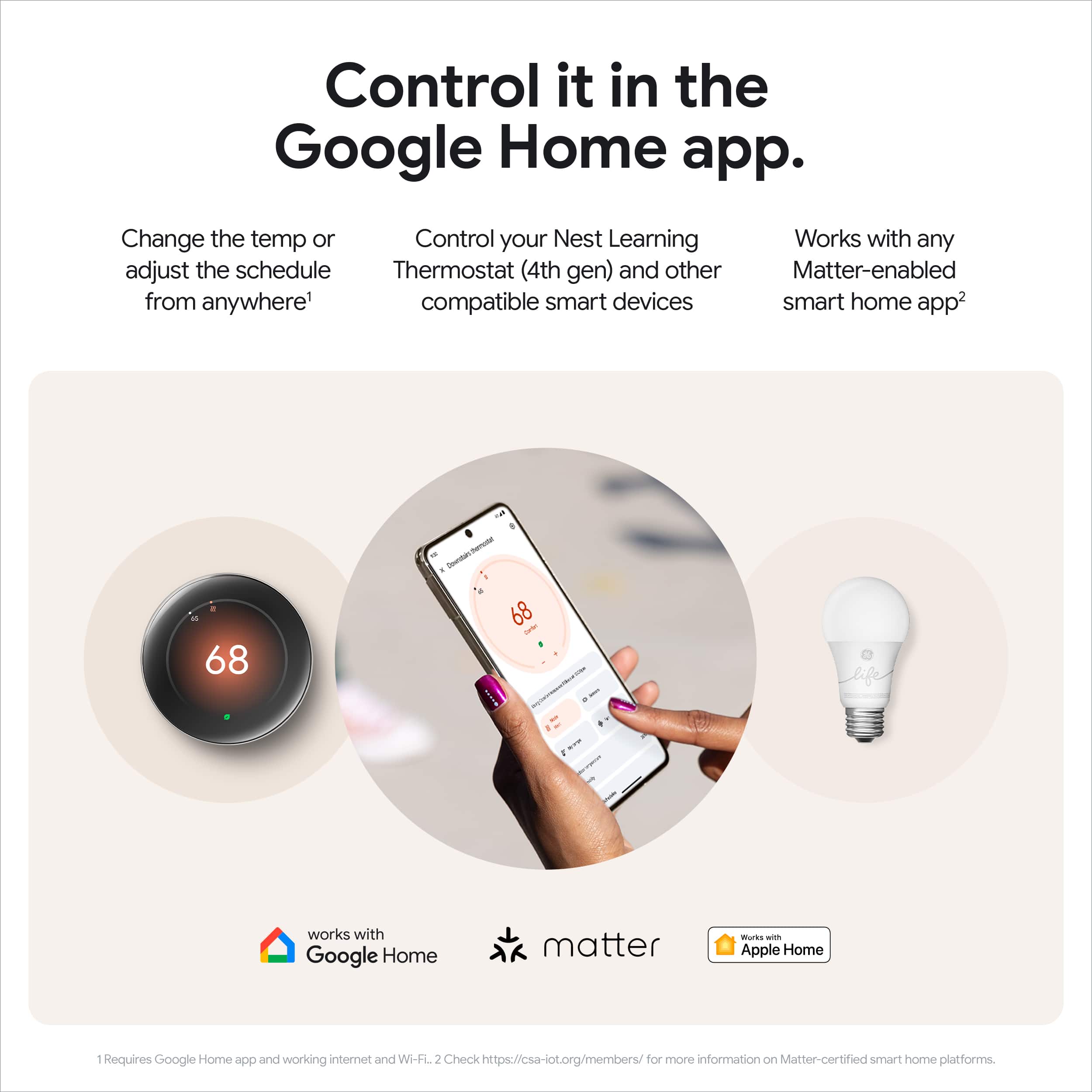
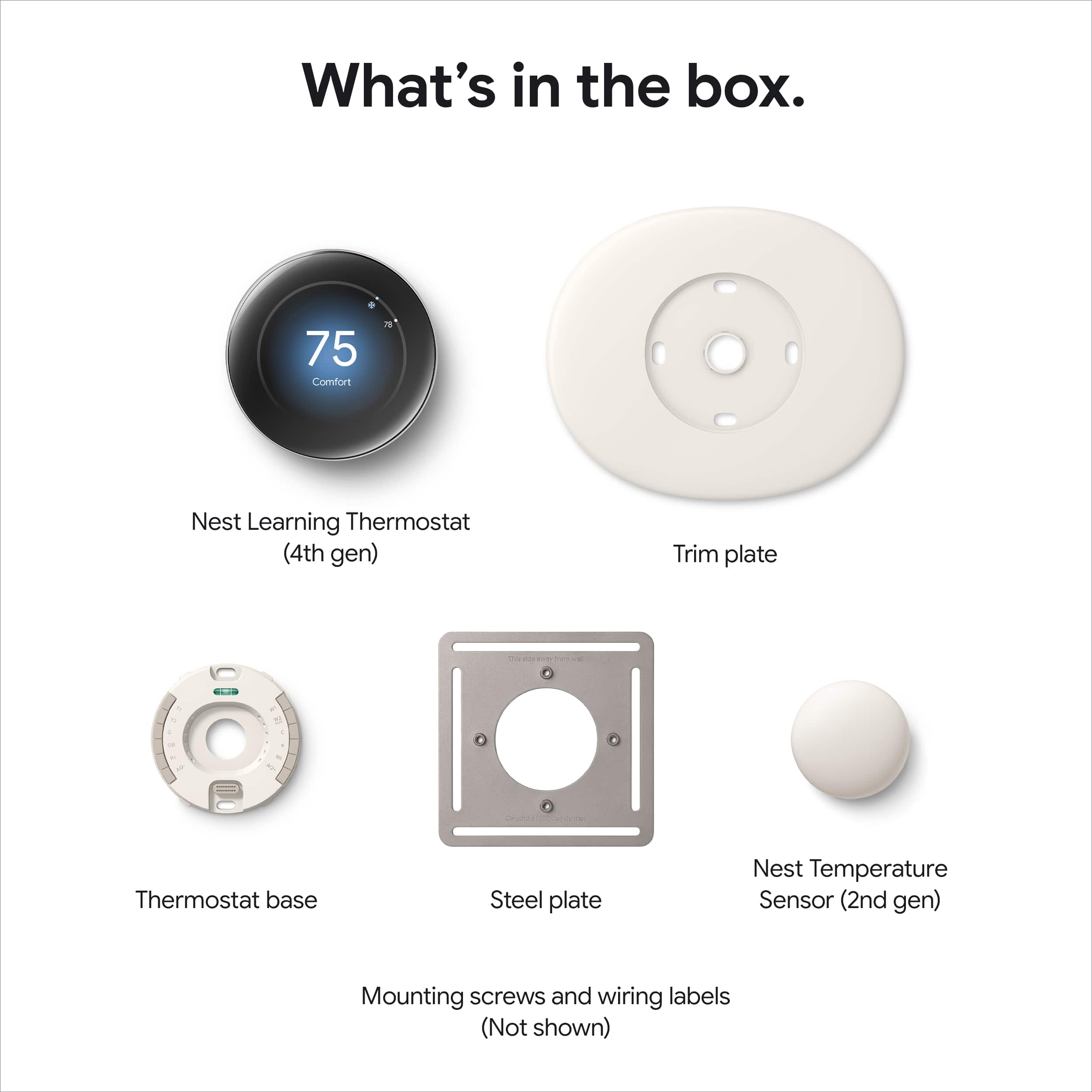
|Posted .This reviewer received promo considerations or sweepstakes entry for writing a review.The Google Nest Learning Thermostat (4th Gen) is a smart thermostat designed to optimize our home's heating and cooling efficiency. It comes with the Nest Temperature Sensor (2nd Gen), and together they offer precise temperature control in different rooms, ensuring comfort throughout our home. Right out of the box, it looks modern, clean, and sleek with a premium feel. It comes with the Thermostat display, the base, trim plate, steel plate, hardware and the sensor, all well packaged. The installation is easy and the application helps out a lot, I completed both the installation and setup fast. The polished silver finish of the thermostat adds a sleek, modern touch to any home decor. The device has a circular liquid crystal display that looks fantastic it offers a nice resolution, and it provides clear and vivid visuals. It has a premium feel and quality, and the design is both functional and attractive. We really like the smart learning function; the thermostat learns our schedule and preferences, so this information automatically adjusts the temperature to suit our needs. Over time, it becomes more efficient, helping us save on energy bills. This ends up with energy savings and lowering our costs. As for the included Nest Temperature Sensor, it helps manage hot and cold spots in our home by placing it in any room, for us is the master bedroom because it is on the second floor so the temperature is different than the first floor. This ensures that the temperature is just right where we need it most not just where the thermostat is installed. I also like how I can control the thermostat from my phone, and from time to time I can check to make sure it’s working properly and efficiently. And it works with Android, Apple iOS, Mac, Windows so we are covered. Also having Google Assistant as well as Amazon Alexa to control the thermostat is also helpful; we do not need to look for our phones to make changes or control the temperature at all. Overall, the Google Nest Learning Thermostat (4th Gen) with the Nest Temperature Sensor (2nd Gen) has been the best choice to keep in our home. It is also energy efficient, has smart features and with a clean and attractive design it is ideal for our and many homes.
I would recommend this to a friendAfter upgrade of Gen 3: more style than substance
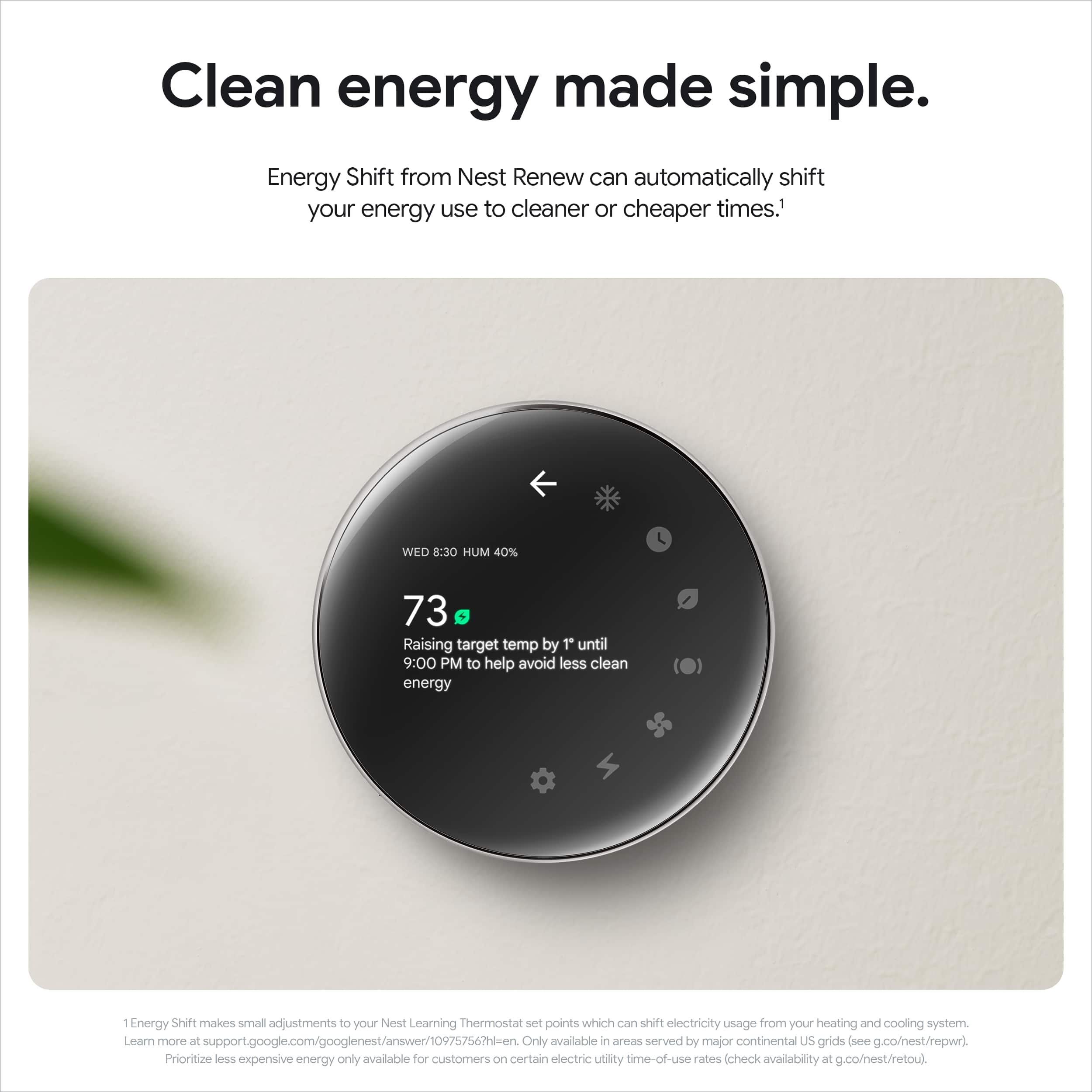
|Posted .This reviewer received promo considerations or sweepstakes entry for writing a review.Should you buy this? YES: if you want a newer styling, If you want a larger display with futuristic appearance, and no large bezel occupying a lot of the face. If you are willing to pay a premium over prior models, for the addition of an included remote temperature sensor (previously available only as an accessory at additional cost) and the potential of Google AI rolling out improvements over the years for more features and capacities. If you have a robust system, with heating/cooling/ventilation and perhaps newer products such as heat pumps and devices that are triggered by external air quality or humidity. NO: If you already own an earlier generation Nest thermostat, and are pleased with its performance. There are no major new functionalities or features with this new generation, which is the first upgrade since 2015. A thermostat is pretty much a one trick pony, but there are nuances. If you prefer the classic Nest app. This generation requires the use of Google Home app for remote control of the thermostat. If you have older Nest products, you might be using two apps to control virtually identical products. However, voice control through a Google speaker/hub will control both equally well. Thinking back over my years of using Nest Learning Thermostats, first with Gen 1 and then upgrading to Gen 3 about 3 years ago, once we set the daily settings for desired temperatures through the days of the week and times we were home versus at work, we really didn't change the settings much at all. Honestly the only adjustment I would make would be occasionally to turn on the “Eco” mode. You would manually activate Eco mode either at home or via the Nest app from afar. This mode would drop your heat to a pre-chosen minimum temperature. For example, going on vacation, we would turn the heat down to 52 degrees. After spending a week away, upon our return, I would use my mobile phone to cancel Eco, as we landed at the airport. Then upon arriving home, it had warmed up from the energy-saving lower temp that it had been for the time while away. The Gen 4 Learning Thermostat appears to be more style than substance in its changes. Certainly the new device has a much sleeker, almost futuristic appearance; it seems to float off the wall.The gold tone is quite modern and goes well with the drawer and cabinet pulls in the kitchen where the thermostat is mounted. The display is larger, having lost the 1 cm bezel around the display edge. The packaging was nicely conceived without any plastic; all recyclable. The Gen 4, like many recent Google hardware products, has incorporated Matter into its hardware. So theoretically it can be voice controlled by not just Google devices, but also Apple’s Siri, Amazon’s Alexa, Samsung’s Smart Things devices, etc. Installation was quite easy; it took about 10 minutes. Having a Gen 3, the holes in the wall were already in place. The backplate was a different shape, so some paint touch up of the wall will be needed. The mounting plate screwed to the wall is a smaller size and has 2 additional wires, so you cannot just click the Gen 4 onto a Gen 3 wall plate. But the screw holes were identically spaced, so no new holes needed to be drilled. Quoting the Google web page here, the 2 extra ports on the mounting plate are needed “to work with humidifier, dehumidifier, and ventilation systems - expanding compatibility. If you have a ventilation system, you can use Smart Ventilation, which helps bring in air if temperatures are mild and outdoor air quality is healthy. If outdoor air quality is unhealthy, the system will pause bringing in outdoor air”. Our home does not have integral humidifier/dehumidifier or a separate ventilation system. We use the ancient method of opening some windows. The basement has a separate dehumidifier, quite necessary in New England basements in the summer to keep the musty mold in check. The Nest Thermostat is capable of handling a broad array of different heating/cooling systems, which you select through the set up process in the app. Our simple system is winter heat only, via natural gas. No GeoThermal or heat pumps to integrate. Since I am writing this in August, we are months away from actually turning the Nest thermostat on. For control and management via your cell phone, the Gen 4 does not use the Nest app, and must be activated by the Google Home app. So now, with one Gen 3 and one Gen 4, I have to use separate apps to control the devices individually. To add the thermostat to the GH app, you use the + sign to add a device. Then you are presented with 3 choices: 1) a Matter-enabled device, 2) a Google Nest device, or 3) a “Works with Google Home” device. I was in a bit of quandary as to whether I should choose choice 1 or 2, as both were true about the thermostat. It seems either choice could work, and I chose NOT to set it up as a Matter device, not just yet. Adding the thermostat to Apple’s HomeKit app, as a Matter compliant device, was quite easy. This could well have been related to the fact that I am a user of the Starling Hub, which is a wonderful enabler of Nest products for use in an Apple centric home. Now I can control both thermostats with Siri, using voice via your device of choice: Home Pod, iPhone, AppleWatch, or Macintosh computer. The Matter enabled choices in the Apple HomeKit app, however, seem somewhat limited: turn the heat or A/C on/off, set a temperature, control the use of the remote temp sensor (see below), and that’s about it. So not a robust skill set, but really all the major fundamentals. Indoor humidity, ventilation systems, and scheduling are not available via the Matter control on HomeKit; so for fine tuning you need the Google Home app. Google states that Gemini AI will learn your heating/cooling preferences and make automatic fine tuning of the settings to optimize your comfort, lessen your energy usage and therefore utility costs, and integrate your presence in the home to know when you are home and when the home is vacant. So no more manual setting of the Eco mode; the AI knows when you are not home. Your presence is determined by motion sensors is various Google/Nest products: smoke alarms, motion detection in Home Hub Max, in home surveillance cameras with motion detectors, etc. Once the system notes that no one is home, Eco mode automatically switches on, rather than it being something the owner needs to activate. Similarly it switches off from Eco when you return (although returning to a cold house). All the prior thermostats were billed as Learning Thermostat with the sole exception of the introduction of the Google Nest Thermostat (notice the absence of the word Learning). The learning capacity really served as a functional AI algorithm, and is built into 23 years of Nest Learning Thermostat’s history. Perhaps there will be new, more robust features as AI unfolds. But the history of the Nest Thermostat has been really that the features that exist when you buy it, are all you should expect for as long as you own it. There is not a previous heritage of firmware updates or system upgrades of installed devices being rolled out to owners. In checking my installed Gen 3 Nest thermostat, it was last updated May 2022, 2 years 3 months ago. By my recollection that was about when I bought it. So no software updates, firmware changes, or new features added in that time. I have not had any personal experience with other brands of smart thermostats, so cannot speak to deficiencies or benefits of one brand over another. I would direct such concerns to reviews from third party sources. With this unit, you can choose between different faces that appear upon close proximity to the device, so called Near Sight: time display, a clock face, current weather outside, or reading of indoor temp and humidity. Again style tweaks, but not a major function improvement. The other new hardware, included in the box, is the Nest Temperature Sensor (2nd gen). It is essentially the same as the 1st gen, just redesigned to better match the Gen 4’s appearance. It looks like a smoothed stone found on the beach, and can be hung from the wall or placed onto a shelf or piece of furniture. Its primary job is to feed a remote room's temperature to the thermostat for altering the house's heat depending on which room you tend to be in during that time of the day. Of course, given the zones your heating system has, it cannot control one room separately from an adjacent room, you just get to select which room is calling the shots at which time. Google/Nest also has an optional program called Nest Renew; to support customers who are concerned about climate change and the role of home heating/cooling in the deteriorating climate. I signed up for that program when it rolled out about a year or two ago. As stated in the Google web page: “Once you enroll in Nest Renew, your thermostat can automatically make small adjustments that shift energy use to cleaner and less expensive times. These adjustments are small but add up — contributing to a more reliable and efficient energy grid while lowering household energy bills at the same time.” I check in the web page of nestrenew.google.com regularly and it gives me a local feed as to whether I should hold off on running the dishwasher (for example) right now, and instead run it later when the electricity generation is less utilizing fossil fuels. So in summary, it is a time tested, reliable product. It is not the cheapest smart thermostat, and most of the functions are available in models from other manufacturers. But the styling is striking, and the promise of future updates and features from Gemini AI integration are tantalizing, but cannot be guaranteed to develop.
I would recommend this to a friendA great solution which will save you cash!
|Posted .This reviewer received promo considerations or sweepstakes entry for writing a review.In the world of home automation, few devices have trended as effectively as the Google Nest Learning Thermostat, especially when paired with the Nest Temperature Sensor. After using this dynamic duo in my home, I can confidently say it stands out for its thoughtful design, intuitive features, and overall performance. Installation Made Easy For those with a bit of handyman skills, installation is a breeze. The package comes equipped with all the necessary hardware and, frankly, a user-friendly guided installation that walks you through each step. For someone who knows little about HVAC systems, the initial setup might feel overwhelming at first, but the clear instructions and visually appealing interface help cushion that learning curve. Smart Learning Capability One of the most impressive features of the Nest thermostat is its ability to learn your habits. After just a few days of use, the thermostat begins to adjust the temperature according to your settings at specific times, making it a seamless part of your daily routine. This kind of adaptability is not just a convenience—it’s a true energy saver. Once it got acquainted with my schedule, I noticed a marked decrease in my energy bills, all while maintaining a cozy home environment. User-Friendly Interface The interface of the thermostat is incredibly well-designed. The sleek outer ring allows for easy rotation to adjust the temperature on the fly, which is a fantastic touch. Additionally, it displays a wealth of information—including time, weather, and more—which keeps you informed at a glance. Coupling this with the Google Home app accessibility—where you can adjust settings on the go—makes for a comprehensive control system that integrates beautifully with my existing Google Nest devices. Temperature Sensor: The Nest Temperature Sensor (2nd Gen) is a fantastic addition that really extends the capabilities of the thermostat. However, it’s essential to install the sensor at an appropriate distance from the thermostat, allowing sufficient communication without interference. This installation aspect does involve a bit of trial and error; I found that experimenting with various placements yielded the best results. Once in place, the sensor complements the thermostat's efforts exceptionally well. Performance The performance of the thermostat is nothing short of impressive. It artfully balances temperatures throughout my home, ensuring a comfortable atmosphere without overburdening the AC. There’s a noticeable ease with which it maintains climate control, efficiently managing the temperature without the air conditioning running non-stop. It’s a marvel of engineering that showcases how technology can elevate everyday living. Final Thoughts In conclusion, the Google Nest Learning Thermostat (4th Gen) alongside the Nest Temperature Sensor (2nd Gen) deserves nothing less than an 11/10. It embodies the perfect mix of art and science, with user-oriented smart technology that enhances comfort and efficiency in the home. Whether you’re a tech aficionado or a casual user, this thermostat sets a new standard in home climate control. Highly recommended!
I would recommend this to a friend