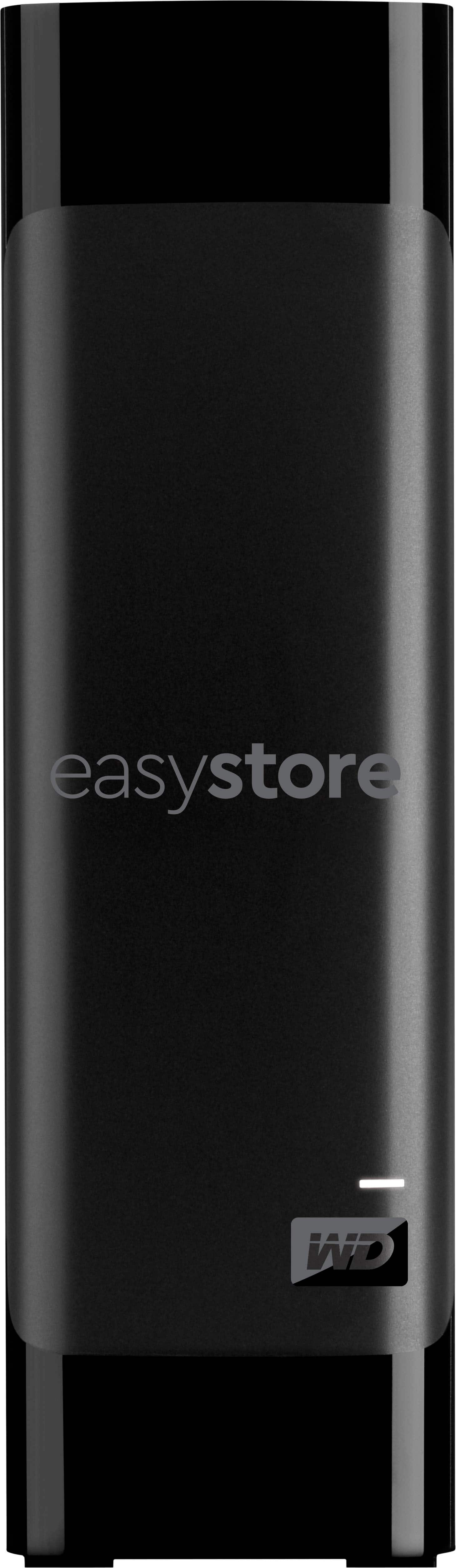
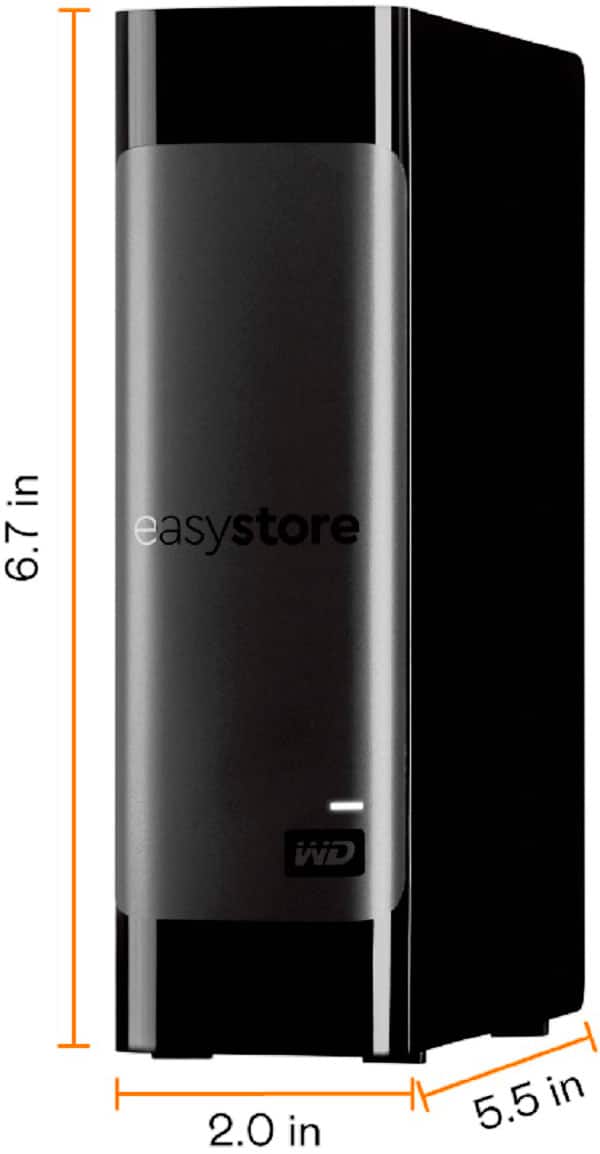
A:Answer The prefixes kilo, mega, giga, and tera technically mean one thousand (1,000), one million (1,000,000), one billion (1,000,000,000) and one trillion (1,000,000,000,000). Hard drive manufacturers use the terms in their literal sense. So a 20 TB drive will store 20,000,000,000,000 bytes and an 18 TB drive will store 18,000,000,000,000 bytes. But people who programmed long ago started using the term kilobyte to refer to small memory chips which had sizes that were 1,024 bytes in size. As the chips got to where they were 1,024x1,024 bytes (1,048,576 bytes), programmers called that a megabyte. The memory chips grew again and programmers casually referred to 1,024x1,024x1,024 bytes (1,073,741,824 bytes) as a gigabyte. Now 1,024x1,024x1,024x1,024 bytes (1,099,511,627,776 bytes) is casually referred to as a terabyte. 20,000,000,000,000 bytes (which is what the drive physically is) divided by 1,099,511,627,776 bytes (which is what programmers casually call a TB) =18.1899 TB. And 18,000,000,000,000 bytes divided by 1,099,511,627,776 = 16.37 TB. Hard drive manufacturers always use the literal meanings of the prefixes. Programmers frequently use the casual terms. Windows File Explorer, for example, uses the casual terms, but if you right click on a file name, then click "Properties," you can see the actual size in bytes. For example, I just looked at a pdf file that I downloaded earlier, and under SIze it says "305 KB (312,979 bytes)."