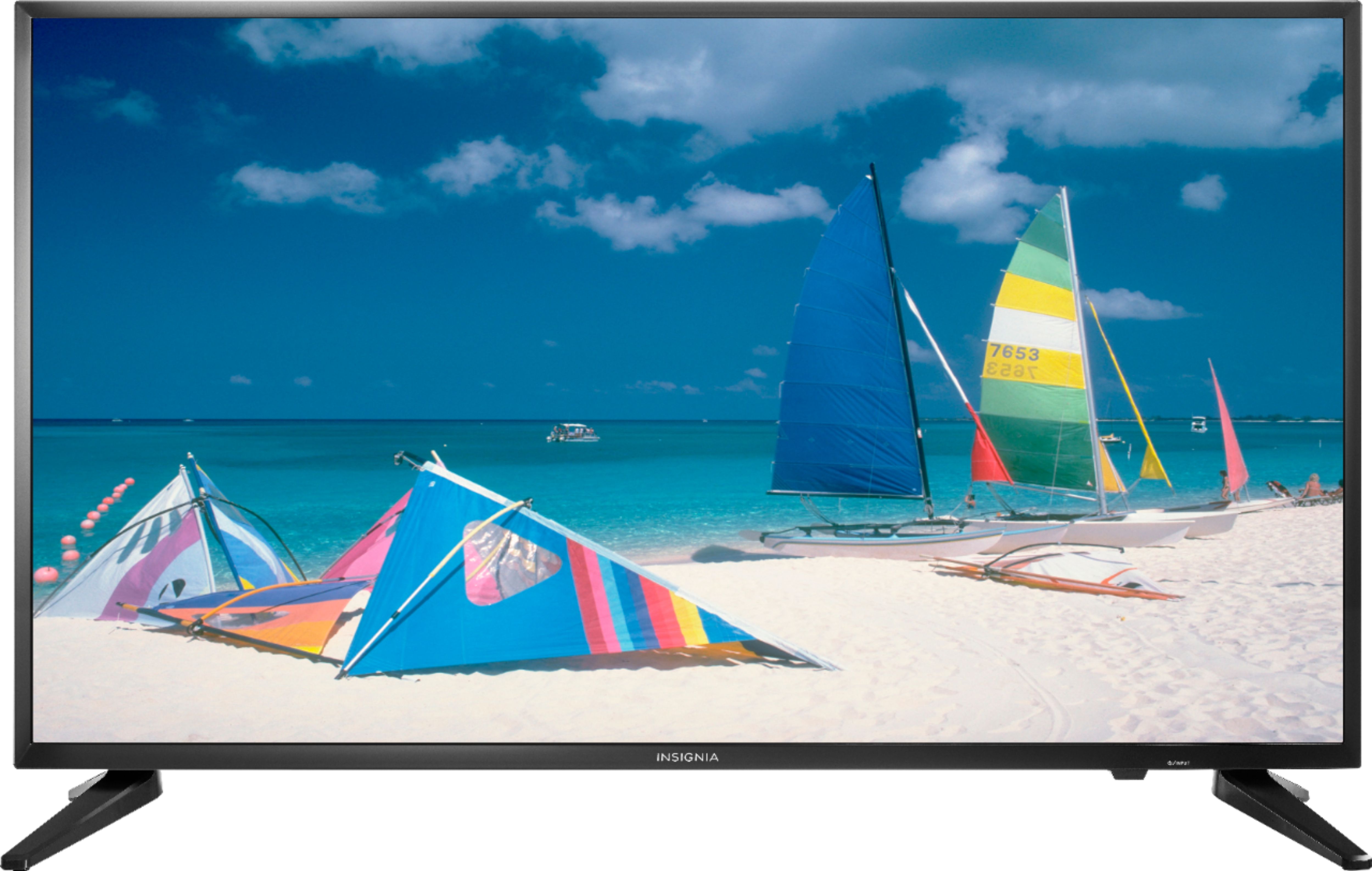
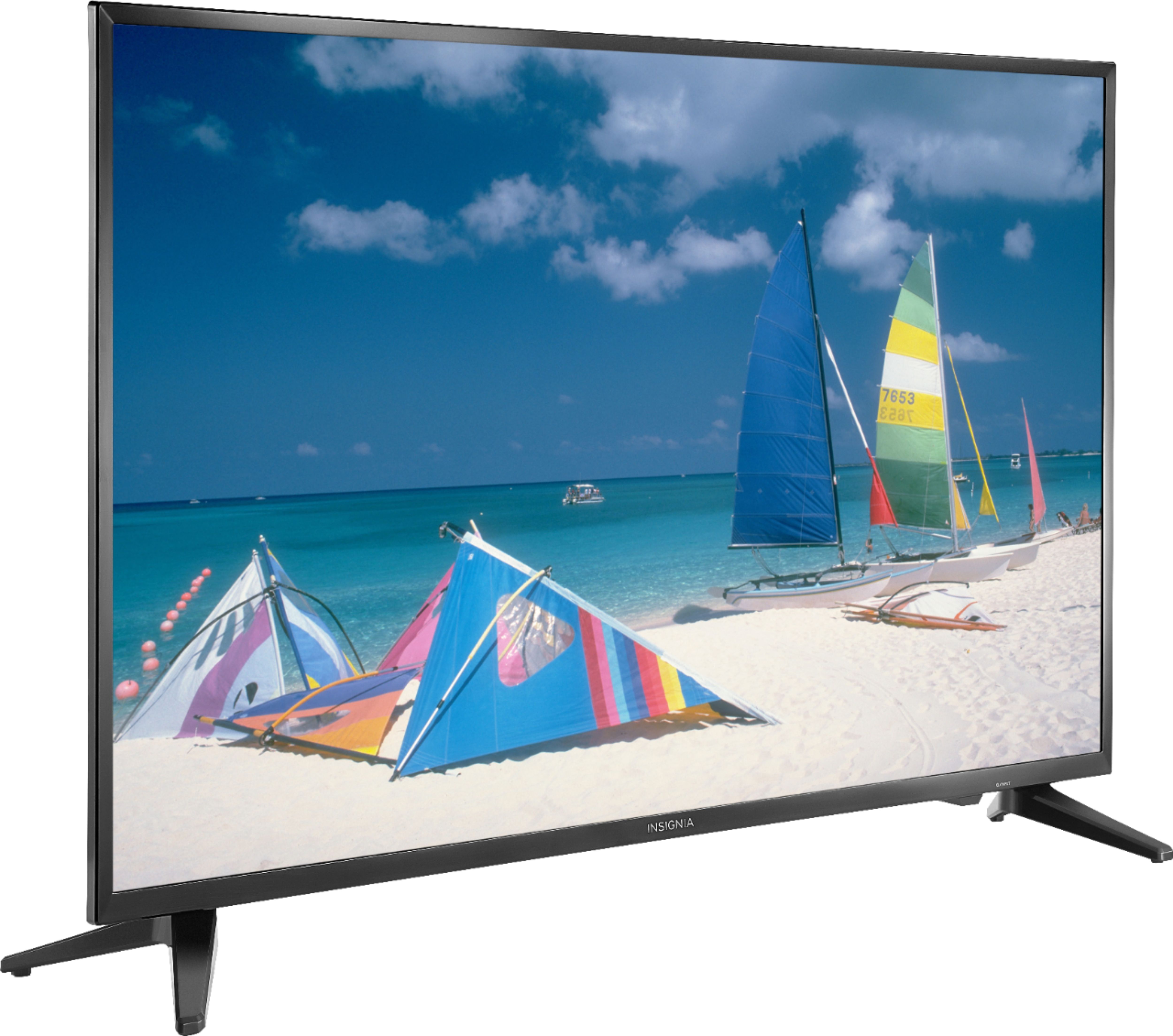
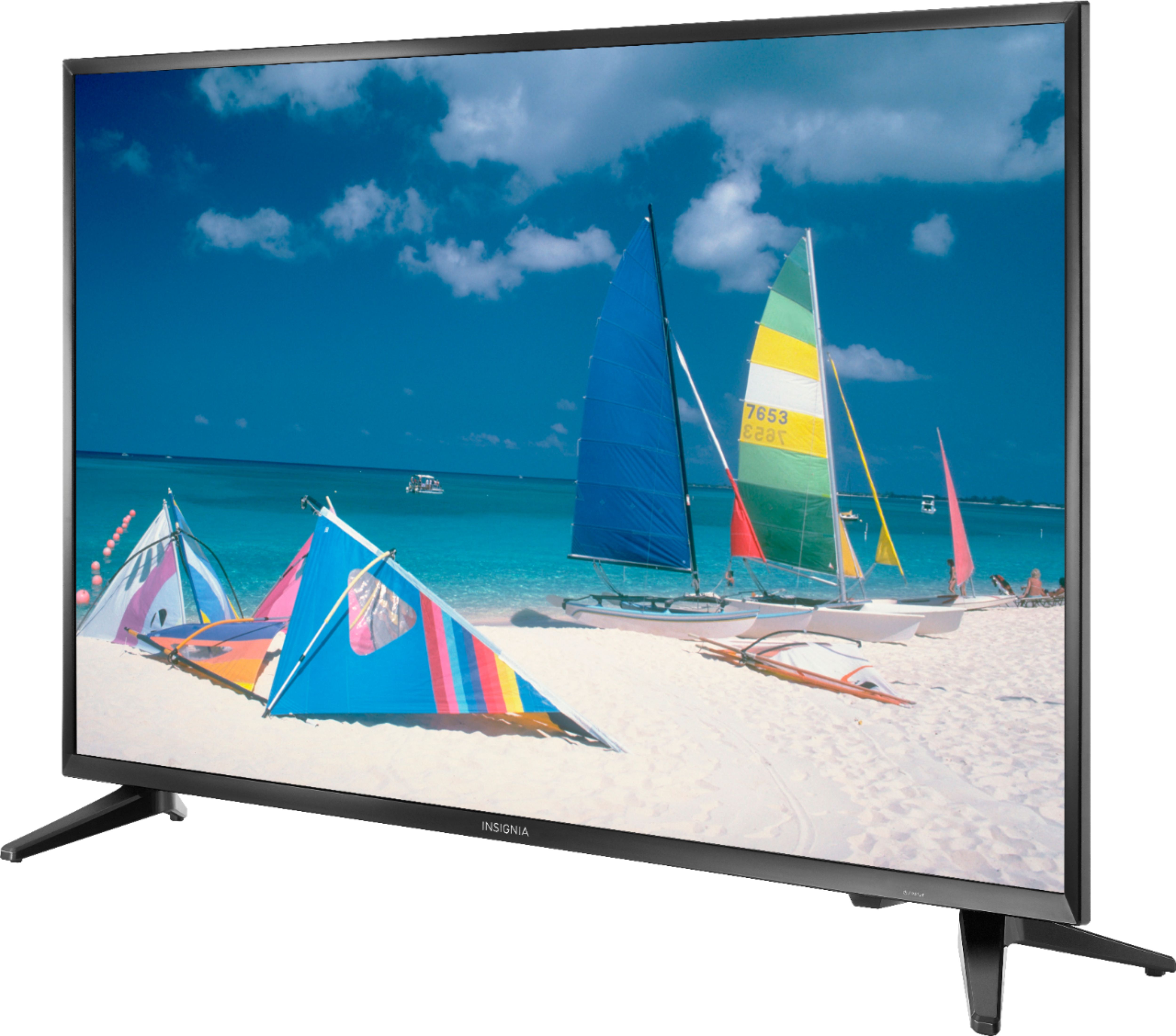
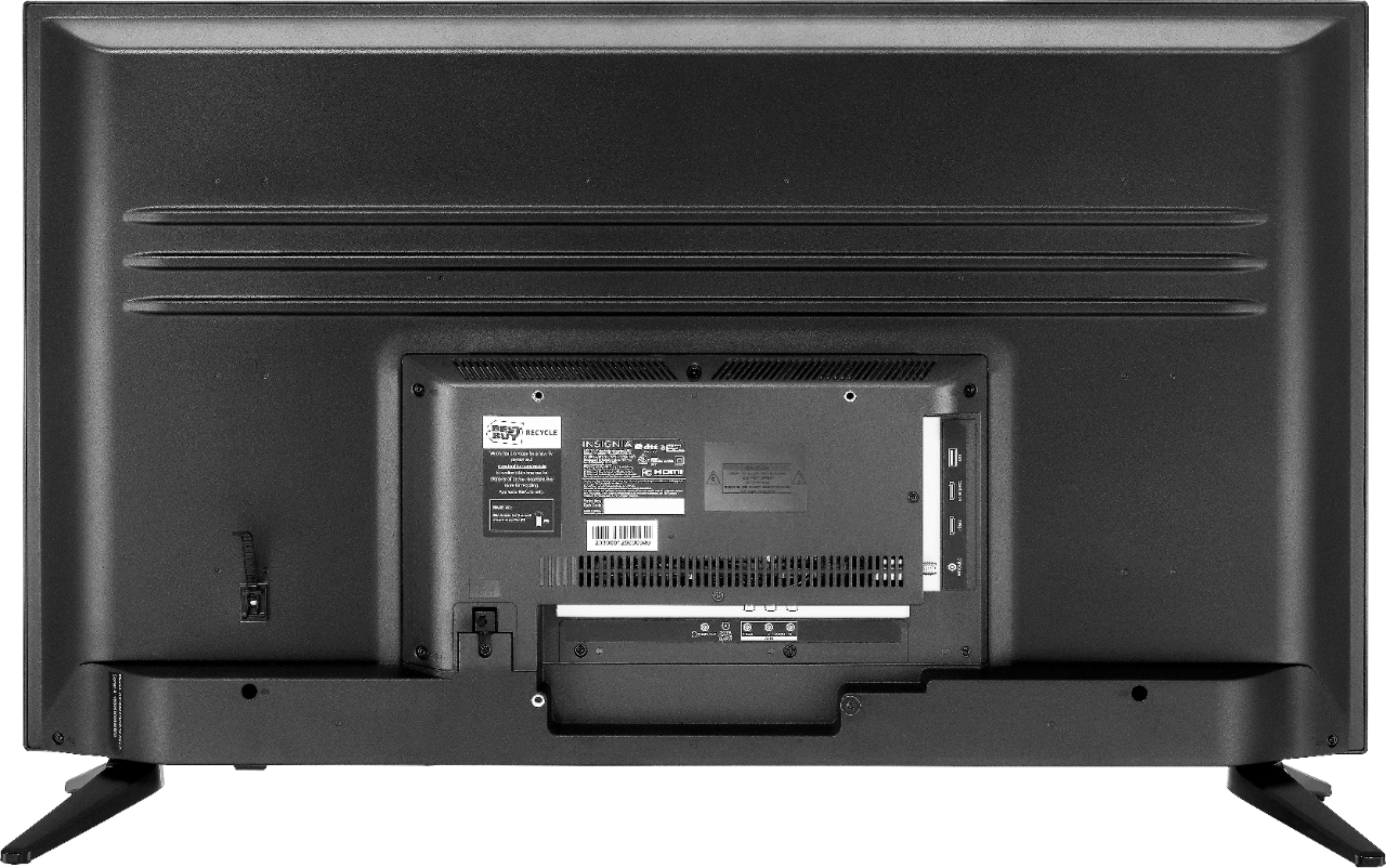
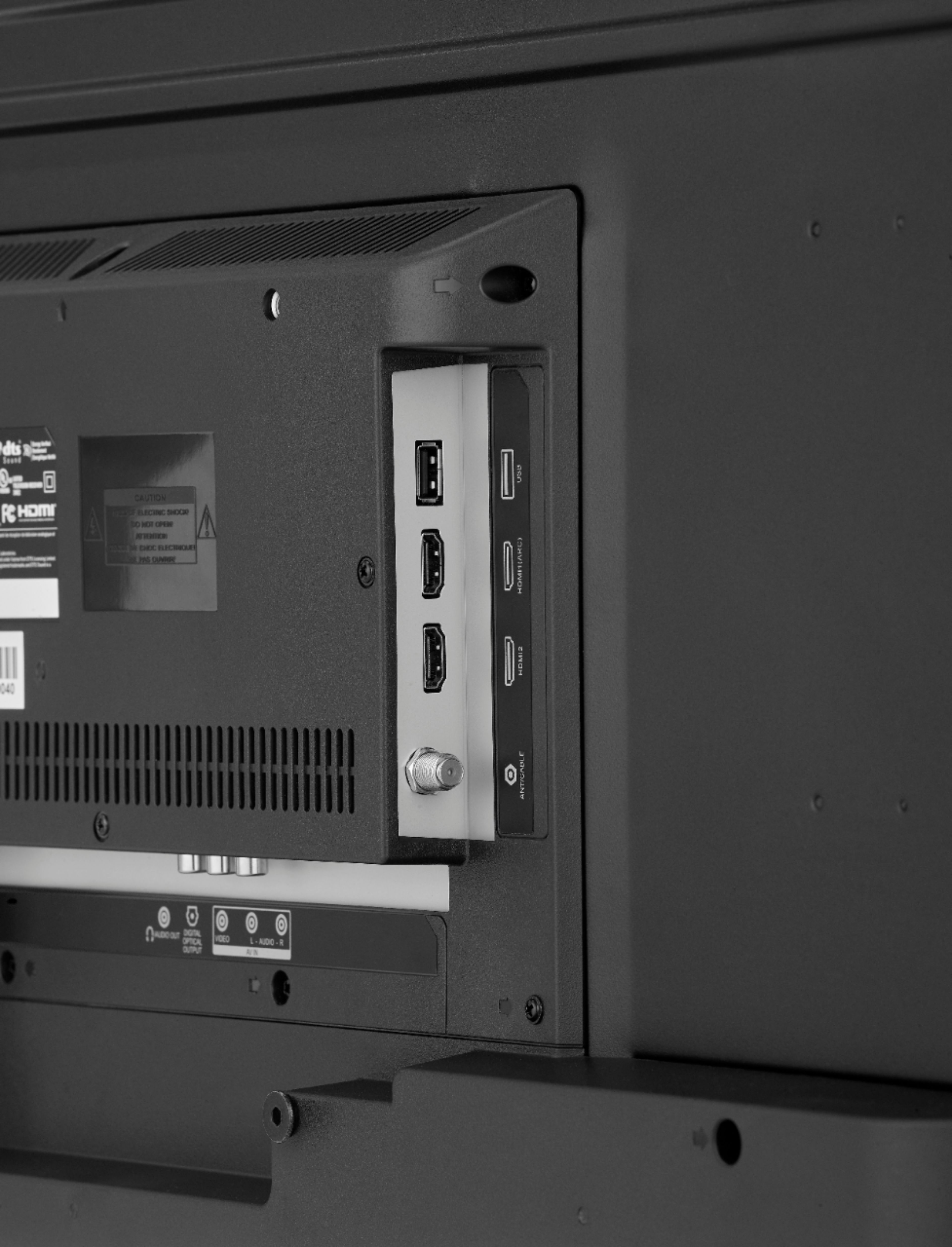
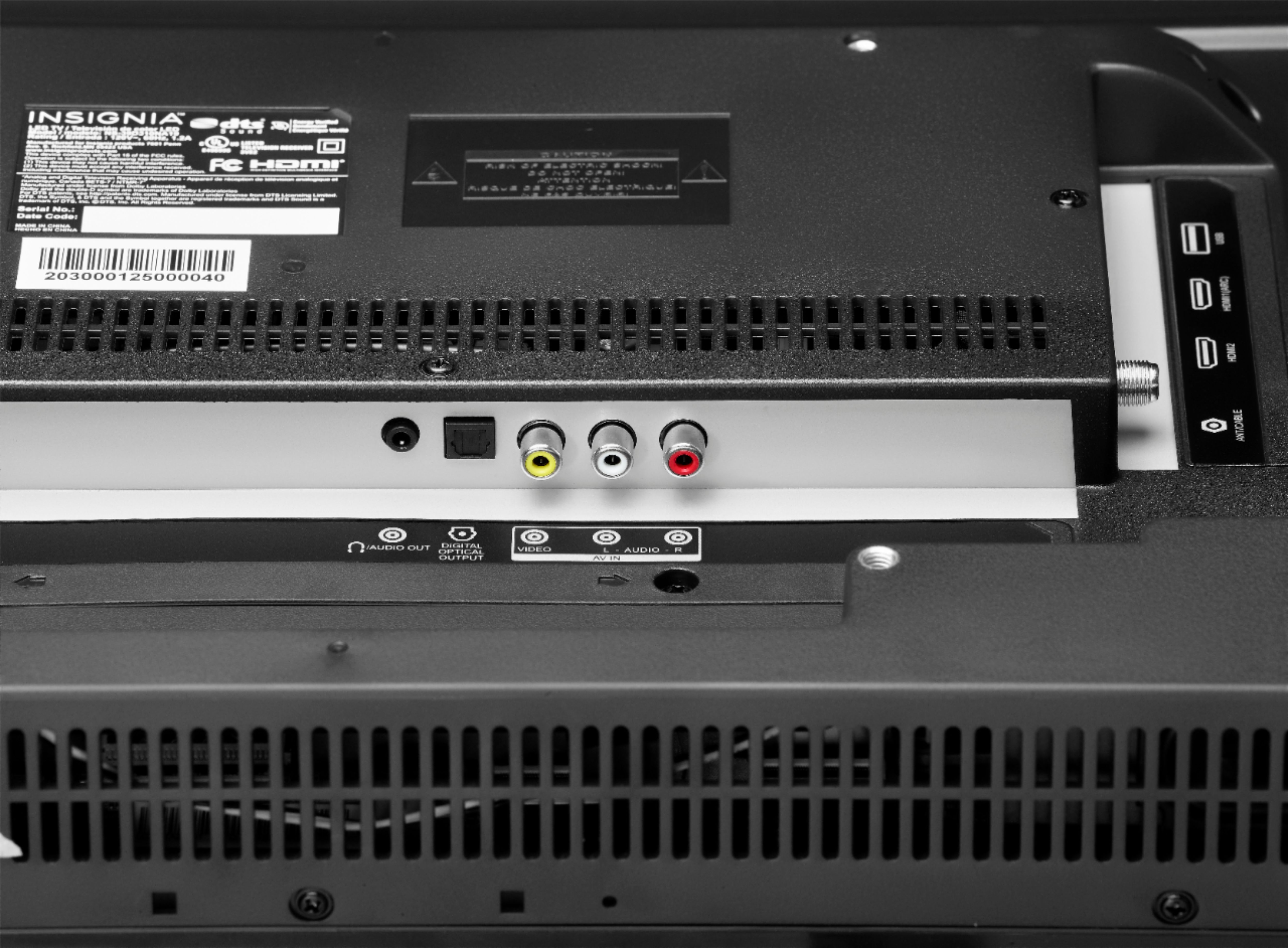
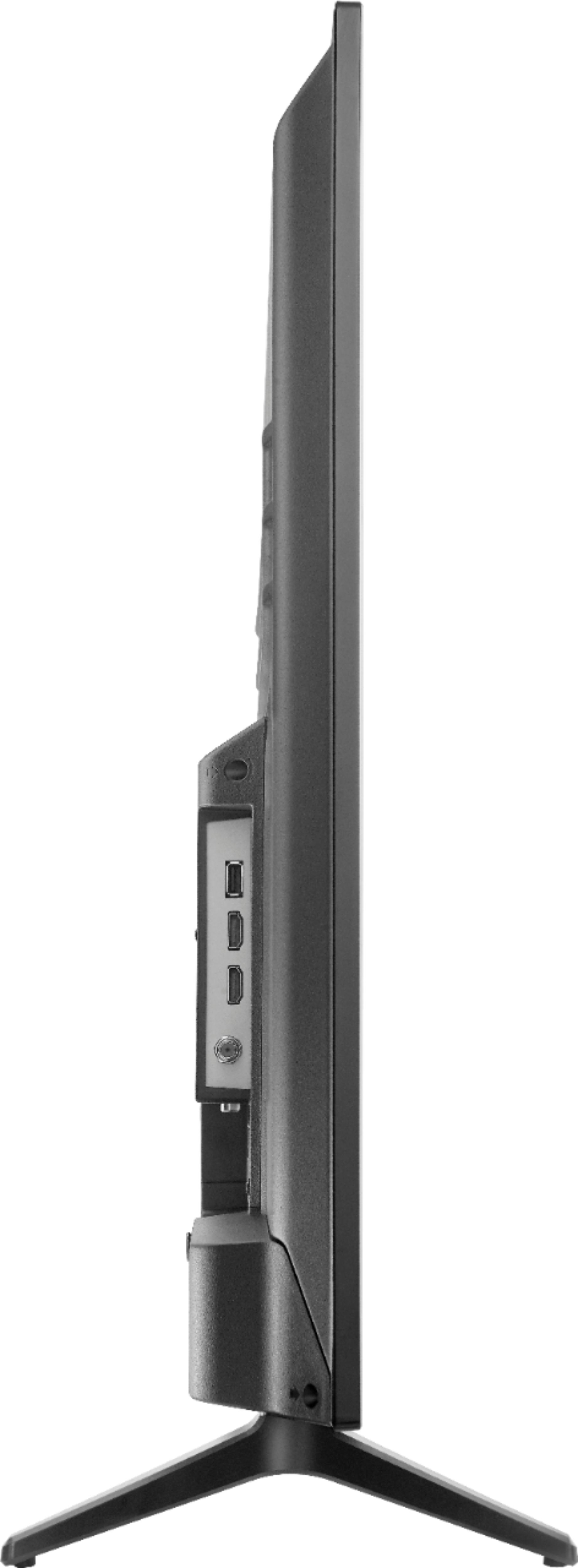
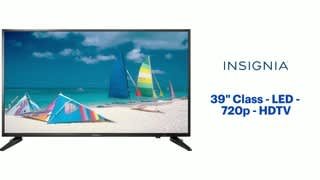
A:AnswerThey are not adjustable, they go all the way to the end of the TV, and distance you ask about is 2 inches exactly. You will need a TV stand no less than 34 inches long to accommodate the TV.
A:Answer720p (1280×720 px; also called HD Ready or standard HD) is a progressive HDTV signal format with 720 horizontal lines and an aspect ratio (AR) of 16:9, normally known as widescreen HDTV (1.78:1).
So, yes it is “HD” or “High Definition”
A:AnswerI connected to my Comcast cable and when I turned it on and used the remote that came with the set, only one channel worked even after I did a scan - then realized I had to use the Comcast Infinity controller to select channels. Remote that comes with TV will turn TV on/off, but if you're on cable, use the cable company's remote for channel changes.
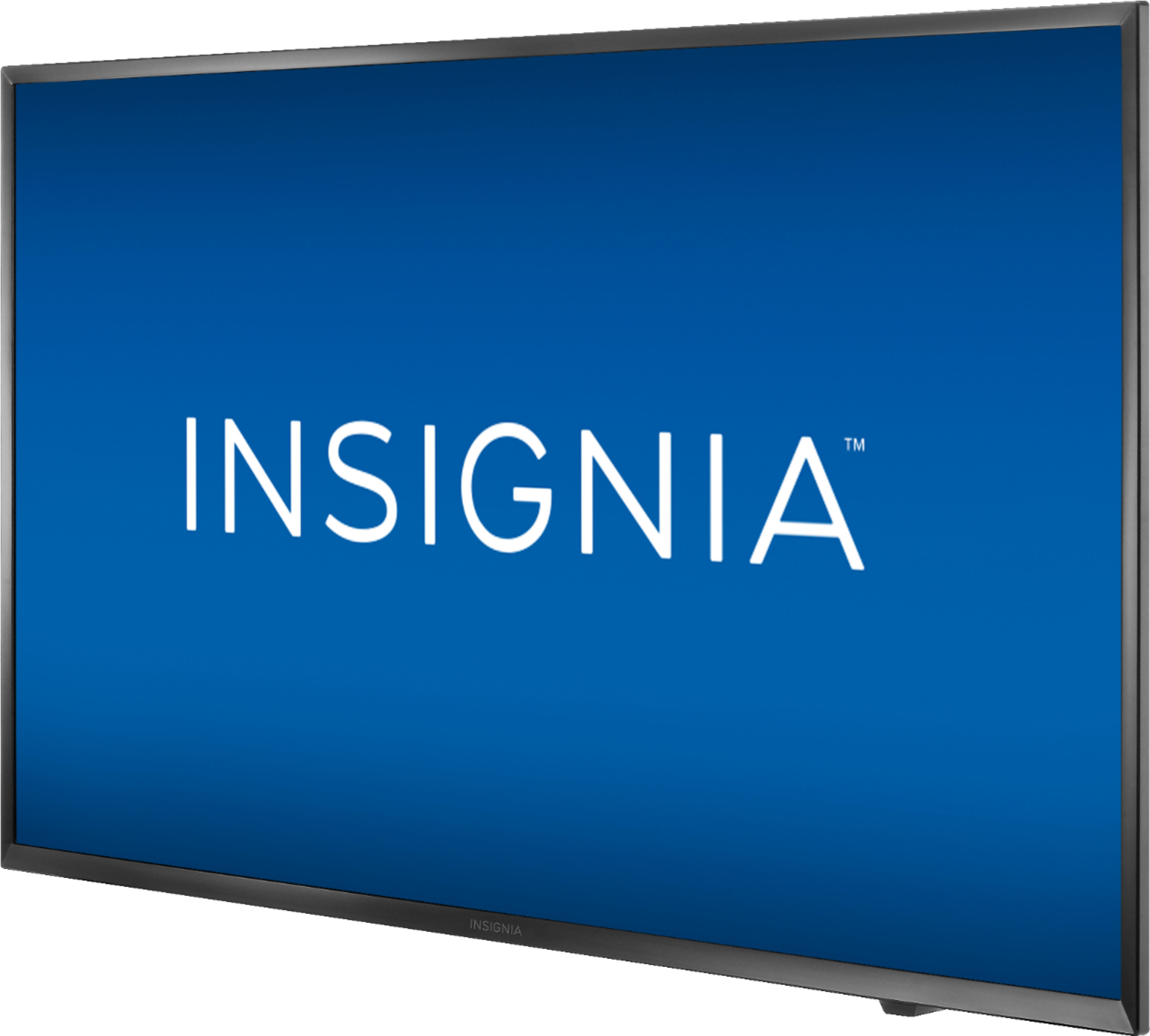
A:Answer1. It's kinda glossy, and will catch glare.
2. The viewing angle is 178°, so you can watch it from literally any angle in front of the TV. There is no loss in picture with increased viewing angle.
A:AnswerHi, Brian:
Glad to help with the NS-39D310NA19.
First off, you'll want to check the owner's manual for the product. It's on the internet, but per BestBuy site rules, I'm not sure I can post a link. Just search by the model number. The actual model number for the manual is NS-39D310NA15, if that helps, but it should have nearly identical specs.
In it, you'll find instructions on Maintenance(p. 72), including the recommended operating temperature, which is specified as 5 to 40 deg Celcius(or 41 to 104 degrees Fahrenheit), and storage temperature of 0 to 50 degrees Celcius(32 to 122 degrees Fahrenheit) . According to the manufacturer, keeping within these temperature limits will ensure a long life for the product. Also, on page 8, there is a note on condensation- which is what you are really concerned about where operating temperature is concerned- "Moisture will form on the TV if the TV is brought from cool surroundings into a warm room or if the temperature of the room rises suddenly. When this happens, the TV's performance may be impaired." Such a shift can also occur in an uncontrolled environment with rising temperatures throughout the day(from below to above freezing), as in your case. So you would want to eliminate scenarios where the temps change around the freezing point. If the NS-39D310NA19 is in an uncontrolled environment with respect to temperature/moisture(ie. if the humidity gets high), eliminating temp change might be hard to do. But if the display is in a place where the temp and humidity doesn't change(even if it is 20 degrees F), then you could be OK(eg. that's why the electronics in the dashboard of your car work fine, even in cold temps in winter.) Lower temps (without humidity) only serve to make the electronics more brittle(temporarily), not less reliable per se. Once the product is "turned on" and "warms up," it should be OK, in any case.
If you want more insight- from an electrical engineer(I am one)- the reason for this is that with moisture condensation, if it were to occur within the electronics of the TV, there is a chance that it could damage the circuit boards and components in the TV- and more importantly, the various electrical connections with either- creating spurious electrical paths(as one example), leading to performance degradation. The LCD display in a TV like this is especially susceptible. The electronic components that activate each of the pixels are small having three circuits(in the simplest case) to each to determine the color of the pixel(Red, Green, Blue), so in the worst case, if all the circuits of such a display are affected, the display might look "all white" or "all black," depending on whether the pixel circuits were rendered "all off" or "all on" because of the electrical shorting. In a more benign case of damage, there may be "spots" of color, where parts of the display are damaged. And then there's the more obvious reason that if moisture were to become in contact with a voltage source, it may just fry the whole thing, and prevent the TV from operating at all, but that would only occur most likely in a more extreme case(eg. leak in ceiling allowed water to fall directly onto the unit). So moisture is a big deal. But though all of the proceeding is "possible," that is the "theory," though you woiuld have to gauge the probability of moisture damage in your scenario.
The other environmental factor for electronics that could be a problem is vibration(in avionics, it's a big deal)- the same failure mechanism would be present, eg. "blank screen". In your case, for example, if the monitor is "dropped," there would be much the same problem, although but if the monitor will be stationary, that's really not something you would need to worry about. If you want more info, an article named "Design for Dust" on the subject from the super smart folks at electronics manufacturer National Instruments can be found however you search for stuff(again limited by posting rules).
And then, from an industry/economics standpoint, there are (at least) three distinct grades of electronic components(for simplicity- commercial, industrial, and military). Each has its own temperature operating parameters(in ascending order). The NS-39D310NA19 is a commercial product(eg. the "cheapest"); the "commercial" category is rated from 0 degrees celcius to 70 degrees C, so any performance below the freezing point or above 70 deg C is not nescessarily guaranteed(although in practice, a component that can operate from -20 deg C to 90 deg C would still be classified as a "commercial" part- since it can meet the 0 to 70 degrees celcius specification- though not the next classification up at the industrial grade.) The other caveat to the foregoing is that some components (eg. microprocessors) can operate to a hundred degrees C or more; the "commercial" rating is made for the product as a whole. There may be a similar industrially graded monitor out there with similar specs, but it'll cost more, since it would be designed to withstand industrial conditions(eg. for factories, etc.), although humidity might still be a problem, even in that case, as well.
Hope this helps!