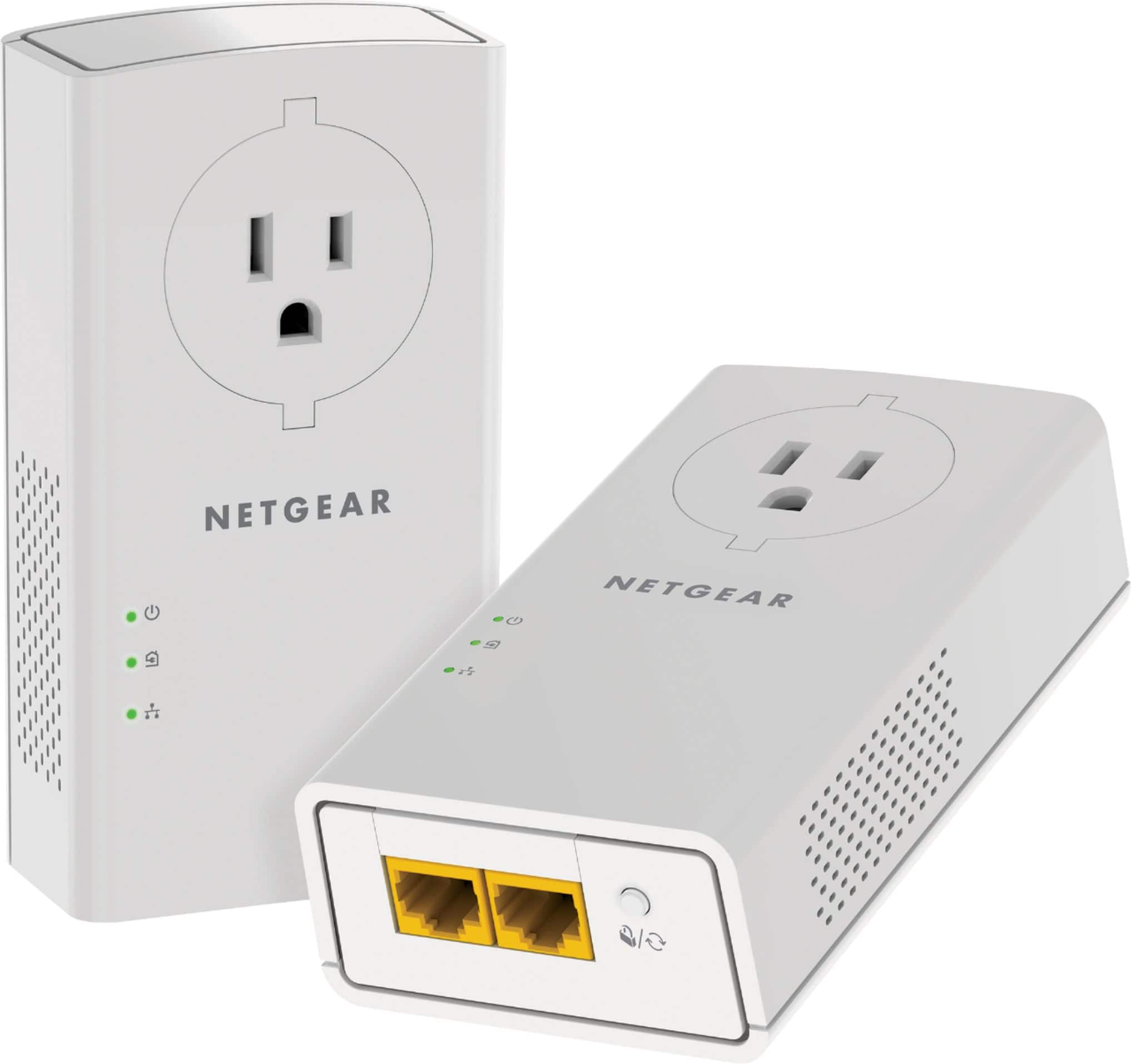
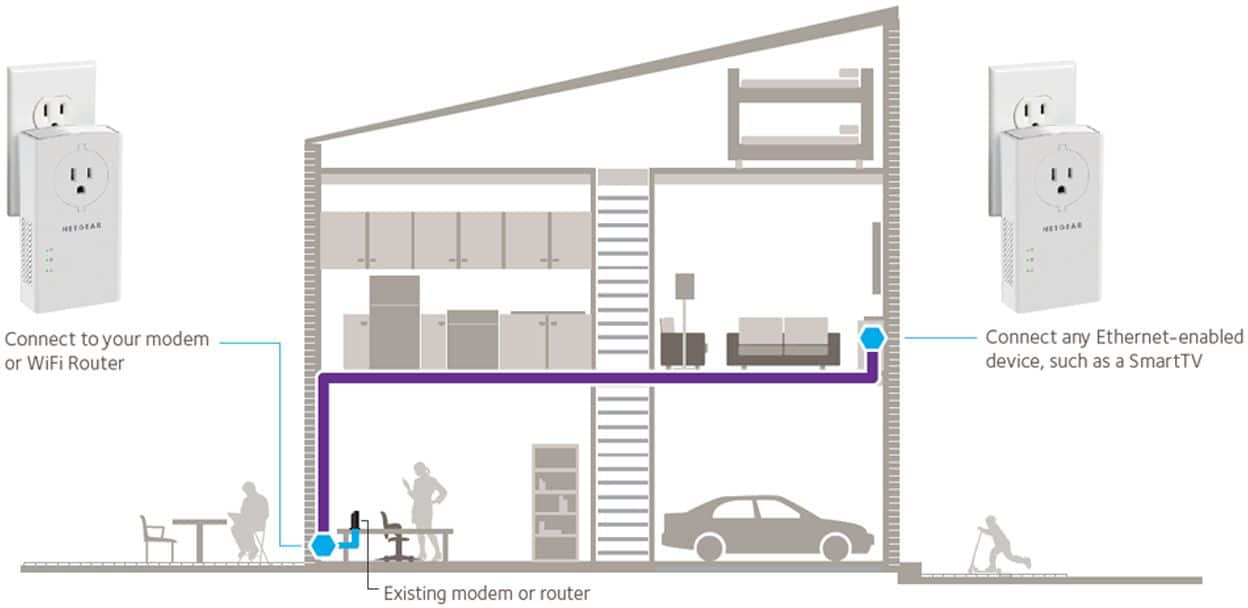
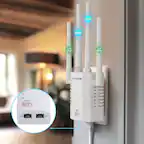
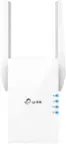
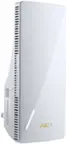
A:AnswerIt is really un relevant which service provider you have, you just need to connect one of this to your modem, and the other to wherever you want it your house, it will grab the signal immediately, and forget about your issues with Wi-Fi.
A:AnswerYes you can. A wired connection will provide a faster experience over wireless almost all the time. However, keep in mind that you cannot increase or create more Internet bandwidth coming into your home. So while this device will give you a faster experience to your home router/modem, it will not increase Internet speeds above what you are already paying for. So if your son and niece are doing heavy duty gaming and/or video playback while you are trying to work, they could potentially "slow" you down if you do not have a strong signal to begin with. The only true way to ensure you will not be impacted is to pay more for higher speeds which most Internet providers offer and many have done during the pandemic due to the increase strain on Internet services in the home. But I definitely recommend this device because being wired vs. wireless is a good place to start!
A:AnswerHello. You will connect one to the router and the other one can go into whatever room you want as long as it is in range. I hope this helps out.
A:AnswerWell I have purchased the 10mbps Ethernet cat6 cable and it does what it says. I would recommend the cat8 cable that reaches up to 40gbps which is more than enough. I hope that helps.
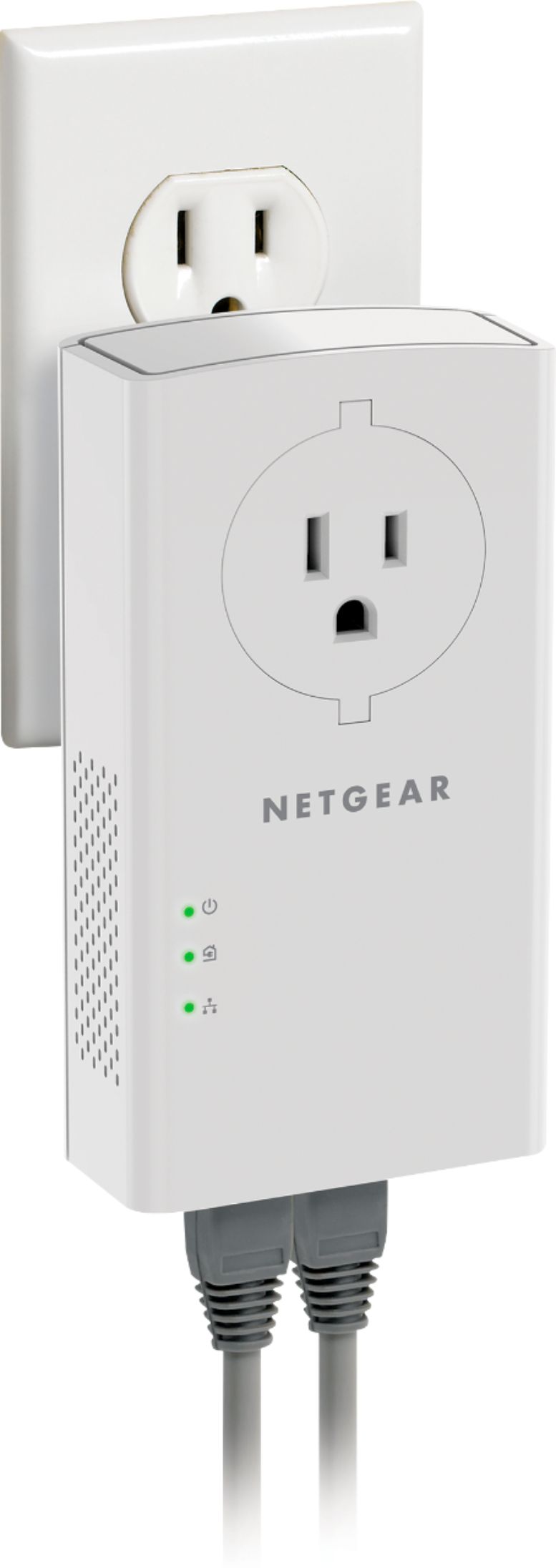
A:AnswerThis indicates that you have lost, or have a poor connection to the other plug. I would check to make sure that you have both plugs connected directly to the outlet and not through any other extension or surge protector. It can also happen if you have many other devices that are wireless which causes “noise” in the RX and TX connection. I hope that helps.
A:AnswerYes, the NETGEAR Powerline 2000 (PLP2000) can handle 4 VLAN traffic, as it acts as a transparent Layer 2 bridge. It passes Ethernet frames—including 802.1Q VLAN tags—directly through the electrical. I hope that helps.
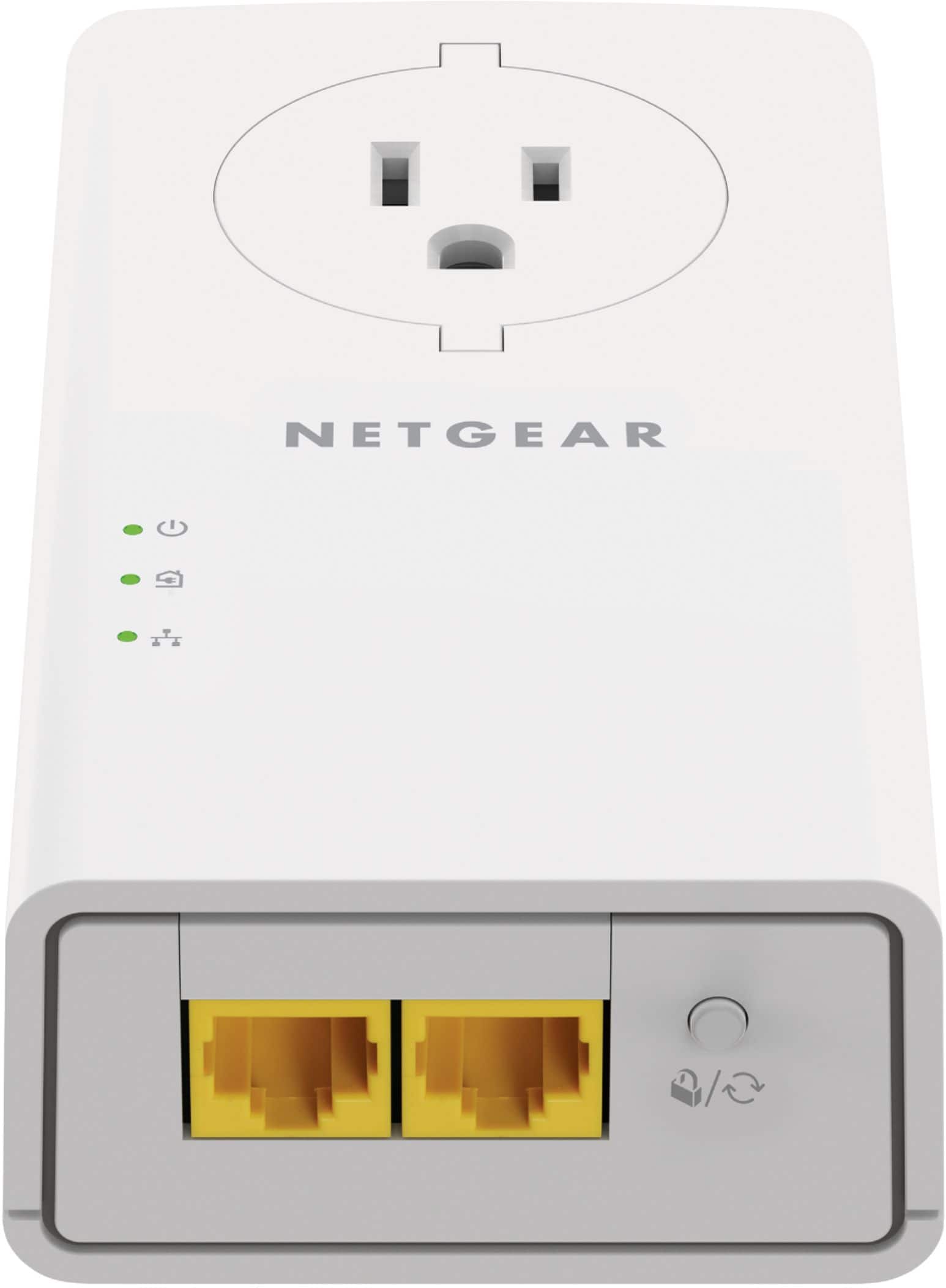
A:AnswerYes, you can use port aggregation (or link aggregation) to combine two 1000Mbps (1Gbps) ports for a total theoretical bandwidth of 2000Mbps (2Gbps).I hope this helps.