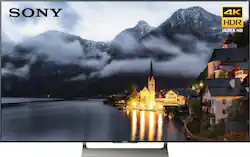
Sony - 55" Class - LED - X900E Series - 2160p - Smart - 4K UHD TV with HDR
- Key Specs
- Display Type: LED
- Screen Size Class: 55 inches (The group size measurement of a screen. This differs from a screen size measured diagonally from corner to corner.)
- High Dynamic Range (HDR): true (An HDR-compatible 4K TV or other HDR-compatible product displays HDR video content when it's available from sources like 4K Ultra HD Blu-ray Discs and 4K streaming services.)
- High Dynamic Range Format: HDR 10, Hybrid Log-Gamma (HLG) (There are a few HDR formats that tell the TV or other HDR-compatible product how to best utilize its capabilities to display HDR content. HDR technology can support one or multiple formats, each with various benefits to picture quality.)
- Refresh Rate: 120Hz (The number of frames per second the device can produce natively without enhancement. Higher rates help produce smooth, seamless pictures.)
- Motion Enhancement Technology: Motionflow XR 960 (Proprietary technologies produced in addition to the Refresh Rate that smooth out faster moving pictures to reduce blur and pixelation.)
- Specific Manufacturer Technologies: XDR PRO Contrast 5x, Full-array Local Dimming, 4K HDR X1, TRILUMINOS Display, 4K X-Reality Pro (This is technology that's specific to a TV brand (sometimes called proprietary technology). Here you'll see terms related to picture quality, brightness, processors and more.)
- Smart Platform: Android TV (Just like a computer, a smart TV needs an operating system (also called a smart platform) in order to access the Internet, connect with entertainment apps, and play streaming content. Some common TV smart platforms are; Roku TV, Android TV, and Chromecast.)
- Works With: Amazon Alexa, Google Assistant (Compatible with or able to be connected to other smart devices or applications.)
- General
- Product Name: 55" Class - LED - X900E Series - 2160p - Smart - 4K UHD TV with HDR
- Brand: Sony
- Model Number: XBR55X900E
- Model Year: 2017
- Dimensions
- Product Height With Stand: 30.5 inches
- Product Width: 48.4 inches (The out of box width of the item. Width is measured as the horizontal distance from one side of the item to the other as it would be primarily used or placed.)
- Product Depth With Stand: 10.3 inches
- Product Height Without Stand: 27.9 inches
- Product Depth Without Stand: 2.38 inches
- Product Weight With Stand: 39.9 pounds
- Product Weight Without Stand: 37.3 pounds
- Display
- Display Type: LED
- Screen Size: 54.6 inches (Size of the screen, measured diagonally from corner to corner.)
- Screen Size Class: 55 inches (The group size measurement of a screen. This differs from a screen size measured diagonally from corner to corner.)
- High Dynamic Range (HDR): true (An HDR-compatible 4K TV or other HDR-compatible product displays HDR video content when it's available from sources like 4K Ultra HD Blu-ray Discs and 4K streaming services.)
- High Dynamic Range Format: HDR 10, Hybrid Log-Gamma (HLG) (There are a few HDR formats that tell the TV or other HDR-compatible product how to best utilize its capabilities to display HDR content. HDR technology can support one or multiple formats, each with various benefits to picture quality.)
- Curved Screen: false
- Refresh Rate: 120Hz (The number of frames per second the device can produce natively without enhancement. Higher rates help produce smooth, seamless pictures.)
- Motion Enhancement Technology: Motionflow XR 960 (Proprietary technologies produced in addition to the Refresh Rate that smooth out faster moving pictures to reduce blur and pixelation.)
- Closed Captioning: true (The text version of spoken audio displayed on the screen. Devices that can display closed captioning typically have the option to toggle the feature on or off.)
- Language(s) Displayed: English, French, Spanish (The available language options for displayed text or captions.)
- Features
- Remote Control Type: Voice control
- Specific Manufacturer Technologies: XDR PRO Contrast 5x, Full-array Local Dimming, 4K HDR X1, TRILUMINOS Display, 4K X-Reality Pro (This is technology that's specific to a TV brand (sometimes called proprietary technology). Here you'll see terms related to picture quality, brightness, processors and more.)
- Smart Capable: true (Smart, or smart-capable devices are able to connect directly to your home network in order to stream content from the Internet, run Internet-based apps, or connect to other smart devices.)
- Smart Platform: Android TV (Just like a computer, a smart TV needs an operating system (also called a smart platform) in order to access the Internet, connect with entertainment apps, and play streaming content. Some common TV smart platforms are; Roku TV, Android TV, and Chromecast.)
- Indoor Or Outdoor Use: Indoor (Indicates the appropriate environment product was designed to be used in.)
- TV Tuner: Digital (The ATSC TV Tuner is a component built into conventional TV sets or other devices for receiving over-the-air broadcast TV without a cable/satellite box. Digital tuners may be purchased separately and connected to a device if it does not have one built in.)
- Connectivity
- HDMI Audio Return Channel (ARC): true
- RF Antenna Input: true (This input is used to connect devices such as antennas or cable boxes to a TV via a coaxial cable.)
- Number Of USB Port(s) (Total): 3 (The total number of USB ports including all generations and versions.)
- Bluetooth Version: 4.1 (The Bluetooth specification formalized by the Bluetooth Special Interest Group. All versions of the Bluetooth standard are backwards compatible with previous versions.)
- Headphone Jack: true (The device features an interface that allows for the connection of headphones.)
- Compatibility
- VESA Wall Mount Standard: 300mm x 300mm (VESA wall mount standards refer to the spacing of screw holes built into a TV in order to fit with standard TV wall mounts. These standards are implemented into most TVs and monitors.)
- Works With: Amazon Alexa, Google Assistant (Compatible with or able to be connected to other smart devices or applications.)
- Audio
- Built-In Speakers: true
- Surround Sound Supported: DTS, Dolby Digital, Dolby Digital Plus, Dolby Pulse (Surround sound systems use multiple audio channels and speakers to create an immersive sound experience for the listener. There are also various proprietary technologies that imitate this kind of sound via a device's built-in speakers or soundbar.)
- Speaker Output: 20 watts
- Power
- ENERGY STAR Certified: false (Devices carrying the ENERGY STAR service mark, such as computer products and peripherals, kitchen appliances, and other products, generally use 20% to 30% less energy than required by federal standards.)
- EPEAT Qualified: false (The Electronic Product Environmental Assessment Tool (EPEAT) was designed to provide an environmental assessment tool for purchasers. In order to qualify for EPEAT, a product must meet all 23 required criteria.)
- Estimated Annual Operating Cost: 17 United States dollars (Predicted cost of operating the product under average conditions for one year.)
- Estimated Annual Electricity Use: 139 kilowatt hours (Predicted amount of electricity needed to operate the product under average conditions for one year.)
- Rechargeable Battery (Remote Control): false
- Battery Size (Remote Control): AAA (The battery size required for operation.)
- Number Of Batteries Required (Remote Control): 2
- Number of Batteries Included (Remote Control): 2
- Included
- Stand Included: true
- Box Dimension
- Height: 32.19 inches
- Width: 60.75 inches
- Depth: 7.06 inches
- CubicDimension: 13806 inches
- Other
- UPC: 027242903609
Immerse yourself in full-array contrast and full 4K HDMI with this Sony HDR Ultra TV. Five times dynamic range brings every bit of the action into sharp relief, whether you're gaming or streaming live events. This Sony HDR Ultra TV is compatible with PlayStation Vue for live streaming, and Google Play apps are available for even more fun.
- X-tended Dynamic Range PRO 5x: Provides five times the contrast range of a conventional LED-edge lit TV by accurately balancing the light output across the screen.
- Full-array local boosting and dimming technology: Provides enhanced contrast and incredible brightness in a stunningly slim design.
- 4K HDR Processor X1: High Dynamic Range video content delivers exceptional detail, color and contrast, with a far wider range of brightness.
- TRILUMINOS Display: Colors are as rich and vivid as nature's own with more shades of red, green and blue.
- 4K X-Reality Pro: Provides lifelike detail and clarity. See the details appear in buildings and trees as scenes become clearer, smoother and more natural.
- Android TV: From movies and TV shows to thousands of apps, Android TV brings you everything in an instant. Cast your favorite apps with Google Cast, and Voice Search helps you find the entertainment you want.
- 54.6" screen (measured diagonally from corner to corner): Large enough to provide an immersive experience for everyone in the room.
- 2160p resolution for breathtaking HD images: Watch 4K movies and TV shows at 4x the resolution of Full HD, and upscale your current HD content to the gorgeous Ultra HD-level picture quality.
- Watch high dynamic range (HDR) content on your TV: With an HDR-compatible 4K TV, you can enjoy HDR movies and TV shows, in addition to all your current content.
- Smart TV with access to streaming services for countless entertainment options: Stream shows, movies, games and more with the TV's built-in Wi-Fi and integrated apps.
- Chromecast Built-in: In order to cast your favorite shows, movies, music and more, you must download the Google Cast app and use your compatible mobile device along with Chromecast-enabled apps to send content right to your TV.
- Google Assistant Built-in: Find what you want quickly, simply by talking. Ask your Google Assistant to help you play TV shows, movies, and more. Dim the lights and control your connected devices while you watch a movie for a better experience.
- LED TVs perform well in all lighting conditions: They also deliver plasma-like deep blacks and rich colors.
- Advanced TV sound: Two built-in Bass Reflex speakers, Dolby Digital, Dolby Digital Plus, Dolby Pulse and DTS Digital Surround.
- Dolby Digital Plus and Dolby Pulse: Optimizes the sound for TV from sources, such as the Internet, connected PCs, smartphones and tablets.
- 4 HDMI inputs for the best home theater connection: High-speed HDMI delivers a full 2160p picture and digital surround sound in one convenient cable. HDMI cable not included.
- Enjoy the picture from multiple angles: The wide 178° viewing angle provides a clear picture for viewers seated near the side of the screen.
- Motionflow keeps the action smooth: Sony's Motionflow XR 960 refresh rate technology builds upon the native 120Hz panel to allow fast moving action sequences in sports and movies to be seen with lifelike clarity.
- 3 USB inputs: Easily connect your digital camera, camcorder or other USB device.
- Manage the viewing experience for your kids: The parental control functionality lets you block channels with the unwanted content.
Whats Included
- Sony 55" Class - LED - X900E Series - 2160p - Smart - 4K UHD TV with HDR
- Voice remote control (RMF-TX200U)
- Batteries (R03)
- AC power adapter (ACDP-200D02)
- AC power cord
- IR Blaster (1-849-161-12)
- Table top stand (separate, assembly required)
- Owner's manual
Q: where does the power supply plug into on the sony xbr 55x 850d
A: Hi mike, Kindly check on this link for steps to connect the power supply on the back of the TV (2): https://docs.sony.com/release//Manual_4690448111.pdf ~Ralph
A: I've not seen this issue but try disabling MotionFlow for that input, or all inputs (I hate the motion interpolation). Maybe that will resolve it.
A: Hi 1080pviewer, I suggest that you change your username to 4Kviewer as this TV not only handles 1080 content well, it upscales it to near 4k quality. It does not make 1080 decent, it makes it excellent. Thanks, -Mark
Q: Does the Sony XBR 55x900E have Bluetooth capability?
A: Yes it does. Better than the 850D.
A: These are used for your remote control so you can use it if something is blocking the sensor in front of the TV in other words it gives you a wider range for your remote to control the TV
A: I just answered this last night! You go to the action menu. then to picture. then you find Pro-Cinema and select it with the center button. Boom, you will see the difference instantly!
Q: what is the difference between xbr55x900e and xbr55x850d when is the sale price end on both thanks
A: The 900 has amuch brighter HDR range. It also has local dimming. It has better Bluetooth connection to headphones.
Q: Does this tv have a power brick or just a cord?
A: AFAIK the 55X900E has a power brick . I will be getting one this week at the local Best Buy to replace the 2015 Sony 55-X850C here that suddenly had a panel fail ,my extended warranty coverage is paying my purchase cost for the 55-X850C and all but $300.00 for the new TV + the sales tax for the replacement 55X900E. Any brand TV can have a panel fail at any time . No matter what TV you buy get an extended warranty from Best Buy or on line somewhere right away it saved me $1199.00 plus a TVservice call to diagnose it .