A:AnswerYes, most UPS do restart automatically when power is restored.
Some models have menus and options for that.
The default is to restart and it will also start slow charging the battery as soon as it can.
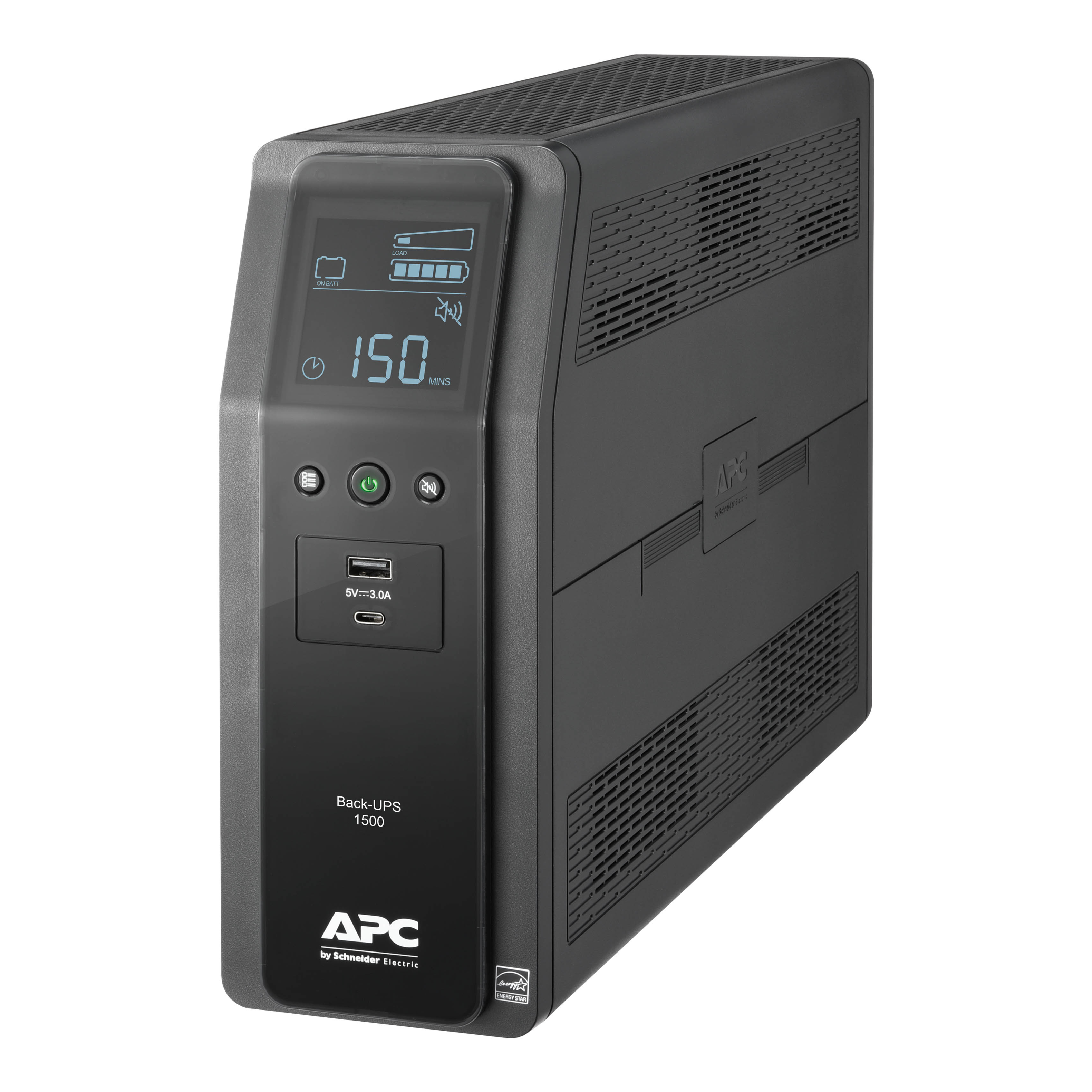
The onboard battery charger for the APC BN1500 has an 11 watt 12V DC charger inside which takes up to 16 hours to fully charge IF the battery was fully discharged.
It goes quicker if the battery was only partially discharged.
ALL the specs are on the APC web site if you look up that model.
DaveM
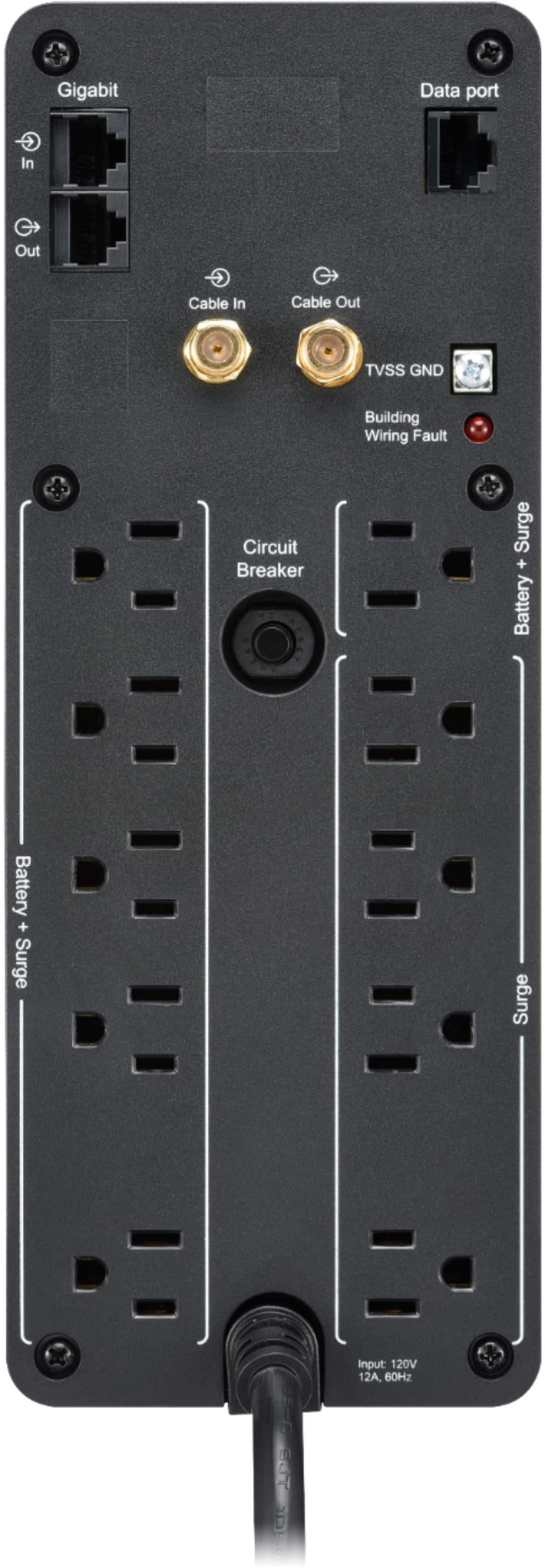
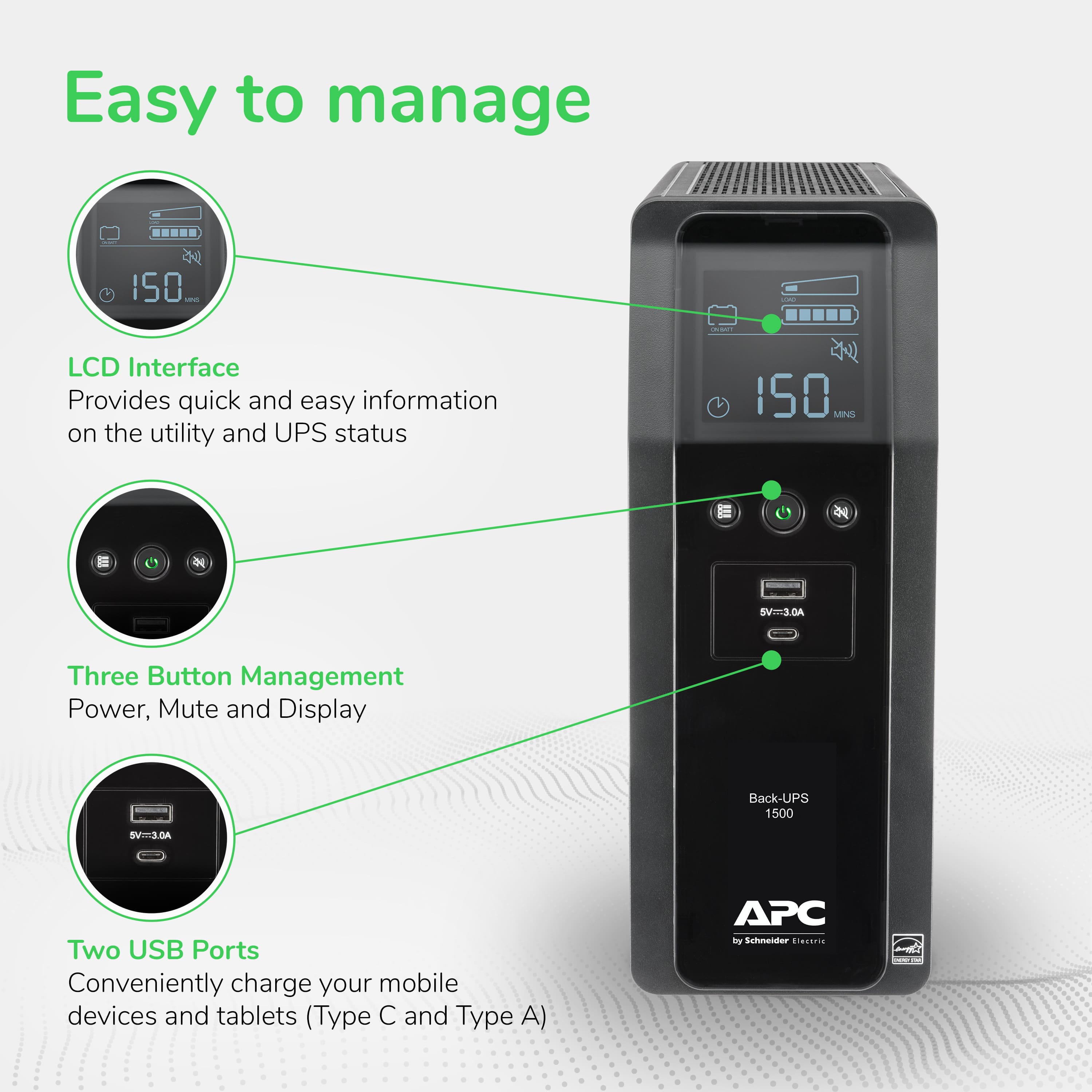
A:AnswerThank you for your interest in our products. Unfortunately you would only be able to gracefully shutdown one of the system because our BackUPS would only support a 1 to 1 USB data connection. The UPS should support the power draw since it supports 900 watts of power connected to it. However one of the systems would need to be manually powered down in a power outage. I apologize for any inconvenience this causes.
A:AnswerAaron, if you add together the power consumption of the two appliances and determine the total wattage. Divide that into the 900W and you will have the time it will last.
Generally these appliances are light power consumers, so you would expect a good long time if those appliances are all that's running off the Backup UPS
A:AnswerYou'll probably be a little short of that 1000 PSU as this only supplies 900 watts. That said, I think that PSU is too much for your rig (you probably max out around 800 unless you've got some serious overclocking going on). You'd probably get 10-15 minutes of run time. Remember, the UPS isnt to run your machine... It's to allow for a safe shutdown in case of power outage so you don't damage your stuff.
A:AnswerThis unit cannot supply enough power for the average 1/2 HP motor but it is close. Even if it did work the battery would not last very long when the motor was running.
A:AnswerThis unit is limited to 900 watts and can only supply that for about 10 minutes. For your needs you will need to go to a higher tier of UPS with much higher prices. This APC unit is reliable but your load is just too much for it.
You will need something in the 1900-200 VA range and with larger batteries to hold up longer.
A:AnswerThe 1500VA rating is the peak power the device can supply the RMS power which typically what your devices are rating for is 900 watts. The batteries in this device are two 12V 9AH which is 24 * 9 = 216 WH. Since you cannot use all of that power, at best the UPS will last about 10 minutes with a 900 watt load.
For a device like a computer that can shut itself down this UPS can supply enough power to get through a short power problem and can shut your computer down properly for longer power outages. This UPS comes with a cable and you can get the software for free to do the automatic shutdown.
While this UPS a excellent unit that will last for many years, UPS devices in the size have relatively small batteries so generally it will just get you through a short outage or until you can fire up a generator.
A trick is if the load you want to use is less than 700 watts the 1200VA unit will do the trick and uses that same batteries so it will last the same amount of time.
A:AnswerThank you for your inquiry. The runtime would depend on how much power the chair pulls. If you are getting 1 hour of runtime on the UPS that would mean the chair is pulling around 100 watts of power. It isn't a lot of power draw but if you are looking to get more runtime from an UPS you would need to look our SmartUPS Extended run units. An example of one the units is our SMX1500RM2UC. This unit would allow you to connect additional battery packs to the UPS if you are looking to get more than an hour of runtime.
A:AnswerThank you for your interest in our products. The BN1500M2 would provide around an hour and 30 minutes if not a bit longer with the ATT Modem connected to it.
A:AnswerUPS devices in this class can last hours under light loads but generally they are not designed for holding up loads for long periods of time. This problem is the limited size of the batteries that can fit into these units. UPSes with larger batteries or the ability to add additional batteries tend to get pricey very quickly. A possible solution could be to split up your loads across multiple UPSes.