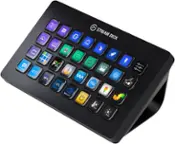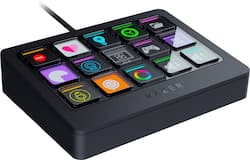
Razer - Stream Controller X All-in-one Keypad for Streaming and Content Creation - Black
Model: RZ20-04790100-R3U1
SKU: 6531754
This item is no longer available in new condition. See similar items below
- Key Specs
- Wireless: false
- Compatible Platform(s): Windows
- General
- Brand: Razer
- Model Number: RZ20-04790100-R3U1
- Product Name: Stream Controller X All-in-one Keypad for Streaming and Content Creation
- Color: Black
- Features
- Product Type: Controller
- Connectivity
- Wireless: false
- Dimensions
- Product Height: 3.9 inches (The out of box height of the item. Height is measured as the vertical distance from the bottom of the item to the top as it would be primarily used or placed.)
- Product Width: 1.02 inches (The out of box width of the item. Width is measured as the horizontal distance from one side of the item to the other as it would be primarily used or placed.)
- Product Length: 4.3 inches (The out of box length of the item. Length is measured as the longest dimension of the item.)
- Product Weight: 0.61 pounds (The out of box weight of the item.)
- Cord Length: 78 inches
- Compatibility
- Compatible Platform(s): Windows
- Warranty
- Warranty - Parts: 1 year
- Warranty - Labor: 1 year
- Other
- UPC: 840272904350
With the Razer Stream Controller X, creativity comes easily. Manage your streaming and content creation seamlessly through one convenient device that controls all your apps and tools. Streamline your workflow so you can focus on what matters most—engaging the fans and growing your following.
- 15 Switchblade Buttons: Create handy shortcuts for streaming, video editing, music production, and more. Control your apps, lights, audio, and more with a few simple taps, and enjoy easy visual navigation with customizable icons.
- Multi-Link Macros: Go live or be ready to create at the push of a key. Create the ultimate shortcut by linking any number of actions to one button, triggering them consecutively or simultaneously.
- Compatible with Leading Streaming Software: Powered by Loupedeck’s easy-to-use software, get set up to create simply by dragging and dropping commands from a plugin library that includes an ever-growing range of third-party and custom plugins.
- Designed for Efficient Multi-Tasking: Sort and store as many actions as you want within a single button. Create custom profiles for various tasks, and enable Dynamic Mode to automatically switch profiles based on the detected app.
- Swappable Magnetic Faceplate: Switch up your style at any time by snapping on a fresh, new faceplate* available in a range of striking colors. Flex your creativity by painting a custom design on a clean, blank option. *Sold separately
- Detachable 50° Anti-Slip Magnetic Stand: Simply snap on the controller for a secure fit that not only provides clear view of all your buttons, but stays firmly in place during use thanks to a grippy underside.
- 15 Switchblade Buttons: Create handy shortcuts for streaming, video editing, music production, and more. Control your apps, lights, audio, and more with a few simple taps, and enjoy easy visual navigation with customizable icons.
- Multi-Link Macros: Go live or be ready to create at the push of a key. Create the ultimate shortcut by linking any number of actions to one button, triggering them consecutively or simultaneously.
- Compatible with Leading Streaming Software: Powered by Loupedeck’s easy-to-use software, get set up to create simply by dragging and dropping commands from a plugin library that includes an ever-growing range of third-party and custom plugins.
- Designed for Efficient Multi-Tasking: Sort and store as many actions as you want within a single button. Create custom profiles for various tasks, and enable Dynamic Mode to automatically switch profiles based on the detected app.
- Swappable Magnetic Faceplate: Switch up your style at any time by snapping on a fresh, new faceplate* available in a range of striking colors. Flex your creativity by painting a custom design on a clean, blank option. *Sold separately
- Detachable 50° Anti-Slip Magnetic Stand: Simply snap on the controller for a secure fit that not only provides clear view of all your buttons, but stays firmly in place during use thanks to a grippy underside.
Whats Included
- Stream Controller X All-in-one Keypad for Streaming and Content Creation
- Stream Controller X All-in-one Keypad for Streaming and Content Creation
Q: Does this work with the Xbox series x
A: Not directly. This will only work through a computer and to control actions on it. Start stream, starts applications, display information etc