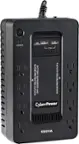
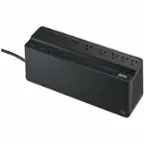
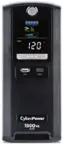
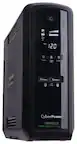
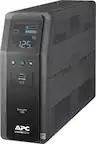
A:AnswerNot sure what you mean by resistance, but for me it's supplying stable power to 2 monitors, a desktop and a switch including even a lamp and some smaller electronic devices.
A:AnswerThe wattage in the specs (900W) would imply not. with one desktop computer, 2 monitors and some other devices my draw is 100W so only about 1A.
A:AnswerFor a Back-UPS Pro to charge properly, it's generally recommended to leave it plugged in for at least 8 to 12 hours after initial setup. This allows the internal batteries to reach a full charge, ensuring optimal performance.
However, it’s a good practice to keep the UPS plugged in continuously, as this allows the battery to maintain a full charge and be ready for any power interruptions.
If you need additional assistance, you may reach us at 800-800-4272 or via chat service through our support site - https://www.apc.com/us/en/support/. Support is available Monday – Friday, 8am – 8pm EST
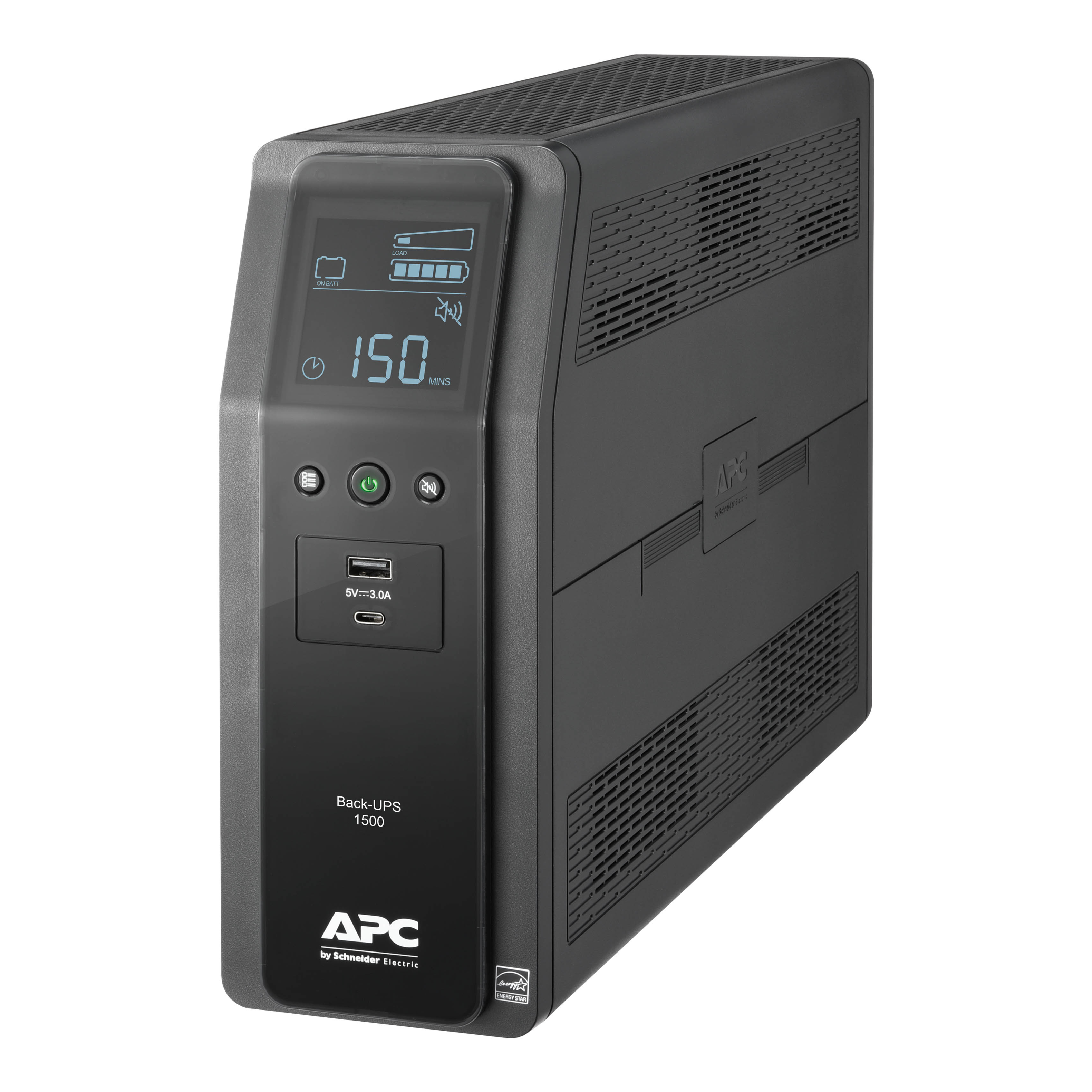
A:AnswerThank you for considering our product. For Back Ups product of ours, we got different family or category of our units and one of those is XS like BX1500G which commonly available thru our Partner Resellers. Hope this answer you inquiry and have a great day ahead.
A:AnswerIf you have it plugged in and the green light is on it should work. If the green light is not on and your outlet is good it may be that you had some kind of power surge that killed it. This is a surge protector. If something too big goes through it , it will be sacrificed to protect your equipment from being burned out. I had to replace a smaller unit a month ago because a lightening strike near by ran through the internet able , then the APC. The APC was killed but my computer and other equipment was spared.
A:AnswerNo. it can't do it.
Small UPS systems will go 5, 10, 15 minutes max at 450 watts load.
Also, please specify more info.
The real answer is rather technical for a small space but I'll give a try
Electronics don't draw "watts per hour" as shown so the units in the question are sort of a typo of wrong units.
Does it draw 480 watts when it's on? then that is Watts and nothing to do with time.
Watts are a steady state unit. there is no time.
However, we can include time data and then we have new units such as Watt-hours which is not the same.
If it draws 480watts steady when on ... then the total energy or watt-hours depends how much of the time does it run during the hour. We call that duty cycle.
If its' on half the time then its' 480W at 50% Dc (duty cycle) is like 240Watts for the hour or 240Watt-hour
If however, you changed the units accidentally in your question and you really meant 480 Watt-hours then that's totally different and the math is different.
Assuming it draws 480 "watts" steady when running.
No, the APC 1500VA UPS can't do that. not that long, with a large 480 watt load.
The APC 1500VA UPS can do 900Watts max, but only for 3 minutes.
They printed 1500VA or Amp-hour because the number looks bigger. but it's really 900Watts max in normal power units.
Higher grade units rated at 1000VA at 1000Watts are more powerful than this one.
Runtime from APC
900Watts for 3minutes
450 watts for 11 minutes
200 watts for 30 minutes
So if you device takes 450Watts and remains off most of the time then it could do a while, but realistically, NO, it can't do it.
The UPS will run itself down anyway in just over an hour even with no load due to internal losses. If your device pulls 450Watts ( that's a lot) then it will be dead even faster in about 10 minutes.
You need a much larger UPS,
A smaller or more efficient O2 generator or
a gas generator with a real AC sine wave output.
or connect an AC inverter to a much larger battery
or 12V from a vehicle that you can leave idling for the hour.
If it's medical equipment and it has a motor in it, it's not going to run well on a stepped, modified.. sort-of sine wave on a device like this. This particular UPS only has a sine wave output when the power company is on. when it goes to battery it's not a real sine wave.
As per the APC site it calls it a
"Wave type: Stepped approximation to a sinewave"
Not a sine wave.
AC motors do not like square wave or sort of rough sine waves with peaks on it. Motors run slower and hotter unless it's a correctly shape, smooth sine wave.
You need a REAL AC sine wave and they do make those on higher end UPS devices, but this one isn't at that level.
Most UPS devices don't really advertise it correctly either so that's misleading. many of these say Sine wave output, which is only half true. It's only a sine wave when it's NOT on battery power. then when you need it, it's not a sine wave, and they don't make that spec easy to find.
If it says stepped approximately or PWD (pulse width modified) then it's not really a sine wave.
A UPS is not the right solution for a medical device with a motor in it. You need a much more powerful solution with a true AC 60Hz sine wave.
You can get a real true, sine wave UPS but that's costs 2-3x more than this one, look up 5SC1500 + sine.
That will be closer to the right product and that has a REAL, true AC sine wave when on battery power so it would run the O2 smoothly for a while, but that's still not really big enough.
Big industrial UPS can come in any size, 2Kw, 300,000 Watt etc but it's better in this case to simply get a larger deep cycle battery and connect that to an AC inverter. That would be far stronger.
Folks that install Solar power for homes can tell you all about that and get you setup perfectly with the right hardware.
No, it's not solar, but those folks know all about deep cycle batteries and AC inverters and can install it safely and get the right hardware to run it for 1 hour, 2, or whatever you want.
A computer size UPS is not the right device for what you need.
For example get a 1000Watt true sine wave inverter that runs on 12V or 24V DC.
Connect that through a fuse for protection (around 100A or 50A depending on the load and how many batteries).
You will need more details but that's the basics.
Talk to residential solar inverter installation folks.
they can set you up with a 12V charger, battery, inverter, AC outlet, protection fuses or breakers and a way to switch it over to backup power.
They have hardware to do what you need and can run it for an hour, 2 hours or even a week if needed.
They could even power the whole house if you want but that's a bigger project.
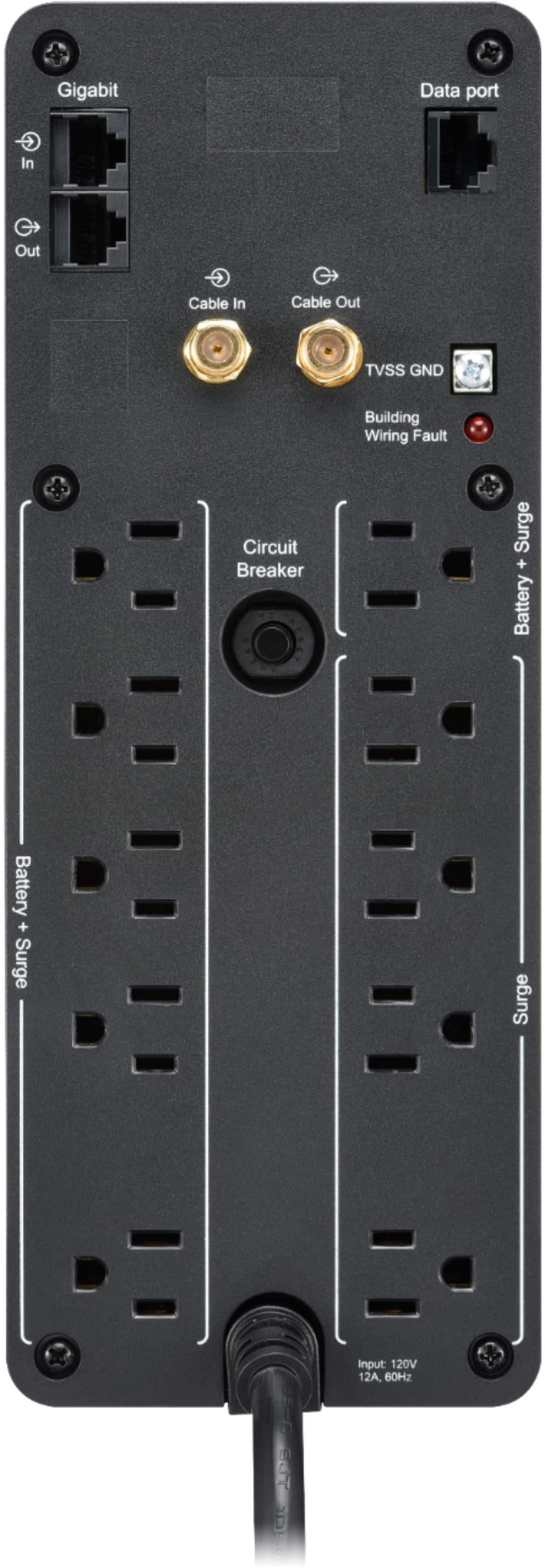
A:AnswerThank you for your inquiry. The previous posters are correct. We do not recommend connecting our units to loads that can change. There is a chance that the UPS would become overloaded if the power draw would go over the supported 900 watts. We also would not recommend using the unit in a wet or damp environment. High humidity would damage the UPS.
A:AnswerThe BN1500VA uses two 12v 7Ah batteries in series, which are in a pack using some plastic bonding brackets and wire loops to connect the batteries.
You can buy a replacement pack directly from APC, but they're going to charge you a premium for it. I always rebuild the packs with individual batteries and save a lot of money.
As for how much the individual batteries are, it depends on the brand and the time you buy them. SLA batteries are like gas, the price goes up and down all the time. But the range is generally $20-$40 per battery.
I would recommend Yuasa, Power Sonic or Universal Battery. I would avoid the cheap no-name batteries.