A:AnswerI am using this with Windows 10 - 64bit. It installed without trouble. My third-party software recognizes it as a usable serial port, and I'm able to interface with remote equipment.
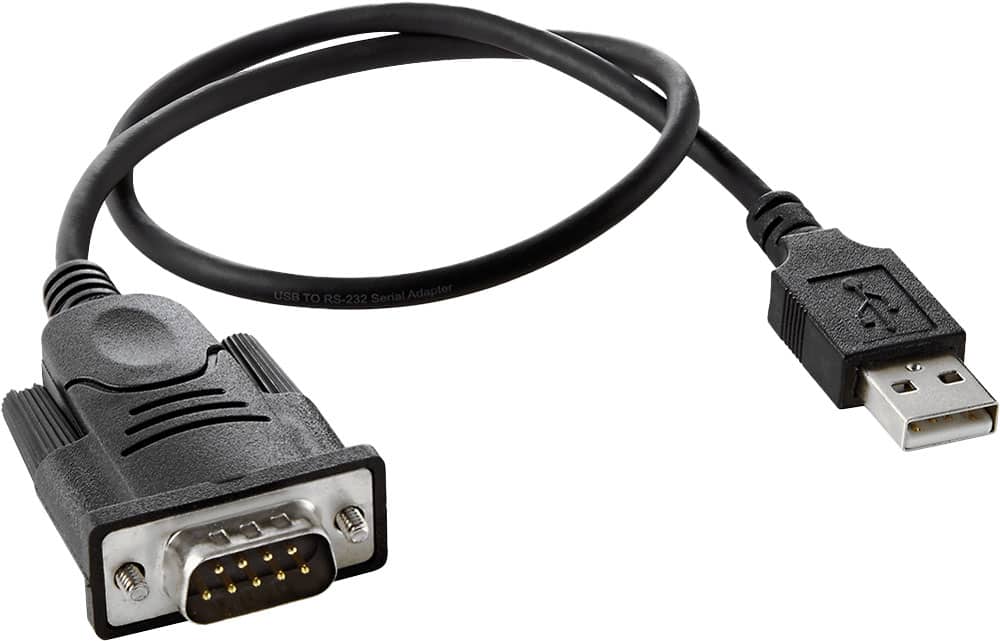
A:AnswerThis adapter is likely not bidirectional. Also, if you're looking for VGA to usb, like for displaying video, this is the wrong cable. This cable is serial to USB. VGA looks similar, but the difference is the number of pins. VGA looks like this cable but has 15 pins instead of 9
A:AnswerYour Atari 2600 analog joystick requires a connection involving analog to digital converters. The USB to RS-232 adapter converts digital serial from USB level ( 4 conductors max with USB 2.0 ) to RS-232 which is also serial- yet involves extra wires for flow control- hence it ends in a de-9 ( BTW- many folks use the term 'DB-9' because the original connectors for serial were DE-9 and DB-25 per the major mfr. ). The DE-9 on your Atari mouse expects to connect to an analog to digital converter ( such as is found in many extra circuit cards for PCs including legacy sound cards ) with at least two analog-to-digital converters involved. One pertains to the X-axis and the other to the Y-axis ( that means up and down is X and side to side is y ). Old issues of 'Nuts and Volts'(tm or R) magazines had conversion wiring diagrams ( schematics in the trade ) for wiring analog joysticks to IBM XT and similar PCs. You may be able to use the USB adapter for a modem port, yet you would need more hardware for your analog joystick. Sorry, no joy in this case... I am the messenger, not the instigator of your issue. What is analog, you ask- a signal level which varies, for example between 0 and 5 volts, your joystick might provide 1 volt at one extreme, 2.5 volts in the middle, and 4 at the other extreme ( so it varies according to position )- the ADC converter might provide that voltage or just measure the resistance. What is digital? The same signal level would always be 0 or 5 volts ( in the example of TTL chips ) but would vary between just those two levels in a code which represents something else. Early PCs almost always used either 5 volts or 12 volts for input and output ports, and would not tolerate short circuits- so measurement needs to be done with appropriately sized probes insulated one from the other.
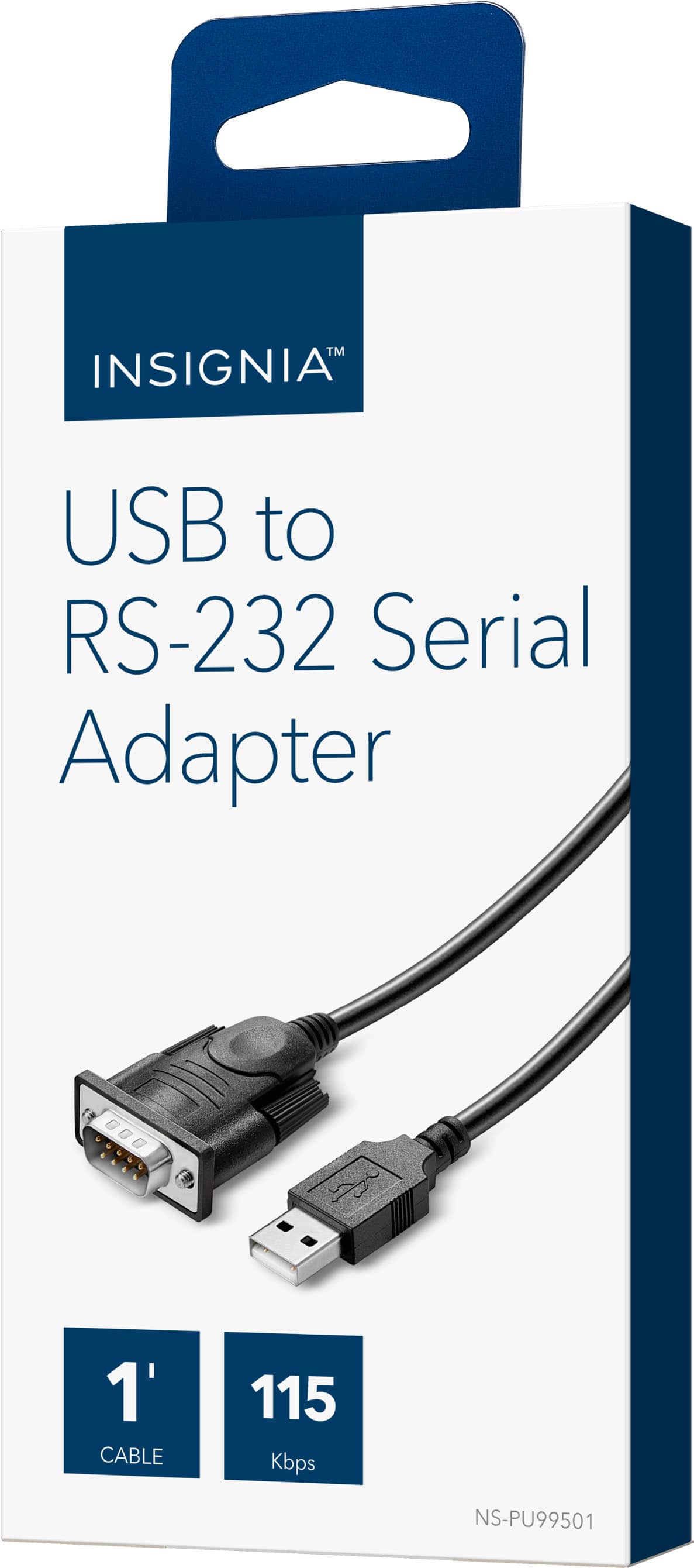
A:AnswerHello! Thank you for your question. The drivers for the Insignia™ USB-to-RS-232 (DB9) PDA/Serial Adapter Cable (Model NS‑PU99501) can be downloaded from the Insignia Support website. Visit www.insigniaproducts.com, search for NS‑PU99501, and navigate to the Support/Downloads section to download the appropriate driver for your operating system. Please note that Linux systems do not require a separate driver. If you need additional assistance, please contact Insignia Customer Support at 1‑877‑467‑4289 or insignia@bestbuy.com.
Vennila | Insignia